

When Facts Come Under Pressure – Trust as a Shield against Disinformation
Experiences from Germany and Ukraine at the Connective Cities Expert Forum during the 8th German-Ukrainian Municipal Partnership Conference
Disinformation and polarising narratives are posing growing challenges for municipalities. False information can undermine trust in municipal institutions, exacerbate social tensions and, particularly in crises, spread within a very short time. How can municipalities prepare for this and respond quickly, credibly and effectively?
This question was at the heart of the Connective Cities expert forum ‘When Facts Come Under Pressure: Empowering Municipalities to Counter Disinformation’ held in Berlin on 8 October 2026 as part of the 8th German-Ukrainian Municipal Partnership Conference, which took place from 7 to 9 October 2026.
The conference, organised by Engagement Global’s ‘Service Agency Communities in One World’, brought together around 600 German and Ukrainian local government representatives and other stakeholders from the partnership network to exchange experiences and successful approaches, discuss current challenges facing the partnership, and further strengthen local resilience and German-Ukrainian partnerships.
Learning from Municipal Practice
How does an administration recognise that disinformation is spreading? When and how should it respond? What roles do mayors, press offices, local media and civil society play?
Ukrainian municipalities are exposed to particularly intense information pressure under the conditions of Russia’s war of aggression. Their experience of crisis communication, of dealing with rumours and false information, and of building reliable information channels offers important points of reference for a joint exchange.
Understanding Disinformation: Methods and Aims
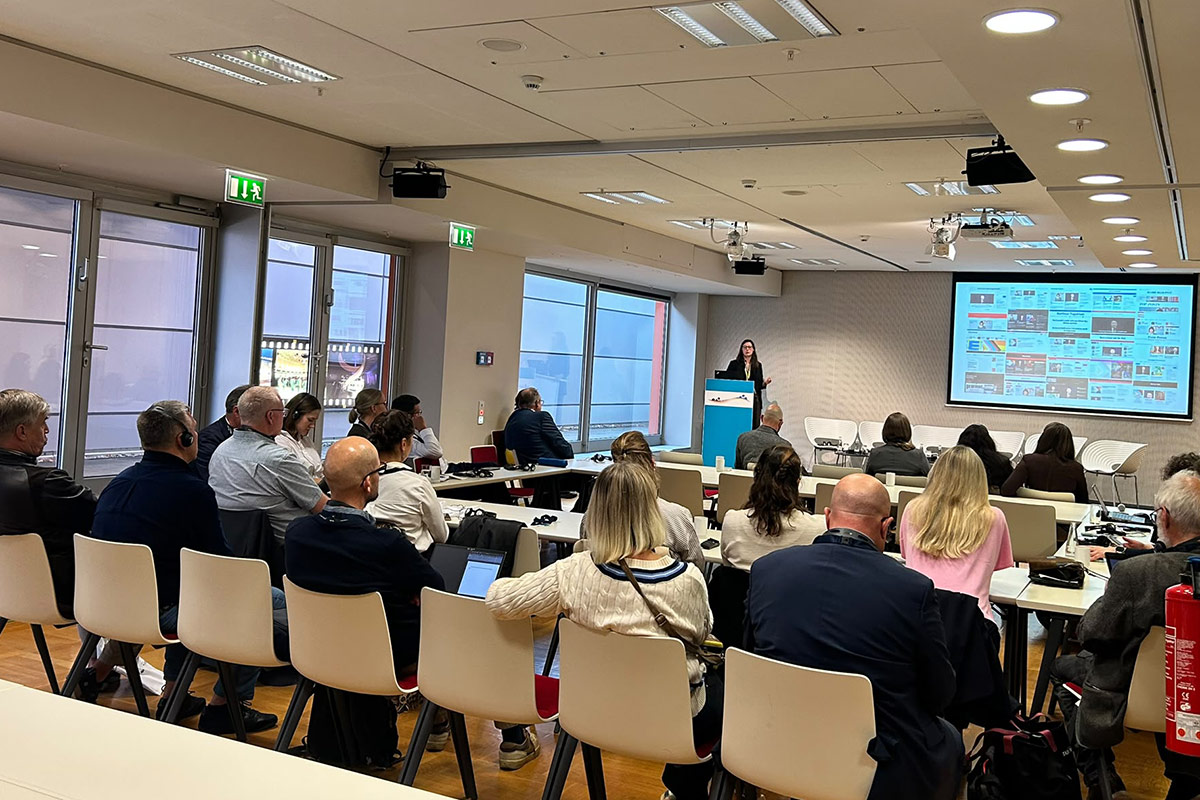
Katharina Nocun, writer and civil rights activist, outlined the basics of disinformation and disinformation campaigns. These work, for example, with imitation websites of well-known print media, fake user accounts and a flood of posts on social media platforms. Artificial intelligence, she said, has made implementation easy and cheap. The aim is to build up enemy images, sow uncertainty and mistrust, and destabilise democratic political systems. It could also be observed, however, that disinformation campaigns increasingly pursue simple profit-oriented goals, for instance by exploiting the monetisation options offered by social media platforms. ‘Propaganda has achieved its aim when people are unsettled. It is enough for uncertainty to be spread’, said Nocun.
Practice in Germany: When Your Own Face Becomes a Fake
How does a municipality respond when disinformation arrives on its doorstep? What room for manoeuvre does it have, and when should it act? And how can trust in the administration be maintained and strengthened so that the municipality becomes more resilient? Two examples from Germany provided answers.
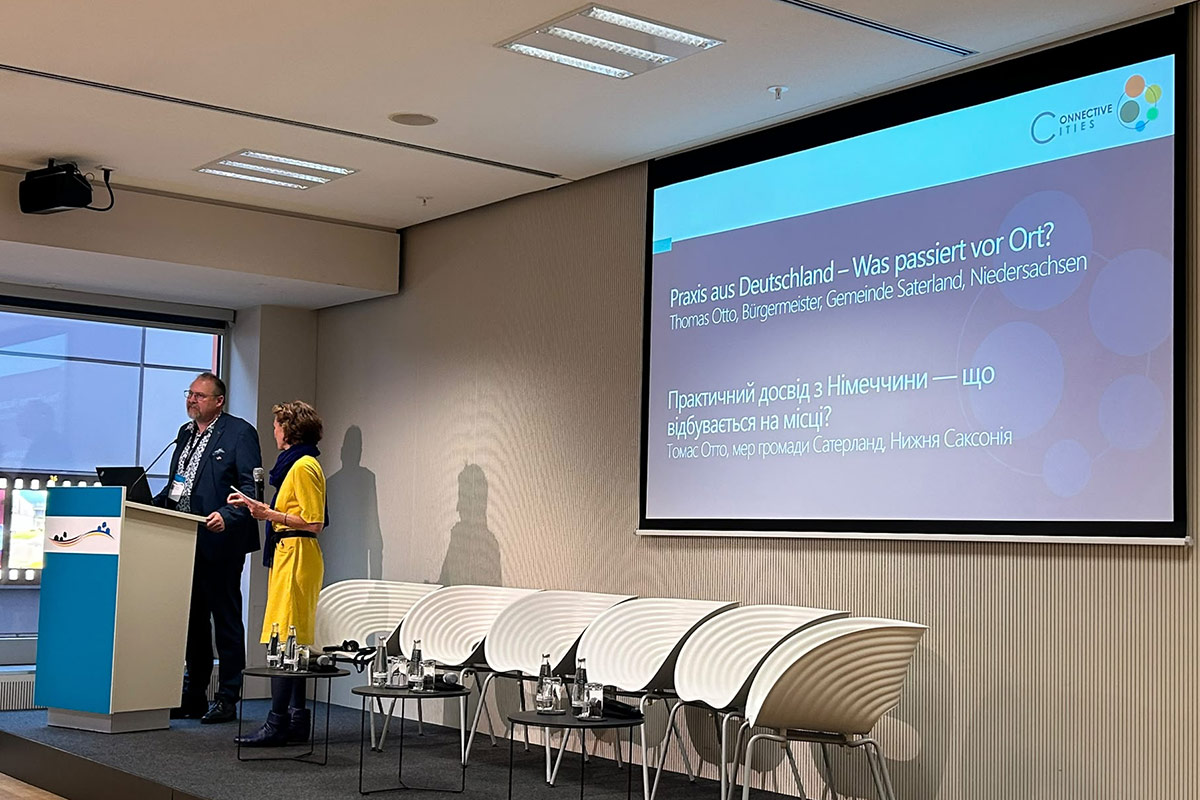
Thomas Otto, mayor of the municipality of Saterland in Lower Saxony, became a target himself: AI-generated images of him circulated online, showing the politician in various poses – including one with a noose around his neck. These fakes damaged the credibility of the mayor and of the administration as a whole. In a small municipality, it is an advantage that the people involved are known, said Otto. Even so, the consequences are still felt today, two years after the incident.
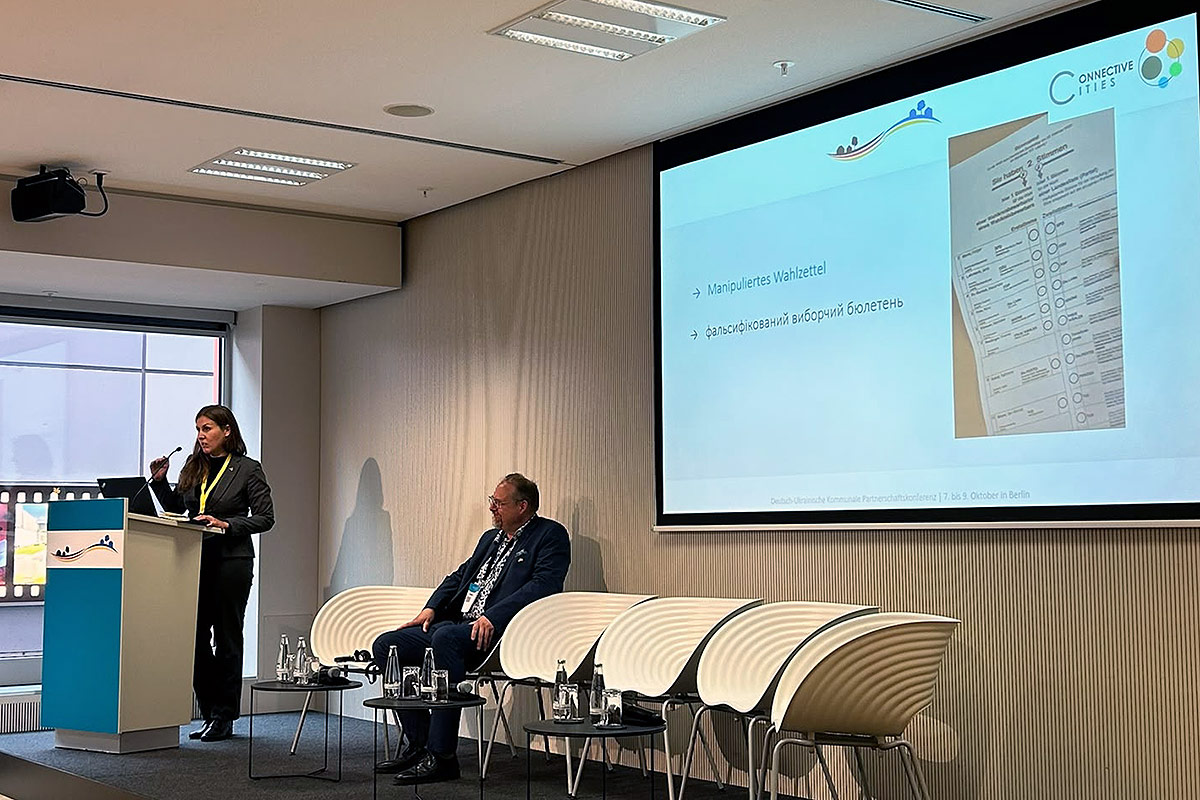
Dr Pia-Mareike Heyne, head of the Office for Democracy and Social Cohesion of the City of Leipzig, made clear that trust must also grow within the city administration. Another key challenge for administrations, she said, is to react quickly. For example, in February 2025, shortly before the German federal election, a video spread via social media showing two purported postal ballot papers from Leipzig on which the party AfD (Alternative for Germany) was missing. This forced the City of Leipzig to clarify the matter and set the record straight quickly.
Practice in Ukraine: Information as Critical Infrastructure
Under the title ‘How Ukrainian municipalities build trust and resilience under wartime conditions’, the focus was on questions that every municipality has to ask itself in a crisis: How does it inform people, and which channels actually work? How does it deal with rumours on social media? How does it avoid contradictory information from different authorities, how does it protect sensitive information, and what role do local media play?
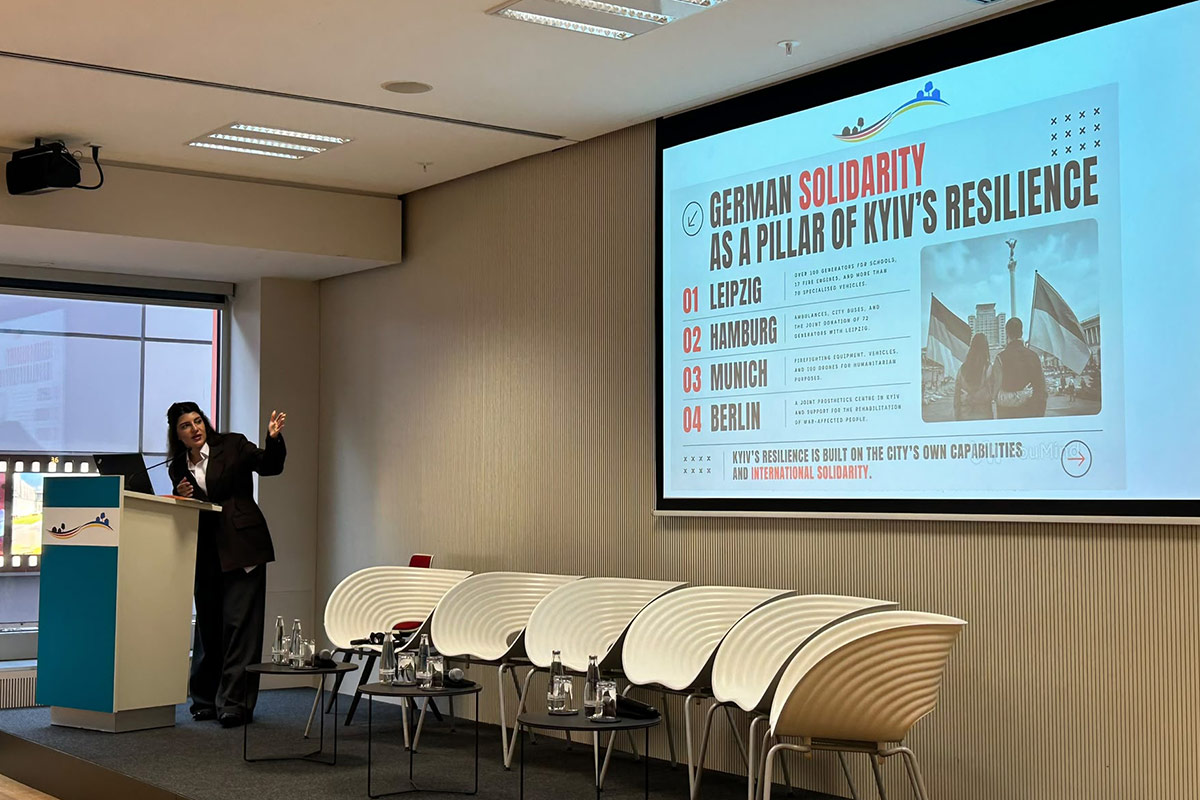
critical infrastructure, which is also a target of Russian attacks. Disinformation is being used, firstly, to sow uncertainty about Western support for Ukraine. Secondly, disinformation campaigns are directed against the warning systems that alert the population during attacks. False information about danger situations and attack targets spreads above all on social media, partly steered deliberately from Russia and partly by bloggers who spread incorrect information in an unprofessional manner. The central problem, she said, is the speed of the platforms: fact-checks and corrections often come too late.
‘Propaganda doesn’t play with facts but with doubts.’ – Dinara Habibulaieva
Vitaliy Zhylenko, adviser to the mayor of Sumy, made clear what consequences false information can have. He emphasised how important media education is for young people.
‘Sumy is only 30 kilometres from the Russian border. We often have 16 hours of air-raid alerts a day and little advance warning. When false information about attack targets is spread, people panic or lose their lives.’ – Vitaliy Zhylenko
Panel Discussion: Learning from One Another
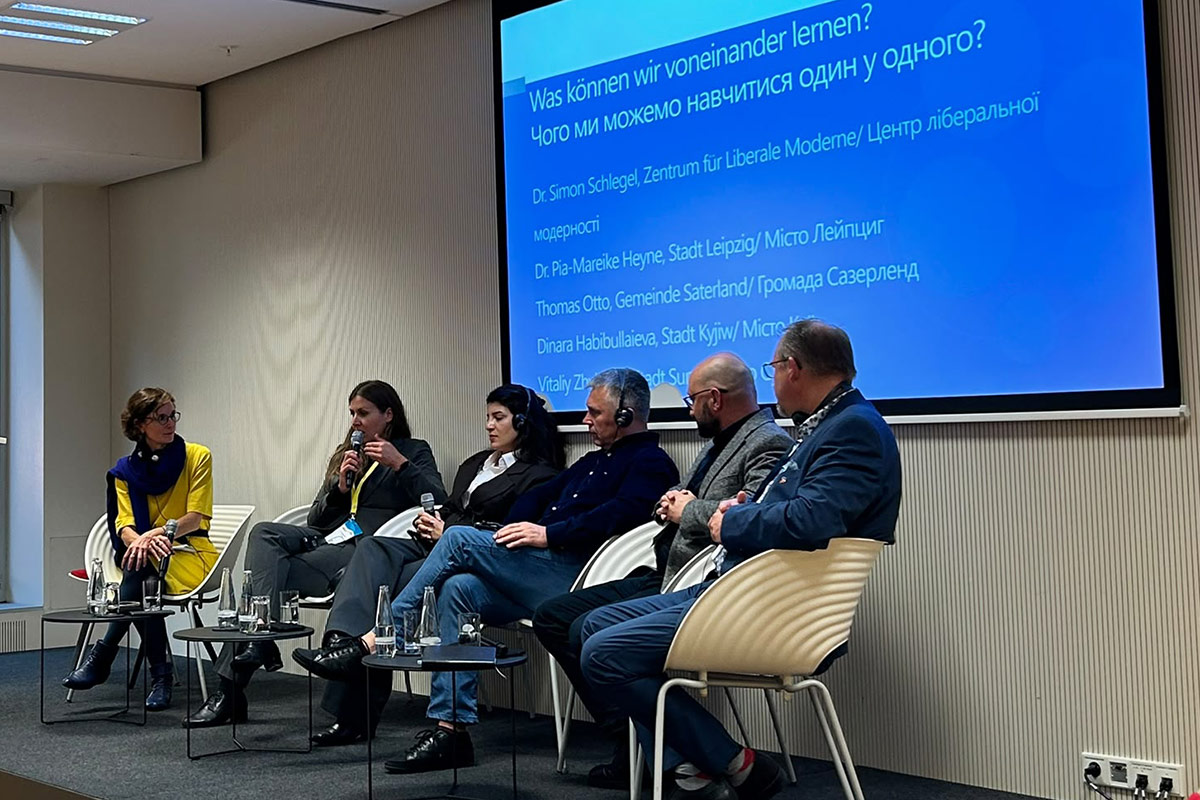
In the panel discussion that followed, Dr Simon Schlegel, director of the Ukraine Programme at the think tank Center for Liberal Modernity (LibMod), spoke about learning from one another. He highlighted the effectiveness of prebunking: people are informed in advance about typical manipulation techniques so that they can recognise and fend off disinformation before it spreads. Debunking, by contrast, refutes false claims only after the fact.
Asked what municipalities could do better, Dr Pia-Mareike Heyne replied: ‘I wouldn’t do anything differently, I would do more. We know everything we need to know, and what we don’t know, our partners do. So we simply have to do more.’
Approaches to Solutions: Strengthening Trust and Promoting Media Literacy
Two strategies stood out among the solutions. First, it is important to strengthen the population’s trust in public institutions and public information. Second, media literacy must be promoted early. At the same time, both the general public and municipal staff should be made more aware of disinformation.
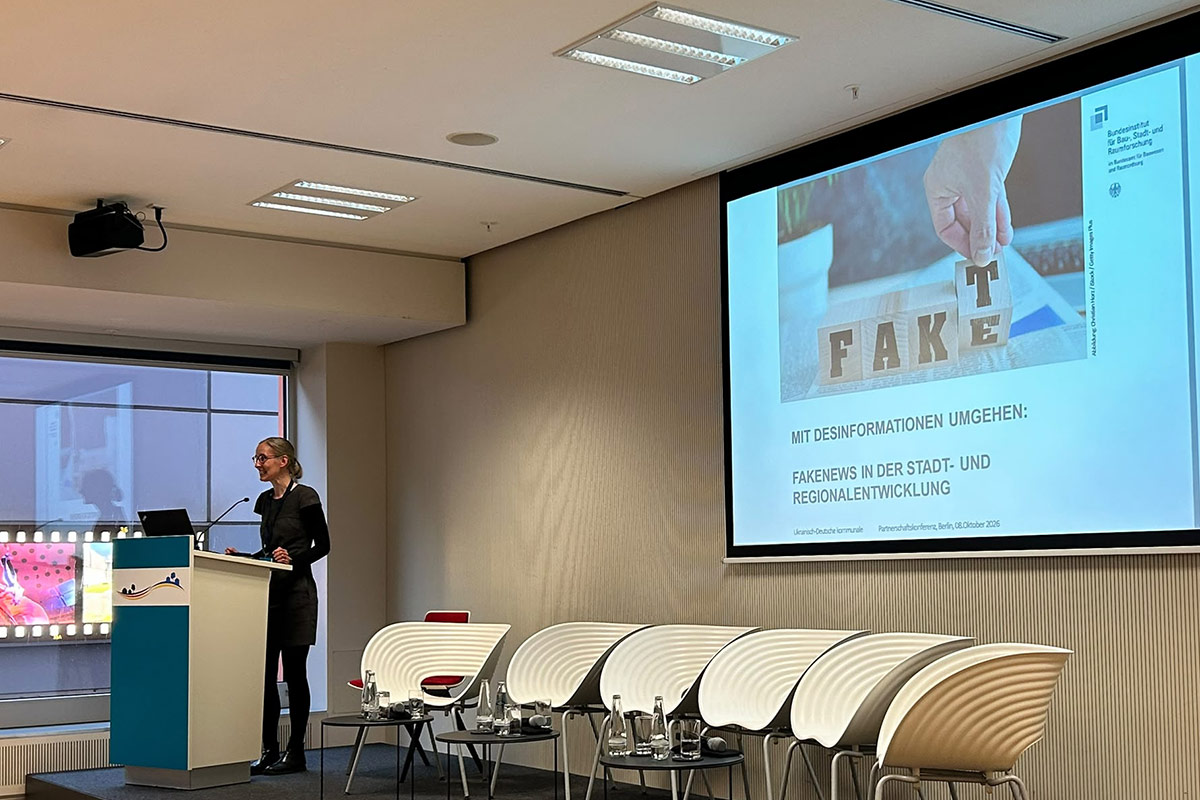
Dr Andrea Jonas of the Federal Institute for Research on Building, Urban Affairs and Spatial Development (BBSR), part of the Federal Office for Building and Regional Planning (BBR), presented the issue ‘Mit Desinformation umgehen’ (‘Dealing with Disinformation’). It describes counter-strategies to disinformation campaigns and offers guidance on how to shape the contested information space in urban and regional development in a democratic and future-proof way.
Conclusion
The expert forum showed that disinformation cannot be prevented entirely, but municipalities can prepare for it. What matters most is the population’s trust, which administrations must build in everyday life before a crisis strikes – both externally and within the administration itself. This includes fast and reliable communication, prebunking rather than mere after-the-fact correction, and media literacy for all. The Ukrainian experience shows how far disinformation can go and how important protected information channels are. It is also crucial to apply existing knowledge consistently. Or, as Pia-Mareike Heyne put it: simply do more.
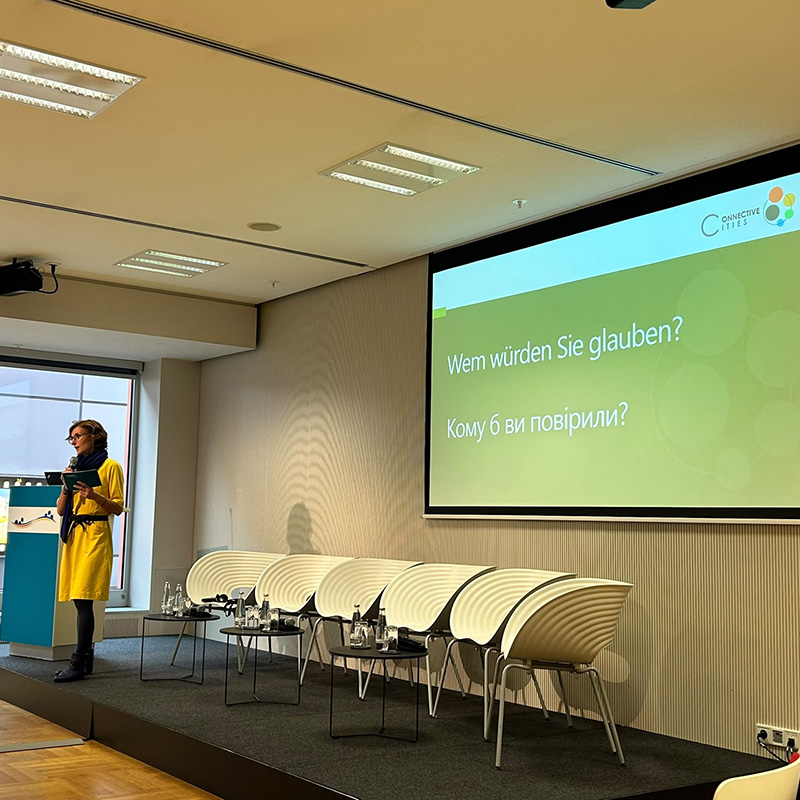
© Connective Cities | Sibylle Loyeaux facilitated the event
Categories: