

The Digital Twin Platform of Bağcilar, Türkiye
How a municipality in Istanbul combines citizen services with data-driven urban risk management
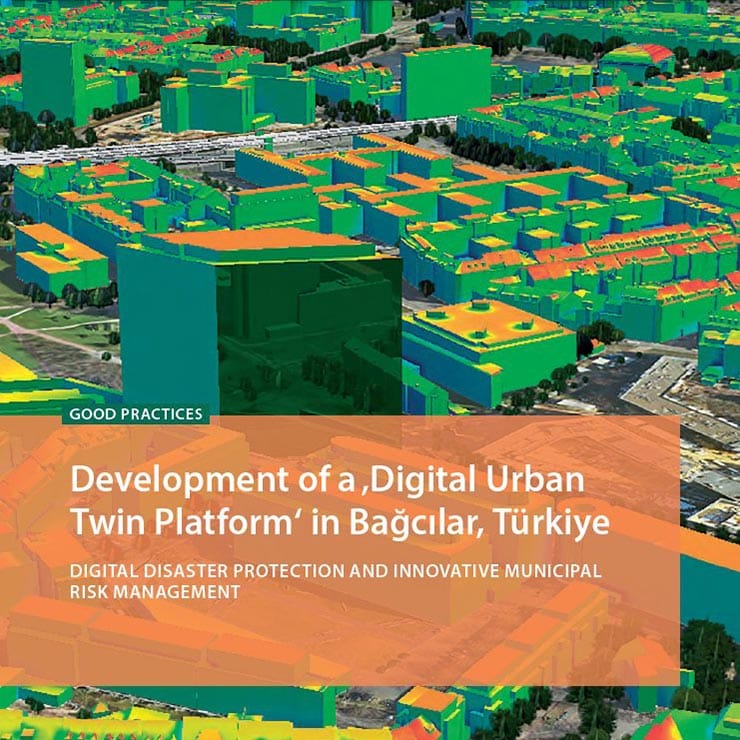
Bağcılar is one of Istanbul’s most densely populated districts, with approximately 710,000 inhabitants. Located on the coast of the Sea of Marmara, it covers an area of about 22 square kilometers. As a municipality in a region with a high risk of earthquakes, Bağcılar faces the urgent task of taking precautions to protect its population and urban systems in the event of a crisis. To this end, the municipal administration has been driving digital transformation since the 2000s and has conducted a comprehensive inventory of existing building structures – information that has been incorporated as data into a digital 3D model of the municipality.
With this ‘Digital Urban Twin Platform’, the administration aims to enable faster assessment of situations in emergencies and disasters. Digital simulation of risk scenarios – such as tsunamis following earthquakes – allows for improved civil protection measures and necessary adjustments to urban systems. Furthermore, continuous digital monitoring of the building stock enables targeted on-site inspections of building regulations, thereby increasing administrative efficiency. Citizens can access the platform via an app to book various municipal services.
According to Cüneyt Yilmaz, head of the IT Department at Bağcılar, the central criterion for the applicability of the platform is the creation of a sustainable data foundation.
The documentation describes in detail the development process, activities and future application areas of the continuously evolving digital twin platform.
Author: Lennart Kreuzfeld
Copyright: Connective Cities
© Bağcılar Municipality
Categories: