

19th German National Urban Development Policy Congress
"Acting together, moving faster, thinking ahead: shaping cities for everyone"
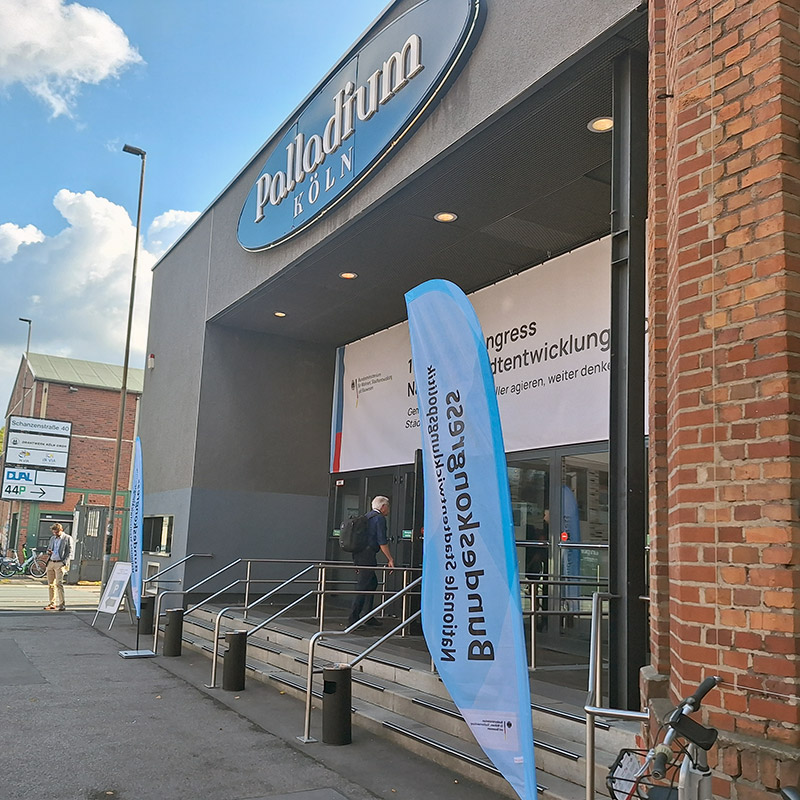
How can cities and local authorities become more capable of taking action whilst remaining liveable, equitable and sustainable places? This question stood at the heart of the 19th National Urban Development Policy Congress, held in Cologne from 14 to 16 September 2026. Under the motto “Acting together, moving faster, thinking ahead: shaping cities for everyone“, representatives from politics, administration, academia, business, planning and civil society came together for around three days to discuss the future of urban development. The discussions centred on key future issues: accelerating planning and implementation processes, providing affordable housing, adapting to climate change, creating modern infrastructure, and establishing new forms of cooperation between different levels of government. The annual congress is organised by the Federal Ministry for Housing, Urban Development and Construction (BMWSB), in collaboration with the Conference of State Ministers for Construction, the German Association of Cities, and the German Association of Towns and Municipalities.
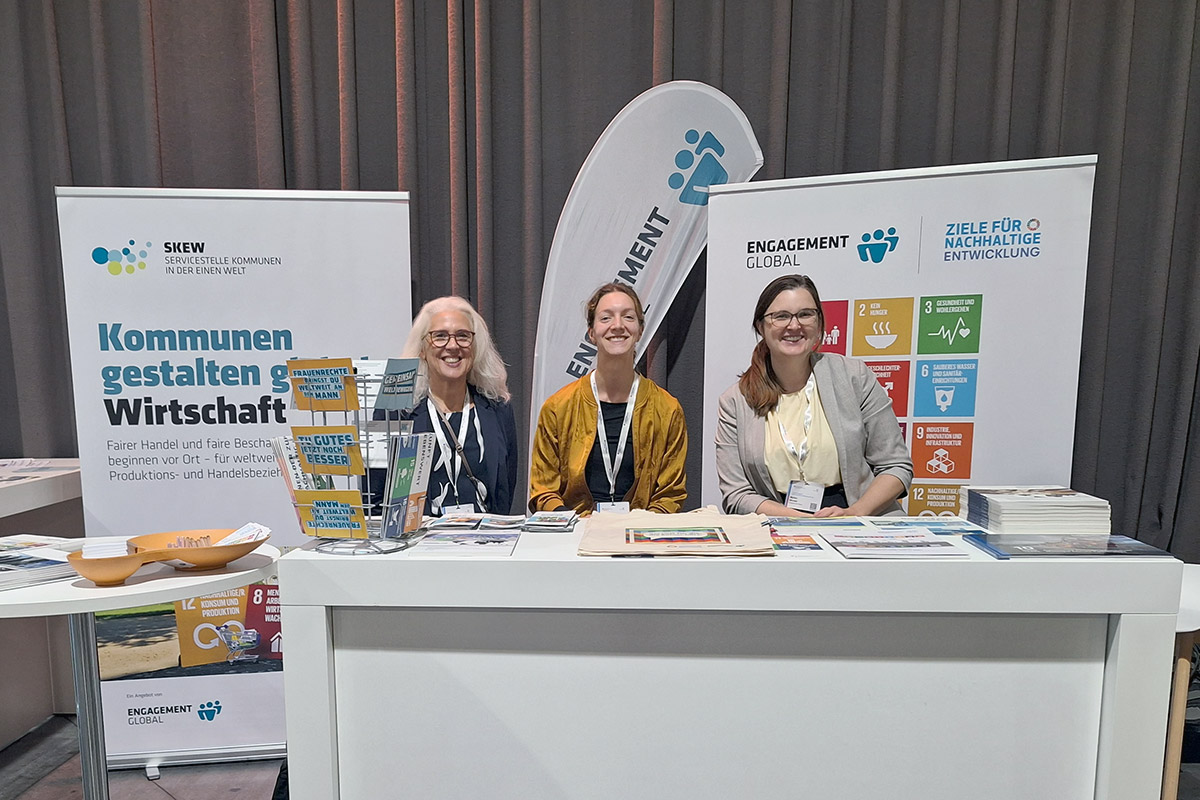
Alongside the plenary contributions, 17 specialist forums, six future arenas and a marketplace offered a wide range of opportunities for focused professional exchange. Connective Cities was represented at the stand of Engagement Global and the Service Agency Communities in One World (SKEW). It became clear that the value of peer-to-peer exchange on good practice – learning from one another to develop solutions for future-proof cities – was repeatedly emphasised: an approach that Connective Cities has been pursuing systematically for over ten years.
We take a closer look here at a selection of plenary contributions, two specialist forums and two future arenas:
Opening of the Congress
The Congress was opened by the Federal Minister for Housing, Urban Development and Building, Verena Hubertz, together with Cologne’s Lord Mayor, Torsten Burmester.
In her speech, Verena Hubertz referred to the so-called “Bau-Turbo” (construction accelerator). With this upgrade to the Federal Building Code and the accompanying further digitalisation of planning and approval procedures, as well as support for the conversion and repurposing of existing buildings, the Federal Government has already taken important steps towards greater speed and flexibility. At the same time, urban development must remain viable in the long term, safeguarding the common good, social justice, climate adaptation and urban planning quality.
To see how the Bau-Turbo is working in practice, the BMWSB is monitoring it through the dedicated “Bau-Turbo Implementation Lab”, which systematically evaluates experience from municipalities. Initial findings point to positive effects on cross-departmental cooperation between urban planning and the planning permission authorities – while the key question remains what local authorities use their new scope for action for: the Bau-Turbo creates flexibility, but does not in itself guarantee good urban development.
“To ensure that the people of Cologne can continue to enjoy a high quality of life in our city in the long term, we must act more swiftly in terms of housing construction, infrastructure and climate adaptation.’ Local authorities need greater scope for action, reliable framework conditions, and strong partners. Speed alone is not an end in itself. Our goal is to develop cities that are liveable, fair and sustainable for future generations too”, said Torsten Burmester, Lord Mayor of the City of Cologne
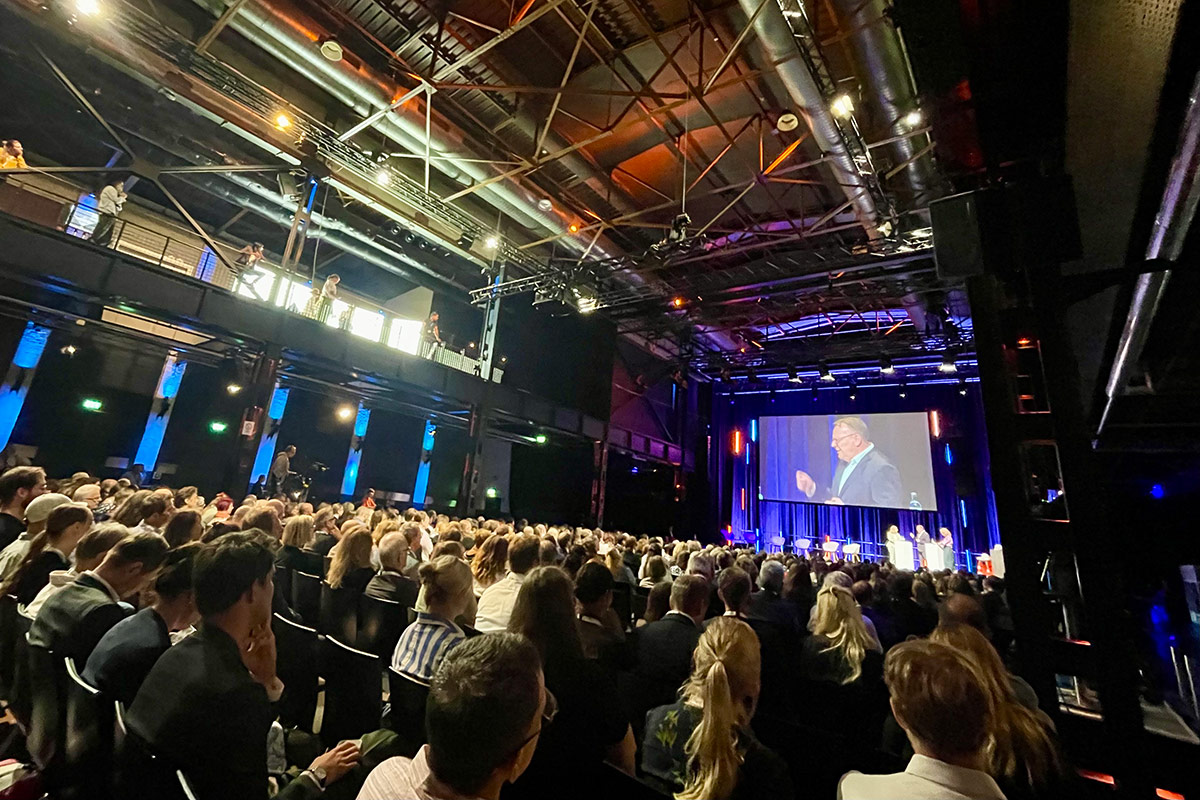
Keynote: “Shaping cities actively – caught between strategic vision, political dynamics and a regulatory jungle”
Prof. Dr Uwe Schneidewind, former Scientific Director of the Wuppertal Institute for Climate, Environment and Energy gGmbH, former Lord Mayor of the City of Wuppertal
In his contribution to the 19th Federal Congress, Uwe Schneidewind raised the fundamental question of whether cities can still be actively shaped at all, given growing transformation pressures – demographic change, digitalisation, climate adaptation, the heating and mobility transitions, and changing city centres – or whether urban policy is increasingly heading towards urban collapse. According to his analysis, these developments are taking place against a backdrop of increasingly diverse urban societies, strained local government finances, and an ever-tightening web of regulations.
Schneidewind identifies three key challenges. First, the financial overstretch of local authorities, which – unlike in previous crises – can no longer be absorbed through economic growth, since structural stagnation in the German economy is too pronounced and the federal and Länder budgets are themselves under too much financial strain to redistribute funds on a large scale. He therefore calls for a fundamental debate on how local authorities can remain functional in the 2040s despite having their staffing and budgetary resources halved.
Second, he describes a state of over-regulation, under which the outcome-oriented running of many cities is only made possible by particularly committed administrative staff willing to operate in legal grey areas. An effective reform of the state could provide an opportunity to systematically widen local authorities’ scope for action – for example through greater discretionary and experimental powers, new approaches to staff and organisational development, lump-sum funding schemes, a consistent focus on outcomes, closer inter-municipal and civil-society cooperation, and the targeted use of artificial intelligence at local level.
Third, he points to a deficit in political strategy: local politics, he argues, is often only capable of limited strategic thinking, dominated instead by “firefighting over concepts”, power politics, and a “culture of saying no”, while a focus on surface-level problems and emotive individual issues often stands in the way of structural debate. Schneidewind therefore calls for dedicated spaces capable of strategic work, in which urban development strategies can be devised and consolidated, as well as a debate on changed political governance structures. He proposed a new political culture: in order not to play into the hands of right-wing populist naysayers, he said, democratic parties bear a great responsibility to foster constructive cooperation at local level.
“Acting together, moving faster, thinking ahead: shaping cities for everyone”
Following the keynote, a panel discussed how these insights could be translated into local authority practice. Andrea Gebhard, President of the Federal Chamber of German Architects, argued for paying greater attention to good examples from other cities. Concepts such as the “sponge city” or participatory neighbourhood development showed how urban development could already be shaped innovatively and with an eye to the future today – local authorities should learn more from one another rather than reinventing every solution from scratch.
“We work on a non-discriminatory basis, yet we do prioritise major building projects – such as converting the former Karstadt building into housing, which benefits many people. I consider this legally unproblematic, and everyone in the city understands that,” said Tristan Vitt, Lord Mayor of Siegen, describing his approach to acting more quickly on urgent urban development matters.
Federal Minister Verena Hubertz stressed in this context the importance of flagship projects: making successful initiatives visible and accessible as models for other cities, she said, was an important lever for turning good ideas into good projects more quickly and at scale. She also underlined the fundamental requirement for capable urban development: “Urban development must not get stuck in the next procedure or the next round of coordination. Cities need pace and a clear compass. That is precisely why the two belong together: acting faster and thinking further ahead. Our aim is for good ideas to become good projects more quickly: more homes, better infrastructure, and green, heat-resilient urban spaces. To achieve this, we need to make procedures simpler and more reliable, and strengthen cooperation between all levels of government. Because, in the end, what counts is what actually happens on the ground.”
Forum 08 – Climate Adaptation as a Transformation Task: From Risk Analysis to Integrated Implementation
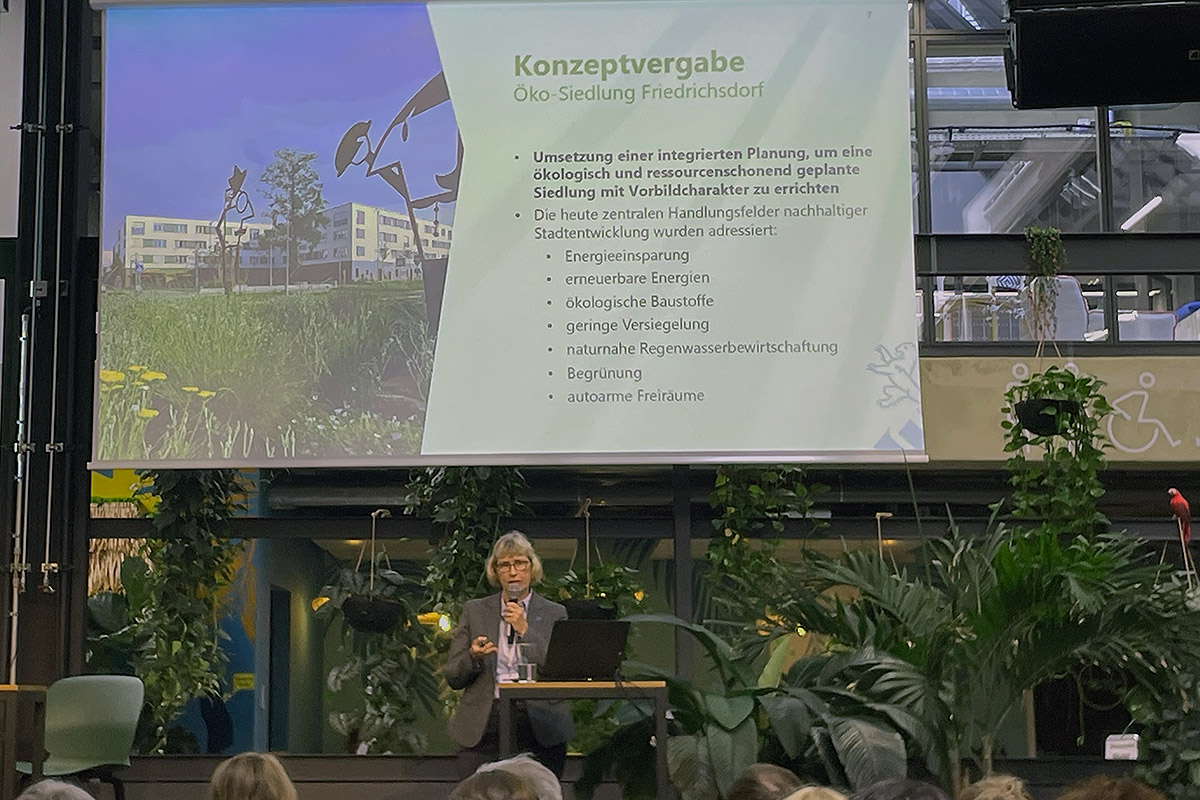
Sustainable climate adaptation measures pose considerable challenges for owners and local authorities in terms of cost-effectiveness and investment capacity. Innovative approaches to risk analysis and assessment, together with coordinated climate adaptation strategies involving private and public actors – from housing associations to local authorities, innovation drivers and process managers – are becoming ever more important.
A representative of Nassauische Heimstätte, a housing and development company majority-owned by the State of Hesse, presented successful practical examples, including the “sponge city” concept in Bad Hersfeld, the cross-municipal climate adaptation concept with heat action plan in the Main-Kinzig district, and the Schönhof quarter in Frankfurt. At the same time, she made clear: “The problem lies in the existing building stock.” The company has therefore commissioned a systematic assessment and mapping of climate risks across its properties. The greatest challenge today, she said, is heat protection. A pilot project on rainwater retention had to be discontinued due to vandalism – evidence that genuine commitment is needed from all stakeholders in a neighbourhood. Her conclusion: private actors need to be more closely involved; while climate measures in outdoor areas work well, implementation within the existing building stock remains difficult. The issue of greywater, too, should be given greater attention in future, rather than neighbourhoods relying solely on mains drinking water.
Henk Brockmeyer, Managing Director of NRW.URBAN, called for climate adaptation to move from being an additional criterion to becoming a standard task in urban development, one that must feature in every town-planning decision. Data and knowledge already exist, he said; what matters now is translating them into concrete decisions and planning. He named four key levers: factoring in climate adaptation at an early stage, making conflicting objectives transparent and negotiating them openly, more closely interlinking planning instruments with implementation, and strengthening staffing and financial capacity for delivery.
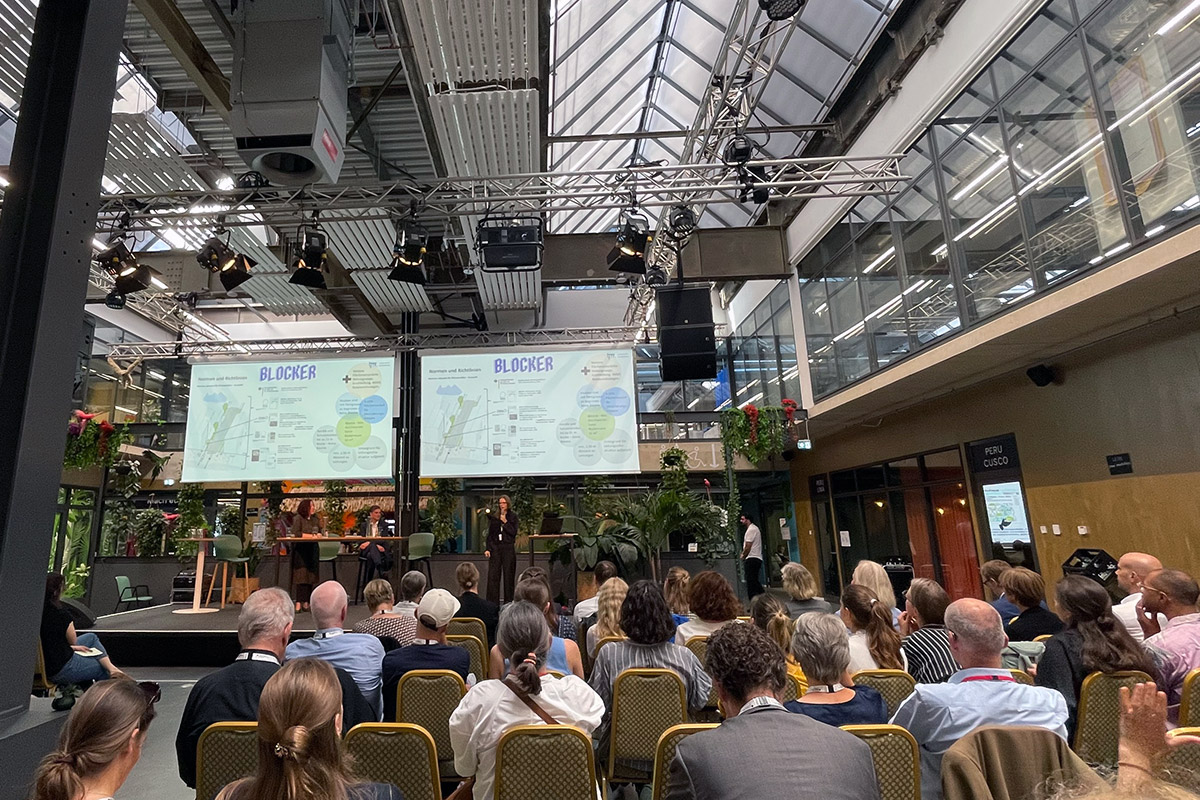
Kathrin Senner, Managing Director of the German Association for Housing, Urban Development and Spatial Planning, summed up the discussion: “Climate adaptation is no longer a task for the future – we are right in the middle of it.” Climate protection and the heating transition, she added, can only be implemented successfully if they are firmly embedded as a cross-cutting task within local administration and closely interlinked with existing integrated urban development concepts – with real-world labs and pilot projects serving as important tools for testing new approaches.
Forum 12 – How Does Resilience Find Its Way into Urban Development? Between Complexity and Capacity to Act
How do municipalities move from the vision of the sustainable city to concrete implementation, becoming more economically, ecologically and socially robust along the way? The forum examined how conflicting objectives around climate adaptation, public health and social justice can be overcome when cities are planned along the lines of a “green-blue urban agenda”, resilient to the effects of climate change and – including from a gender-equity perspective – fair in terms of use, access and participation.
Matthias Schäpers of the German Sustainable Building Council (DGNB e.V.) made clear that vivid imagery plays an important role in persuasion on the issue of climate adaptation, and that municipalities can make targeted use of this potential. As an example, he pointed to the concept of “climate twin cities” in Europe: an analysis by the Federal Environment Agency shows that the climates of German regions have already shifted to such an extent that many cities now have a climate that, 50 years ago, prevailed 100 to 600 kilometres further to the south-west – an image that makes the urgency of climate adaptation tangible, without suggesting that solutions can simply be copied across.
Dr Mary Dellenbaugh-Losse (urban.policy) stressed that resilience always requires a social perspective too: what matters is who is able to respond to climate risks and who is not – and why. This social perspective, she argued, can make urban development solutions more robust. Socially equitable heat planning, for instance, needs to take account of everyday routes and caring responsibilities, turning gender equity into a central issue of fairness. As an example of a typical conflict of objectives, she cited the tension between de-sealing surfaces and keeping them wheelchair- and buggy-accessible.
Arena I: The Future through Regional Cooperation – Scales, Formats, Content
The arena was hosted by Region Köln/Bonn e.V., which, as regional management for the 4,415 km² region of more than 3.6 million people, promotes regional cooperation in particular in the areas of sustainable spatial development, mobility, climate resilience, commercial land development, structural change and innovation support. The strategic instrument for this is the Agglomeration Programme, which initiates, connects and supports the implementation of regional future projects – among them the conversion of the Frimmersdorf power station in the Rhenish mining area, Cologne’s Parkstadt Süd development, and the Seequartier in Wiehl in the Bergisches Land.
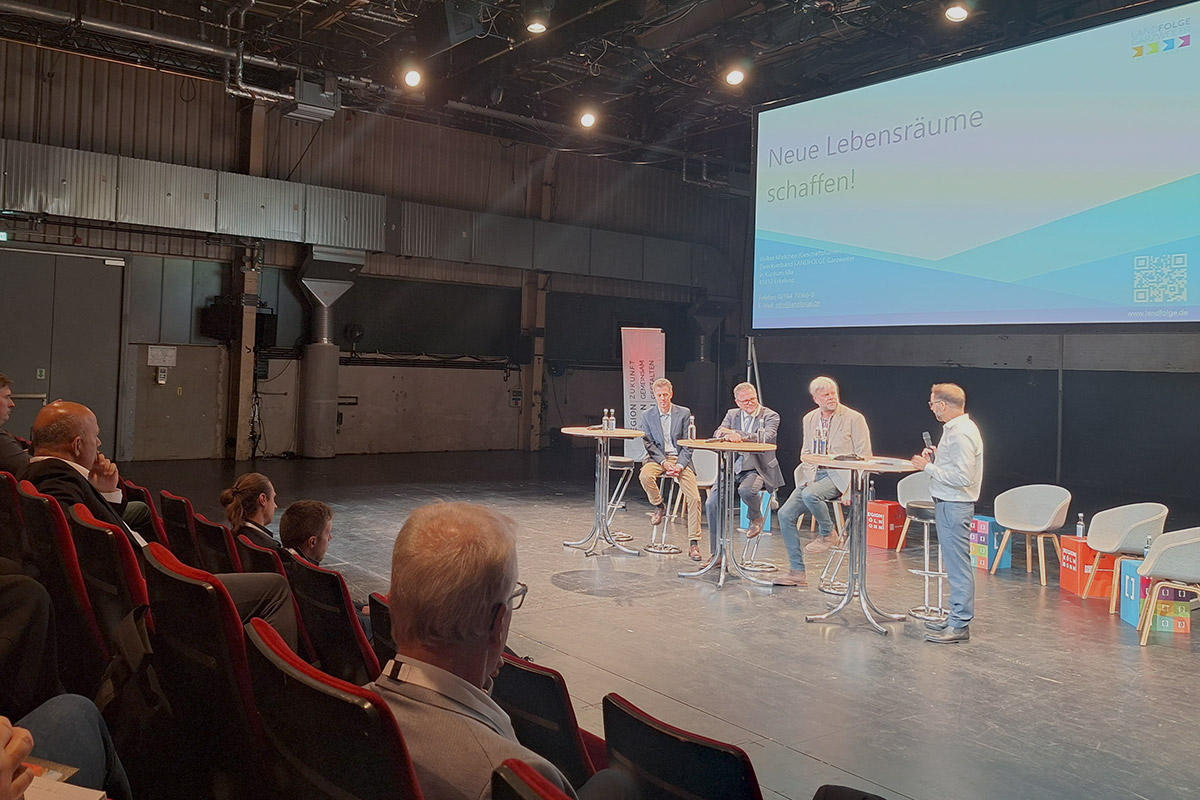
Overall, the arena showed that regional cooperation is seen as an important approach to tackling transformation tasks that individual local authorities can no longer manage alone. The introduction made clear that Germany has a long history of inter-municipal cooperation, which enjoys high acceptance in both politics and practice – regions are increasingly establishing themselves as an independent level of action between municipalities and the Länder or Federal Government, for example in securing funding. A further input identified regional economic and location development, start-up and innovation support, transport and mobility issues, structural change, and land-use and spatial planning as the key substantive fields of regional cooperation. A marketplace featuring existing regional associations and networks – including exhibitors such as the German Garden Show Company, the Hamburg Metropolitan Region and Zukunftsregion Ahr e.V. – also provided an opportunity for direct exchange with practitioners and for learning from existing examples of cooperation.
Arena V: AI in Urban Development – Opportunities and Challenges
As part of the Federal Building Ministry’s Smart City Dialogue Initiative, the City of Gelsenkirchen launched the URBAN.KI project. Marlene Damerau (gkd-el) presented the initiative: from 130 expressions of interest, nine use cases were identified across six areas, including urban planning, mobility, the environment and climate protection, IT security, civil protection and administrative processes A new institute focusing on AI and urban development is also in the planning stage. The institute will foster the exchange of experience, provide advice, and ensure the continuity of inter-municipal collaboration on potential solutions. Five use cases were presented, and all of these are freely available to local authorities as open code.
MapChatAI – Navigating with AI: the map chatbot for greater digital participation
Together with the City of Leipzig, URBAN.KI is developing an AI-powered map chatbot that gives citizens – including those with disabilities or limited language skills – low-threshold access to geographic information via text or voice input, for example: “Where is the nearest accessible entrance?”
Sursentia & aviary – Aerial image analysis & smart analysis of urban areas
Together with the Recklinghausen and Unna districts, URBAN.KI is developing two platforms for AI-supported aerial image analysis: “Sursentia” identifies sealed surfaces, green roofs and solar installations, while “aviary” goes further still, analysing urban structures and changes over time – both can be operated without specialist expertise and are more cost-effective than external providers.
ArchivAIr – Processing digital building files with AI
Together with the City of Heiligenhaus, URBAN.KI is using AI to digitise and classify analogue building files fully automatically – files are then available within seconds rather than days, and the approach is scalable and transferable to other local authorities.
AIMOS – AI-supported transport planning in Osnabrück district
Together with Osnabrück district, URBAN.KI uses anonymised usage and structural data to determine demand for on-demand transport services in rural areas, providing a sound basis for needs-based mobility services.
Prof. Dr Julia Frohne (Westphalian University of Applied Sciences) presented the URBAN.KI study: around a third of municipalities are already using their own AI systems, almost half are planning or trialling them, but a good 40 per cent also cited a lack of resources as the biggest obstacle.
The closing panel discussion focused on data quality, security, funding and skills development. Given the tight budgetary situation facing many municipalities, the recommendation was clear: when developing AI solutions, inter-municipal cooperation pays off, helping to avoid duplicate development and to pool resources. The takeaway: the cost of not using AI will one day be higher than the cost of developing it, applying it, and training staff to use it.
Conclusion
The 19th National Urban Development Policy Congress showed just how complex the challenges facing municipalities are today – from accelerated delivery through the Bau-Turbo, to climate adaptation and social resilience, through to the use of artificial intelligence Despite the wide range of topics covered, a common theme emerged throughout the three-day congress: effective solutions stem from dialogue, whether between specialist departments, regions, or local authorities nationwide. Once again, the Federal Congress proved to be a valuable platform, bringing together municipal practitioners from across Germany and encouraging mutual learning, thus making an important contribution to the sustainability of towns and municipalities.
Author: Burkhard Vielhaber, in cooperation with Nikola Krause and Marcella Sobisch
© Connective Cities
Regions:
Categories:
- Good Urban Governance
- Cities and climate change
- Democracy and public participation
- Energy efficiency and renewable energy
- Gender-sensitive cities
- Integrated urban development
- Municipal and regional networks
- Participation and urban planning
- Smart Cities / Digitalisation
- Sustainable mobility
- Urban management and administration
- Urban renewal