We are pleased to invite you to our upcoming virtual Insight Session on ‘nature-based solutions for urban resilience’, which will take place on July 15, 2026 from 1:00 PM to 2:30 PM CET.
Cities in sub-Saharan Africa, Germany, and other regions are increasingly relying on nature-based solutions to address flooding, climate risks, biodiversity loss, and the associated urban development challenges. However, integrating these approaches into municipal planning, management, and implementation remains a complex task.
This Insight Session brings together research, policy and community network perspectives to present practical approaches for planning, integrating and implementing nature-based solutions.
We invite the following discussion partners:
Andreas Wolter, President of Climate Alliance Presentation: From Local Action to Collective Impact: How Municipal Networks Advance Climate Resilience
Andreas Wolter will present the Climate Alliance network and highlight its role in supporting municipalities to strengthen local climate action. His presentation will provide important insights into how city networks learn from each other, promote knowledge exchange, advocacy, and collaboration, while simultaneously helping municipalities translate climate commitments into practical measures – such as nature-based solutions to strengthen municipal resilience.
McKenna Davis Senior Fellow and Coordinator for Nature-Based Solutions at Ecologic Institute, Berlin Presentation:Mainstreaming Nature-based Solutions: Insights and Practical Examples from the Urban Governance Atlas
McKenna Davis will share insights and practical examples from the Urban Governance Atlas and the Climate Adaptation Naturally project, highlighting how nature-based solutions can be integrated into municipal policy and planning.
Dr. Kirk B. Neu,Researcher in the fields of landscape architecture, landscape planning and urban resilience Presentation:Evidence-based Lessons on Planning Nature-based Solutions for Flood Resilience in Sub-Saharan African Cities
Drawing on research from Ghana and the wider Sub-Saharan African region, Kirk Enu will present practical lessons on how municipalities can use research evidence to plan and implement nature-based solutions for inclusive flood resilience.
The event offers participants the following:
practical examples of nature-based solutions for strengthening the resilience of urban flood zones;
Insights into the framework conditions for governance, policy and planning required for implementation;
Insights from the compatibility of research results with municipal decision-making processes;
Perspectives on the role of municipal networks in promoting climate protection measures; and
an opportunity to exchange experiences with practitioners and experts from different cities and regions.
The event will be held in English, with French translation provided.
We cordially invite municipal practitioners, urban planners, climate and resilience experts, researchers, development partners and other interested members of the Connective Cities network to participate.
We look forward to welcoming you to the event.
If you have any questions or require support, please contact: moses.munuve@giz.de
From 8 to 12 June 2026, Connective Cities, in partnership with the South African Local Government Association (SALGA) and the Waterberg District Municipality, organised an international expert mission on economic transition and green industrial development at the municipal level. The mission brought together municipal representatives, researchers, and experts from industry and practice from South Africa (SALGA, Waterberg District Municipality, and the local municipalities of Lephalale and Mogalakwena), Germany (the Economic Development Agencies of the Cities of Karlsruhe and Heilbronn, as well as the Baden-Württemberg RegioClusterAgency), Namibia (Lüderitz Town Council), and Kenya (the County Government of Nakuru). Participants exchanged experiences, discussed shared challenges, and explored the opportunities that the emerging green hydrogen economy—based on the production of hydrogen using renewable energy sources—offers for local and regional development.
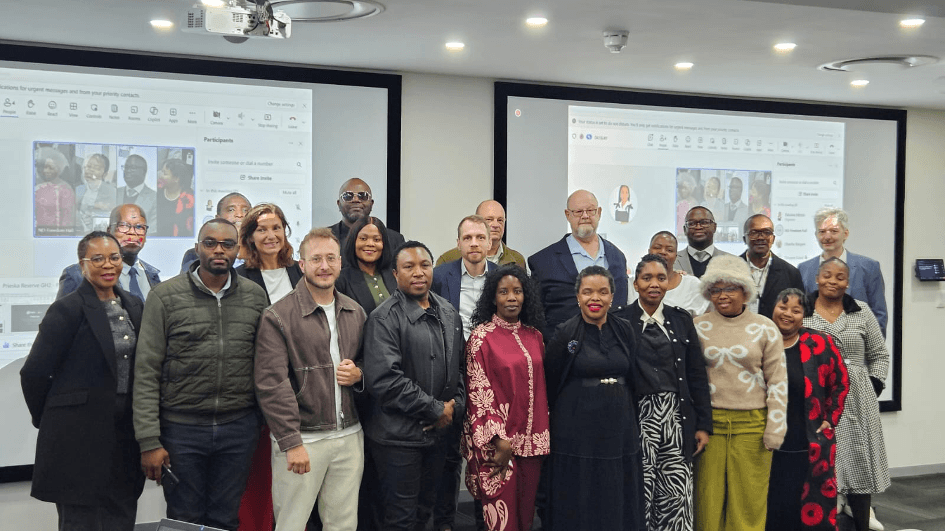
Visit at SALGA | Photo; Grace Karanja
The mission formed part of broader efforts for the Just Energy Transition and complemented the work of South Africa’s Just Energy Transition Municipal Council (JETMC), which is strengthening municipal readiness for a shift toward cleaner and more sustainable energy systems. Through policy discussions, technical presentations, and site visits to strategic infrastructure such as the Eskom Matimba Power Station and Exxaro Solar Power Station, participants gained valuable insights into the challenges and opportunities facing regions transitioning from coal-dependent industries.
Central themes of the mission were the role of green hydrogen in driving local economic development, industrial diversification, and job creation. Waterberg District Municipality highlighted the importance of ensuring that the transition is both environmentally sustainable and socially inclusive. Participants learned about progress made in Waterberg District municipality in cooperation with both Lephalale and Mogalakwena Local Municipalities, including municipal skills development initiatives, governance structures, funding mobilization efforts, and partnerships supporting green hydrogen capacity building.
The Waterberg Development Initiative (WDI) presented its vision for a coordinated regional development model that aligns municipalities, industry, and communities around shared economic and sustainability goals. Discussions also featured contributions from national government representatives, development partners, and municipalities already advancing hydrogen-related projects, demonstrating growing momentum behind South Africa’s hydrogen economy.
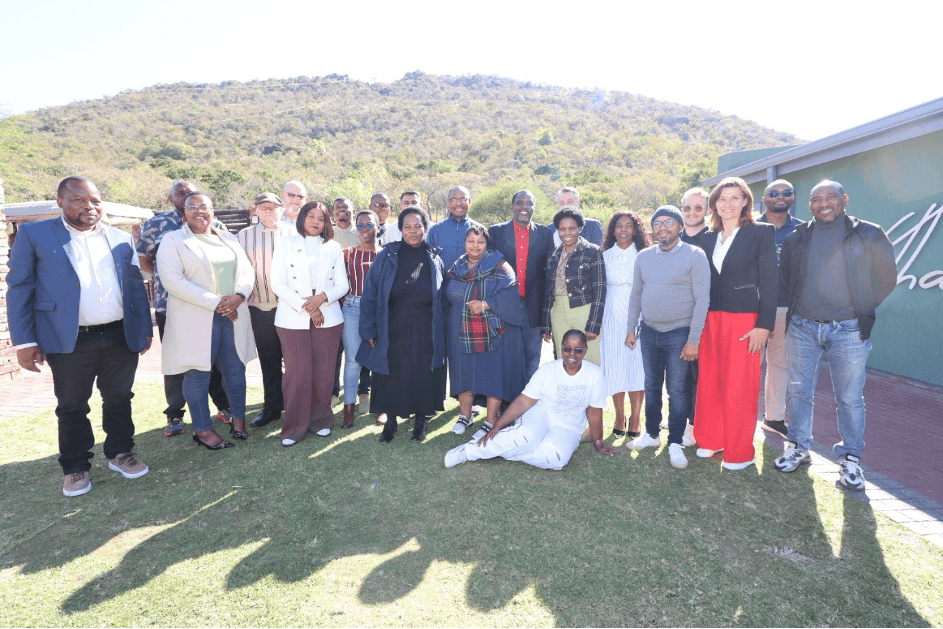
Final workshop with stakeholders in Waterberg | Photo: Elwin Gaoseb
The mission concluded with a strategy workshop, where participants jointly developed a 36-month roadmap for regional development. The roadmap identified priority actions in infrastructure development, skills readiness, investment attraction, and partnership building to support the creation of a future “Waterberg Hydrogen Corridor.” These outcomes complemented Hydrogen Cities Working group discussions on municipal capability development, finance mobilization, and energy access, while addressing challenges such as financing constraints and uneven municipal preparedness.
The expert mission reinforced the critical role municipalities play in South Africa’s energy transition. Through international collaboration, knowledge exchange, and practical planning, the initiative demonstrated how green industrialization can drive sustainable economic growth while ensuring communities remain at the center of the transition to a cleaner, more resilient future.
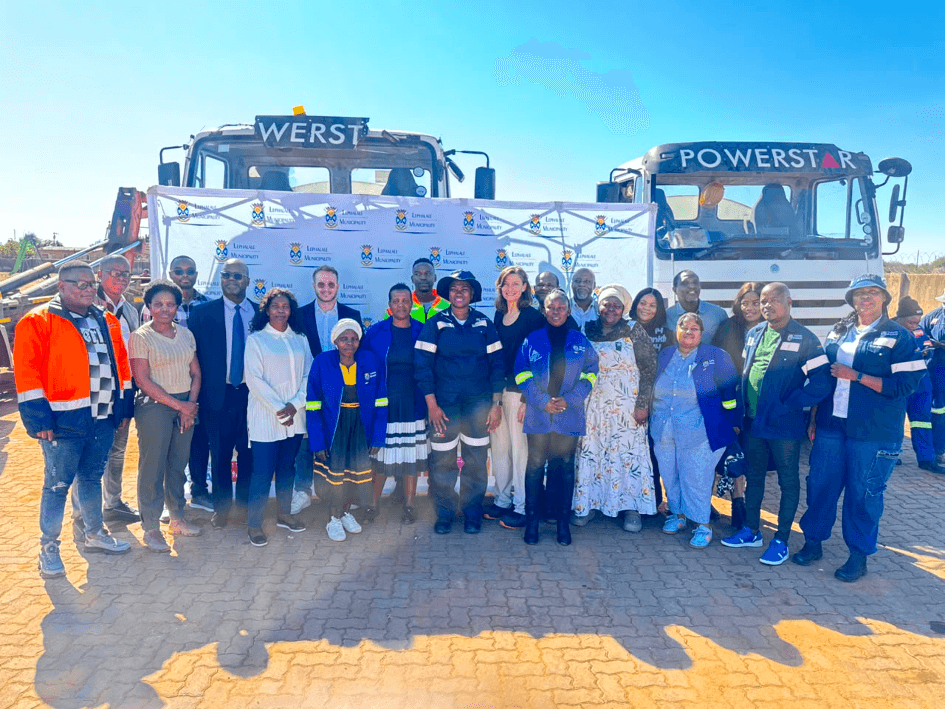
Meeting with Mayor and Employees at Lephalale Municipality | Photo: Elwin Gaoseb
Language: English – French simultaneous translation
How can forests be planted sustainably in urban areas with chronically low precipitation and/or heat waves?
The Miyawaki-Method is a reforestation technique which has become popular in recent years due to its efficiency in growing vegetation in small urban spaces within a very short time period. In order to accelerate growth, the method builds on three key principles: The exclusive use of native plant species that are used to the soil; which are planted in extreme density; and form a multi-layered ecosystem featuring canopy, sub-canopy, shrubs and ground cover tiers. A videographic overview of the Miyawaki-Method can be found here.
Not only can micro forests serve as cooling green corridors in urban geographies; they may also be classified as nature-based solutions, which are essential for various ecosystem services, not least disaster prevention. According to the method’s founder Dr. Akira Miyawaki, native forests are nearly thirty times more resilient and offer protection against natural disasters compared to non-native species.
While the Miyawaki-Method has been developed in Japan in the 1970s, it only recently has become to spread globally, with many applications in India but also growing popularity in Europe, North America and other parts of the world. However, as droughts become more frequent around the globe, watering-intensive Miyawaki afforestation may also face increasing difficulties in implementation. Can Urban Micro Forests therefore be considered a suitable intervention and nature-based solution in municipalities affected by frequent drought – for instance across Africa and the Middle East?
The MIYA-forest network from Eberswalde, Germany is one recent example of civil society-led practices to spread tiny forests according to the Miyawaki-method, both in Germany and the MENA region. In this ConnectiveCities Insight session, Board Member Stefan Scharfe will present the association’s best practices, which—in addition to planting more than 40 micro-forests since 2021—also include educational and scientific work.
As our second speaker, Deema Assaf from TAYYŪN, an Amman-based research and ecological design studio, will share her experience planting Miyawaki forests. The architect pioneered the Miyawaki method in the Middle East, planting the region’s first such forest in Amman in 2018 and going on to lead multiple native forest plantings across the city. Her work spans native seed harvesting and propagation, community planting workshops, and regenerative, permaculture-based design.
The new regional learning process for Southeast Europe and the South Caucasus will kick off with a dialogue event in Tirana (16–18 June 2026). The focus will be on: “Planning for Municipal Resilience – Safeguarding Critical Infrastructure through Risk-Informed Development.”
The event brings together professionals from municipalities as well as municipal enterprises from nine countries: Albania, Armenia, Georgia, Germany, Kosovo, Montenegro, Serbia, Türkiye and Ukraine. Even ahead of the event, the learning process has attracted strong interest from municipal administrations and service providers, highlighting both the relevance of the topic and the growing pressure to act across the region.
Participating municipalities represent a wide range of sizes, structures and fields of municipal service delivery. These include, among others, Gjirokastër, Roskovec and Mat in Albania; Gavar and Noyemberyan in Armenia; Poti and Gori in Georgia; Drenas in Kosovo; Cetinje in Montenegro; Priboj and Kraljevo in Serbia; İznik in Türkiye; as well as Dnipro, Drohobych and in Ukraine. From Germany, participants include municipal representatives from the City of Leipzig as well as experts from Cologne’s municipal wastewater utility.
This diversity enables a highly practice-oriented exchange on different governance contexts, institutional frameworks and challenges in municipal development.
Starting point: Increasing risks to critical infrastructure
Municipalities are facing increasingly complex challenges: climate-related extreme events, rapid urbanisation, as well as technological and hybrid threats are intensifying the vulnerability of critical infrastructure such as energy, water, transport and IT systems.
At the same time, there is often a lack of structured opportunities to systematically exchange and further develop existing experiences and solutions. The learning process addresses this gap by combining municipal practice with a structured, application-oriented exchange.
Dialogue event in Tirana: From exchange to joint prioritisation
The dialogue event marks the starting point of the multi-phase learning process and lays the foundation for continued collaboration. Its objective is to deepen and compare existing risk and vulnerability analyses and to define initial priority areas for action.
The focus will be on:
exchanging existing risk and vulnerability assessments across municipalities
comparing different approaches through peer-to-peer learning
identifying key weaknesses in critical infrastructure systems
defining priority intervention areas and first concrete steps
In addition, remaining data gaps will be identified and approaches developed to address them throughout the learning process.
A structured learning process with a focus on implementation
The dialogue event is the first building block of a year-long learning process. It combines in-person formats with virtual exchange and aims to move from analysis to concrete implementation.
The methodological framework is based on an integrated approach to risk-informed municipal development, in which risk analysis is systematically embedded into planning and decision-making processes.
Tirana was deliberately chosen as the venue, as it exemplifies dynamic transformation processes in the region. The city provides an ideal setting to discuss challenges and solutions related to resilience and critical infrastructure in a practical and collaborative way.
How can AI-generated images help municipalities discuss affordable housing and informal settlement upgrading – without losing sight of implementation challenges?
At the World Urban Forum 13 (WUF13) in Baku, Connective Cities will contribute to the official WUF Academy programme with an interactive event on AI-based visualisation for affordable housing and informal settlement upgrading. The event will take place on 21 May 2026, from 09:30 to 11:30 Baku time (UTC+4).
Organised by the German Association of Cities in cooperation with Connective Cities and the participating municipalities, the event brings together urban practitioners from different regions to work with real urban cases and explore how digital visualisation can support dialogue, participation and peer learning.
About the event
The format builds on the recent Connective Cities working group exchange on affordable housing, including an AI-based visualisation exercise under the umbrella of the New European Bauhaus.
At its core is a practical city exchange: participating municipalities and institutions provide images of selected housing areas, informal settlements and urban transformation sites. WUF participants will work in groups with these prepared cases and use AI-generated visual scenarios as analytical and dialogue-oriented tools — not as final planning products or implementation promises.
The focus is not on the technology itself, but on the urban development questions that the images make visible. How are housing needs, affordability, density, land use, public space, infrastructure and social inclusion negotiated in different contexts? How can visual scenarios support communication between city administrations, communities, technical experts and decision-makers?
The event will also address the limits and risks of AI-supported visualisation. In the context of affordable housing and informal settlement upgrading, attractive images alone are not enough. They need to be linked to questions of financing, operation, maintenance, climate resilience, land ownership, social safeguards and clear implementation responsibilities.
The format was developed and coordinated by Jelena Karamatijevic, Connective Cities, as part of the Connective Cities peer-learning approach.
The event will be moderated by Prof. Hilmar von Lojewski, Association of German Cities. The practical AI exercise will be facilitated by Damiano Cerrone, co-founder of CoPlan AI.
In addition, the GIZ Sustainable Urban Development Programme in Santa Cruz, Bolivia, represented by Ruvi Suárez, will contribute a short methodological reflection on AI-supported scenario thinking and impact assessment.
City exercise examples
Selected examples from the city exercises show how real urban situations can be translated into AI-supported visual scenarios for discussion, reflection and peer learning.
The Academy event will include practical city examples from:
Nairobi City County / Kenya – Godfrey Ngugi, Director of Urban Renewal
Huye District / Rwanda – Richard Ndicunguye, Senior Advisor / Adaptation and Green Cities
Mariental Municipality / Namibia – Sunday Haimbodi, Building Inspector
Urban Development Fund, Egypt / Cairo – Dr. Marwa Ahmed, General Manager, International Cooperation and Community Participation Department
Hebron Municipality / Palestine – Husam Shweiki, Head of the Architecture Department
Berlin Senate Department for Urban Development, Building and Housing / Germany – Lars Loebner
The Connective Cities learning process on “Nature at the Heart of Urban Resilience” was officially launched through a three-day kick-off workshop held in Naivasha, Kenya from 21 to 23 April 2026, bringing together 20 municipalities and cities from across Sub-Saharan Africa and Germany, alongside over 40 urban practitioners, technical experts, and institutional partners.
The workshop marked the starting point of a longer-term engagement aimed at supporting local governments in translating their urban challenges into concrete, implementable solutions through structured peer exchange and technical support.
Cities at the Frontline: Climate Pressures and the Need for Nature-Based Solutions
Urban areas are increasingly where the impacts of climate change are most visible—and most intensely felt. Across Sub-Saharan Africa, cities and municipalities are facing a convergence of pressures: rapid urbanisation, environmental degradation, and growing exposure to climate risks such as flooding, drought, and heat stress. These pressures are not isolated; they interact in complex ways, amplifying vulnerabilities and placing strain on already limited infrastructure and institutional capacities.
At the same time, local governments are not passive actors. As highlighted in the opening of the workshop, they are at the forefront of both experiencing and addressing climate challenges.
Andreas Wolter, President of Climate Alliance and City Councilor of Cologne, emphasized the critical importance of ensuring that cities are actively represented in the global climate discourse, as municipalities are where climate impacts are most immediate and where solutions must ultimately be implemented.
Complementing this perspective, Dr. Nelson Maara, representing Nakuru County, highlighted the importance of preserving ecosystem services as a foundation for resilience, drawing on local experience to illustrate how the degradation of natural systems directly translates into increased urban vulnerability for climate-related risks.
Together, these perspectives reinforce a growing recognition that municipalities must play a stronger role in shaping climate action, as they are responsible for translating high-level commitments into practical, locally grounded solutions. In this context, Nature-Based Solutions (NbS) offer a critical pathway—enabling cities to address environmental, social, and economic challenges simultaneously through the restoration and sustainable management of ecosystems. However, while the relevance of NbS is increasingly acknowledged, the ability to move from concept to implementation remains a complex issue. This is where the Connective Cities learning process plays a critical role, equipping municipal practitioners with the technical capacities and knowledge required through structured exchange formats.
From Exchange to Implementation: The Role of the Learning Process
The learning process is built on the principle that cities and municipalities learn most effectively when they engage directly with one another on real, shared challenges. Rather than focusing on abstract knowledge transfer, it creates a structured space for practitioners to jointly analyse their challenges, exchange experiences, and progressively develop reform measures—concrete actions or project concepts that can be taken forward within their local contexts.
Additionally, another key component of the Learning Process methodology is to strengthen the capacities of urban practitioners to design, plan, and advance these measures within their institutional environments. The peer-to-peer approach is particularly important given the diversity of participating municipalities, bringing together different governance structures, capacities, and experiences while highlighting that many of the underlying challenges are fundamentally shared.
The learning process is therefore not about transferring solutions from one context to another, but about enabling cities to adapt and refine ideas through dialogue, ensuring that they are both context relevant and practically implementable.
From Framing to Practice: Expert Inputs and Panel Insights
Building on the broader objectives and structure of the learning process, the kick-off workshop in Naivasha marked the first step in translating this approach for peer learning into practice. Over the course of three days, participating cities and municipalities engaged in a structured exchange that combined expert inputs, panel discussions, and peer learning sessions, allowing them to ground NbS in their own urban realities.
The expert inputs provided the theoretical basis for the participants to better understand the importance of NbS for sustainable municipal development:
Prof. Johanes Belle introduced NbS through the lens of ecosystem services, highlighting how natural systems provide essential functions such as flood regulation, water purification, and climate moderation.
In addition to their core infrastructural functions, Nature-Based Solutions also generate co-benefits, including improvements in psychological well-being of local residents, increased soil quality, and opportunities for job creation. By framing NbS in terms of these services, Dr. Belle underscored that ecosystems should be understood as functional infrastructure, central to urban resilience rather than peripheral environmental assets.
For example, wetlands and urban green spaces can absorb excess stormwater, reducing flood risk while simultaneously improving water quality in rapidly growing urban areas. This perspective was particularly relevant for participating cities, many of which are experiencing the direct consequences of ecosystem degradation in the form of increased flood risk, declining water quality, and heightened climate vulnerability.
The input from Deputy Mayor William Wolfgramm, from the City of Cologne’s Climate Department demonstrated how such concepts of NbS can be translated into practice within a structured comprehensive planning framework by presenting the City of Cologne’s ‘urban green space masterplan’. Drawing on concrete examples, the presentation showed how NbS are embedded within long-term planning instruments and supported through institutional coordination, data-driven analysis, and dedicated funding mechanisms.
Measures such as de-sealing urban surfaces, expanding green corridors, and promoting green roofs and rainwater retention systems illustrated how NbS can be systematically implemented at scale when anchored in governance structures, through long-term planning processes and through taking a ‘whole-of-society’ approach.
The panel discussion further reinforced this shift from concept to application. Drawing on experiences from cities that had previously engaged in similar processes, panelists demonstrated through experiences from previous Connective Cities learning processes how initial ideas developed through peer exchange can evolve into tangible outputs—whether through feasibility studies, planning instruments, or pilot interventions. The discussion highlighted various concrete lessons:
eThekwini (South Africa): Emphasised the importance of adopting an all-of-society approach to disaster risk management, bringing together local government departments, technical experts, and communities. Particular attention was given to strengthening communication channels with local populations and ensuring that NbS are embedded within long-term, city-wide programmes and institutional frameworks.
Abelkuma, Accra (Ghana): Highlighted the importance of breaking down institutional ‘silos’ and ensuring coordination across departments in the development of foundational instruments such as urban greening guidelines and implementation plans. The intervention further underscored the need to strengthen technical detailing, local ownership, and financing pathways in order to move from concept to implementation.
Berlin (Germany): Emphasised the importance of clearly scoping technical challenges, anchoring them within appropriate institutional frameworks, and establishing clear lines of accountability. They further highlighted how inclusive, participatory processes—bringing together multiple stakeholders, including local communities—can strengthen implementation, supported by robust control mechanisms such as data systems, continuous monitoring, and regulatory frameworks.
Lusaka (Zambia): Emphasised the critical role of data collection and feasibility studies in advancing projects from concept to implementation. They highlighted the importance of partnerships in mobilising financing and noted the value of city networks in providing technical support and facilitating access to funding opportunities.
Commonly shared among the panelists was the insight, that while ideas often originate through exchange, their success depends on strong ownership —both in terms of institutional anchoring and the involvement of all relevant stakeholders— alongside the ability to translate concepts into structured an financeable interventions.
Cities in Dialogue: From Individual Challenges to Shared Patterns
With these insights in mind, the workshop moved into the peer learning phase, where participating cities and municipalities began to unpack their own challenges in greater detail. To facilitate focused exchange, participants were organised into five moderated working groups:
Group 1: Babadjou (Cameroon), Méagui (Côte d’Ivoire), Natitingou (Benin), Commune de Nanga-Eboko (Cameroon)
Group 3: Tanga City (Tanzania), Köln (Germany), Mazabuka (Zambia), Ilemela (Tanzania)
Group 4: Embu (Kenya), Nakuru (Kenya), Mwanza (Tanzania), Tarkwa-Nsuaem (Ghana)
Group 5: Bosaso (Somalia), Sinda Town Council (Zambia), Kimberley (South Africa), Berlin (Germany)
Within these groups, municipalities presented their challenges, received peer feedback, and began refining possible directions for action. While the discussions initially reflected diverse local contexts, a clear pattern of shared challenges quickly emerged.
Across the groups, municipalities repeatedly highlighted issues related to ecosystem degradation, water management, waste systems, and rapid urbanisation. These challenges were often closely interconnected. For instance, inadequate waste management was identified as a key contributor to flooding, as blocked drainage systems exacerbate water accumulation during heavy rainfall. Similarly, unplanned urban expansion into wetlands and riverbanks was found to increase exposure to climate risks.This reinforced the understanding that urban challenges are not isolated, but rather systemic in nature, requiring integrated responses that address environmental, institutional, and social dimensions simultaneously.
As discussions progressed, cities began to move beyond describing their challenges and toward identifying more structured pathways forward.
From Challenges to Action: Peer Recommendations and Emerging Directions
Through structured peer exchange, participants worked to refine and prioritize potential solutions. Rather than introducing entirely new ideas, this process helped cities to clarify the thoughts broad to the workshop and translate broad concepts into more concrete directions.
Key recommendations emerging from the discussions included the need to strengthen the evidence base for planning, through baseline studies, risk assessments, and feasibility analyses. Cities were also encouraged to integrate NbS within urban planning and governance frameworks, ensuring that interventions are embedded within long-term strategies rather than implemented as isolated projects.
Another strong theme was the importance of community engagement and behavioral change, particularly in areas such as waste management and environmental protection. Many cities recognised that technical solutions alone would not be sufficient without local ownership and awareness building measures.
Finally, there was a clear emphasis on the need to move toward structured project development, including cost-benefit analysis, clearer project definition, and preparation for financing.
From Ideas to Implementation: What Comes Next
While the initial phases of the workshop focused on understanding challenges and identifying potential solutions, time was also dedicated to looking ahead within the year-long learning process. The emphasis shifted towards how these ideas can be further developed into implementable and financeable interventions.
To support this, inputs were provided by the City Climate Finance Gap Fund and the Covenant of Mayors in Sub-Saharan Africa (CoM SSA). Both initiatives outlined their approaches to supporting cities in developing climate projects, including their selection criteria, support mechanisms, and application processes. Emphasis was placed on the importance of strong technical preparation, clear project scope, and alignment with climate and development priorities.
These inputs directly responded to the needs expressed by cities, particularly in relation to moving beyond early-stage ideas and accessing financing. Building on this, the workshop concluded with a forward-looking exercise in which cities presented initial concepts for reform measures, beginning to articulate more concrete project ideas and potential pathways for implementation.
What the workshop demonstrated is that cities are not lacking solutions. Across contexts, there is already a strong foundation of ideas, experiences, and emerging practices. The key challenge lies in structuring these ideas, strengthening the enabling environment, and advancing them toward implementation.
The Connective Cities learning process provides a platform to do exactly that—turning exchange into collaboration, and collaboration into tangible action.