Exploring the Potential of Green Transition for Local Economic Development

African and German Cities Power a Shared Vision for a Just, Climate-Smart Hydrogen Future

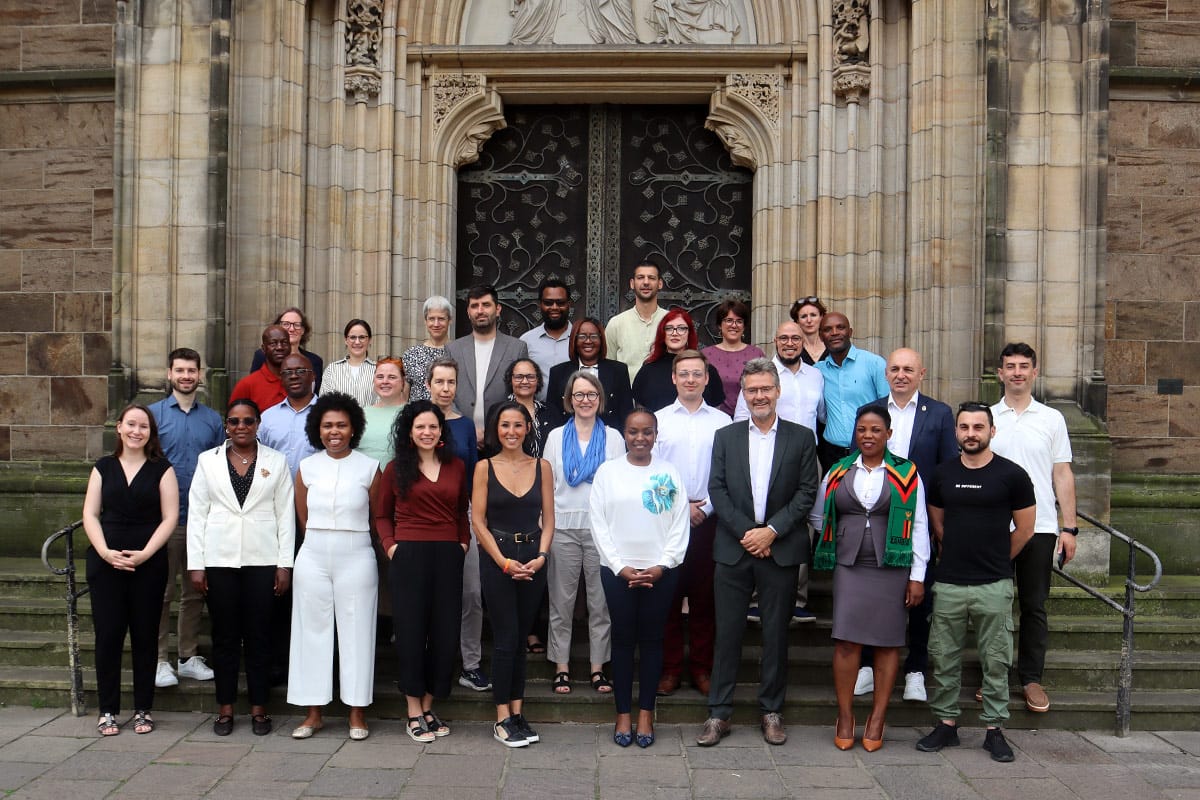
Cities across Africa and Europe are accelerating their role as frontline actors in the global green transition, driving innovation, investment, and climate resilience from the ground up. Following the successful launch of the Hydrogen Cities Working Group earlier this year in Naivasha, Kenya, Connective Cities will convene the second peer-learning workshop on 24–27 November 2025 in Mombasa, Kenya.

This flagship event will bring together city leaders, practitioners, industry innovators, researchers, and development partners to scale up municipal hydrogen strategies and unlock new pathways for green industrialization, inclusive growth, and just transition at the local level.

From Naivasha to Mombasa: Turning Ideas into Impact

The inaugural workshop in Naivasha brought together over 30 municipal representatives and technical experts to explore how cities can anchor the emerging green hydrogen economy in local value creation and job generation. It underscored hydrogen’s role not only as a clean-energy vector but as a catalyst for climate-neutral industrial ecosystems, skills development, and innovation-driven urban transformation.

Case studies showcased how municipalities are positioning themselves along the hydrogen value chain — from production and storage to end-use applications in mobility, manufacturing, and port logistics. Examples ranged from Namibia’s evolving hydrogen hubs to Germany’s Heilbronn and Karlsruhe regions, where local governments are building innovation clusters, R&D partnerships, and market linkages for hydrogen deployment.

An expert stands next to a screen showing a PowerPoint presentation.
Specialist presentation during the meeting in Naivasha | Photo: Connective Cities

Participants also highlighted the importance of integrated urban governance — combining spatial planning, transparent land management, and strong stakeholder engagement — to ensure hydrogen projects deliver tangible community benefits.

 Key takeaways from Naivasha included:

  • Municipal leadership as a driving force for innovation, investment, and policy alignment.
  • Local value creation through SME participation, skills training, and green entrepreneurship.
  • Institutional capacity and human capital as preconditions for hydrogen readiness.
  • Peer-to-peer collaboration as a catalyst for scaling solutions and knowledge transfer.

Since Naivasha, cities have been actively refining their project concepts, forging cross-regional partnerships, and identifying bankable entry points to accelerate their green transition agendas.

Green Hydrogen: Powering Sustainable, Inclusive Urban Futures

Africa’s vast solar and wind potential places its cities at the heart of the global clean-energy transformation. Green hydrogen — and its derivatives such as green ammonia and e-methanol — offers a once-in-a-generation opportunity for low-carbon industrialisation, climate resilience, and circular economy development.

For municipalities, this transition means:

  • Developing innovation clusters and hydrogen corridors that attract private investment.
  • Expanding renewable energy infrastructure and smart urban grids.
  • Enhancing water security and resource-efficient technologies such as desalination and wastewater reuse.
  • Creating green jobs across engineering, construction, logistics, and research sectors.
  • Catalysing start-ups, incubators, and technology partnerships.
  • Building skills pipelines aligned with future hydrogen markets.

Yet, challenges persist — from infrastructure gaps and regulatory complexity to financing bottlenecks and local ownership. The Hydrogen Cities Working Group provides a collaborative platform where cities can co-create solutions, de-risk investment, and ensure the green transition remains inclusive, equitable, and locally anchored.

What to Expect in Mombasa: Scaling Up and Going Deeper

The upcoming workshop in Mombasa will mark a critical shift from strategic visioning to operationalisation and project implementation. Over three days, participants will:

  • Present project updates and refine concepts through structured peer-review and coaching.
  • Engage in interactive sessions on land use, water-energy nexus, and industrial cluster design.
  • Explore innovative financing instruments, including blended finance and PPP models.
  • Participate in hands-on peer-coaching clinics to advance project maturity.
  • Exchange with international experts on policy frameworks, investment pipelines, and market integration.
  • Join a site visit to the Mombasa Port and Special Economic Zone to identify real-world opportunities for green hydrogen applications.

The event will feature keynotes from government and private-sector leaders, expert panels, and networking sessions to strengthen partnerships between African and German municipalities.

Confirmed participants include cities such as Mombasa, Naivasha, Lüderitz, Arandis, Nouakchott, Waterberg District, Hamburg, Karlsruhe, Heilbronn, and Freudenstadt — forming a growing alliance of municipalities championing decentralized, climate-smart hydrogen ecosystems.

Looking Ahead: Cities as Catalysts of a Just Green Economy

As the global energy landscape transforms, cities that act decisively today will become the engines of tomorrow’s green prosperity. The Mombasa workshop represents another milestone in empowering municipalities to lead the hydrogen-powered urban transformation — advancing climate action, economic resilience, and social inclusion in equal measure.

Through the Hydrogen Cities Working Group, Connective Cities continues to bridge continents, connect expertise, and translate ambition into action — ensuring that the hydrogen revolution drives sustainable, locally embedded, and future-ready urban economies.

From Naivasha to Mombasa, cities are demonstrating that the green transition starts locally — and scales globally.

Green Hydrogen for Local Development

Naivasha, Kenya | 14–17 April 2025 – Green hydrogen is gaining global attention as a key energy carrier for the future. While much of the discussion centres on export potential, green hydrogen production also holds significant potential for local development—boosting municipal infrastructure and stimulating local economies, especially in Africa, where the continent’s high potential for solar and wind energy brings African cities in a unique position to become innovation hubs and key drivers in the global energy transition.

To foster exchange of experiences and best practices between African and German cities, Connective Cities organised the workshop “Exploring the Potential of Green Transition for Local Economic Development”, bringing together over 30 municipal professionals from both regions.

The role of cities in promoting green hydrogen

The workshop, which focused on the role of cities in advancing green hydrogen as a lever for sustainable economic growth, facilitated a peer-to-peer learning space for municipal actors to exchange experiences, address challenges, and explore pathways for green hydrogen adoption at the local level.

Municipal strategies and shared challenges

Konferenzraum: Teilnehmende sitzen gruppiert an runden Tischen. Auf dem Plenum sitzen fünf Personen und diskutieren.
Photo: Connective Cities

A central focus of the exchange was how technological innovation can align with local development needs. Discussions ranged from decentralised hydrogen production systems and seawater electrolysis to the use of organic waste as a renewable source. Especially for coastal or water-scarce cities in Africa, such technologies were seen as promising solutions to local resource constraints.

However, participants agreed that technology alone is not enough. Effective local hydrogen strategies require strategic urban planning, transparent land management, and strong community engagement. Several municipalities shared examples of inclusive planning processes, involving traditional authorities and local universities in shaping future-oriented land use plans and infrastructure projects.

Eine Gruppe von zehn Personen sitzen um einen runden tisch und diskutieren intensiv. Im Hintergrund steht eine Metaplan-Tafel.
Peer Learning Session | Photo: Connective Cities

Participants from countries including Namibia, South Africa, Mauritania, Kenya, and Germany presented concrete initiatives demonstrating how hydrogen projects can generate local value. The example of Arandis (Namibia) illustrated how targeted investment and strategic partnerships are enabling the town to position itself as a production hub for green hydrogen. In contrast, the Heilbronn region (Germany) focuses on the application and industrial use of hydrogen, building a regional value chain by attracting user industries and technology providers.

Furthermore, Karlsruhe (Germany) showcased a successful ecosystem for start-ups working in hydrogen technologies, supported by research institutions and public-private partnerships. Across all cases, one message became clear: municipal masterplans and coordinated strategic planning are essential for cities to fully benefit from the emerging hydrogen economy.
The discussions underscored the growing role of cities not only as implementers of national energy goals, but as active shapers of the green transition. The workshop aimed to empower municipalities to position themselves as testing grounds, innovation platforms, and investment destinations within a future green hydrogen economy.

Outlook and next steps

The workshop concluded with a strong call for municipal leadership in developing local hydrogen strategies that reflect both environmental ambitions and socio-economic priorities. Participants identified three key areas for action:

  1. Local value creation: Prioritising domestic use of hydrogen for local industries – such as fertiliser or building materials – rather than relying solely on export models.
  2. Education and skills development: Aligning vocational training and higher education programmes with future labour market needs in the hydrogen sector.
  3. Partnerships and knowledge exchange: Strengthening peer-to-peer learning and cooperation among municipalities through platforms such as Connective Cities.

Participants also highlighted that green hydrogen offers more than energy solutions – it can help create future-oriented jobs, stimulate innovation, and improve urban living conditions. By linking clean energy production with economic development, municipalities can promote both resilience and inclusivity.
The workshop in Naivasha confirmed that green hydrogen can become a key pillar of sustainable urban development – provided that cities take a proactive role. Where political commitment, technical capacity and community participation come together, green hydrogen has the potential to drive long-term prosperity and shared growth.

Gruppenbild mit sechs Teilnehmenden aus Deutschland und Kenia
Photo: Export-Akademie Baden-Württemberg


“Whether peer learning sessions, inspiring impulses or practical insights into hydrogen strategies, sustainable mobility and local project development – the variety of formats impressively demonstrated how much potential there is in partnership-based cooperation.“

– Felix Sossalla, Wirtschaftsförderung Raum Heilbronn GmbH (LinkedIn, translated)


“We’re looking forward to partnering with more cities, industries, and changemakers who share our vision for a greener, more inclusive future. Let’s create the green cities of tomorrow — together.”

– Export-Akademie Baden-Württemberg (LinkedIn)

The Haus der Statistik

A new district for administration, housing, social affairs and culture is being built on the large site of the former administrative building for the Federal Statistical Office – Haus der Statistik – in the center of Berlin. A civil society initiative had prevented the demolition of the existing building from the 1960s and, together with the administration and other stakeholders, developed the concept for the conversion – a beacon for alternative approaches to urban development.

Celebrating Decentralized Cooperation and Heritage-Driven Tourism

On 20 March 2025, in honor of the International Day of Happiness, Connective Cities hosted an insightful session highlighting the transformative power of decentralized cooperation in advancing sustainable development. This session aligned with the global theme of happiness by fostering collaboration, cultural exchange, and community engagement—key pillars of thriving and cohesive societies.

The session explored how decentralized cooperation empowers municipalities to tackle shared challenges, drive innovation, and promote inclusive growth. Participants gained valuable insights from successful heritage-driven tourism strategies implemented in various municipalities, inspiring them to leverage partnerships for meaningful local and global impact.

The session opened with a heartfelt address by Ms. Barbara Baumbach (BMZ), who emphasized Connective Cities’ success in facilitating global exchanges of municipal expertise and supporting the development of locally-adapted solutions to urban challenges. This was followed by three engaging panel discussions featuring representatives from Battir and Brühl, Bethlehem and Madaba, and Nablus. These discussions showcased how municipalities and civil society effectively utilize local and international collaborations to create opportunities for societal, economic, and environmental progress.


Panel discussion of the partnership Brühl-Battir | Photo: Connective Cities

The panels addressed key topics such as:

  • Bridging communities through cooperation – success factors and challenges in decentralized cooperation
  • Revitalizing decentralized cooperation
  • Harnessing local stakeholder collaboration for sustainable tourism development

By drawing on international, regional, and local examples, the session demonstrated how municipalities can harness decentralized cooperation to foster sustainable tourism while balancing cultural preservation and economic growth. The discussions underscored the importance of engaging local communities and stakeholders, integrating academic contributions, and strengthening international partnerships to address global challenges effectively.

Master Presentation of the Insight Session on Connective Cities platform including the recording of the session for registered users (Arabic and German).

Author: Muna Shalan | Connective Cities

Impressions

Input from the Nablus Chamber of Commerce
nput from the Ministry of Tourism of Palestine
Input from media representatives from Nablus
Input from the academic community of Nablus
Twinning agreement between Bethlehem and Madaba
Commonalities between Bethlehem and Madaba

Avoiding vacancy by opening buildings to interim use

During the process of redefining a building’s purpose and outlining the procedure and financing of the venture, constructions might fall vacant. A vacant building is wasted potential in many ways, for both the community and the cities’ urban development.

Moreover, an unused building often leads to an increase in visual and atmospheric pollution due to the accumulation of waste, water infiltration and possible growth of mold or toxic materials. Besides these ecological consequences, vandalism may increase as well as insecurity in the surroundings. Hence, the revitalisation of vacant buildings can come costly to municipalities and possible investors.

How can vacancy be avoided? Opening public buildings to interim use was one of the topics that participants of the learning process “2nd Hands on Public Buildings” wanted to focus on during the one-year-long learning process on reusing public buildings from the 1960s and 1970s. Therefore, experts from Germany, Kenya, Palestine and Montenegro came together virtually on March 12, 2025.

During the meeting, the German guests Oliver Hasemann, ZwischenZeitZentrale Bremen, and Moritz Tonn, Transiträume e.V., elaborated on the facilitation of interim use in Bremen and Berlin. With years of experience and quite some examples of moderating agreements between the buildings’ owners and users, the inputs allowed for a general understanding of the opportunities and challenges related to intermediate tenants. Given the vibrant cultural scene in Berlin, Transiträume e.V. has successfully allowed artist to transform vacant halls to impressive exhibition spaces, attracting large numbers of visitors. Among other, ZZZBremen showcased its “Wurst Case” (translates into “Sausage Case”), in which a sausage factory was reused involving the public in an extended participation process. The factory was then rented in a small scale to local entrepreneurs, artists, and for social initiatives and artisans testing of various kinds of use (offices, workshops, studios).

Giving the buildings a temporary use helps their protection, reduce the operational and maintenance costs for public vacancy and can support the cultural and creative industry. Through the participation of neighbourhoods, the interim use of vacant buildings also helps revitalizing disadvantaged areas. The main challenges consisted in setting a frame for interested users, which means to create the basic infrastructure and the legal framework for working in the abandoned buildings as well as finding sponsorships and raising awareness for the new project.

Based on these inputs, the group of experts discussed their project examples and ideas regarding a possible temporary use. Twenty floors of the former Hilton Hotel in Nairobi are currently vacant and the participants were interested in how interim use might lead to the attraction of possible investors. Although in one case an investor who had visited an exhibition in Berlin had finally bought the complex, the guests stated that this was not the main objective of interim utilisation. Financing was also a concern of a participants from Montenegro and Regensburg.

The consense was that those who profit most from the interim use should also be hold financially responsible. In most cases, tenants only pay a symbolic rent, but their conservation of the building presents an economic advantage for the owner. Cases are very individual. In Regensburg, the activation of central heating in the concerned building would have caused high costs. While the guest suggested house in house solutions, Regensburg had yet found creative forms of interim use and offered the fireguard and police to use the building for training purposes. Asked from Hebron, questions concerned the public participation process and best practices. The ongoing Connective Cities learning process will offer another follow-up activity on the involvement of the public, soon.

„Think about your interim project from the end. How is it guaranteed that the project ends in everybody’s consent?” Oliver Hasemann, ZweischenZeitZentrale Bremen

Inclusive nature tourism trails for the deaf, disabled and blind

In recent years, the tourism industry has been expanding its offerings by providing more inclusive and sustainable options. However, access to tourist attractions is still a major challenge for the deaf, visually impaired and people with disabilities. Even people with temporary injuries or mild sensory impairments often find it difficult to relax and fully enjoy their vacation experiences. This guide aims to address these challenges by updating currently available tourism guidelines and incorporating contemporary design standards for inclusivity. It is one of the outputs of the working group ‘Destination management organisation in tourism in the MENA region’.

Arabic version:
مسارات سياحية طبيعية شاملة للصم والمعاقين والمكفوفين

Tourism promotion strategies in municipalities

Adopting innovative tourism strategies can help municipalities boost their economies and promote sustainable development. These strategies often focus on leveraging local culture, history, natural resources, and new technologies. Municipalities in the MENA region are capitalizing on their unique cultural, historical, and natural assets while incorporating modern technology and sustainability practices to attract a wide range of tourists. During an insight session held on the 9th September 2024, representatives of municipalities from Jordan, Palestine, Tunisia and Lebanon have learned about and discussed effective tourism promotion strategies. This session focused on two key areas, namely innovative tourism promotion strategies, improving existing tourism activities and sustainable tourism practices to prevent destination decline. Participants have learned about digital marketing techniques, methods for identifying and showcasing their unique selling points, and strategies for creating compelling tourism narratives that resonate with potential visitors. The session delved into effective collaboration strategies with local businesses and tour operators to create a cohesive tourism ecosystem.

A good practice example was presented by the secretary general of the municipality of Sidi Jedidi in Tunisia by sharing insights into the local touristic attractions and the promotion strategies they have implemented that included community engagement. Through story-telling, Nablus municipality representatives have engaged the participants in a captivating virtual visit to their city in Palestine.  These presentations have sparked a lively discussion between the participants that included several elements of peer learning, particularly on the solutions developed as part of the working group which include:

  1. Local handicraft protection and promotion policy – Al Aizariya Municipality, Palestine
  2. Designing touristic trails and envisioning an eco-touristic village – Kufranja municipality, Jordan
  3. Assisting and guiding Kfarmatta municipality (Lebanon) in establishing the rules of procedures for Al Hima zone and the establishment of a Local Development Office.
  4. Tourism promotion Strategy in Nablus municipality, Palestine.

Recording of the insight session on Connective Cities platform (in Arabic).

Local Development Strategy Guidebook

This guidebook is an outcome of the working group ‘Local development strategies for municipalities in MENA’. It outlines a comprehensive methodology for municipalities to develop strategic sustainable planning with a mid- and long-term vision.

The objectives include:

  • Strengthen Resilience and Capacity
  • Enhance Participatory Strategic Planning
  • Define Long-Term Development Strategies
  • Improve Local Services
  • Develop Project Card Templates

The manual also addresses the importance of having up-to-date data to improve the accuracy of analysis and decision-making processes. This includes staff training on data collection and interpretation methodologies.

Kufranja municipality – city of oxygen in Jordan

This is the first video in the second edition of ‘Voices from Connective Cities’. Dr. Anwaar Bani Salman, Head of Planning and studies at Kufranja municipality in Jordan talks about the competitive advantage of the municipality in agri- and eco-tourism due to its unique nature and high percentage of green cover. She highlights the benefits of peer learning particularly from Madaba municipality on the topics of local development strategies, proposal writing, and forging partnerships with stakeholders from different sectors. She noted that the moral support that she received from Connective Cities network helped her overcome various challenges such as fear of failure.

Watch video at YouTube: https://youtu.be/q6TZawYNglY

————-

Further information: Municipal Business Incubators in Madaba

A Strategy for Climate-Sensitive Urban Development in Garowe, Somalia

Connective Cities has supported the development of a bottom-up strategy for climate-resilient urban development, known as the Climate-Sensitive City Development Strategy (CSCD). This involved a participatory methodology for identifying and analyzing key entry points for municipal action. Garowe was the first pilot project where this methodology and the design of the CSCD strategy were tested. We are pleased to present this strategy to you here.

Connective Cities was commissioned by the GIZ project “Promotion of social and economic inclusion of extreme poor IDPs and residents of host communities in Puntland, Somalia” (SEIPP) to support the development of an integrated climate protection concept (adaptation and partial mitigation) for the city of Garowe, Puntland, Somalia. SEIPP is dedicated to promoting the socio-economic integration of extremely poor internally displaced persons and residents of host communities in Puntland, Somalia.

If you have any questions about the methodology or are interested in discussing it, please contact Paulina Koschmieder: paulina.koschmieder@giz.de