Exploring the Potential of Green Transition for Local Economic Development

African and German Cities Power a Shared Vision for a Just, Climate-Smart Hydrogen Future

Cities across Africa and Europe are accelerating their role as frontline actors in the global green transition, driving innovation, investment, and climate resilience from the ground up. Following the successful launch of the Hydrogen Cities Working Group earlier this year in Naivasha, Kenya, Connective Cities will convene the second peer-learning workshop on 24–27 November 2025 in Mombasa, Kenya.

This flagship event will bring together city leaders, practitioners, industry innovators, researchers, and development partners to scale up municipal hydrogen strategies and unlock new pathways for green industrialization, inclusive growth, and just transition at the local level.

From Naivasha to Mombasa: Turning Ideas into Impact

The inaugural workshop in Naivasha brought together over 30 municipal representatives and technical experts to explore how cities can anchor the emerging green hydrogen economy in local value creation and job generation. It underscored hydrogen’s role not only as a clean-energy vector but as a catalyst for climate-neutral industrial ecosystems, skills development, and innovation-driven urban transformation.

Case studies showcased how municipalities are positioning themselves along the hydrogen value chain — from production and storage to end-use applications in mobility, manufacturing, and port logistics. Examples ranged from Namibia’s evolving hydrogen hubs to Germany’s Heilbronn and Karlsruhe regions, where local governments are building innovation clusters, R&D partnerships, and market linkages for hydrogen deployment.

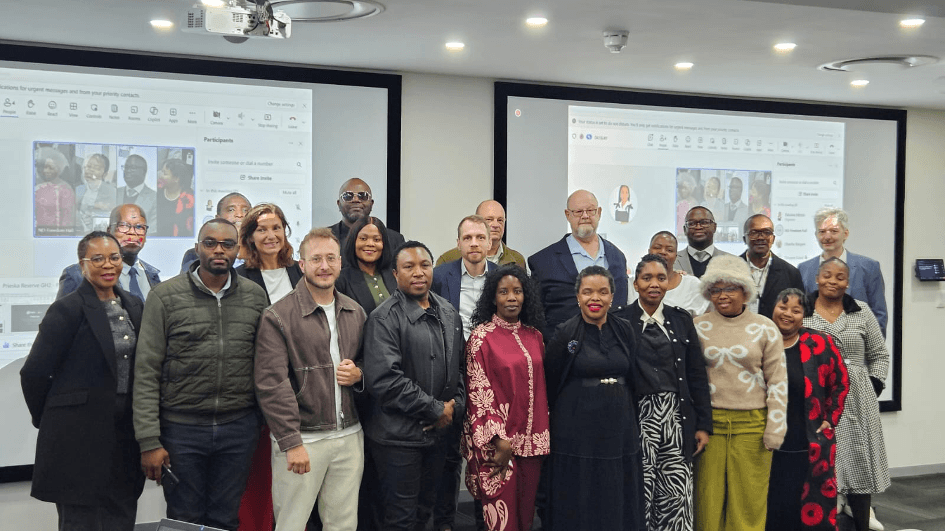
An expert stands next to a screen showing a PowerPoint presentation.
Specialist presentation during the meeting in Naivasha | Photo: Connective Cities

Participants also highlighted the importance of integrated urban governance — combining spatial planning, transparent land management, and strong stakeholder engagement — to ensure hydrogen projects deliver tangible community benefits.

 Key takeaways from Naivasha included:

  • Municipal leadership as a driving force for innovation, investment, and policy alignment.
  • Local value creation through SME participation, skills training, and green entrepreneurship.
  • Institutional capacity and human capital as preconditions for hydrogen readiness.
  • Peer-to-peer collaboration as a catalyst for scaling solutions and knowledge transfer.

Since Naivasha, cities have been actively refining their project concepts, forging cross-regional partnerships, and identifying bankable entry points to accelerate their green transition agendas.

Green Hydrogen: Powering Sustainable, Inclusive Urban Futures

Africa’s vast solar and wind potential places its cities at the heart of the global clean-energy transformation. Green hydrogen — and its derivatives such as green ammonia and e-methanol — offers a once-in-a-generation opportunity for low-carbon industrialisation, climate resilience, and circular economy development.

For municipalities, this transition means:

  • Developing innovation clusters and hydrogen corridors that attract private investment.
  • Expanding renewable energy infrastructure and smart urban grids.
  • Enhancing water security and resource-efficient technologies such as desalination and wastewater reuse.
  • Creating green jobs across engineering, construction, logistics, and research sectors.
  • Catalysing start-ups, incubators, and technology partnerships.
  • Building skills pipelines aligned with future hydrogen markets.

Yet, challenges persist — from infrastructure gaps and regulatory complexity to financing bottlenecks and local ownership. The Hydrogen Cities Working Group provides a collaborative platform where cities can co-create solutions, de-risk investment, and ensure the green transition remains inclusive, equitable, and locally anchored.

What to Expect in Mombasa: Scaling Up and Going Deeper

The upcoming workshop in Mombasa will mark a critical shift from strategic visioning to operationalisation and project implementation. Over three days, participants will:

  • Present project updates and refine concepts through structured peer-review and coaching.
  • Engage in interactive sessions on land use, water-energy nexus, and industrial cluster design.
  • Explore innovative financing instruments, including blended finance and PPP models.
  • Participate in hands-on peer-coaching clinics to advance project maturity.
  • Exchange with international experts on policy frameworks, investment pipelines, and market integration.
  • Join a site visit to the Mombasa Port and Special Economic Zone to identify real-world opportunities for green hydrogen applications.

The event will feature keynotes from government and private-sector leaders, expert panels, and networking sessions to strengthen partnerships between African and German municipalities.

Confirmed participants include cities such as Mombasa, Naivasha, Lüderitz, Arandis, Nouakchott, Waterberg District, Hamburg, Karlsruhe, Heilbronn, and Freudenstadt — forming a growing alliance of municipalities championing decentralized, climate-smart hydrogen ecosystems.

Looking Ahead: Cities as Catalysts of a Just Green Economy

As the global energy landscape transforms, cities that act decisively today will become the engines of tomorrow’s green prosperity. The Mombasa workshop represents another milestone in empowering municipalities to lead the hydrogen-powered urban transformation — advancing climate action, economic resilience, and social inclusion in equal measure.

Through the Hydrogen Cities Working Group, Connective Cities continues to bridge continents, connect expertise, and translate ambition into action — ensuring that the hydrogen revolution drives sustainable, locally embedded, and future-ready urban economies.

From Naivasha to Mombasa, cities are demonstrating that the green transition starts locally — and scales globally.

Resilient cities in times of multiple crises – strategies for resilient municipalities

In times of multiple crises, cities must become increasingly resilient. This currently applies to Ukrainian municipalities in particular: they need to prepare for and respond to stressors such as acts of war, the effects of climate change and economic developments. Connective Cities hosted the expert forum “Resilient cities in times of multiple crises – strategies for resilient municipalities” at the seventh German-Ukrainian partnership conference in Münster (16 – 18.06.2025). The cooperation partners GIZ and Engagement Global with its SKEW welcomed a panel with numerous good practices from Ukrainian and German municipalities, some of which are already involved in Connective Cities’ project activities on urban resilience.

A resilient city is a city that deals with risks and takes precautions, but also a city that is able to learn and adapt. Resilience is a much-used term today – Christian Rauch, head of the “Digital City, Risk Prevention and Transport” department at the Federal Institute for Research on Building, Urban Affairs and Spatial Development (BBSR), therefore defined the concept of resilience in a city in his introductory keynote speech. A resilient city is robust, but also adaptable. It is able to react to a variety of stressors, such as social polarization, thermal stress, demographic developments or energy crises. Areas of action for greater urban resilience include integrated and forward-looking urban development, strengthening and adapting critical infrastructure, risk and crisis management, climate resilience and sustainable solutions, community participation and governance, monitoring, review and learning processes, as well as the use of digital tools. Christian Rauch also referred to international strategy documents with guidelines for strengthening urban resilience: “The New Leipzig Charter” and “Sendai Framework for Disaster Risk Reduction 2015-2030“.

Individual efforts for more urban resilience were illustrated by the examples of the 7 panelists, who presented their strategies by way of introduction with images of their projects:

  • From the district of Euskirchen, which was affected by the flood disaster in 2021, project manager of the KRITIS dialog Sarah zur Linden reported on her experiences of improving communication between local and regional actors in crises.
  • Valeriia Levchyshyna from the Lviv City Institute is involved in setting up the Lviv Resilience Hub, which aims to bundle the networking of Ukrainian cities on the topic of resilience and continue the topics of the “Ukrainian Resilience Week” at municipal level.
  • Project coordinator Monika Hanemann reported on the WiReSt project from the Steinfurt district. As part of the project, an open-source app was developed to inform small and medium-sized companies in the region about potential bottlenecks within relevant supply chains.
  • The Head of the International Cooperation Department, Sasha Kirian, presented an example of greater social resilience from Kharkiv, a municipality affected by Russian bombing: Underground schools. Thanks to foreign investment, a total of 16% of pupils already have the opportunity to attend a safe institution. Measures like these allow the population to stay in the city.
  • The mayor of the city of Trosyanets, Yuri Bova, explained how important the will of the population is for this and showed pictures of a hospital that had been bombed and then rebuilt. He repeatedly and impressively emphasized the unbroken will of the citizens – including the hospital staff – to stay. This also has an impact on economic resilience: No company has left its town, some have even invested in the reconstruction of destroyed production facilities.
  • Patrick Dufour, Head of the Heilbronn Economic Development Agency, also spoke of strategies to retain companies. To this end, he is already working intensively with Ukrainian municipalities.
  • Tetyana Shulichenko, Director of the Economic Development Department of Mykolaiv City Council, showed pictures of the reconstruction of the port, for example. According to her, the increased international interest and willingness to invest is an opportunity. New places for a better quality of stay and life have also been created in the port.


On the one hand, the audience was able to take away from the expert forum the basics of urban resilience and the realization that diverse and mostly innovative approaches and projects can strengthen the resilience of their cities. The examples of the Ukrainian panelists regarding the effects of the Russian war of aggression impressively showed the audience what it means for the population of a city to stand up to acute crises and how important the will of citizens and entrepreneurs is to do so. The examples and speeches also clearly showed that lively cooperation between a wide range of actors, both nationally and internationally, is essential for resilient cities. Under certain circumstances, the increased interest in investment is also an opportunity for Ukrainian municipalities to actively shape reconstruction in line with the model of the resilient city.

Municipal Response to the Covid-19 Pandemic – MENA region

In the wake of the Pandemic, municipalities in the MENA region in both urban and rural areas need to rethink their modes of operation and accelerate their shift towards building resilience during the recovery process. In an effort to support municipalities that are members of the Connective Cities network in the MENA region, four thematic working groups were established as part of Connective Cities program ‘Municipal Recovery from the Pandemic.’ Objectives of this working group include promoting practice–oriented knowledge exchange between municipal and urban practitioners, facilitating peer learning on sustainable and innovative approaches to build resilience in cities through biodiversity and environmental protection, digitalisation of municipal services, and promoting social entrepreneurship for circularity. The program has resulted in the development of concrete urban solutions. Another outcome was the creation of partnerships between municipalities as well as with private sector actors to articulate the proposed solutions and scale up the impact. This report summarizes the main achievements until February 2022.

Digitalisation in Madaba Municipality, Jordan

In line with the efforts in Jordan to drive economic transformation and application of international quality standards, Madaba municipality developed a vision towards achieving equitable growth and sustainability.  An integral part of this vision is the digital transformation of municipal services.

Building. Forward. Better

We look back on an eventful year. Hopes of getting the Corona pandemic under control quickly fizzled out. The World Climate Conference cast its shadow ahead, only to end with a mediocre result. Despite, or perhaps because of, these setbacks, experts at the municipal level intensified their cooperation to better meet the challenges of the pandemic and climate change. Our networks expanded, project proposals became more concrete, working groups more agile, and some “champion municipalities” are themselves doing much to move the networks forward. It is time to pause for a moment, look back and dare to look forward to the future. Our coordinators of the regional networks in South Eastern Europe, the MENA region and Sub-Saharan Africa describe this from their own personal perspective.

The Future of the Southeast Europe Region – by Irakli Samkharadze and Elene Samukashvili

As the year comes to a close Connective Cities Southeast European Region celebrates achievements of every concurrent Learning and Peer-exchange processes held with the support of urban practitioners, experts, consultancies and technical personnel from all over the world.

Activities under Learning Processes on Climate Resilient Urban Development and Sustainable Urban Energy Planning, underway in SEE region will continue into the upcoming year with an updated roadmap. We will proceed with expert missions, financial advisory and project proposals polishing support, in close synergy with financial institutions. This support will be provided for projects identified through Dialogue Events and Planning Workshops held in past two years.

In 2021 under Connective Cities COVID-19 Programme, Southeast European Region (SEE) gathered amazing and motivated professionals from all over the region who worked in two directions of Crisis Management and Digitalisation. As of new year, Programme Teams aims to maintain the close contact with the groups, through the Network, providing them with further news, updates and guidance.

As the network of the region is constantly expanding, planned activities are also amplifying and growing in their directions and frequency. 2022 promises to be a very active and highly engaging time for the network. Our topics include but are not limited to Sustainable Urban Development, Energy Efficiency & Renewable Energy, Urban Planning, Green Technologies, Infrastructure and recovery, Crisis management & Digitalisation, while also constantly looking into new directions according to preferences of Network Members and political Developments in the region.

Kontakt: Irakli Samkharadze (irakli.samkharadze@giz.de)

Sub-Saharan Africa – an outlook to 2022 – by Sophia Kamau

We have braved another year of virtual learning, networking and finding solutions to our urban challenges. Thank you for being part of this journey by sharing good practices, challenges, contacts and expertise.

We look over the skies into the endless opportunities that time gives and envision 2022. Based on the networks built, relationships established, and ideas exchanged, we would like to share our thoughts with you as we get into a reflective season.

In 2022 we will finalize the learning processes on urban basic services and sector governance and land management and land use planning. This will be through support to municipalities working on their proposals and those seeking expertise support. Through partnerships with like-minded institutions, we will have more opportunities to learn and exchange through the thematic working groups; solid waste management, urban green spaces, climate change and urban mobility.

We welcome you to join this community of transformers in the region.

From the Sub Saharan Africa desk, we appreciate your cooperation and wish you happy holidays!

Contacts: Sophia Kamau (sophia.kamau@giz.de)

Connective Cities in the MENA region: Champion Cities taking ownership of the network in 2022 – by Muna Shalan

Over the past year, the vibrant network of Connective Cities in the MENA region has grown and has intensified its activities: we are now at 235 registered members! To sustain the momentum and ensure the sustainability of the network, champion cities will take the lead in steering the activities of the different thematic working groups starting next year. This will include peer learning, good practice presentation and joint proposal development. Upon showcasing the outcomes of the activities in the planned regional event in January 2022, the network members will be able to nominate themselves or vote for the steering committee of the regional working groups that include local economic development and job creation, municipal energy efficiency projects, biodiversity and environmental protection, digitalisation of municipal services, social entrepreneurship and circular economy.

We are also looking forward for new partnerships with regional city associations in 2022. This includes our recently signed MoU with UCLG MEWA to strengthen decentralised regional cooperation.

Contact: Muna Shalan (muna.shalan@giz.de )

The Connective Cities Lab 2021 – Facts & Findings

Municipalities around the world are affected by the impact of the COVID-19 pandemic. Therefore, Connective Cities organised a series of virtual formats to discuss and develop measures, challenges, and solutions to overcome the pandemic and support the municipal recovery.

The Connective Cities Lab – an online programme for urban practitioners and municipal experts – created an international exchange between 85 municipalities from 57 different countries worldwide to support the development of solutions and prototypes for local challenges.

With a total of 72 hours of programme, the following components were implemented and results achieved within the Connective Cities Lab.

Crisis Management in Palestinian municipalities: in the sectors economy, health and education

The COVID-19 pandemic has presented unique challenges to the public sector worldwide. Especially municipalities play a central role in fighting the pandemic. Increasingly, municipalities are also developing local strategies for the recovery and conceptualising post-pandemic measures.

Due to the constant emergency situation in the Palestinian Territories, coupled with the negative impact of the Corona pandemic, crisis management planning especially at the municipal level is perceived as a high priority. Therefore, and as part of the Connective Cities programme, 10 Palestinian municipalities:

  • Tullkaram,
  • Salfit,
  • Toubas,
  • Al Beera,
  • Beitunia,
  • Jericho  
  • Halhoul,
  • Beit Jala,
  • Bani Naim,
  • and Dura

have come together in 3 working groups to work out solutions for their common crisis management challenges as follows:

Working Group 1: Crisis Management in the Education Sector

Municipalities: Tullkaram, Salfit, Toubas, Beit Jala

Working Group 2: Crisis Management in the Health Sector

Municipalities: Bani Naim, Halhul, AlDura

Working Group 3: Crisis Management in the Local Economy Sector

Municipalities: ElBeera, Bitunia, Jericho

The working groups have worked throughout the past 3 months with the support of national experts on developing various prototypes, projects ideas as well as sharing their good practices in crisis management in the different sectors. The efforts of the working groups resulted in the following products:

The Working Group focussing on the education sector developed a prototype which provides a model for organizational structure for an emergency management cell at the municipal level with clear mandates and roles for different involved units at the municipalities. The prototype proposes practical guidelines on how to structure an emergency management cell at times of crises with the existing units of the municipalities and how to involve various actors in the cell. Further, the working group drafted a project idea which is aimed at the development of an Emergency fund. The fund is to be institutionalized as part of the educational tax collected by the municipality and shall cover educational interventions and support for schools. Membership of the fund shall come from various community representatives. The municipalities of the working group developed and drafted this idea jointly.

The second working group, concentrating on the health sector, created an outline for how to include crisis management as part of strategic planning of municipalities. The task force is developing an additional chapter for a manual for municipal strategic planning, focusing on practical guidelines of crisis management. In addition, the municipalities drafted jointly a project idea, which targets the establishment of a Crisis Management Fund – allocated for municipalities to support the system during crisis situations.

Crisis management in the local economy sector was covered by the third working group. This group has also worked on a prototype, concluding in an organizational matrix for Crisis Management planning in the various units of local governments. The matrix proposes specific actions to be taken by each unit in the municipality during the 3 phases of crises management – pre, during and post crisis. As project idea the group focused on strengthening the role and capabilities of the local economic development unit (LED) in municipal crisis management to assist in crisis. The process includes carrying out an inventory of economic damage and collecting and analyzing key economic data during crises in cooperation with the relevant parties.

The undertakings of Connective Cities and its working groups were a cooperation with and endorsement of activities by the Government of Palestinian Territories and Association of Palestinian Local Authorities APLA. The municipalities and APLA are interested to further build on innovative approaches in cooperation with Connective Cities.

All data (recordings of workshops) of the different working groups has been shared on our Connective Cities Community and can be accessed as registered member. For more insights into the developments of the working groups, watch our YouTube movie and please visit our YouTube Kanal.

Call for Participation: Join the Connective CitiesCity Lab

A open and flexible online program for local municipal employees and urban practitioners around the world.

Municipalities around the world are affected by the impact of the COVID-19 pandemic. Therefore, Connective Cities is organising a series of virtual formats to discuss and develop measures, challenges, and solutions to overcome the pandemic and support the municipal recovery.

By joining the Connective Cities Lab, you get full access to international experts and urban practitioners from other cities, who will support you to develop solutions and prototypes to the challenges you are working on in your local community.

Strengthening the Partnership between Local Cities and Tourism Industry

Tourism is one of the most affected economic sectors globally due to COVID-19, with declining numbers of visitors severely impacting local economies. There have been business closures, job losses, a rise in unsustainable alternative income sources, and the loss of government revenue from tourism. However, the dire situation has also led many tourism-dependent countries to explore new opportunities as part of the COVID-19 recovery strategy. These include new products such as eco-tourism, technology-based/ digital tourism, innovative marketing, and domestic tourism. Amidst this challenging situation and potential opportunities, there is a need to look for a strategy and projects to support the tourism industry.

We are pleased to invite you to the first workshop of the virtual series on COVID-19 and Municipal Tourism Recovery: Strengthening the partnership between Local Cities and Tourism Industry on 15th September 2021 at 16:00 – 18:00 CEST.

The event is aimed at international municipal actors from local administrations, civil society, business and academia who are working on the impacts of COVID-19 on the tourism sector and looking for innovative strategies for a post-pandemic future.

Connective Cities’ COVID-19 and Municipal Tourism Recovery will support participating urban practitioners in devising ways to help the tourism industry survive. It will provide a broad knowledge sharing and peer learning platform with like-minded municipal actors and local government policymakers who work on tourism recovery planning. Additionally, the Connective Cities Community provides access to relevant global expertise on tourism to support the planning and recovery process.

The kick-off event on September 15 offers the opportunity for several urban practitioners and the tourism industry to work on COVID-19 tourism recovery through peer learning and preparing potential proposals for soliciting funding. As a starting point, various scenarios from municipalities from five countries – Nepal, Botswana, Cape Verde, Romania, Uganda, and Cambodia – will be introduced.

Further workshops of the series are planned for the 20th of October and 16th of November 2021 (to be confirmed).

To register for the workshop and stay updated on the agenda, the announcement of speakers and further details, please visit our Connective Cities Community.

COVID-19 and Municipal Tourism Recovery Kick-Off Event:

Date: 15th of September 2021

Time: 16:00 – 18:00 CEST (Berlin Time)

Venue: Connective Cities Community (online)

Event Language: English, simultaneous translation: Arabic, Portuguese, (Romanian tbc.)

Contact: Paulina Koschmieder     paulina.koschmieder@giz.de