Sustainable mobility – Combination of future-proof mobility forms

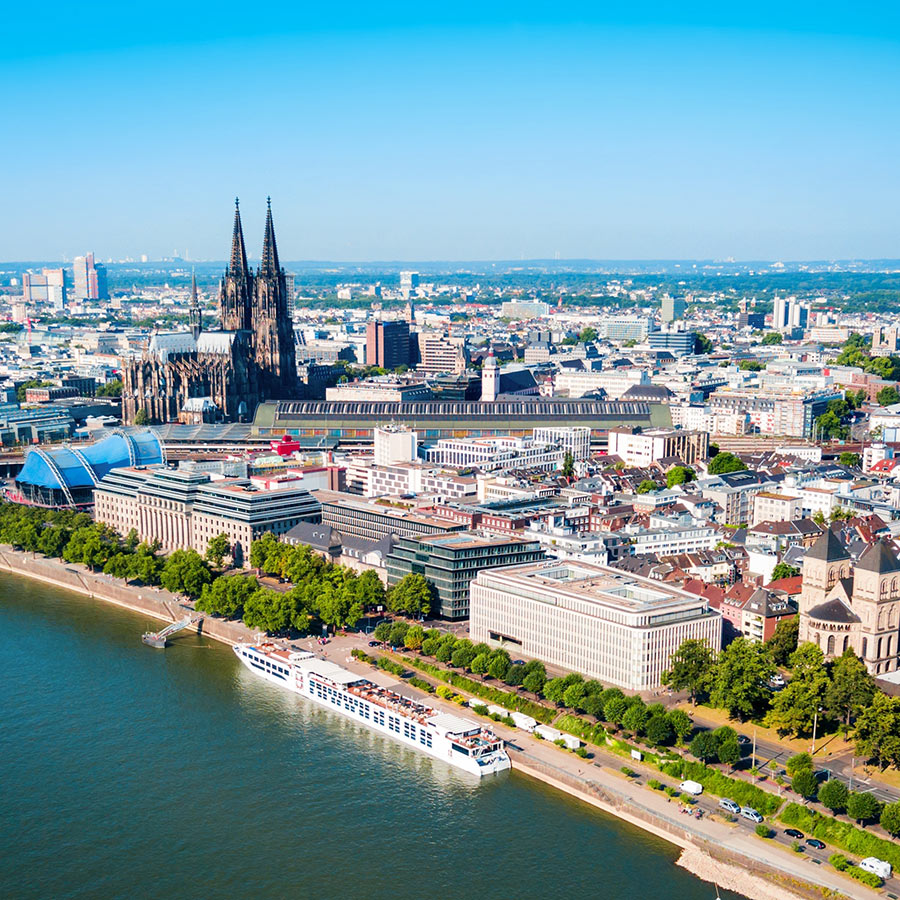
The global transition towards sustainable transportation is essential for a sustainable future. Experts agree: there is no one-size-fits-all solution for sustainable mobility. Instead, we must create public transport services that include a range of mobility solutions and combine them in the best possible way – in a smart, accessible, and time- and resource-efficient manner. In addition, measures must be tailored very individually to the needs of citizens in individual regions, cities, counties, or municipalities. For strategic planning, German municipalities often develop concepts across regions in collaboration with transport and special-purpose associations. Innovative solutions and considerations for connecting transport are particularly reflected in concepts for mobility, tourism, or strategic regional development. In the Global South, municipalities are often challenged by urbanization and increasing traffic volumes to formulate solutions for developing their communities, and are increasingly relying on digital solutions and private providers.

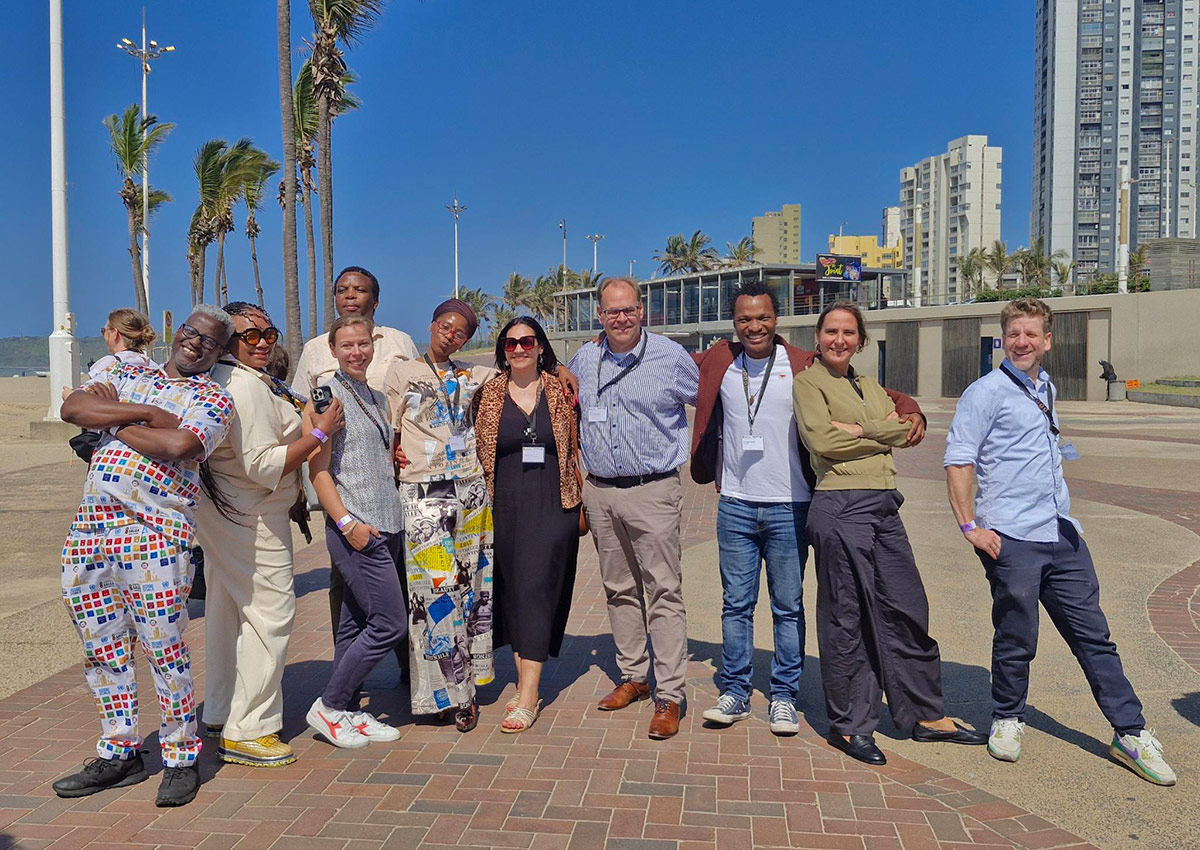
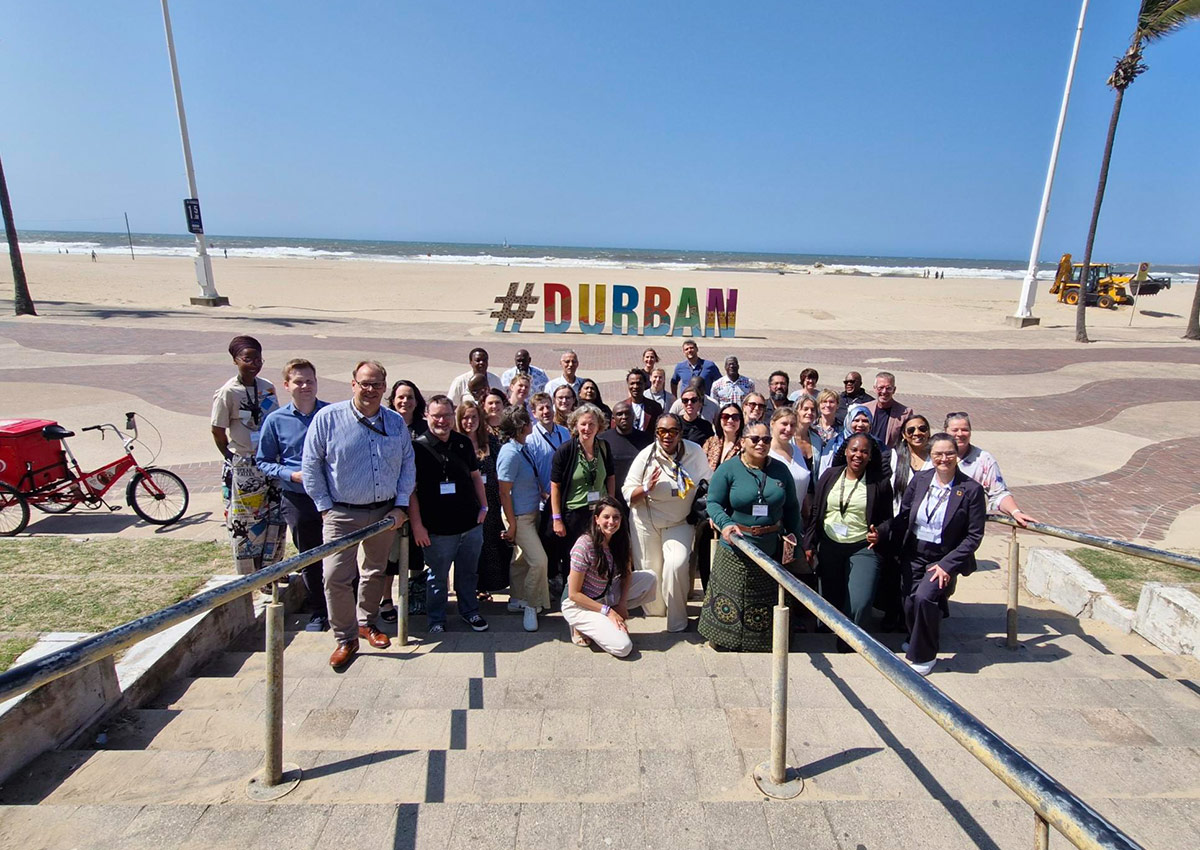
The dialogue event marks the start of a one-year learning process in which participating municipalities are also invited to take part in further optional activities.

Objectives of the event

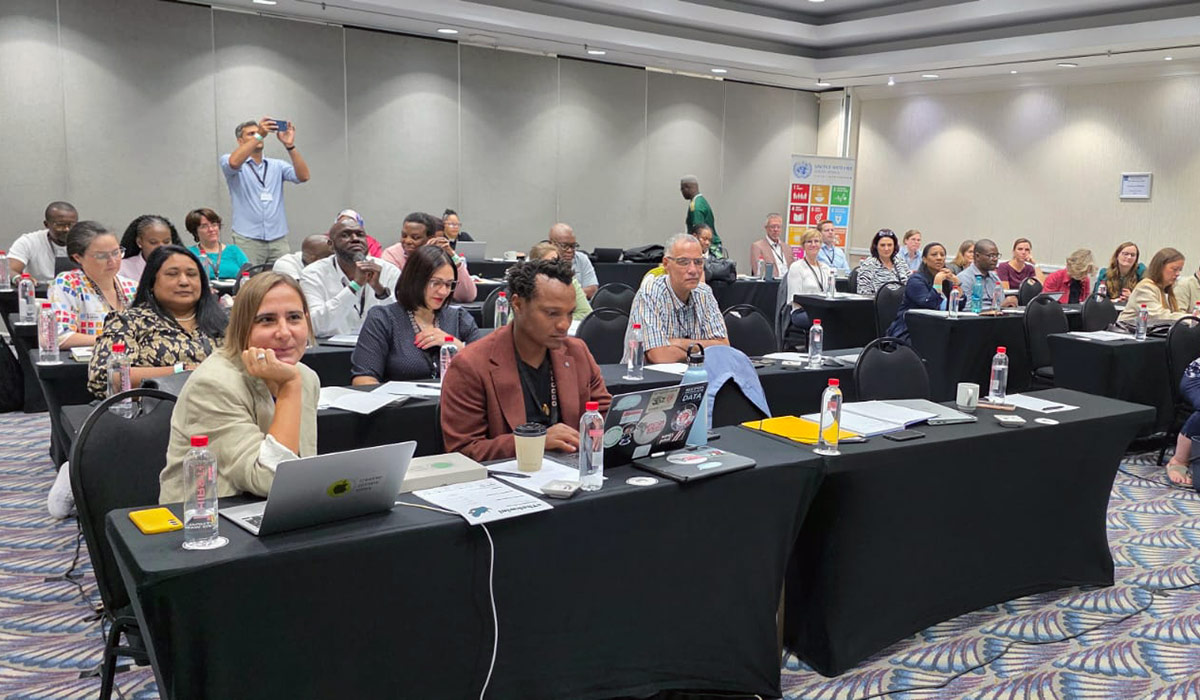
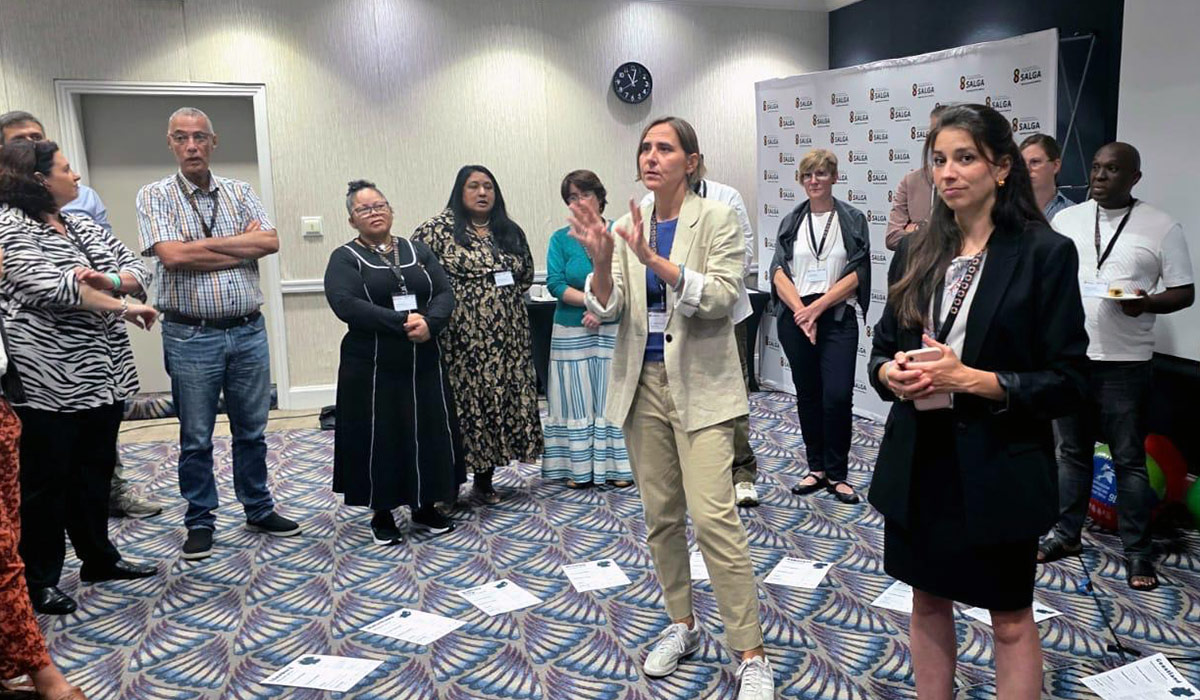
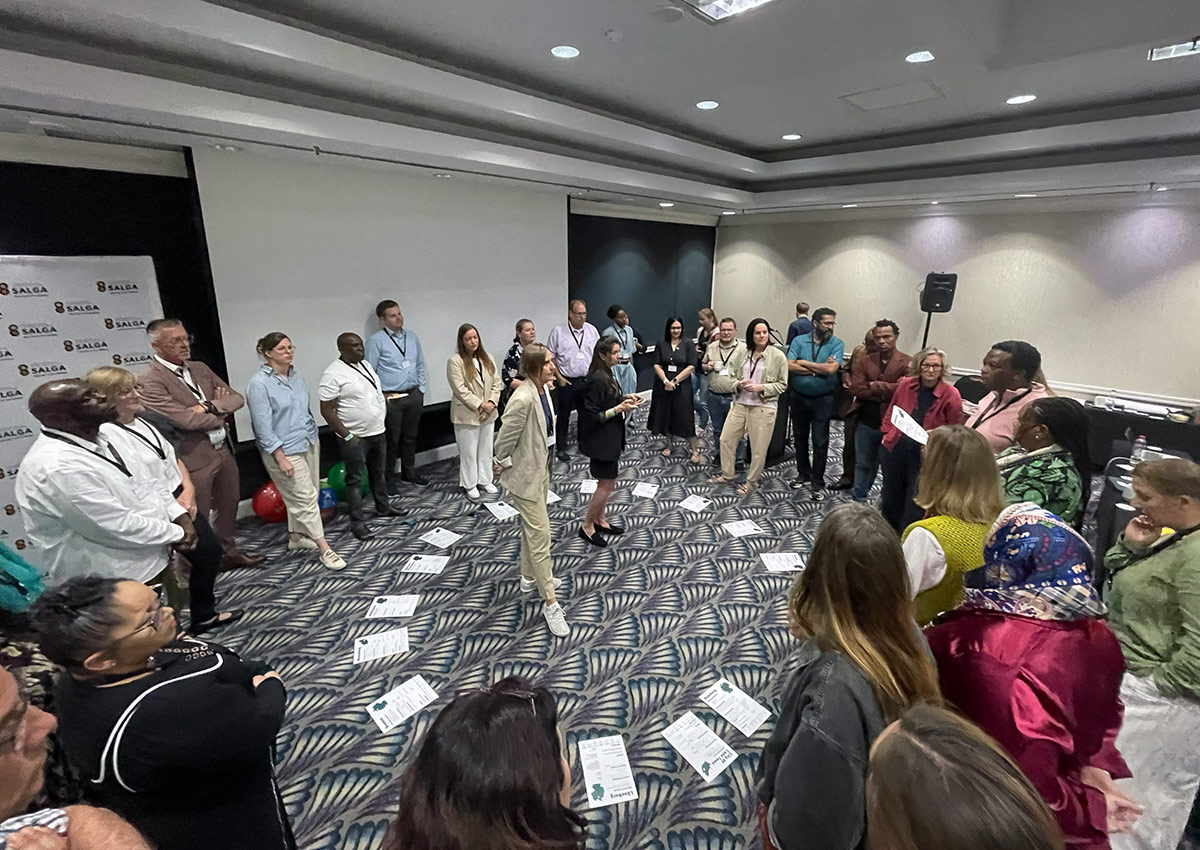
The event brings together experts from cities, counties, and municipalities and supports international expert exchange on the interaction of sustainable forms of mobility.

Goals for participants

  • Learn about innovative mobility solutions and how to combine them in a smart way
  • Compare strategic approaches and instruments for sustainable mobility in cities and surrounding areas
  • Acquire skills to solve challenges in the implementation of planned measures, drawing on an extended network and the method of peer consultation
  • In addition: getting to know each other as a basis for expanded peer exchange, e.g., through professional exchange trips


Participation and contact

If you would like to participate in the learning process, please send us an email by 15 October 2025, with details about your municipality or organization, your role, and a brief description of the project or challenge you would like to present to the other participants.For further information, please download the Call for particpation [pdf, 2 pages].

If you have any questions about the Connective Cities learning process, the event and your participation, please feel free to contact us:

Marcella Sobisch

marcella.sobisch@engagement-global.de

Tel.: +49 (0)228-20717-2658

NEWSLETTER – ISSUE NO. 89, November 2025


Enhancing Local Governance for Climate Action in the MENA region

Local governance plays a critical role in advancing climate action across the MENA region, where cities and municipalities are increasingly at the frontline of responding to climate-related challenges such as water scarcity, extreme heat, and urban vulnerability. Despite national climate strategies, local authorities often face limited financial and technical capacities to implement sustainable solutions. However, there is growing recognition of the need to decentralize climate governance by empowering municipalities with the tools, knowledge, and resources to plan and implement locally tailored climate initiatives. Collaborative efforts—such as regional networks, peer-learning platforms, and partnerships with civil society and the private sector—are helping to strengthen local capacities and foster more inclusive, participatory approaches to climate resilience in urban and rural settings alike. Against this background, Connective Cities has organized on the 13th October 2025 an insight session to showcase good practices and achievements from municipalities in the MENA region in this field.

Planungsrahmen für die kommunale Hitzeanpassung in Assuan
Planning framework for municipal heat adaptation in Aswan| Photo: Connective Cities

Dr. Marwa Ahmed (General Manager of International Cooperation and Community Participation at the Urban Development Fund in Egypt), presented the good practice ‘Integrated Heat Action Framework Development in Aswan, Egypt’, where the Urban Development Fund partnered up with Aswan governorate to channel its institutional knowledge while putting together fragmented parts that will form the base for an Integrated Heat Action Framework in Aswan. The aim was to 1) establish a core working group with the most relevant departments to be involved in the process of developing a heat action plan, and 2) develop the general framework and select a zone for piloting. International experiences showcased and discussed as part of the deep dive were adapted to serve in the local context. Capitalizing on the local native knowledge in Aswan on climate-responsive design and construction methods, the local building codes will be reviewed and modified. The general framework includes measures for 1) adaptation planning and implementation, 2) preparedness, communication, and workers’ safety, 3) built environment, infrastructure, and managed spaces, and 4) ecosystem-based adaptation.

Voting for area prioritization and selection was conducted and resulted in choosing “Elsail Elgadida” as a pilot area. Initial needs assessment meetings with local residents revealed a myriad of urban challenges, among which is the lack of safe public spaces. Accordingly, it was suggested to designate one of the districts numerous wide streets to this purpose by converting it into a pedestrian-only area and rehabilitating it with tree planting, shading elements and urban furniture. Local residents expressed their willingness to collaborate by watering the planted trees.


Sechs Straßenbilder zur Einschätzung der Fussgängerfreundlickeit in Constantine
Assessment of pedestrian-friendliness in Constantine | Photo: Connective Cities

Mr. Al-Hani Maghzi (representative of Constantine municipality-Algeria) presented the initial results and roadmap for improving walkability and transitioning into transit-oriented development in Constantine. He showcased the multi-stage roadmap that incorporates a wide range of procedures that are categorized as structural (e.g. review of mobility plan), comprehensive (e.g. reducing car use, widening sidewalks, reorganizing parking spaces) and priority actions (transforming the city center into a pedestrian-friendly area). He concluded his presentation with the statement that green and liveable cities prioritize pedestrians over vehicles.

In conclusion, the examples showcased how decentralized cooperation supports knowledge exchange, strengthens global partnerships, and drives innovation in local climate adaptation and climate protection efforts. Through the resulting lively discussion, the participants were provided with  actionable insights and tools for municipalities to integrate climate resilience into local planning, infrastructure, and service delivery while ensuring social equity and long-term environmental sustainability.


The recording and presentations are accessible via Connective Cities platform .

Author: Shalan Muna, Connective Cities

The Voluntary Local Review (VLR) of Amman: Accelerating the implementation of the Sustainable Development Goals

With four million inhabitants, the Jordanian capital is home to around 40 per cent of the country’s total population. In 2021, Amman’s city administration, the Greater Amman Municipality (GAM), decided to create a VLR – the first in the Arab region. In the summer of 2022, the VLR was finalised and presented together with the Voluntary National Review (VNR) at the UN High-Level Political Forum in New York.

The VLR has proven to be a complete success – both as an analytical tool and as a process:

  • An ‘ecosystem’ for collecting validated data has been developed.
  • Sustainability goals (SDGs) were integrated into various areas of policy, strategy development and administrative action.
  • New formats for citizen participation were trialled.
  • New projects and partnerships were initiated and ongoing ones strategically interlinked;
  • The digitalisation of the administration is very advanced.

The simultaneous creation of VNR and VLR ensured policy coherence and mutual support between the two levels.

Handing Over Ceremony for the Climate-Sensitive City Development Strategy for Garowe

On September 25, 2024, the Garowe Municipality officially received the Climate-Sensitive City Development Strategy (CSCD), developed in collaboration with GIZ and the RACCA Working Group. This strategy offers practical solutions to pressing climate challenges in areas such as mobility, waste management, water resources, and green spaces.

Event Highlights:

  • Presentation of key sectors for climate-friendly urban development in Garowe.
  • Discussion on sustainable measures to improve urban infrastructure.
  • Formal handover of the strategy plan to the municipality, promoting the implementation of climate-friendly projects in Garowe.
  • Expert exchanges and collaborative discussions aimed at ensuring a resilient future for the city.

The ceremony marked the transition from planning to implementation, empowering Garowe in its efforts to become a sustainable and climate-resilient city.

We invite you to read the full publication and documentation of the event to explore the insights and strategies discussed in detail.

Jerash in Jordan: Incremental steps towards success

Known as “Pompeii of the Middle East”, Jerash in Jordan is a tourist destination due to its well-preserved Greco-Roman ruins. It is a rapidly urbanizing city that is experiencing population growth, accompanied by challenges such as housing shortages, traffic congestion, environmental degradation, and the integration of refugee population. As the city struggles with these complex issues, the municipality has been pursuing innovative and sustainable solutions that prioritize the well-being of its residents while fostering environmental stewardship and economic prosperity. Represented by the local development unit, the municipality has actively participated in many of Connective Cities regional and global activities, enabling it to take away ideas for  local projects in the areas of gender-sensitive local economic development, waste management and plastic recycling, paving the way towards becoming a zero-waste municipality. In 2021, the municipality established a sorting station with financial and technical support from the GIZ to construct a waste sorting facility. The municipal waste management team has successfully managed the segregated waste operation during the past years. The operation is sustainable and the revenue from selling the segregated products is covering the operational costs.

Solar pumps, e-mobility, and climate-friendly street lighting in Sub-Saharan Africa

The workshop is part of a working group for Renewable Energy Applications for Cities convened by Connective Cities in collaboration with the Romanian development agency RoAid.

Apart from the municipal experts and the Connective Cities team, the conference was graced by the attendance of Daniella Dobre (RoAid), Massimiliano Pedretti (Delegation of the European Union to Tanzania), and Dr. Tobias Godau (GIZ ProWaS – Water Security and Climate Resilience for Urban Areas in Tanzania.

The conference was a follow-up event of the kick-off workshop in Nairobi in 2023, focusing on the topic of Street Lighting and E-Mobility applications in the urban context.

Participants

The participant experts represented the cities of Nairobi, Kisumu and County of Baringo (Kenya), City of Kasungu (Malawi), Gulu city (Uganda), City of Dar es Salaam, City of Mwanza and City of Tanga (Tanzania). The Working Group is accompanied by the international representatives from the cities of Gersthofen (Germany), Slatina and Alba Luluia (both Romania).

Participating institutions were:

  • Malawi Local Government Association (MALGA)
  • Regional Administration and Local Government Tanzania (PO-RALG)
  • The City Climate Gap Fund (through the project support office of the Global Covenant of Mayors)
  • The African Development Bank (through the Renewable Energy and Energy Efficiency Department)

Ideas presented:

All ten cities presented their projects and received advice. All ten cities are familiar with the prerequisites for funding and have completed 70% of these requirements.

Kisumu, Kenya:

Improving electric mobility and street lighting in the city of Kisumu. Piloting a PPP model for the deployment of charging infrastructure for 2- and 3-wheel motorcycles.

Baringo, Kenya:

Solarization of a water pump that pumps water from Lake Baringo to a treatment plant in Kabernet town.

Gulu, Uganda:

Solarization of the main street of Gulu City.

Mwanza, Tanzania:

Solar Project on Ijinga Island generated from solar panels to operate water pumps that push water to a treatment tank. Fundraising stage, feasibility analysis completed already.

Nairobi: Energy efficiency and Solarization of markets. Target pilot projects: City Market, City Park Market, Kangundo Road Market and Gikomba Market. Energy audits for these sites have been carried out.

Dar es Salaam: Solar powered street lighting along market street incorporating solar power radio for the market and charging stations for three wheelers.

Tanga: The cites faces an ever-growing landfill. The city intends to undertake a waste to energy project. To begin, the city therefore aims to undertake waste value chain analysis. This will highlight the waste characteristics and the attendant calorific values.

Kasungu: The City of Kasungu presented a double challenge of deforestation due to the heavy usage of biofuels (firewood and charcoal) and the high cost of power for lighting the streets compounded by lack of such streetlights in many areas. The city therefore prioritizes for the project to prepare a solution for solar street lighting still integrated with the main grid for back-up.

Malawi Local Government Association (MALGA): The proposed project focuses on installing solar-powered streetlights to improve lighting in selected municipalities and cities in Malawi. This initiative aims to enhance the local business environment, improve security, and contribute to local economic development.

Targeted Municipalities: Kasungu, Karonga, Luchenza, Mangochi.
Targeted Cities: Zomba City, another city to be determined.

Next Steps of the Working Group

In the journey to support the cities to develop solutions to their challenges, Connective Cities and RoAid plan to continue their support via:

  • Insight sessions and webinars: present emerging knowledge in short learning sessions.
  • Best practices: Publishing of innovative solutions of the collaborating cities.
  • Conferences / Workshops: to bring the city experts together to scale up peer to peer and associated learning.
  • Expert missions: will be availed to city experts with clear cases and inputs for experiential learning and exchange. This will include virtual formats where cities are connected according to relevance of needs.

Promoting Sustainable Mining Industries

The online event took place on 23 April and explored the challenges and opportunities in promoting sustainable mining industries and the critical role of cities in driving positive change in the sector. Key discussion points included:

  • The role of cities in promoting sustainable mining industries: How can cities actively contribute to the promotion of sustainable mining practices, taking into account environmental and social impacts?
  • Maximising benefits for local communities: What strategies are in place to ensure that mining activities best benefit local communities, both economically and socially?
  • Repurposing closed mining sites: What innovative approaches exist to transform them into new assets for communities and promote sustainable development?

The event featured insightful inputs from various sources:

City-to-city collaboration is key to streamlining climate neutrality and decentralized energy production

Together with the Connective Cities, the Association of German Cities organized a side event in the German Pavilion at the COP28 World Climate Conference in Dubai on the question of “What solutions are there for sustainable and decentralized energy generation and supply at local level”. On 6 December at 2 p.m. local time, representatives from German and African cities (Cologne, Bonn, eThekwini and Abuja) discussed their local innovations for climate-friendly energy solutions.

In her keynote speech, Katja Dörner, Vice-President of the German Association of Cities, Mayor of Bonn, and ICLEI Co-Chair for Climate Action, emphasized the importance of a socially just and participatory approach to a climate and energy transition. She emphasized that the voice of cities in climate negotiations is essential to achieve global goals.

She showed how the city of Bonn can achieve climate neutrality by 2035 and called on the federal level to make swift changes to support the local level. The EU and the German federal level must create the framework for a climate-friendly energy transition. She again emphasized the importance of making climate protection and adaptation a mandatory task for local authorities.