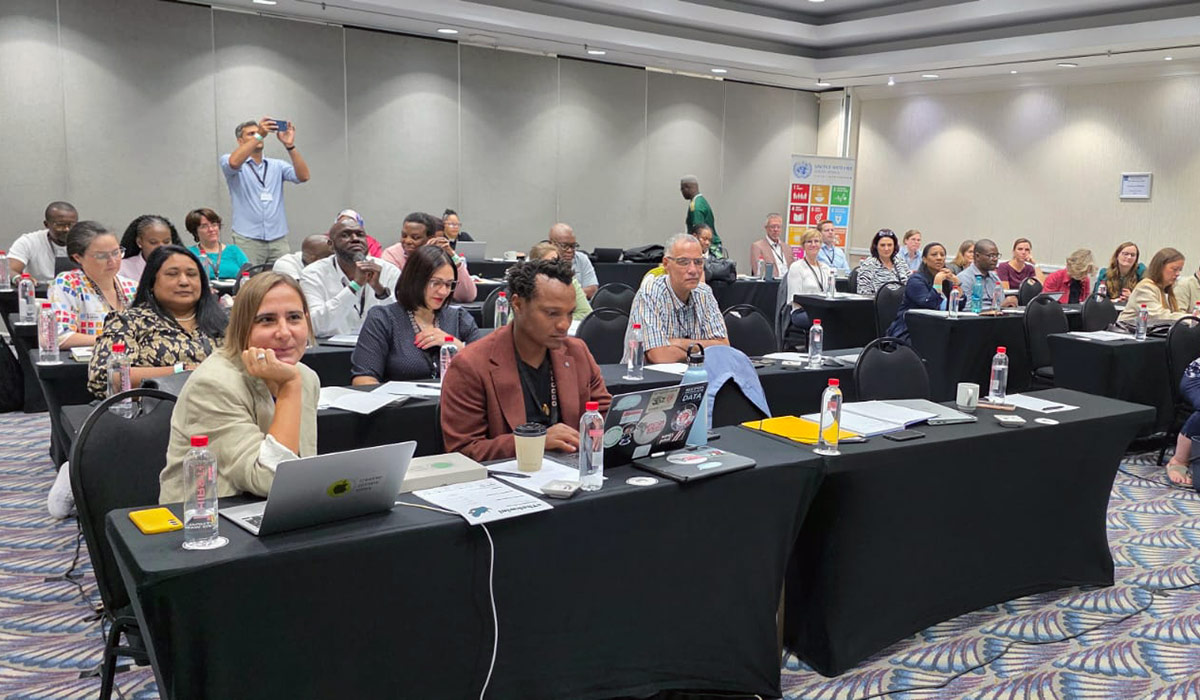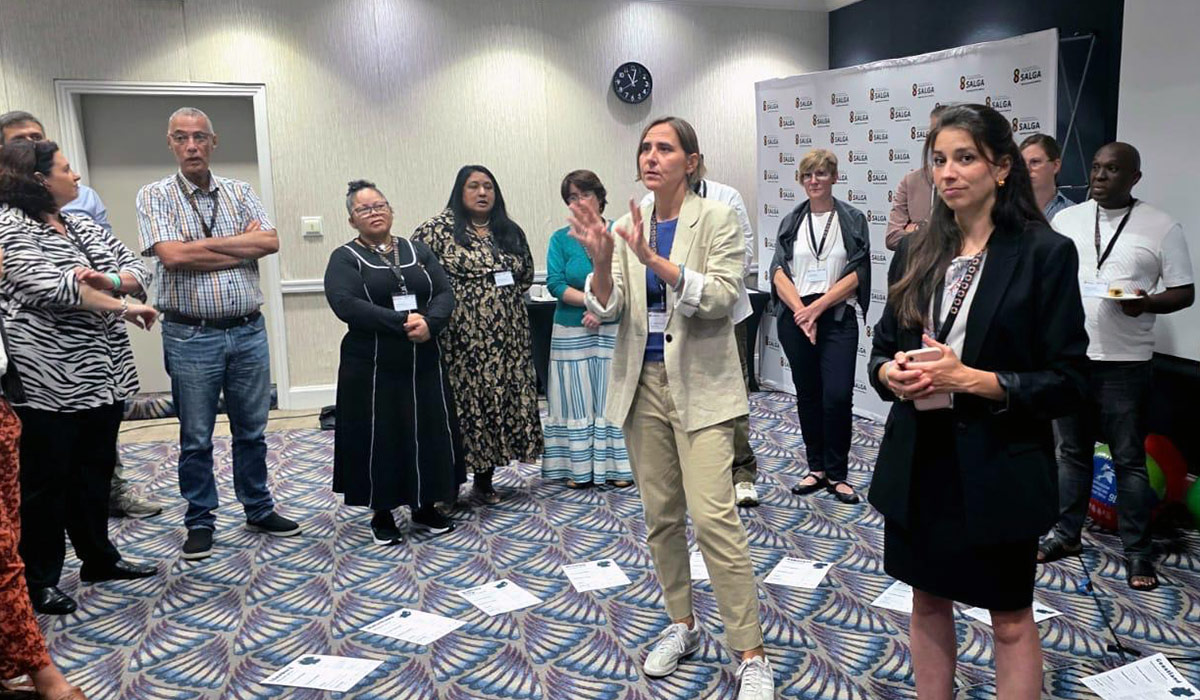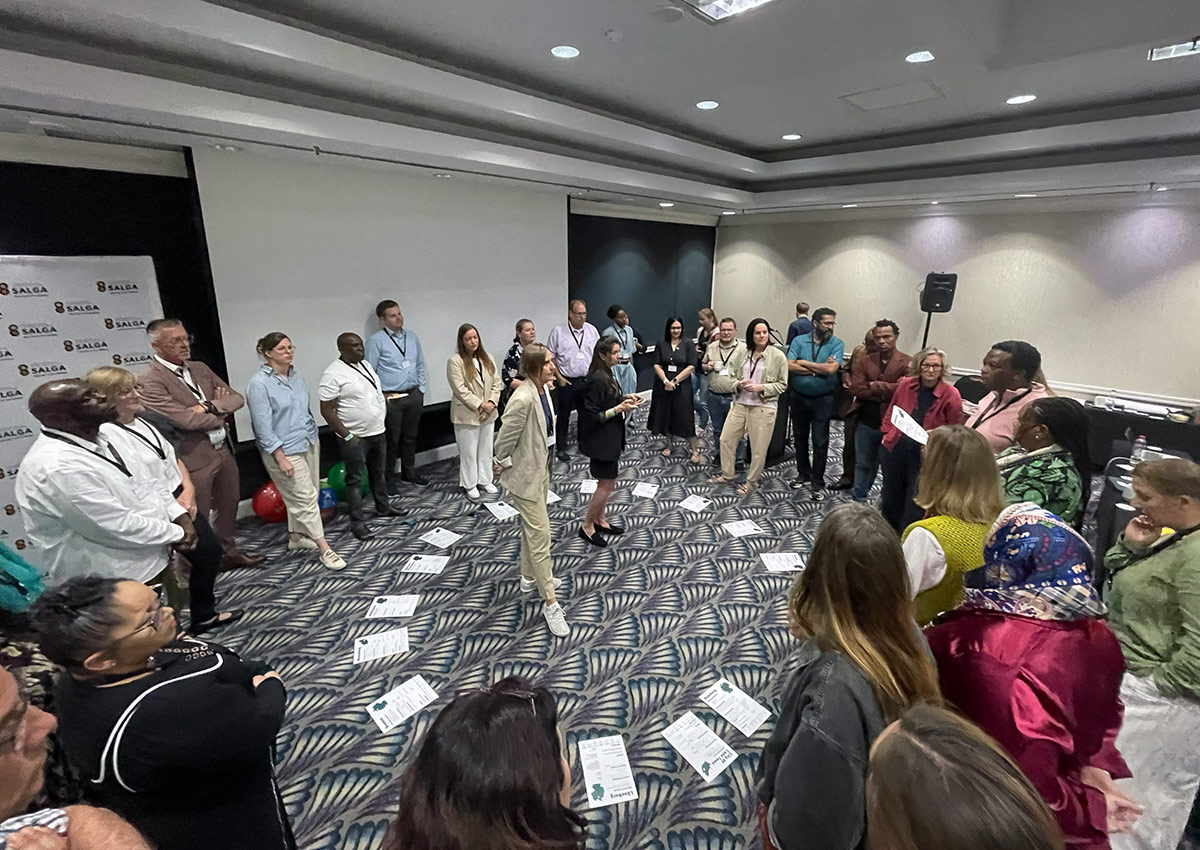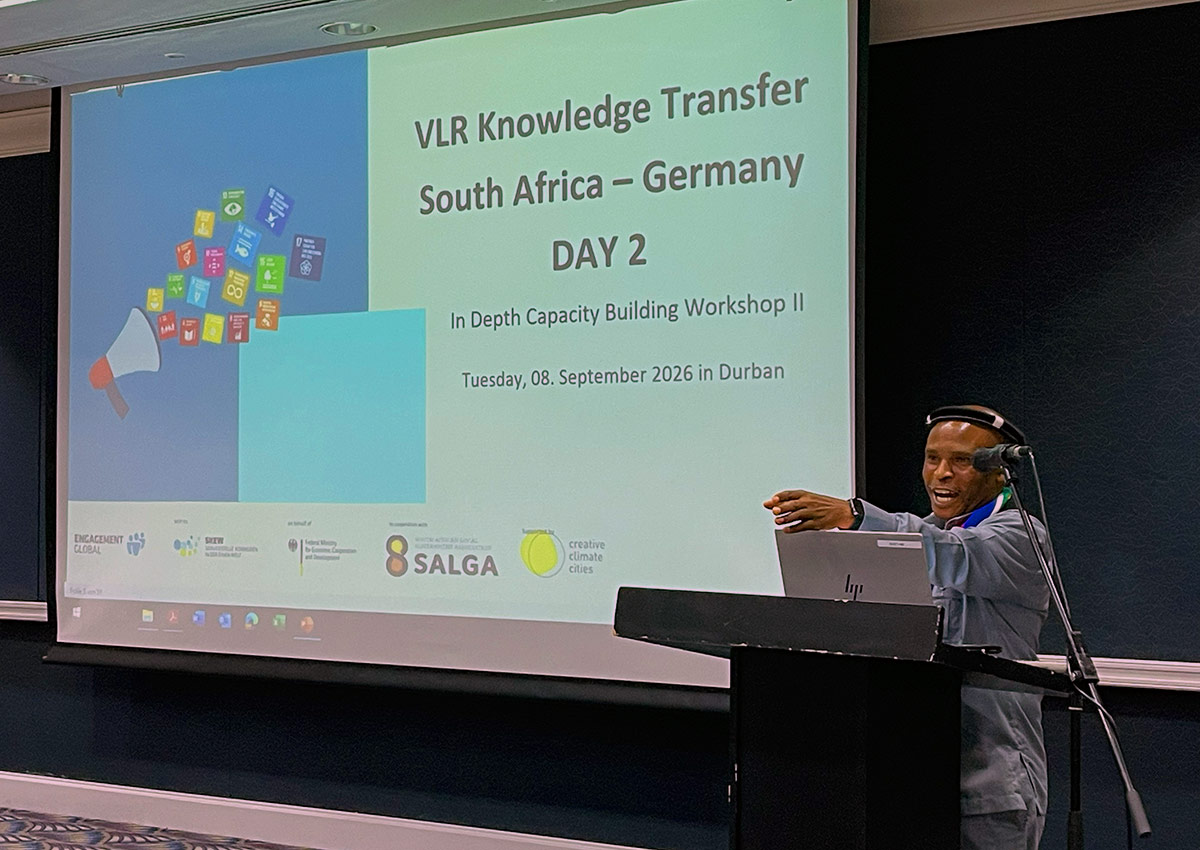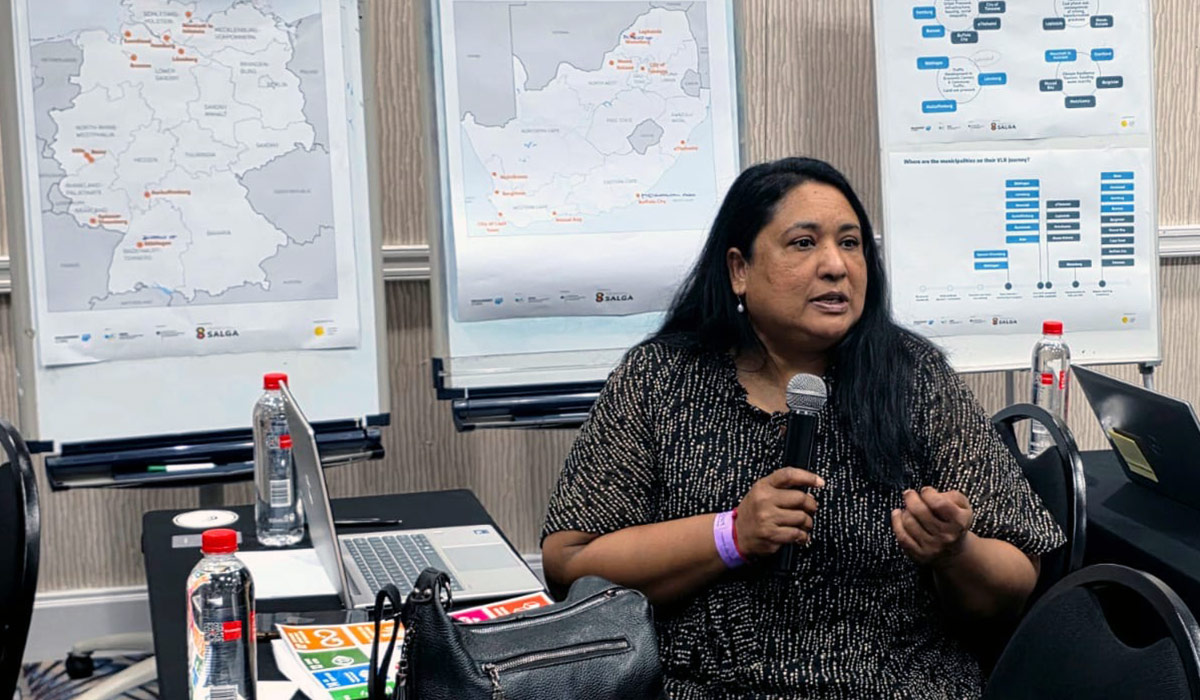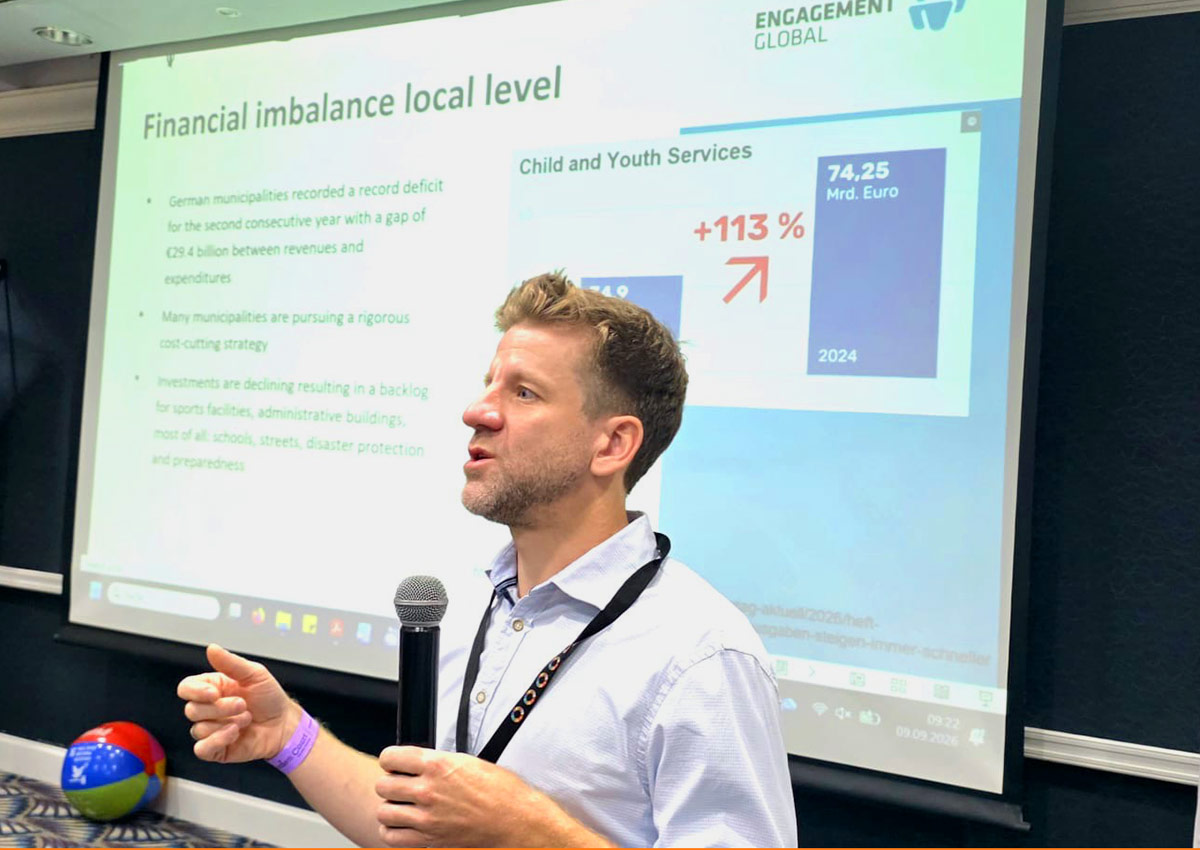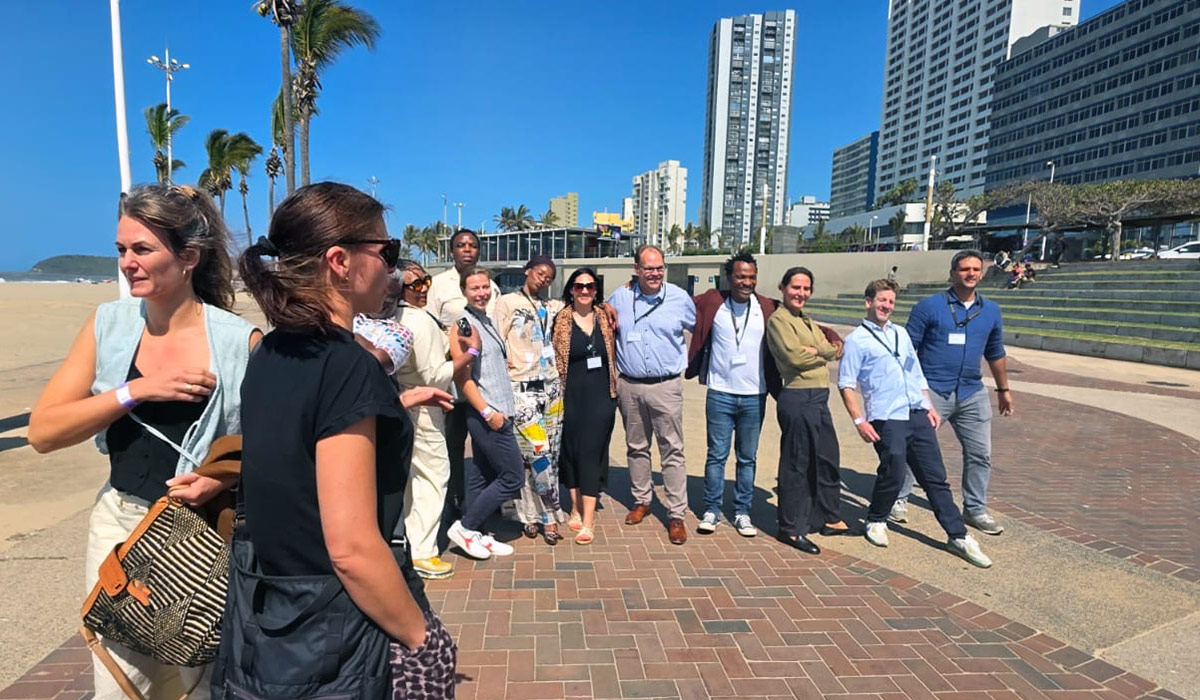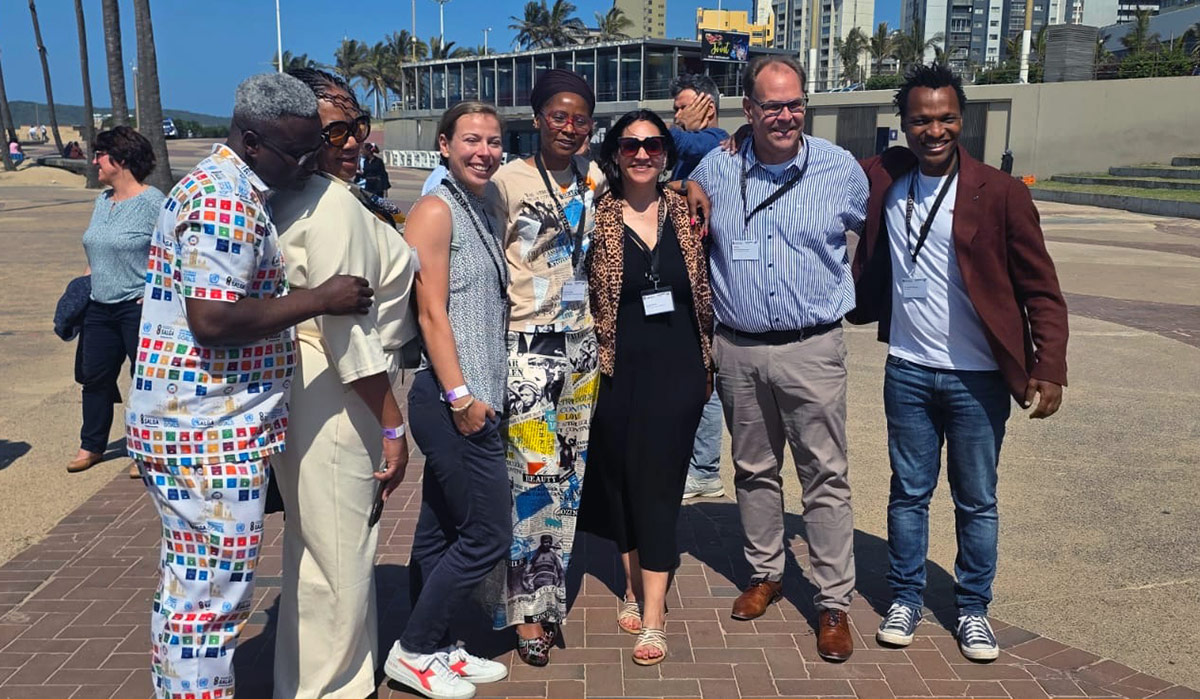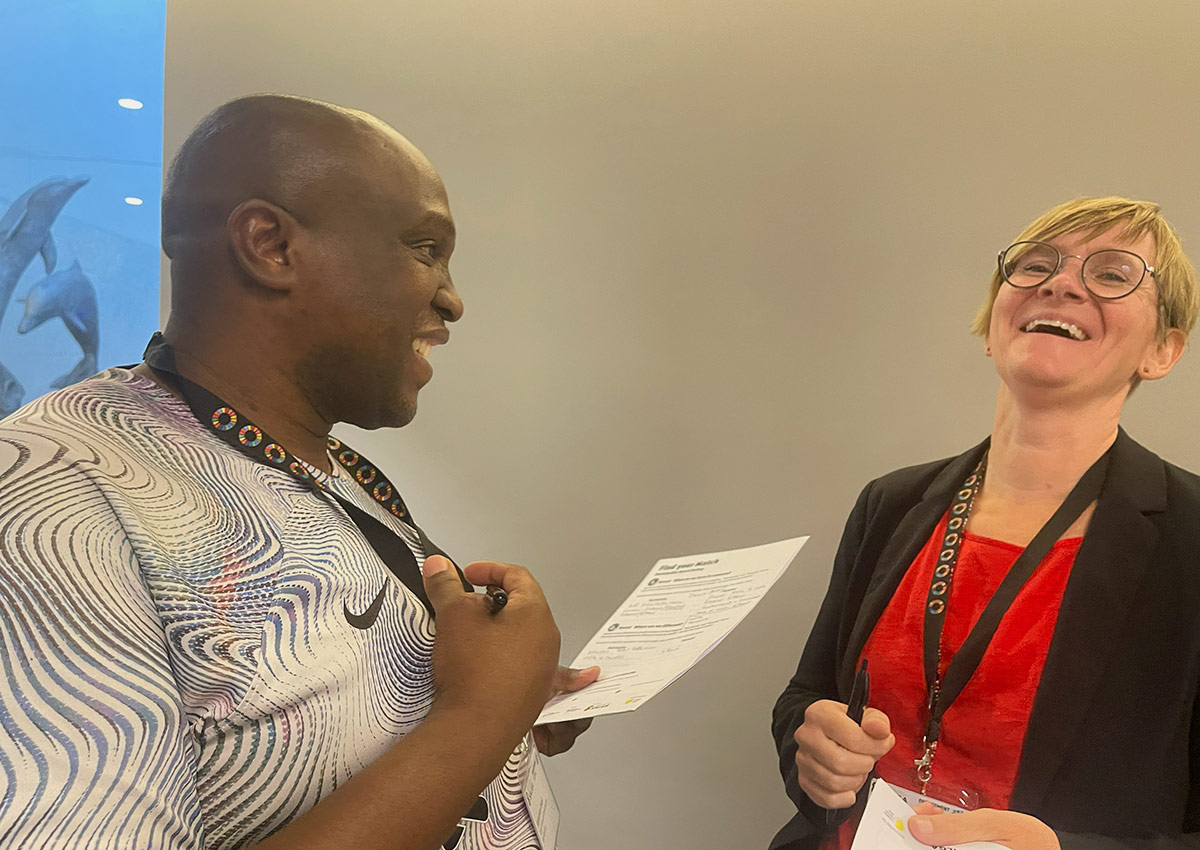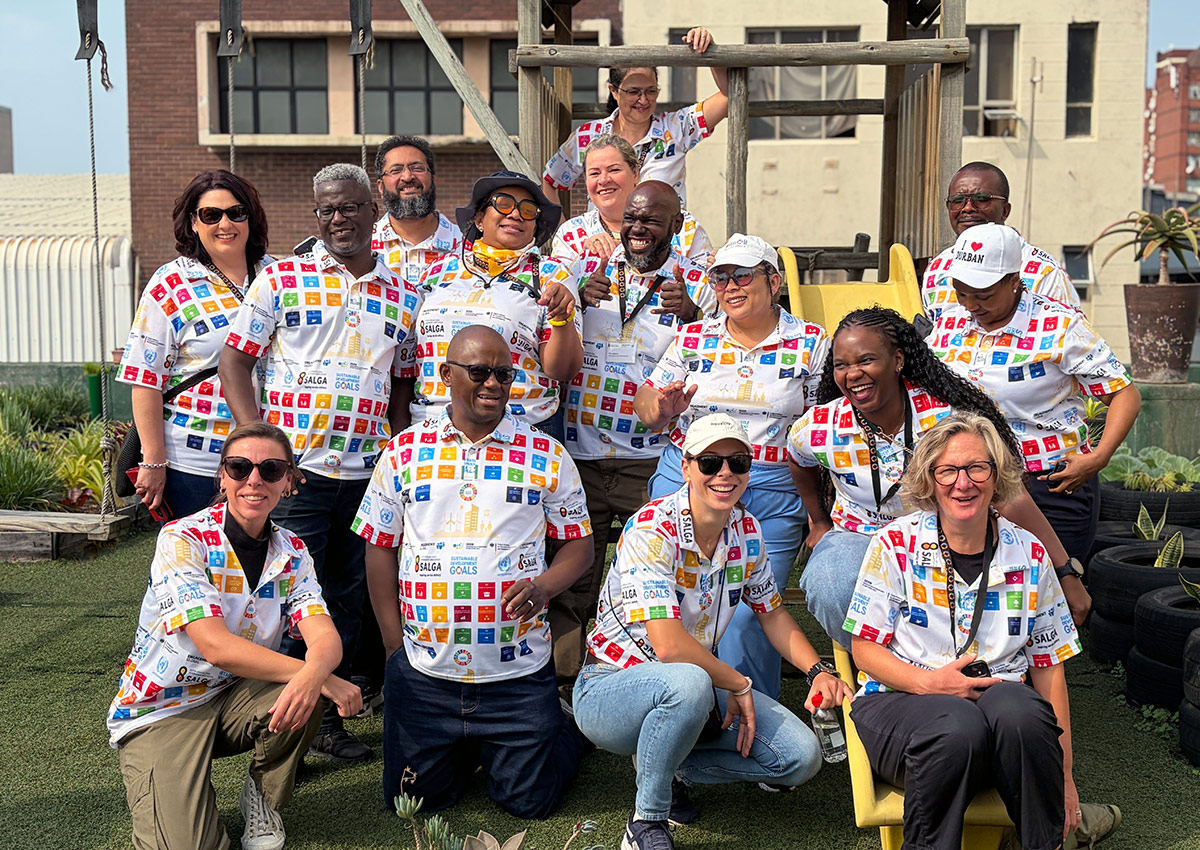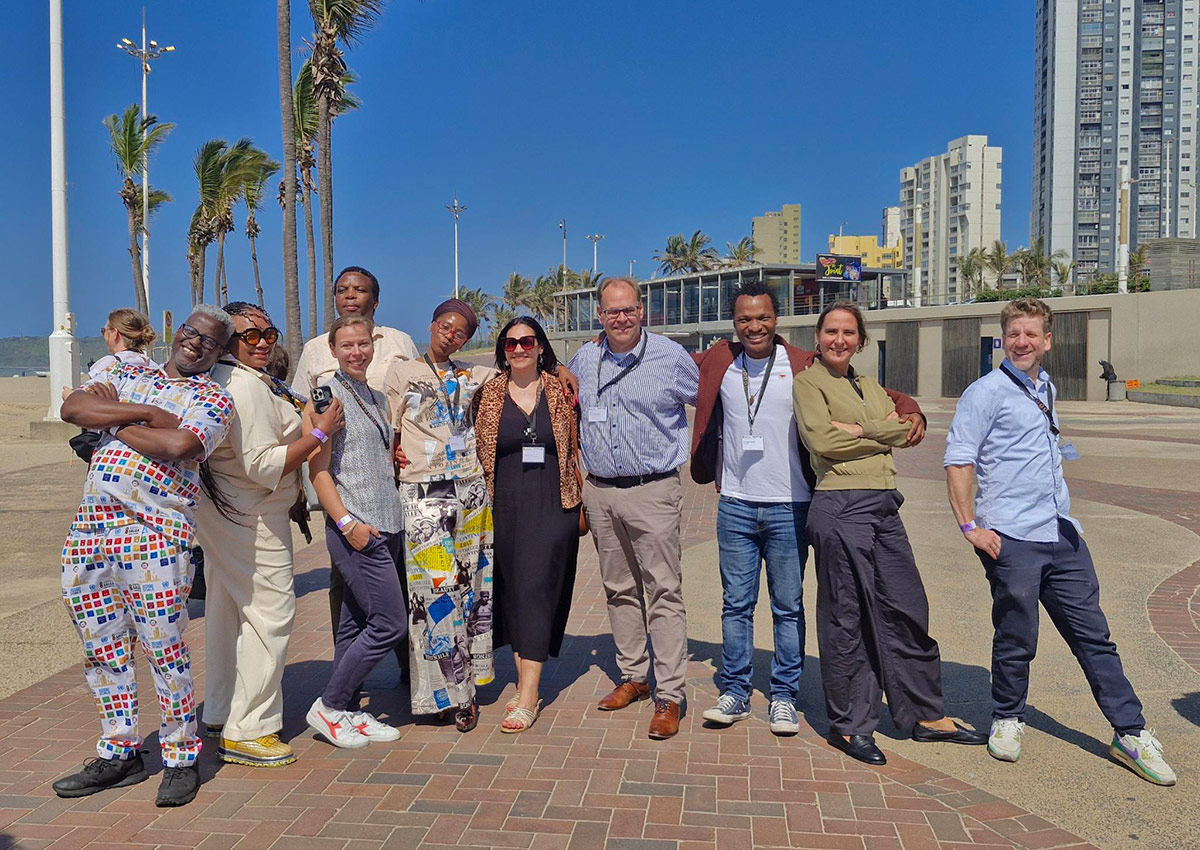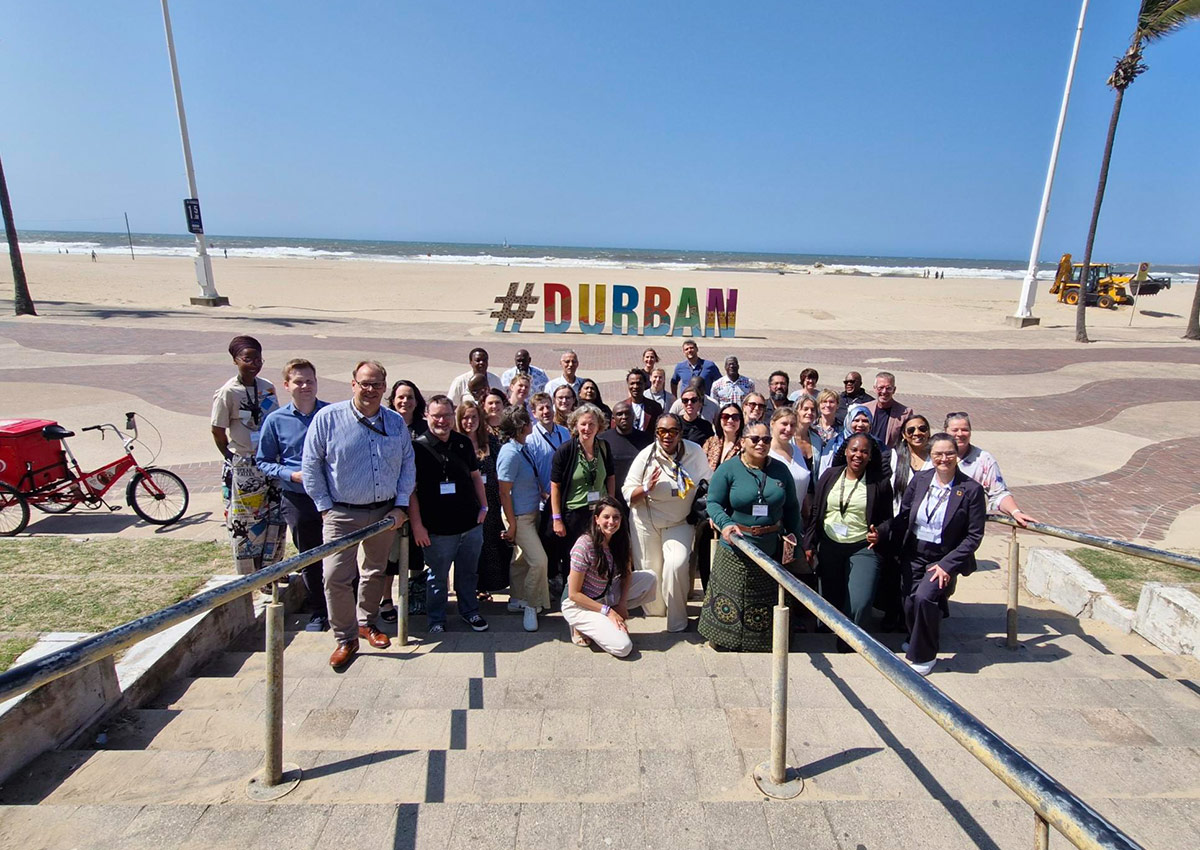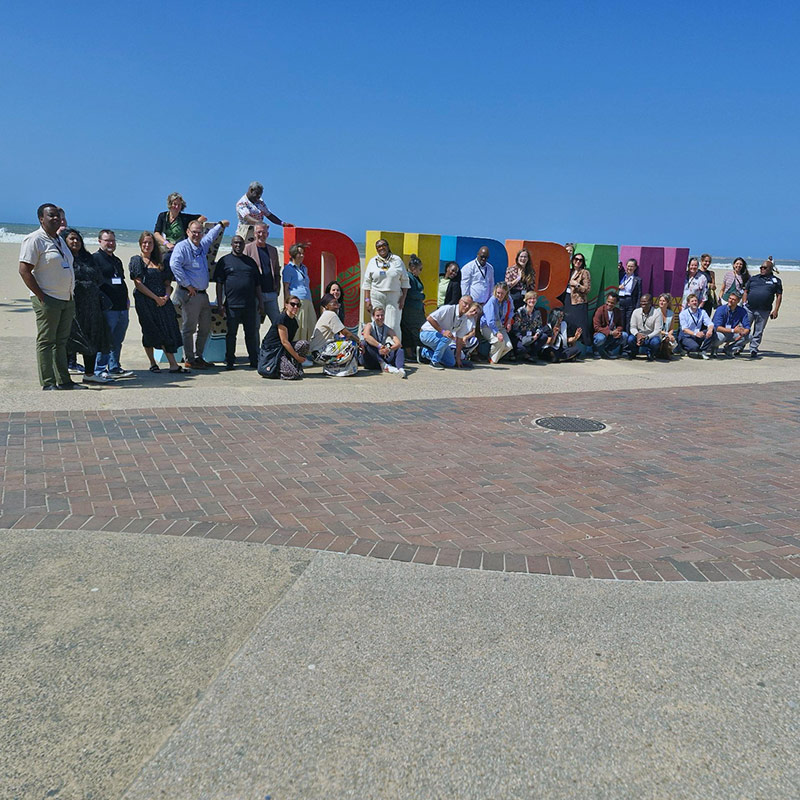
How can municipalities systematically track their progress on sustainable development while learning from one another? Twenty-three South African and German municipalities set out to answer this question together at two week-long workshops, held in Frankfurt in June 2026 and in Durban, South Africa, in September 2026, as part of the project ‘VLR Knowledge Transfer South Africa – Germany’.
The South African participants were Bergrivier Local Municipality, Buffalo City Metropolitan, City of Cape Town Metropolitan, City of Tshwane Metropolitan, eThekwini Metropolitan (Durban), Lephalale Local Municipality, Matzikama Local Municipality, Moses Kotane Local Municipality, Mossel Bay Local Municipality and Waterberg District Municipality; the German participants were the Free and Hanseatic City of Hamburg, the Municipality of Spiesen-Elversberg, the Hanseatic Cities of Bremen, Buxtehude and Lüneburg, Böblingen District, the Cities of Aschaffenburg, Bonn, Geestland, Neustadt in Holstein, Cologne and Pirmasens.
Municipalities play a central role in implementing the 2030 Agenda and its Sustainable Development Goals (SDGs). To make progress measurable and to communicate it transparently, a growing number of towns, cities and communities are using Voluntary Local Reviews (VLRs) or, in Germany, also the Sustainable Municipality Reporting Framework (Berichtsrahmen Nachhaltige Kommune, BNK) – voluntary reports, produced by municipalities themselves, on the status of SDG implementation at local level.
In practice, municipalities often face similar challenges: reliable data and suitable indicators are lacking, monitoring systems are still being set up, and producing a VLR requires good cooperation across departments as well as a clear methodological approach.
This is precisely where the project comes in. In the two workshops, the participating municipalities exchanged experiences and solutions and jointly developed ideas on how sustainability reporting can be used as a tool for municipal steering. The project is being implemented by the Service Agency Communities in One World (SKEW) together with the South African Local Government Association (SALGA). The Connective Cities learning process ‘Sustainability Reporting and Voluntary Local Reviews’, carried out in 2025, laid the foundation for this cooperation. The project continues to be supported by the agency Creative Climate Cities and is funded by the Federal Ministry for Economic Cooperation and Development (BMZ).
For participation, municipalities that were already engaging with the SDGs and municipal sustainability reporting were approached in early 2026. In addition, municipalities that are still at an earlier stage and stand to benefit from the experiences of the group also took part. Subject to funding approval, a further call for participation is planned for 2027.
A key outcome of the project will be a practical guide that leads municipalities through the process step by step. The publication is intended to help municipalities plan and carry out their own Voluntary Local Review in a structured way. It is scheduled for publication in early 2027.
Impressions
All photos: Connective Cities