Connective Cities participated in the United Cities and Local Governments (UCLG) World Congress 2026, held from 22–25 June in Tangier, Morocco. Under the overarching theme “A New Generation of Universal Local Public Services,” the Congress brought together more than 3,000 local and regional leaders, municipal practitioners, city networks and development partners from around the world.
As part of the Local4Action Track, Connective Cities, together with the Association of German Cities, organised the 90-minute Lab “From Challenge to Practice: How Municipalities Turn Local Plans into Public Services.”
From Planning to Implementation
The Lab addressed a challenge shared by municipalities worldwide: while local strategies and development plans are often well designed, translating them into effective, inclusive and sustainable public services remains a complex task. Rather than focusing solely on success stories, the session encouraged municipalities to share real implementation experiences, discuss practical challenges and learn from one another.
Gabi Schock from the City of Krefeld (Germany) opened the session with insights into strategic municipal waste management, demonstrating how citizen participation can become a key success factor in planning and implementing public services. Using Krefeld’s waste management strategy as an example, she illustrated how local government, political representatives, businesses and citizens were involved at an early stage of the planning process. The presentation showed that participation not only increases public acceptance of new measures but also helps integrate local knowledge into decision-making, identify potential conflicts early on and develop sustainable long-term solutions. Krefeld’s experience highlighted that successful municipal service delivery is built on transparent governance, continuous dialogue and trust-based cooperation with citizens.
The second case was presented by H.E. Governor Issa Timamy of Lamu County (Kenya), who introduced the Kiunga Solar-Powered Desalination Initiative. The project addresses the challenge of providing reliable access to clean drinking water in a remote border region. By using solar-powered desalination technology, Lamu County has not only improved water supply but also reduced dependence on fossil fuels and strengthened resilience to climate change. Governor Timamy emphasised that the initiative’s success was made possible through close cooperation between the County Government, local communities and development partners. The project demonstrates how integrated municipal planning can simultaneously contribute to improved public services, better health outcomes, social cohesion and local economic development. In recognition of these achievements, Lamu County received the UCLG Peace Prize, accompanied by prize money of €20,000.
The two presentations highlighted a common message: effective public service delivery is achieved where technical solutions are combined with good governance, active citizen participation and strong local partnerships.
Peer-to-Peer Consultation: Developing Solutions Together
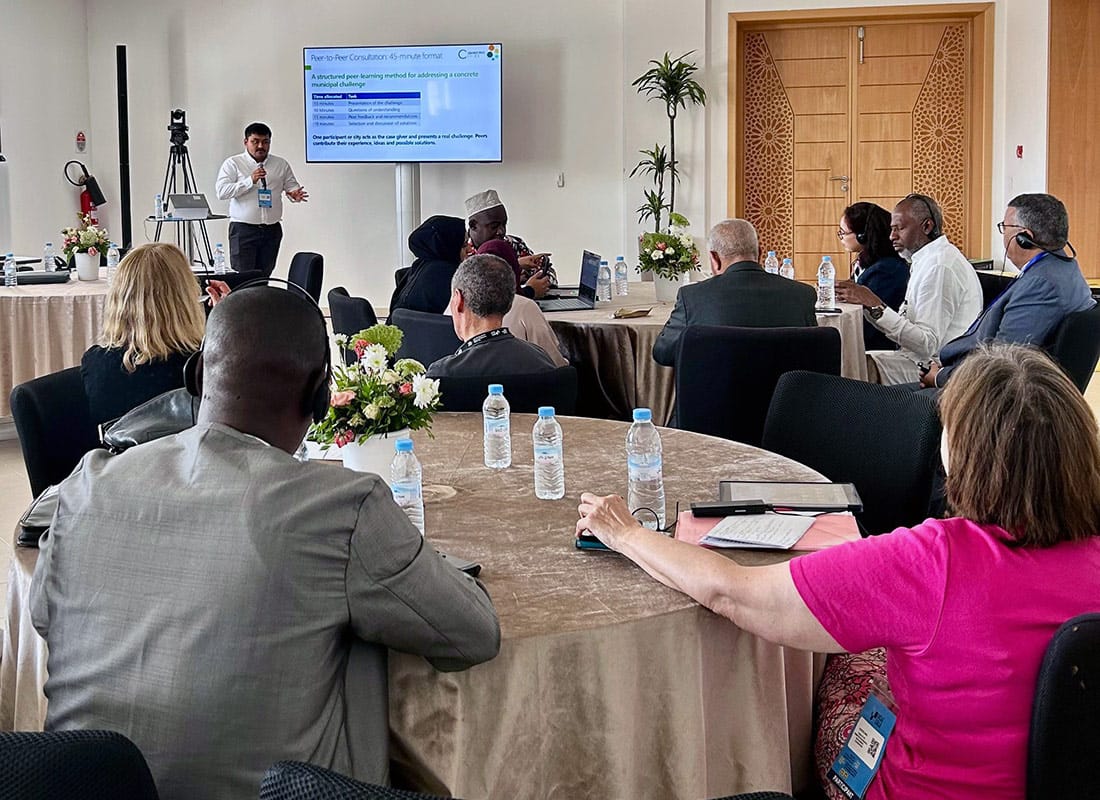
The second half of the Lab shifted from presentations to collaborative problem-solving.
An Introduction to the Peer-to-Peer Consultation Methodology | Photo: Connective Cities
A representative of the Municipality of Pékine (Senegal) presented a real implementation challenge: complex procurement procedures, lengthy administrative processes and staff turnover were delaying infrastructure projects and slowing down municipal service delivery.
Participants jointly analysed the challenge during a facilitated Peer-to-Peer Consultation and developed a range of practical recommendations. Proposed solutions included:
strengthening knowledge management to preserve institutional memory;
developing clearer procurement roadmaps and process guidelines;
improving coordination across municipal departments;
establishing clear responsibilities and accountability mechanisms;
promoting knowledge exchange with neighbouring municipalities;
investing in continuous capacity development for municipal staff;
creating databases of qualified service providers;
introducing minimum quality standards for contractors and service providers; and
assessing the political and institutional context at an early stage to identify opportunities for implementation.
The discussion demonstrated that municipalities across different regions often face remarkably similar implementation challenges. This is precisely where the Connective Cities approach creates value: structured municipal exchange enables practitioners to jointly develop practical solutions that can be adapted to their respective local contexts.
The Lab also illustrated how international municipal exchange can move beyond traditional good practice presentations. By openly discussing implementation challenges and working together to identify solutions, peer learning becomes a practical instrument for strengthening local public service delivery.
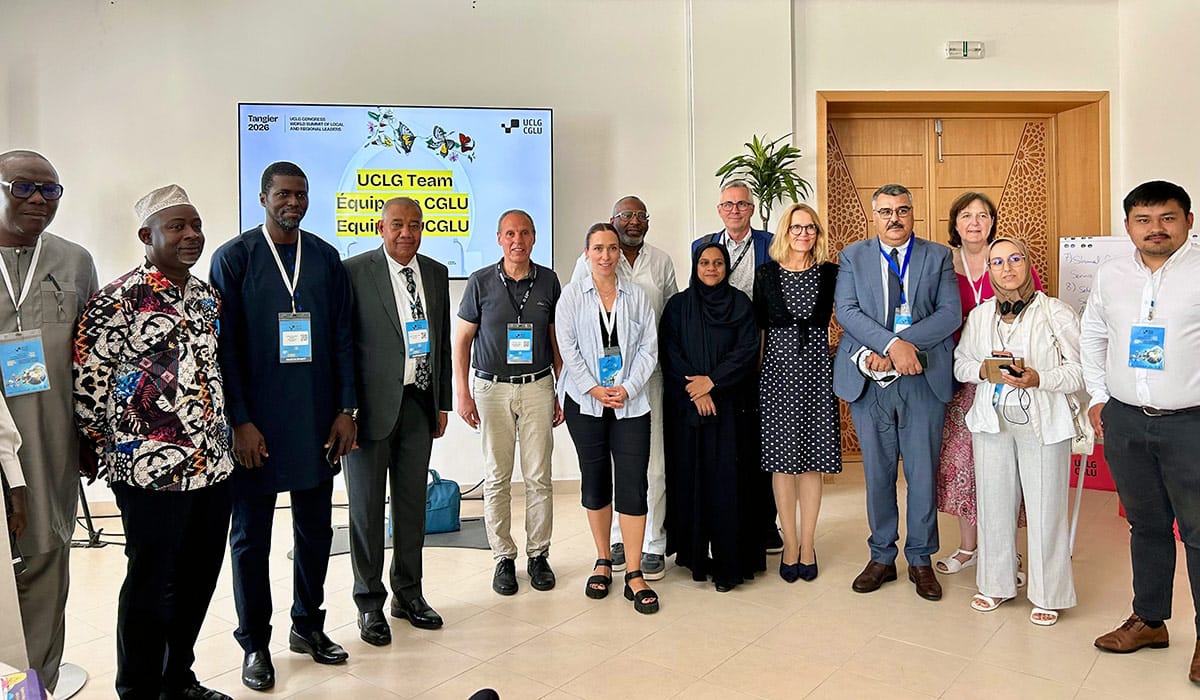
The Connective Cities team and participants in the Lab | Photo: Connective Cities
The Connective Cities learning process on “Nature at the Heart of Urban Resilience” was officially launched through a three-day kick-off workshop held in Naivasha, Kenya from 21 to 23 April 2026, bringing together 20 municipalities and cities from across Sub-Saharan Africa and Germany, alongside over 40 urban practitioners, technical experts, and institutional partners.
The workshop marked the starting point of a longer-term engagement aimed at supporting local governments in translating their urban challenges into concrete, implementable solutions through structured peer exchange and technical support.
Cities at the Frontline: Climate Pressures and the Need for Nature-Based Solutions
Urban areas are increasingly where the impacts of climate change are most visible—and most intensely felt. Across Sub-Saharan Africa, cities and municipalities are facing a convergence of pressures: rapid urbanisation, environmental degradation, and growing exposure to climate risks such as flooding, drought, and heat stress. These pressures are not isolated; they interact in complex ways, amplifying vulnerabilities and placing strain on already limited infrastructure and institutional capacities.
At the same time, local governments are not passive actors. As highlighted in the opening of the workshop, they are at the forefront of both experiencing and addressing climate challenges.
Andreas Wolter, President of Climate Alliance and City Councilor of Cologne, emphasized the critical importance of ensuring that cities are actively represented in the global climate discourse, as municipalities are where climate impacts are most immediate and where solutions must ultimately be implemented.
Complementing this perspective, Dr. Nelson Maara, representing Nakuru County, highlighted the importance of preserving ecosystem services as a foundation for resilience, drawing on local experience to illustrate how the degradation of natural systems directly translates into increased urban vulnerability for climate-related risks.
Together, these perspectives reinforce a growing recognition that municipalities must play a stronger role in shaping climate action, as they are responsible for translating high-level commitments into practical, locally grounded solutions. In this context, Nature-Based Solutions (NbS) offer a critical pathway—enabling cities to address environmental, social, and economic challenges simultaneously through the restoration and sustainable management of ecosystems. However, while the relevance of NbS is increasingly acknowledged, the ability to move from concept to implementation remains a complex issue. This is where the Connective Cities learning process plays a critical role, equipping municipal practitioners with the technical capacities and knowledge required through structured exchange formats.
From Exchange to Implementation: The Role of the Learning Process
The learning process is built on the principle that cities and municipalities learn most effectively when they engage directly with one another on real, shared challenges. Rather than focusing on abstract knowledge transfer, it creates a structured space for practitioners to jointly analyse their challenges, exchange experiences, and progressively develop reform measures—concrete actions or project concepts that can be taken forward within their local contexts.
Additionally, another key component of the Learning Process methodology is to strengthen the capacities of urban practitioners to design, plan, and advance these measures within their institutional environments. The peer-to-peer approach is particularly important given the diversity of participating municipalities, bringing together different governance structures, capacities, and experiences while highlighting that many of the underlying challenges are fundamentally shared.
The learning process is therefore not about transferring solutions from one context to another, but about enabling cities to adapt and refine ideas through dialogue, ensuring that they are both context relevant and practically implementable.
From Framing to Practice: Expert Inputs and Panel Insights
Building on the broader objectives and structure of the learning process, the kick-off workshop in Naivasha marked the first step in translating this approach for peer learning into practice. Over the course of three days, participating cities and municipalities engaged in a structured exchange that combined expert inputs, panel discussions, and peer learning sessions, allowing them to ground NbS in their own urban realities.
The expert inputs provided the theoretical basis for the participants to better understand the importance of NbS for sustainable municipal development:
Prof. Johanes Belle introduced NbS through the lens of ecosystem services, highlighting how natural systems provide essential functions such as flood regulation, water purification, and climate moderation.
In addition to their core infrastructural functions, Nature-Based Solutions also generate co-benefits, including improvements in psychological well-being of local residents, increased soil quality, and opportunities for job creation. By framing NbS in terms of these services, Dr. Belle underscored that ecosystems should be understood as functional infrastructure, central to urban resilience rather than peripheral environmental assets.
For example, wetlands and urban green spaces can absorb excess stormwater, reducing flood risk while simultaneously improving water quality in rapidly growing urban areas. This perspective was particularly relevant for participating cities, many of which are experiencing the direct consequences of ecosystem degradation in the form of increased flood risk, declining water quality, and heightened climate vulnerability.
The input from Deputy Mayor William Wolfgramm, from the City of Cologne’s Climate Department demonstrated how such concepts of NbS can be translated into practice within a structured comprehensive planning framework by presenting the City of Cologne’s ‘urban green space masterplan’. Drawing on concrete examples, the presentation showed how NbS are embedded within long-term planning instruments and supported through institutional coordination, data-driven analysis, and dedicated funding mechanisms.
Measures such as de-sealing urban surfaces, expanding green corridors, and promoting green roofs and rainwater retention systems illustrated how NbS can be systematically implemented at scale when anchored in governance structures, through long-term planning processes and through taking a ‘whole-of-society’ approach.
The panel discussion further reinforced this shift from concept to application. Drawing on experiences from cities that had previously engaged in similar processes, panelists demonstrated through experiences from previous Connective Cities learning processes how initial ideas developed through peer exchange can evolve into tangible outputs—whether through feasibility studies, planning instruments, or pilot interventions. The discussion highlighted various concrete lessons:
eThekwini (South Africa): Emphasised the importance of adopting an all-of-society approach to disaster risk management, bringing together local government departments, technical experts, and communities. Particular attention was given to strengthening communication channels with local populations and ensuring that NbS are embedded within long-term, city-wide programmes and institutional frameworks.
Abelkuma, Accra (Ghana): Highlighted the importance of breaking down institutional ‘silos’ and ensuring coordination across departments in the development of foundational instruments such as urban greening guidelines and implementation plans. The intervention further underscored the need to strengthen technical detailing, local ownership, and financing pathways in order to move from concept to implementation.
Berlin (Germany): Emphasised the importance of clearly scoping technical challenges, anchoring them within appropriate institutional frameworks, and establishing clear lines of accountability. They further highlighted how inclusive, participatory processes—bringing together multiple stakeholders, including local communities—can strengthen implementation, supported by robust control mechanisms such as data systems, continuous monitoring, and regulatory frameworks.
Lusaka (Zambia): Emphasised the critical role of data collection and feasibility studies in advancing projects from concept to implementation. They highlighted the importance of partnerships in mobilising financing and noted the value of city networks in providing technical support and facilitating access to funding opportunities.
Commonly shared among the panelists was the insight, that while ideas often originate through exchange, their success depends on strong ownership —both in terms of institutional anchoring and the involvement of all relevant stakeholders— alongside the ability to translate concepts into structured an financeable interventions.
Cities in Dialogue: From Individual Challenges to Shared Patterns
With these insights in mind, the workshop moved into the peer learning phase, where participating cities and municipalities began to unpack their own challenges in greater detail. To facilitate focused exchange, participants were organised into five moderated working groups:
Group 1: Babadjou (Cameroon), Méagui (Côte d’Ivoire), Natitingou (Benin), Commune de Nanga-Eboko (Cameroon)
Group 3: Tanga City (Tanzania), Köln (Germany), Mazabuka (Zambia), Ilemela (Tanzania)
Group 4: Embu (Kenya), Nakuru (Kenya), Mwanza (Tanzania), Tarkwa-Nsuaem (Ghana)
Group 5: Bosaso (Somalia), Sinda Town Council (Zambia), Kimberley (South Africa), Berlin (Germany)
Within these groups, municipalities presented their challenges, received peer feedback, and began refining possible directions for action. While the discussions initially reflected diverse local contexts, a clear pattern of shared challenges quickly emerged.
Across the groups, municipalities repeatedly highlighted issues related to ecosystem degradation, water management, waste systems, and rapid urbanisation. These challenges were often closely interconnected. For instance, inadequate waste management was identified as a key contributor to flooding, as blocked drainage systems exacerbate water accumulation during heavy rainfall. Similarly, unplanned urban expansion into wetlands and riverbanks was found to increase exposure to climate risks.This reinforced the understanding that urban challenges are not isolated, but rather systemic in nature, requiring integrated responses that address environmental, institutional, and social dimensions simultaneously.
As discussions progressed, cities began to move beyond describing their challenges and toward identifying more structured pathways forward.
From Challenges to Action: Peer Recommendations and Emerging Directions
Through structured peer exchange, participants worked to refine and prioritize potential solutions. Rather than introducing entirely new ideas, this process helped cities to clarify the thoughts broad to the workshop and translate broad concepts into more concrete directions.
Key recommendations emerging from the discussions included the need to strengthen the evidence base for planning, through baseline studies, risk assessments, and feasibility analyses. Cities were also encouraged to integrate NbS within urban planning and governance frameworks, ensuring that interventions are embedded within long-term strategies rather than implemented as isolated projects.
Another strong theme was the importance of community engagement and behavioral change, particularly in areas such as waste management and environmental protection. Many cities recognised that technical solutions alone would not be sufficient without local ownership and awareness building measures.
Finally, there was a clear emphasis on the need to move toward structured project development, including cost-benefit analysis, clearer project definition, and preparation for financing.
From Ideas to Implementation: What Comes Next
While the initial phases of the workshop focused on understanding challenges and identifying potential solutions, time was also dedicated to looking ahead within the year-long learning process. The emphasis shifted towards how these ideas can be further developed into implementable and financeable interventions.
To support this, inputs were provided by the City Climate Finance Gap Fund and the Covenant of Mayors in Sub-Saharan Africa (CoM SSA). Both initiatives outlined their approaches to supporting cities in developing climate projects, including their selection criteria, support mechanisms, and application processes. Emphasis was placed on the importance of strong technical preparation, clear project scope, and alignment with climate and development priorities.
These inputs directly responded to the needs expressed by cities, particularly in relation to moving beyond early-stage ideas and accessing financing. Building on this, the workshop concluded with a forward-looking exercise in which cities presented initial concepts for reform measures, beginning to articulate more concrete project ideas and potential pathways for implementation.
What the workshop demonstrated is that cities are not lacking solutions. Across contexts, there is already a strong foundation of ideas, experiences, and emerging practices. The key challenge lies in structuring these ideas, strengthening the enabling environment, and advancing them toward implementation.
The Connective Cities learning process provides a platform to do exactly that—turning exchange into collaboration, and collaboration into tangible action.
On 28 May 2025, the Connective Cities team held the online Ad-Hoc event “Waste Management and Digitalisation”. The Ad-Hoc events are online meetings, in which experts from Germany and the Global South come together in order to discuss a specific topic of common interest.
By the last event, experts discussed the state of the digitalisation in the waste management sector – and the prerequisites for the development of municipal waste management. During the event, two experts presented their experience in Germany and Lebanon. It was particularly interesting to see that in Lebanon the private social enterprise Nadeera serves as a cutting-edge example, while in Germany waste managed is bedded into a clear legal framework, which strictly regulates the collaboration between relevant stakeholders: ministries, municipalities, private companies, and the public.
Mr. Michel Mokbel explained how Nadeera manages to recycle plastic waste in Lebanon, Saudi Arabia, and the United Arab Emirates with the support of digital tools. Using their phones, citizens have access to an app, which they can use to identify recyclable plastic waste and get informed about the correct deposit. The application recognizes e.g. bottles using artificial intelligence. Smart bins, reverse vending machines or deposit centers receive the categorized waste. For waste recycled correctly, citizens receive rewards. The playful interaction with citizens promotes their engagement and loyalty, while driving up recycling rates. More than 100 communities in the MENA region yet engage in the platform.
In contrast, PD Dr.-Ing. habil. Abdallah Nassour, who has researched the waste management sector in Germany and the MENA region for over thirty years, emphasized that sustainable waste management is driven more by policy, responsibility, and organization than by technical solutions. According to him, Germany demonstrates a successful model where municipalities play a central role, supported by a clear legal framework and a well-structured financing system. Waste fees, Extended Producer Responsibility (EPR), and private sector involvement ensure cost recovery and operational sustainability. The country operates thousands of treatment facilities and has developed a strong workforce and educational foundation for circular economy practices. The MENA region faces challenges such as weak regulations, insufficient funding, and limited technical expertise. Landfilling remains the cheapest option, and sustainable waste strategies are often lacking. However, there is significant potential for composting, energy recovery, and refuse-derived fuel (a type of fuel produced from non-recyclable waste materials use) especially in collaboration with the cement industry. Implementing EPR systems and optimized waste collection are essential next steps. Municipalities should lead the transition, with support from the private sector and international partners. Ultimately, education, financing, and cooperation form the backbone of a functioning circular economy.
The subsequent questions and discussion revealed a great interest in Nadeera’s innovative approach. Also, many aspects of Professor Nassour’s presentation were commented and furthered. An interest in exchanging on solutions for organic waste and composting became apparent. Following the presentations, the Connective Cities team also offered two peer-to-peer consultations in which individual challenges in ongoing digitalisation projects were discussed among the participating experts. The peer-to-peer consultations highlighted two crucial challenges of the digitalisation of the waste management sector: in municipalities where decisions are centralised to the mayor, advocacy for the digital transformation plays an increasing role; when the digital transformation is ongoing, new challenges may occur and shallbe overcome with the participation of every member of the team.
The initiative “Making My School More Beautiful,” led by five women elected for the municipal council of Yarmouk al-Jadida municipality in Jordan, showcases a successful model for promoting democracy and empowering girls through school parliaments. By collaborating closely with local communities, schools, and mothers, the project not only enhanced school environments but also fostered civic awareness and active participation among young women. Its structured approach offers a replicable framework for similar initiatives in other communities.
Dabola is a dynamic city in Guinea, with a population of 47,200. Located approximately 430 km from the capital Conakry, it is a vibrant hub for traditional agricultural activities, trade, and craftsmanship. However, the city faces significant challenges due to rapid population growth and inadequate waste management, which negatively impact public health and the environment. Insufficient infrastructure and the accumulation of waste in public spaces threaten the well-being of residents and the local ecosystem.
In response to these challenges, a partnership between Dabola and Dortmund was established in 2019, focusing on solid waste collection and treatment as well as environmental education.
Since August 2022, a local expert has been assisting the municipality of Dabola in developing a sustainable waste management system and strengthening the capacities of local actors.
The implementation of a waste management plan, developed in consultation with all relevant stakeholders, marked a significant turning point in Dabola. This initiative not only strengthened cooperation between the municipal administration and external actors but also established fruitful partnerships with private companies specializing in the field. As a result of these collaborative efforts, Dabola has seen a notable decrease in street waste.
Since the Russian aggression in Ukraine, relations between Germany and Ukraine have intensified. On 18 November 2024, the state of North Rhine-Westphalia organised a conference on cooperation with Ukraine in cooperation with the city of Cologne. The aim of the conference was to network North Rhine-Westphalian and Ukrainian stakeholders from state and local government, business, civil society and academia. The focus was on the question of how horizontal cooperation can contribute to strengthening Ukraine’s resilience, reconstruction and EU integration. The regional partnership between North Rhine-Westphalia and the Dnipropetrovsk Oblast was a particular focus.
With 300 German and 100 Ukrainian guests, the conference was a success. It was officially opened by the Minister President of North Rhine-Westphalia, Hendrik Wüst, and the Mayor of Cologne, Henriette Reker.
On September 25, 2024, the Garowe Municipality officially received the Climate-Sensitive City Development Strategy (CSCD), developed in collaboration with GIZ and the RACCA Working Group. This strategy offers practical solutions to pressing climate challenges in areas such as mobility, waste management, water resources, and green spaces.
Event Highlights:
Presentation of key sectors for climate-friendly urban development in Garowe.
Discussion on sustainable measures to improve urban infrastructure.
Formal handover of the strategy plan to the municipality, promoting the implementation of climate-friendly projects in Garowe.
Expert exchanges and collaborative discussions aimed at ensuring a resilient future for the city.
The ceremony marked the transition from planning to implementation, empowering Garowe in its efforts to become a sustainable and climate-resilient city.
We invite you to read the full publication and documentation of the event to explore the insights and strategies discussed in detail.
Known as “Pompeii of the Middle East”, Jerash in Jordan is a tourist destination due to its well-preserved Greco-Roman ruins. It is a rapidly urbanizing city that is experiencing population growth, accompanied by challenges such as housing shortages, traffic congestion, environmental degradation, and the integration of refugee population. As the city struggles with these complex issues, the municipality has been pursuing innovative and sustainable solutions that prioritize the well-being of its residents while fostering environmental stewardship and economic prosperity. Represented by the local development unit, the municipality has actively participated in many of Connective Cities regional and global activities, enabling it to take away ideas for local projects in the areas of gender-sensitive local economic development, waste management and plastic recycling, paving the way towards becoming a zero-waste municipality. In 2021, the municipality established a sorting station with financial and technical support from the GIZ to construct a waste sorting facility. The municipal waste management team has successfully managed the segregated waste operation during the past years. The operation is sustainable and the revenue from selling the segregated products is covering the operational costs.
Padang is a city of over one million inhabitants located on the island of Sumatra, Indonesia. The Arau River flowing through the city center of Padang is heavily polluted with household garbage and is a main recipient of untreated wastewater. In order to make Padang more attractive to tourists and a more livable city for its inhabitants, the Padang administration developed the objective to clean Arau River with the support of a water sanitation expert.
During the virtual event “Learning experiences with construction waste management in crisis areas” on November 10th 2022, an intensive exchange took place between 30 experts from 12 municipalities (mainly from Ukraine and Germany). The event was a reaction to the high demand and relevance of the topic due to the Russian war of aggression against Ukraine. To ensure basic services on the ground, municipalities have to clear away the debris caused by the shelling of infrastructure and buildings. However, this work is highly resource-intensive while those resources are not always available in areas of crisis. The aim of the event was thus to share experiences from other conflict areas about how construction waste disposal can be managed as effectively as possible and also reused for future reconstruction.