Driver of Green Transformation: Connective Cities Expert Mission in Waterberg

From 8 to 12 June 2026, Connective Cities, in partnership with the South African Local Government Association (SALGA) and the Waterberg District Municipality, organised an international expert mission on economic transition and green industrial development at the municipal level. The mission brought together municipal representatives, researchers, and experts from industry and practice from South Africa (SALGA, Waterberg District Municipality, and the local municipalities of Lephalale and Mogalakwena), Germany (the Economic Development Agencies of the Cities of Karlsruhe and Heilbronn, as well as the Baden-Württemberg RegioClusterAgency), Namibia (Lüderitz Town Council), and Kenya (the County Government of Nakuru). Participants exchanged experiences, discussed shared challenges, and explored the opportunities that the emerging green hydrogen economy—based on the production of hydrogen using renewable energy sources—offers for local and regional development.
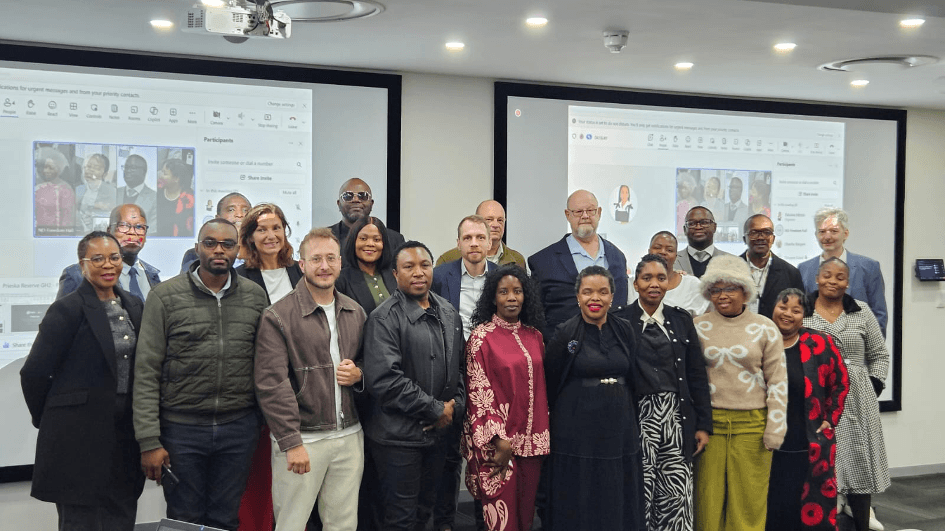
Visit at SALGA | Photo; Grace Karanja

The mission formed part of broader efforts for the Just Energy Transition and complemented the work of South Africa’s Just Energy Transition Municipal Council (JETMC), which is strengthening municipal readiness for a shift toward cleaner and more sustainable energy systems. Through policy discussions, technical presentations, and site visits to strategic infrastructure such as the Eskom Matimba Power Station and Exxaro Solar Power Station, participants gained valuable insights into the challenges and opportunities facing regions transitioning from coal-dependent industries.

Central themes of the mission were the role of green hydrogen in driving local economic development, industrial diversification, and job creation. Waterberg District Municipality highlighted the importance of ensuring that the transition is both environmentally sustainable and socially inclusive. Participants learned about progress made in Waterberg District municipality in cooperation with both Lephalale and Mogalakwena Local Municipalities, including municipal skills development initiatives, governance structures, funding mobilization efforts, and partnerships supporting green hydrogen capacity building.

The Waterberg Development Initiative (WDI) presented its vision for a coordinated regional development model that aligns municipalities, industry, and communities around shared economic and sustainability goals. Discussions also featured contributions from national government representatives, development partners, and municipalities already advancing hydrogen-related projects, demonstrating growing momentum behind South Africa’s hydrogen economy.
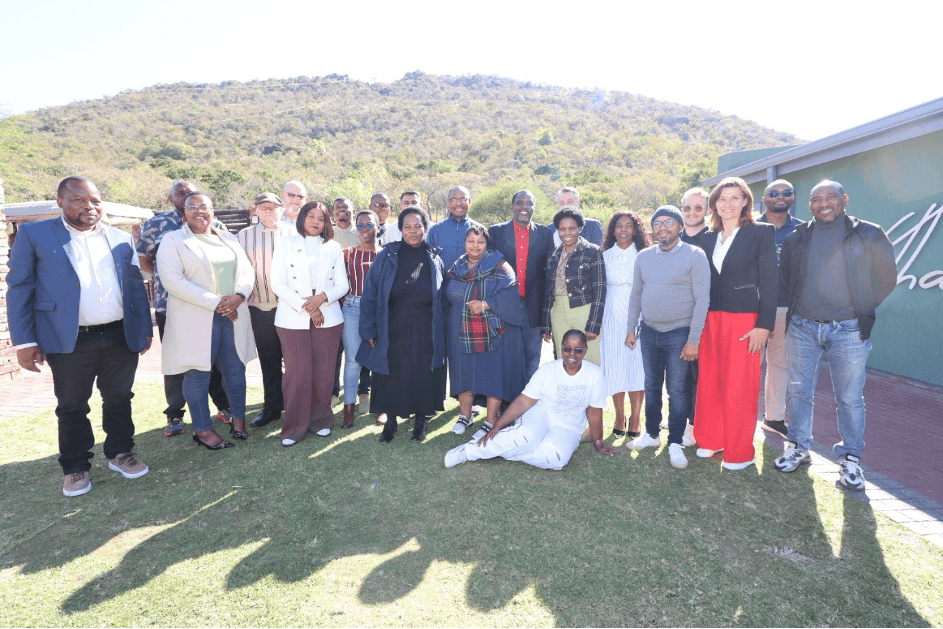
Final workshop with stakeholders in Waterberg | Photo: Elwin Gaoseb

The mission concluded with a strategy workshop, where participants jointly developed a 36-month roadmap for regional development. The roadmap identified priority actions in infrastructure development, skills readiness, investment attraction, and partnership building to support the creation of a future “Waterberg Hydrogen Corridor.” These outcomes complemented Hydrogen Cities Working group discussions on municipal capability development, finance mobilization, and energy access, while addressing challenges such as financing constraints and uneven municipal preparedness.

The expert mission reinforced the critical role municipalities play in South Africa’s energy transition. Through international collaboration, knowledge exchange, and practical planning, the initiative demonstrated how green industrialization can drive sustainable economic growth while ensuring communities remain at the center of the transition to a cleaner, more resilient future.
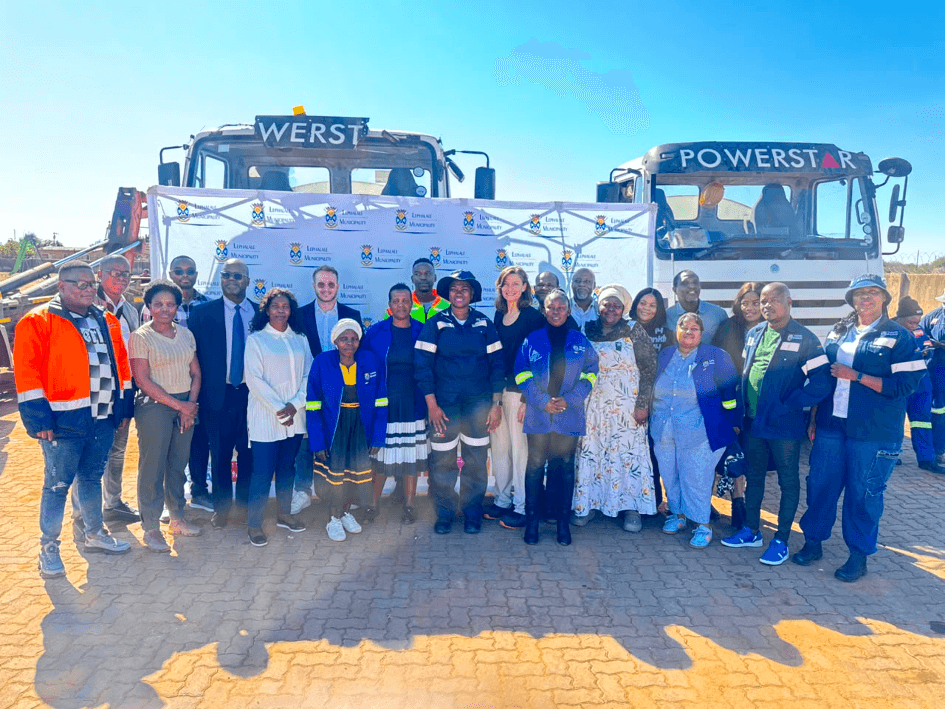
Meeting with Mayor and Employees at Lephalale Municipality | Photo: Elwin Gaoseb

Towards a more sustainable building sector

The building sector must become more sustainable: It is responsible for up to 40 per cent of all CO2 emissions worldwide. The construction industry also consumes many resources, as valuable building materials are rarely recycled. Moreover, it’s not just about the construction phase: the way a building is constructed plays a decisive role in how much energy is used for heating or cooling throughout the entire life cycle of the building.

In order to fight climate change and protect the environment, the construction sector urgently needs to be decarbonized. There are many innovative ways to do this, for example with bio-based materials such as wood, clay and bricks or by recycling used materials.

Local authorities play a key role in making the construction sector more sustainable: as innovation drivers in their own buildings and in the design of building regulations.

As part of a yearlong learning process organized by Connective Cities, representatives from local authorities and research institutions as well as planners and architects shared their experiences and knowledge of climate-friendly constructions and inspired each other’s work.

Dialogue event: What must be done and what can we do?

The learning process began with a dialogue event in Potsdam from 13 to 15 November 2023, at which participants from Bhutan, Indonesia, Nepal, South Africa, Berlin, Heidelberg, Lörrach, Munich, Stuttgart and Potsdam reported on how they are shaping the green transformation in the building sector. In Heidelberg and Munich, the aim is to reuse as much existing building material as possible when constructing new urban neighborhoods on former military sites. Architect Nyoman Popo Priyatna Danes explained how traditional and modern technologies were combined in the construction of a hotel complex in Bali. It was important to sensitize the population to the fragility of the landscape and to ecological economic activity.

According to Dr. Susanne Winter from the World Wide Fund For Nature (WWF) Germany and Peter Heuer, Chairman of the Potsdam City Council, it is important to find a sustainable balance between the protection and use of forests when building with wood. Wood for the construction industry must come from sustainably managed forests. Prof Dr. Jürgen Kropp from Bauhaus Erde and the Potsdam Institute for Climate Impact Research (PIK) pointed out that bio-based building materials could mitigate the dangerous heating of cities and that, contrary to some opinions, wood is a stable and durable building material.

The dialogue took place in cooperation with the City of Potsdam, Bauhaus Erde and PIK.

-> Good practice I: Lörrach plans Germany’s first industrial estate in timber construction
-> Good practice II: Banepa preserves traditional building methods using bio-based materials

Ideas to emulate – Sustainable urban development planning in Germany

Since 2019, the team from the Urban Planning Department of Greater Amman Municipality in Jordan has been taking part in an international dialogue process on sustainable urban planning, facilitated by Connective Cities. This has involved sharing ideas with other urban planners from around the world, and obtaining external expertise from the network for the planning of a new neighbourhood. In August 2022, an 11-member delegation travelled to Germany to conclude this process. The delegation collected numerous ideas on how to improve urban planning in Amman. Their itinerary included stops in Münster, Dortmund, Cologne and Frankfurt am Main.

The team from the Urban Planning Department was particularly interested in tips and lessons learned when drafting the German building code. This was because they were in the process of drafting such national regulations themselves. Their code, which is intended to give all parties involved – from landowners to the municipal planning departments – more legal certainty in urban and spatial planning. The Jordanian Parliament is expected to vote on the draft in 2023.

As early as 2021, the team, together with German experts, had analysed the relevant Jordanian and German legislation. They also discussed various recommendations, including how local government can simplify dealings with landowners.

This report documents the study tour in four stops and the insights gained from the perspective of the Jordanian delegation.