Water resilience – Municipalities strengthen themselves against drought and heavy rainfall event

Local authorities face challenges due to climate change and soil sealing, with frequent droughts, floods, and heavy rainfall. Ensuring water supply, preserving green spaces, and preventing damage can be addressed through nature-based and structural measures. Approaches like the sponge city principle, unsealing urban areas, and installing retention basins are becoming central to climate adaptation strategies. In Germany and the Global South, innovative solutions are emerging. Connective Cities therefore offers an in-depth learning process on this topical and highly relevant subject.

Connective Cities is launching an international call for applications for its new Deep Dive. It will begin in early 2026 and will run until 2027, depending on the funding allocated. The Deep Dive is a recent format from connective cities, the platform for sustainable urban development that brings together up to five municipalities from the Global South and three German municipalities, which are invited to work together to develop a locally adapted solution that responds to a current challenge.

To participate in this Deep Dive, please send us your completed expression of interest before 5 January 2026.

We look forward to receiving your application!

Further information

Call for participants [pdf, 242 kb]

Expression of Interest [doc, 476 kb]

The conference language is English.

Contact

If you have any questions about the Connective Cities Deep Dive and your participation, please feel free to contact us:

Sibylle Loyeau
E-Mail: sibylle.loyeau@engagement-global.de
Phone: +49 (0)228-20717-2587

Artificial intelligence in local governments: opportunities and challenges in an international comparison

The use of artificial intelligence (AI) is becoming increasingly important for local governments. From more efficient administrative processes to data-driven decisions in urban development, resource use, or citizen participation, AI opens up new possibilities for action. At the same time, questions arise about ethical standards, transparency, and social inclusion.

The expert event brings together municipalities from Germany and the Global South to share international experiences, opportunities, and challenges in dealing with AI in municipal practice.

The aim is to:

  • highlight specific best practices from different contexts,
  • promote interregional knowledge exchange, and
  • provide impulses for the development of individual approaches.


Firstly, the Bonn-based AI company Petanux will present its AI tools and how they collaborate with German municipalities. Secondly, the City of Jakarta will showcase the AI tool employed to support its urban development strategy. The event will conclude with a presentation from the City of Hamburg, sharing its experiences with a Large Language Models (LLMs)-based analysis tool used to monitor the implementation of the SDGs in Hamburg.

Conference language is English.

Location: Online

Free of charge. Registration is necessary:

Event registration

If you have any questions about the event, please feel free to contact us:

Sibylle Loyeau

sibylle.loyeau@engagement-global.de and Connective-cities@engagement-global.de

Tel.: +49 (0)228-20717-2587

NEWSLETTER – ISSUE NO. 89, November 2025


Enhancing Local Governance for Climate Action in the MENA region

Local governance plays a critical role in advancing climate action across the MENA region, where cities and municipalities are increasingly at the frontline of responding to climate-related challenges such as water scarcity, extreme heat, and urban vulnerability. Despite national climate strategies, local authorities often face limited financial and technical capacities to implement sustainable solutions. However, there is growing recognition of the need to decentralize climate governance by empowering municipalities with the tools, knowledge, and resources to plan and implement locally tailored climate initiatives. Collaborative efforts—such as regional networks, peer-learning platforms, and partnerships with civil society and the private sector—are helping to strengthen local capacities and foster more inclusive, participatory approaches to climate resilience in urban and rural settings alike. Against this background, Connective Cities has organized on the 13th October 2025 an insight session to showcase good practices and achievements from municipalities in the MENA region in this field.

Planungsrahmen für die kommunale Hitzeanpassung in Assuan
Planning framework for municipal heat adaptation in Aswan| Photo: Connective Cities

Dr. Marwa Ahmed (General Manager of International Cooperation and Community Participation at the Urban Development Fund in Egypt), presented the good practice ‘Integrated Heat Action Framework Development in Aswan, Egypt’, where the Urban Development Fund partnered up with Aswan governorate to channel its institutional knowledge while putting together fragmented parts that will form the base for an Integrated Heat Action Framework in Aswan. The aim was to 1) establish a core working group with the most relevant departments to be involved in the process of developing a heat action plan, and 2) develop the general framework and select a zone for piloting. International experiences showcased and discussed as part of the deep dive were adapted to serve in the local context. Capitalizing on the local native knowledge in Aswan on climate-responsive design and construction methods, the local building codes will be reviewed and modified. The general framework includes measures for 1) adaptation planning and implementation, 2) preparedness, communication, and workers’ safety, 3) built environment, infrastructure, and managed spaces, and 4) ecosystem-based adaptation.

Voting for area prioritization and selection was conducted and resulted in choosing “Elsail Elgadida” as a pilot area. Initial needs assessment meetings with local residents revealed a myriad of urban challenges, among which is the lack of safe public spaces. Accordingly, it was suggested to designate one of the districts numerous wide streets to this purpose by converting it into a pedestrian-only area and rehabilitating it with tree planting, shading elements and urban furniture. Local residents expressed their willingness to collaborate by watering the planted trees.


Sechs Straßenbilder zur Einschätzung der Fussgängerfreundlickeit in Constantine
Assessment of pedestrian-friendliness in Constantine | Photo: Connective Cities

Mr. Al-Hani Maghzi (representative of Constantine municipality-Algeria) presented the initial results and roadmap for improving walkability and transitioning into transit-oriented development in Constantine. He showcased the multi-stage roadmap that incorporates a wide range of procedures that are categorized as structural (e.g. review of mobility plan), comprehensive (e.g. reducing car use, widening sidewalks, reorganizing parking spaces) and priority actions (transforming the city center into a pedestrian-friendly area). He concluded his presentation with the statement that green and liveable cities prioritize pedestrians over vehicles.

In conclusion, the examples showcased how decentralized cooperation supports knowledge exchange, strengthens global partnerships, and drives innovation in local climate adaptation and climate protection efforts. Through the resulting lively discussion, the participants were provided with  actionable insights and tools for municipalities to integrate climate resilience into local planning, infrastructure, and service delivery while ensuring social equity and long-term environmental sustainability.


The recording and presentations are accessible via Connective Cities platform .

Author: Shalan Muna, Connective Cities

Cities Leading by Example

Cities play a dual role in climate change—they are both major contributors to it and highly vulnerable to its impacts. This dynamic creates a feedback loop that exacerbates urban challenges, where urban contributions to climate change worsen the very risks that urban centers face. As cities worldwide experience the impacts of climate change including rising temperatures and more frequent heatwaves, the need for proactive, risk-informed planning has never been more urgent.

Cities Leading by Example: A Guidebook on Risk-Informed Planning and Heat Mitigation serves as a practical guide for municipal actors, urban planners, policymakers, and community leaders seeking to adopt risk-informed approach and to integrate heat adaptation into their planning processes. Drawing on practice-oriented examples, this guidebook delves into city experiences in devising policies and strategies, optimizing the institutional set-up and steering structures, pursuing effective communication and public engagement as well as utilising evidence-based planning using climate data.

Cities as pioneers for a sustainable, inclusive, and resilient future

From 12 to 14 September 2025, the Urban 20 (U20) Mayor Summit took place in Johannesburg as part of South Africa’s G20 presidency. The mayors of the C40 cities came together to strengthen the voice of cities at the global level. The U20 is a diplomatic initiative jointly supported by C40 Cities and United Cities and Local Governments (UCLG). This year, the cities of Johannesburg and Tshwane took the chair.

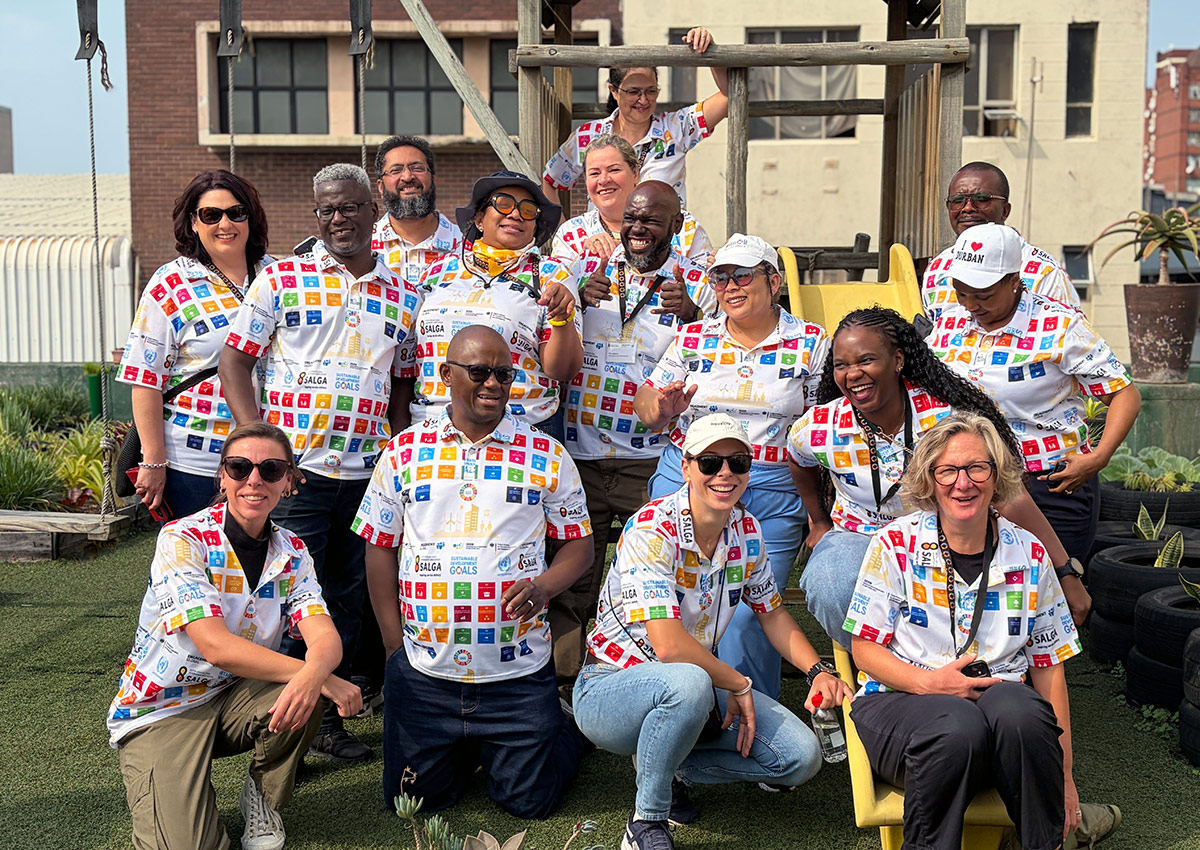
Connective Cities and the City of Bonn participated in the panel discussion organised by SALGA (South African Local Government Association) on the topic ‘From Goals to Impact: Advancing Urban Sustainability and Resilience through the SDGs’. The discussion highlighted the central role of local governments in implementing the Sustainable Development Goals (SDGs): more than 65% of the SDG targets are directly linked to municipal and regional responsibilities, as SALGA Vice-President Flora Mabea-Baltman emphasised.

The panel participants provided a wide range of insights. Aaron Maluleka from the City of Tshwane presented energy programmes and partnerships in the field of sustainable energy. Dr Angela from São Paulo discussed the importance of philanthropic initiatives in achieving the SDG goals. Verena Schwarte from the City of Bonn emphasised the importance of data and international cooperation, and Sibylle Loyeau from Connective Cities stressed the significance of partnerships, professional exchanges, and peer learning.

The communiqué, the summit’s joint outcome document, recognises the importance of the local perspective in the G20 agenda. Four priority areas for action were defined: economic opportunities and financing; climate protection and urban resilience; social inclusion and justice; and digital transformation and innovation.

The Urban 20 Summit 2025 confirmed impressively that cities are at the forefront of solving global challenges locally, working towards a sustainable, inclusive and resilient future.

Municipal Observatory for Gender Mainstreaming

“What gets measured, gets managed.” This adage underscores the importance of tracking progress to achieve meaningful change. For municipalities committed to gender mainstreaming, this means developing structured data systems, enriching the knowledge base, and ensuring precise monitoring—essential steps toward truly inclusive, gender-sensitive local governance.

Building on the model pioneered by the National Federation of Tunisian municipalities (FNCT) and its partners,1 this guide provides a unified, practical framework for advancing gender equality by integrating a gender perspective across all municipal services. Beyond policies and projects, it aims to catalyze a cultural shift—one where gender mainstreaming is no longer an add-on, but a fundamental pillar of equitable and effective local governance. Establishing a municipal observatory for Gender Mainstreaming enables municipalities to integrate the gender perspective into all aspects of municipal services, and to foster a shift in mindset where gender mainstreaming is recognized as a core element of fair and inclusive local governance. Employing the guide’s evidence-based approach, municipalities can stimulate dialogue, propose concrete solutions, and develop measurable gender related indicators that municipalities can apply and track.

Municipal Observatory for Gender Mainstreaming

English version [pdf, 11 pp.]

Arabic version [pdf, 11 pp.]

Building New Bridges: Integration of Syrian cities in Connective Cities regional network

This workshop contributed to strengthening the exchange of municipal experiences and paved the way for Syrian cities to be integrated in the network and become active members. Representatives from Damascus and Reef Damascus Governorates shared the current state of comprehensive planning, highlighting the challenges of pursuing a long-term vision for sustainable development while aiming to turn the complexities of post-war reconstruction into an opportunity to build back better.

The participants sit at two round tables and listen to the lecture on Damascus.
Participants during the lecture on planning in Damascus | Photo: Muna Shalan, Connective Cities
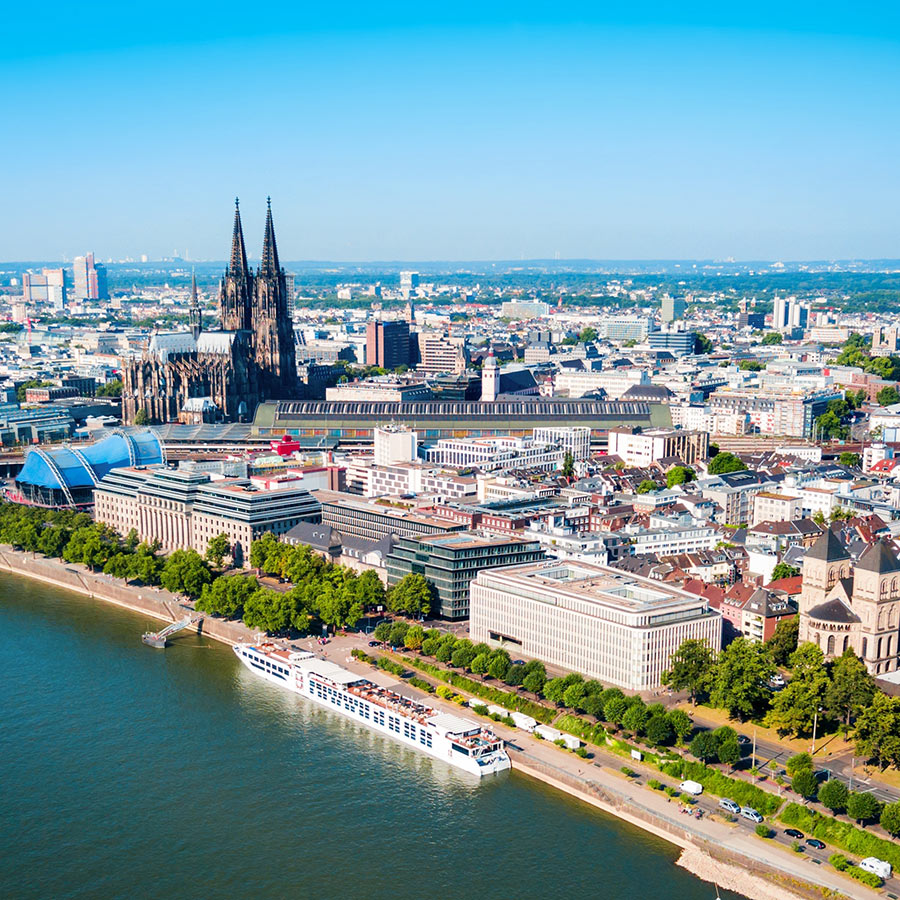
A colleague from Amman during the PowerPoint presentation on the digitisation process in his city.
Presentation of the digitisation process in Amman | Photo: Muna Shalan, Connective Cities
They also discussed their aspirations for digital transformation in their city administration. Their counterparts from Greater Amman municipality delved into practical experiences in these thematic fields, sharing a wealth of knowledge and lessons learned grounded in the local context of implementation.

Collage of three photos showing students discussing in small groups.
Peer consultation and presentation of good practices | Photo: Muna Shalan, Connective Cities

Through interactive peer learning activities, the participants showcased good practice examples and fleshed out success factors and impediments faced by municipal workers in the process of city planning, municipal service delivery, and digital transformation. The discussions created an open and honest exchange, allowing both sides to learn from each other’s successes and obstacles.

Two photographs showing the participants standing in a semicircle on the grounds of the Al-Zuhour Green Triangle while the project is being explained to them
Field visit to Al-Zuhour Green Triangle – a model for green infrastructure | Photo: Muna Shalan, Connective Cities

A site visit to a good practice example was also organized as part of the workshop namely to  Al-Zuhour Green Triangle – a model for green infrastructure. On an area of 2300 sq. m, this pilot project that was implemented by Greater Amman municipality and UN-Habitat Jordan demonstrates two concepts of green stormwater management; stormwater bioretention and stormwater detention.

The workshop resulted in a roadmap for future cooperation and institutionalization of knowledge exchange, which outlined priority action areas. Key focus areas include legislation and governance, with an emphasis on fast-tracking a fair reconstruction law in Syria, adopting standardized tendering and contracting procedures, and activating public-private partnership (PPP) frameworks where appropriate. In terms of decentralization, participants agreed on the need to delegate selected powers—particularly in transport and traffic management—to municipalities, supported by technical committees to ensure that master plans align with sectoral strategies. Strengthening resources and capacities was also identified as critical, including securing adequate human and financial resources, and investing in in-house expertise and ongoing training.

The participants, some standing and some seated in the conference room, with a screen displaying the Connective Cities logo in the background.
Group photo of participants | Photo: Muna Shalan, Connective Cities

Placing the community at the center of urban planning emerged as another key principle, with commitments to maintain public participation through Citizen Hubs and feedback mechanisms that reflect both the social and economic dimensions of urban life. Finally, under the banner of “Build Back Better,” participants called for addressing data gaps, improving cross-sectoral coordination, and using reconstruction as a platform for long-term, sustainable development.

Further information about the presentations can be found on Connective Cities platform.

From Risk to Resilience: Building Inclusive Urban Futures in West Africa

This was the central question that brought together urban risk experts, local leaders, and community representatives from Benin, Burkina Faso, Ghana, Mali, Niger, Senegal, Sierra Leone, and Togo to continue the workshop series on “Risk-Informed Urban Development in West Africa and the ECOWAS Region”.

The 2nd workshop took place from 02-04 July in Accra, Ghana. This workshop was jointly organised by the German Projects Resilience Initiative Africa (RIA), Connective Cities, and CIVIC and in cooperation with the African Union and the ECOWAS Commission.

The Workshop Series

West Africa is facing growing challenges due to climate change and rapid urbanisation. The Intergovernmental Panel on Climate Change (IPCC) predicts temperature increases of 1.5 to 2 degrees Celsius by 2050, which has already led to a 25% rise in climate-related extreme events between 2011 and 2021. These shifts threaten water resources, biodiversity, food security, and public health. Additionally, the urban population is expected to double by 2050 across Africa, exacerbating the risks associated with rapid urbanisation, particularly in informal settlements. Climate-related disasters could cost the region between 1.5% and 3% of GDP annually by 2030, making investments in urban resilience vital for protecting infrastructure, livelihoods, and promoting sustainable economic growth.


Die Panelist*innen sitzen im offenen Halbkreis auf der Bühne
Panelists from left to right – Isabel Njihia (UNDRR), Mr. Cédric Dzelu, Technical Advisor to the Minister, Ministry for Climate Change and Sustainability, Ghana, Dr. Emmanuel Osuteye, AUC, Mrs. Beatrice Owusu-Appiah, Planner, City of Accra, Mr. Assouhan Jonas Atchade, ECOWAS Secretariat | Photo: GIZ – Resilience Initiative Africa

To address these challenges, RIA and Connective Cities have launched the workshop series on “Risk-Informed Urban Development in West Africa and the ECOWAS Region”. The goal of the workshop series is to provide urban actors in the region with the tools and knowledge needed to manage urban risks while fostering collaboration through peer learning and exchange. The workshop series supports 12 cities from West Africa in preparing bankable project ideas to address the risks faced in their cities and strengthening the capacities of the participating urban practitioners in enhancing urban resilience.

Workshop 2 – Inclusivity and Participatory Risk Assessments

Presentation by Dr. Benjamin Creutzfeldt, City of Berlin on New impulse for municipal urban pluvial risk management: map-ping the impacts of heavy rain on various elements at risk | Photo: GIZ – Resilience Initiative Africa

After the kick-off workshop in Lomé, Togo, the 2nd workshop took place in Accra, Ghana from 2 to 4 July. Over three days, participants gained insights into participatory risk assessments and inclusivity concepts. They were provided with concrete tools and approaches on how to integrate these concepts in their urban planning work to tackle Risk-Informed Urban Development. Experts in urban planning, as well as representatives from the African Union and ECOWAS, and civil society, shared their experiences and provided a range of perspectives, from continental to local-level approaches.

The workshop was completed through the continued peer-advisory sessions where cities presented their concrete challenges in the elaboration of their project idea that they started since workshop 1 and received practical advice from other participating cities.


The Ga Mashie Participatory Slum Upgrading Project | Photo: GIZ – Resilience Initaitive Africa
The Recycling Hub at the Bubuashie Cable and Wireless. | Photo: GIZ – Resilience Initiative Africa

On the third day of the workshop, participants visited two sites in Accra that linked to the topic of participatory risk assessment and inclusivity: The Ga Mashie Participatory Slum Upgrading Project and the Recycling Hub at the Bubuashie Cable and Wireless. The site visits were co-organised by the City of Accra and Slum Dwellers International.

Next steps

The series of workshops will continue to provide local governments, urban planners, and communities with the knowledge and tools needed to make risk-informed decisions in urban planning and management. The next workshop is scheduled for October 2025, focusing on access to finance and the development of action plans.

Die Teilnehmenden stehen zusammen vor dem Konferenzgebäude
Group photo of participants | Photo: GIZ – Resilience Initiative Africa

Author: Franziska Loibl, GIZ