Driver of Green Transformation: Connective Cities Expert Mission in Waterberg

From 8 to 12 June 2026, Connective Cities, in partnership with the South African Local Government Association (SALGA) and the Waterberg District Municipality, organised an international expert mission on economic transition and green industrial development at the municipal level. The mission brought together municipal representatives, researchers, and experts from industry and practice from South Africa (SALGA, Waterberg District Municipality, and the local municipalities of Lephalale and Mogalakwena), Germany (the Economic Development Agencies of the Cities of Karlsruhe and Heilbronn, as well as the Baden-Württemberg RegioClusterAgency), Namibia (Lüderitz Town Council), and Kenya (the County Government of Nakuru). Participants exchanged experiences, discussed shared challenges, and explored the opportunities that the emerging green hydrogen economy—based on the production of hydrogen using renewable energy sources—offers for local and regional development.
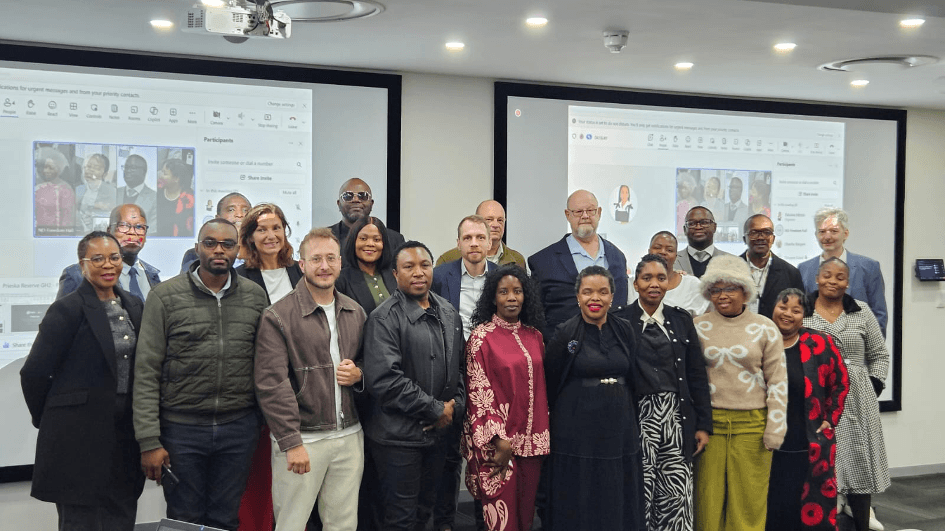
Visit at SALGA | Photo; Grace Karanja

The mission formed part of broader efforts for the Just Energy Transition and complemented the work of South Africa’s Just Energy Transition Municipal Council (JETMC), which is strengthening municipal readiness for a shift toward cleaner and more sustainable energy systems. Through policy discussions, technical presentations, and site visits to strategic infrastructure such as the Eskom Matimba Power Station and Exxaro Solar Power Station, participants gained valuable insights into the challenges and opportunities facing regions transitioning from coal-dependent industries.

Central themes of the mission were the role of green hydrogen in driving local economic development, industrial diversification, and job creation. Waterberg District Municipality highlighted the importance of ensuring that the transition is both environmentally sustainable and socially inclusive. Participants learned about progress made in Waterberg District municipality in cooperation with both Lephalale and Mogalakwena Local Municipalities, including municipal skills development initiatives, governance structures, funding mobilization efforts, and partnerships supporting green hydrogen capacity building.

The Waterberg Development Initiative (WDI) presented its vision for a coordinated regional development model that aligns municipalities, industry, and communities around shared economic and sustainability goals. Discussions also featured contributions from national government representatives, development partners, and municipalities already advancing hydrogen-related projects, demonstrating growing momentum behind South Africa’s hydrogen economy.
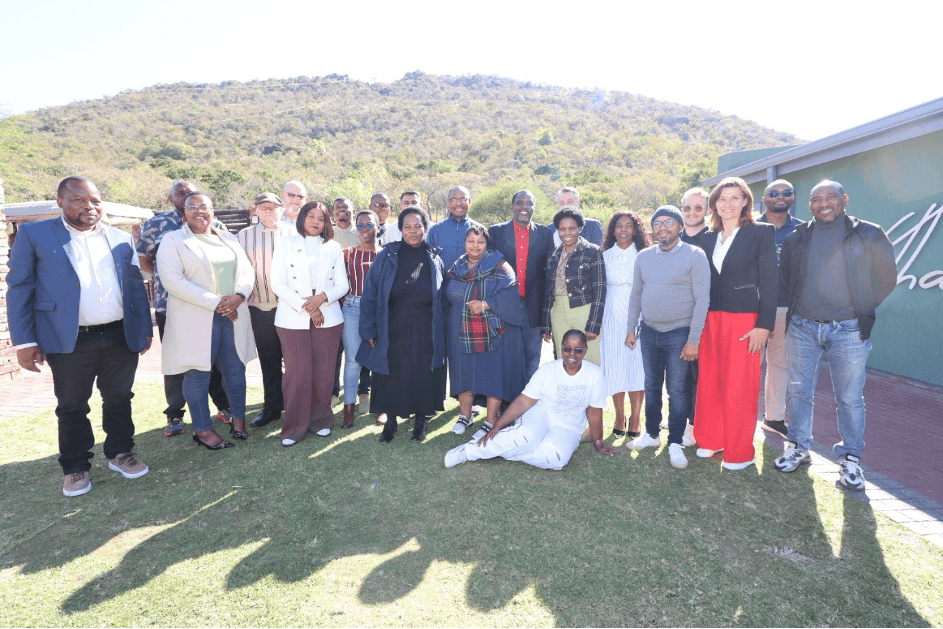
Final workshop with stakeholders in Waterberg | Photo: Elwin Gaoseb

The mission concluded with a strategy workshop, where participants jointly developed a 36-month roadmap for regional development. The roadmap identified priority actions in infrastructure development, skills readiness, investment attraction, and partnership building to support the creation of a future “Waterberg Hydrogen Corridor.” These outcomes complemented Hydrogen Cities Working group discussions on municipal capability development, finance mobilization, and energy access, while addressing challenges such as financing constraints and uneven municipal preparedness.

The expert mission reinforced the critical role municipalities play in South Africa’s energy transition. Through international collaboration, knowledge exchange, and practical planning, the initiative demonstrated how green industrialization can drive sustainable economic growth while ensuring communities remain at the center of the transition to a cleaner, more resilient future.
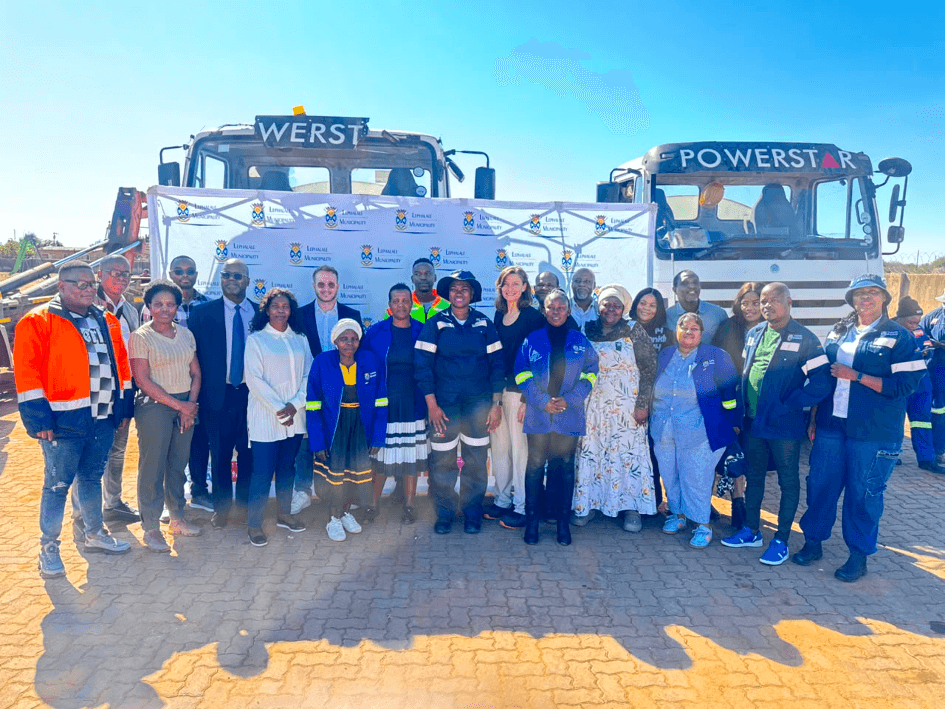
Meeting with Mayor and Employees at Lephalale Municipality | Photo: Elwin Gaoseb

AI-based Visualisation for Affordable Housing and Informal Settlement Upgrading

How can AI-generated images help municipalities discuss affordable housing and informal settlement upgrading – without losing sight of implementation challenges?

At the World Urban Forum 13 (WUF13) in Baku, Connective Cities will contribute to the official WUF Academy programme with an interactive event on AI-based visualisation for affordable housing and informal settlement upgrading. The event will take place on 21 May 2026, from 09:30 to 11:30 Baku time (UTC+4).

Organised by the German Association of Cities in cooperation with Connective Cities and the participating municipalities, the event brings together urban practitioners from different regions to work with real urban cases and explore how digital visualisation can support dialogue, participation and peer learning.

About the event

The format builds on the recent Connective Cities working group exchange on affordable housing, including an AI-based visualisation exercise under the umbrella of the New European Bauhaus.

At its core is a practical city exchange: participating municipalities and institutions provide images of selected housing areas, informal settlements and urban transformation sites. WUF participants will work in groups with these prepared cases and use AI-generated visual scenarios as analytical and dialogue-oriented tools — not as final planning products or implementation promises.

The focus is not on the technology itself, but on the urban development questions that the images make visible. How are housing needs, affordability, density, land use, public space, infrastructure and social inclusion negotiated in different contexts? How can visual scenarios support communication between city administrations, communities, technical experts and decision-makers?

The event will also address the limits and risks of AI-supported visualisation. In the context of affordable housing and informal settlement upgrading, attractive images alone are not enough. They need to be linked to questions of financing, operation, maintenance, climate resilience, land ownership, social safeguards and clear implementation responsibilities.
The format was developed and coordinated by Jelena Karamatijevic, Connective Cities, as part of the Connective Cities peer-learning approach.

The event will be moderated by Prof. Hilmar von Lojewski, Association of German Cities. The practical AI exercise will be facilitated by Damiano Cerrone, co-founder of CoPlan AI.

In addition, the GIZ Sustainable Urban Development Programme in Santa Cruz, Bolivia, represented by Ruvi Suárez, will contribute a short methodological reflection on AI-supported scenario thinking and impact assessment.

City exercise examples

Selected examples from the city exercises show how real urban situations can be translated into AI-supported visual scenarios for discussion, reflection and peer learning.
The Academy event will include practical city examples from:

  • Nairobi City County / Kenya – Godfrey Ngugi, Director of Urban Renewal
  • Huye District / Rwanda – Richard Ndicunguye, Senior Advisor / Adaptation and Green Cities
  • Mariental Municipality / Namibia – Sunday Haimbodi, Building Inspector
  • Urban Development Fund, Egypt / Cairo – Dr. Marwa Ahmed, General Manager, International Cooperation and Community Participation Department
  • Hebron Municipality / Palestine – Husam Shweiki, Head of the Architecture Department
  • Berlin Senate Department for Urban Development, Building and Housing / Germany – Lars Loebner


City exercise example: Berlin © Connective Cities
City exercise example: Nairobi © Connective Cities
City exercise example: Hebron © Connective Cities
City exercise example: Huye © Connective Cities


Event details and registration


  • Date: 21 May 2026
  • Time: 09:30–11:30 Baku time (UTC+4)
  • Format: Hybrid WUF Academy event
  • Venue: WUF13, Baku, Room AE 11-03, Area A
  • Online participation: Registration via WUF13-Zoom Webinars & Events
  • Calendar entry: download


Further information is available on the official WUF13 event page: WUF13 event page

Please register via the official WUF13 platform and download the WUF13 App in advance to access the event and receive the latest information.

For further information, please contact:

Jelena Karamatijevic, Connective Cities – concept and content coordination jelena.karamatijevic@giz.de

Moses Munuve, Connective Cities – Regional Coordinator Sub-Saharan Africa, organisational coordination moses.munuve@giz.de

Connective Cities’ COVID-19 programme 2021

After last year’s Connective Cities event series “Municipal Response to COVID-19”, which was well received by over 750 participants from different cities and municipalities around the world, Connective Cities is again offering a comprehensive programme on COVID-19 this year. Last year, the programme focused on sharing experiences of immediate municipal measures during the pandemic – this year, the perspective will be broadened to include municipal recovery from the pandemic, also in the context of the 2030 Agenda. Instead of pure exchange formats, the second part of the Corona programme will derive proven methods from Connective Cities as well as use new approaches to promote a deeper municipal exchange of experiences. In this sense, it is planned that municipal practitioners jointly address current COVID-19-related topics in compact learning processes. The aim here is the (further) development of (project) initiatives and guidelines for municipal challenges as well as the elaboration and dissemination of existing approaches to solutions. Building on the previous momentum, challenges related to COVID-19 can thus be dealt with in greater depth and in a practical manner.

Aspects already addressed in the previous year will thus be further developed. Connective Cities will focus on the following topics in this year’s COVID-19 programme:  

  • Local economy & industry   
  • Digitalisation & communication  
  • Public health & public services
  • Crisis management 
  • Climate neutral urban development
  • Gender sensitivity in the pandemic
  • Innovation

For more information on our COVID-19 activities this year, watch our information video and visit our
COVID-19 webpage.

Insight Sessions: Post-COVID Urban Futures

The new event series “Insight Sessions: Post-COVID Urban Futures” is part of this year’s Connective Cities Corona programme and facilitates a regular, open exchange on relevant topics of the post-COVID-19 era for municipal practitioners and relevant experts worldwide. Different topics of sustainable urban development during and after the COVID-19 pandemic will be discussed and innovative approaches in this regard will be shared in brief and concise virtual exchange formats. The aim of these events is to provide impulses that encourage participants to reflect on their progress so far and think about innovative solutions. The open discussion rounds will take place on Wednesdays once every three weeks. 

We are pleased to invite you to the opening event and first discussion of the Insight Sessions series focusing on the topic “COVID-19 Recovery & SDG 11” on Wednesday, 28 July 2021, from 10:00 to 11:45 a.m. CEST

The opening event will start with a brief introduction to this year’s Connective Cities Corona programme. Subsequently, a panel discussion will explore the challenges and opportunities of the COVID-19 crisis for achieving SDG 11 towards making cities more inclusive, safe, resilient and sustainable. During this panel discussion, municipal practitioners and experts from different urban sectors and world regions will share their diverse perspectives and insights on this topic. The panelists (tbc) are:

  • Faola Hodaj, Director of Innovation, Municipality of Tirana, Albania
  • Karim Elgendy, Sustainable City Strategist, London UK / MENA – Recipient of the 2013 Global Green Building Entrepreneurship Award by the World Green Building Council
  • Aditya Kumar, Executive Director, NGO Development Action Group, Cape Town, South Africa
  • Hilmar von Lojewski, Councillor for Urban Planning, Building, Housing and Traffic, Association of German Cities / Cologne, Germany

 A detailed agenda of the opening event can be found here. The preliminary schedule of the series of Insight Sessions will be shared soon.  The event will take place virtually in the Connective Cities Community

Insight Session: COVID-19 Recovery and SDG 11 | Connective Cities Network (connective-cities.net)

Date: Wednesday, the 28th of July 2021

Time: 10:00 – 11:45 a.m. CEST 

Event language: English. Translation available in: Russian, French, Arabic. 

.

If you have any further questions, please do not hesitate to contact us:

Contact: paulina.koschmieder@giz.de

Interview with Faola Hodaj on Innovation Ecosystems

Learn through Faola Hodaj, Director of Innovation at Municipality of Tirana, how did the municipality reflect this innovative spirit through its services and response to the pandemic.

More: https://youtu.be/BpnLZLcky00

Join us and watch a special series of videos and podcasts that will show how to overcome a crisis from many different points of view. More videos, podcasts and interviews on our COVID-19 page.

Interview with Leila Ben Gacem: Social Innovation

Beni Khalled, Tunisia, a city famous for its citrus farms, is home of Leila Ben Gacem, social entrepreneur and as elected city councillor head of the Finance Committee. The brave woman worked late hours throughout the first lockdown in order to coordinate volunteers, health companies and municipal activities through social entrepreneurship skills.

More: https://youtu.be/w4ihfI_Gg00

Join us and watch a special series of videos and podcasts that will show how to overcome a crisis from many different points of view. More videos, podcasts and interviews coming soon on our COVID-19 page.

Podcast with Armin Berger: Digital Innovation

Welcome to Berlin, where thousands of artists lost their stages because of lockdown. Learn how Armin Berger got support from the senator of culture and how good ideas emerged during breakfast to fill Berlin with new life: Berlin(a)Live

More: https://youtu.be/UwqjbiMlIGE

Join us and watch a special series of videos and podcasts that will show how to overcome a crisis from many different points of view. More videos, podcasts and interviews coming soon on our COVID-19 page.

Podcasts with Salih Mahmod on Public Health Innovation

Meet Salih Mahmod, a young Iraqi that rebuilt his maker space entirely after ISIS left Mosul and knew what to do after the hospitals in his city lost their medical supplies in the middle of the pandemic.

More: https://youtu.be/JkgV4-eN9Ww

Join us and watch a special series of videos and podcasts that will show how to overcome a crisis from many different points of view. More videos, podcasts and interviews coming soon on our COVID-19 page.

Virtual Global Exchange

The exchange was designed to bring together urban practitioners from all over the globe. The goal was to ignite creativity, innovation, solidarity and motivation, while creating and enhancing this global community of practice around the common purpose of combating the global COVID-19 pandemic and its consequences with smart local solutions and strategies.

During the first week, urban practitioners and experts from different municipalities, the civil society, business and academia, presented a total of 56 Good Practices in 18 sessions and gave insights into their experienced challenges and local solutions to deal with the pandemic. The exchange were centered around the nine topics were Public Health, Crisis Management, Economic Response, Housing, Education, Digitalisation, Crisis Communication, Innovation, and Green Urban Recovery.

The second week was about receiving practical “How To” workshops with practical exercises on topics that came up repeatedly during the exchange events such as: social media usage, digital tools, and how to plan for virtual meetings. Finally, the newly learned mindsets and tools could be applied in a 4-hour solution design workshop.

Download documentation

Municipal expert exchange to COVID-19- compact

Topics: Public Health & Crisis Management / Economy, Housing & Education / Digitalisation & Communication / Innovation

Time: 23 November – 3 December 2020

Cities worldwide are severely affected by the impacts of COVID-19. Unlike national governments, municipalities are in close contact with their citizens and are responsible for the implementation of measures decided by governments to reduce the spread of Corona infections.

Cities worldwide also have collected important experiences, which will be of immense relevance in the global fight against the virus. The crisis has shown how important the resilience of municipalities is: this directly applies to local crisis management and disaster preparedness as well as to the need for constantly adaptive urban planning. The current crisis has shown and proven once again that resilience is an essential capacity of municipalities.

To continue tackling the challenges of the pandemic in the future and to find suitable solutions to minimise its negative impact, it is now necessary to learn from and share experiences that will support the joint development of further measures. In the framework of its COVID-19 Municipal response dialogue, Connective Cities is organising a virtual global exchange series on “Municipal Response to COVID-19” from 23 November to 3 December 2020 and kindly invites you to be part of this series of events. This international exchange effort takes place in cooperation with engaged urban practitioners, municipal experts as well as local experts from academia, civil society and business.

More information