Provision of basic services: solid waste management

Effective solid waste management service is vital in ensuring a sanitary environment for any population. With changes in lives and partial or total lock-downs, the provision of this crucial service was interrupted. With the spread of the virus, the general public is now using a lot of medical equipment including surgical gloves and masks. The unsafe disposal of this waste including the increase of medical waste, increases the risks and hazards especially to the waste handlers both formal and informal.

The virtual session on the 29th of October, 2020 was to highlight the issues that cities/municipalities are grappling with to ensure that this service is adequately provided, the workers are safe, and minimize the spread of the virus through the medical waste. Through cross-pollination kind of exchange between cities/municipalities in SSA and Kosovo, a very insightful discussion was experienced. 14 participants from Ghana, Kenya, Kosovo and Zambia with representatives from Nairobi, Kisumu, Accra, Kiambu, Gjilan and Vushtrri cities/ municipalities actively engaging.

Program

5 presentations from cities/municipalities and input from UNEP defined the discussions. The presentations were from Nairobi City, Accra, Municipality of Vushtrri, Municipality of Gjilan and then we got the recommendations from UNEP on how cities can improve solid waste management during the pandemic. The session was moderated and provided an opportunity for discussion and exchange among the participants. The cities/municipalities sought to answer the following questions:

  1. What have been the core challenges for the municipalities?
  2. What measures have municipalities put in place?
  3. How do the municipalities deal with vulnerable groups which were most affected by the pandemic?
  4. Have there been any lessons learned already for long term strategies to improve cities’ resilience (i.e. preparedness for pandemics or similar events in the future)?

Presentations

Solid waste management in Nairobi during the Covid-19 period
Ms. Patricia Akinyi

Covid-19 and solid waste management in Ghana
Ms. Charlotte Akwaah-Adjei

Current situation in the Municipality of Vushtrri – waste management system
Mayor Xhafer Tahiri

Solid waste management in the Municipality of Gjilan
Mayor Lutfi Haziri

UNEP’s recommendation to cities on solid waste management
Mr. Muhammed Omotola

Results

Different cities/municipalities are at different levels in solid waste management with Municipalities like Vushtrri having waste separation and recycling practices. Nairobi City had a lot to learn from the two municipalities in Kosovo. Cities need to be intentional about continuous improvement in the waste management chain. With the rich and diverse input, the discussions were beneficial.

The highlights of the session were:

  • The pandemic led to increase in domestic waste as lock downs loomed and also use of medical equipment (masks & gloves) by the public.
  • Financial constraints were a hindrance to ensuring timely provision of this basic service. There is need for budgeting and allocation of resources.
  • Intensive communication and education of the public and the municipal staff on proper handling of waste including promoting waste separation even at household level.
  • Digitalization of systems and procedures to minimize contact including payment for services.
  • Need for effective environmental policies and guidelines on management of waste especially the hazardous medical waste.
  • Coordination of the different levels of government and other sector players.
  • How past pandemics/ disasters have helped municipalities like Gjilan prepare for covid-19. We shouldn’t waste this pandemic and instead use the lessons learnt to prepare for future emergencies.
  • Establishing of emergency preparedness facilities and crisis management teams.

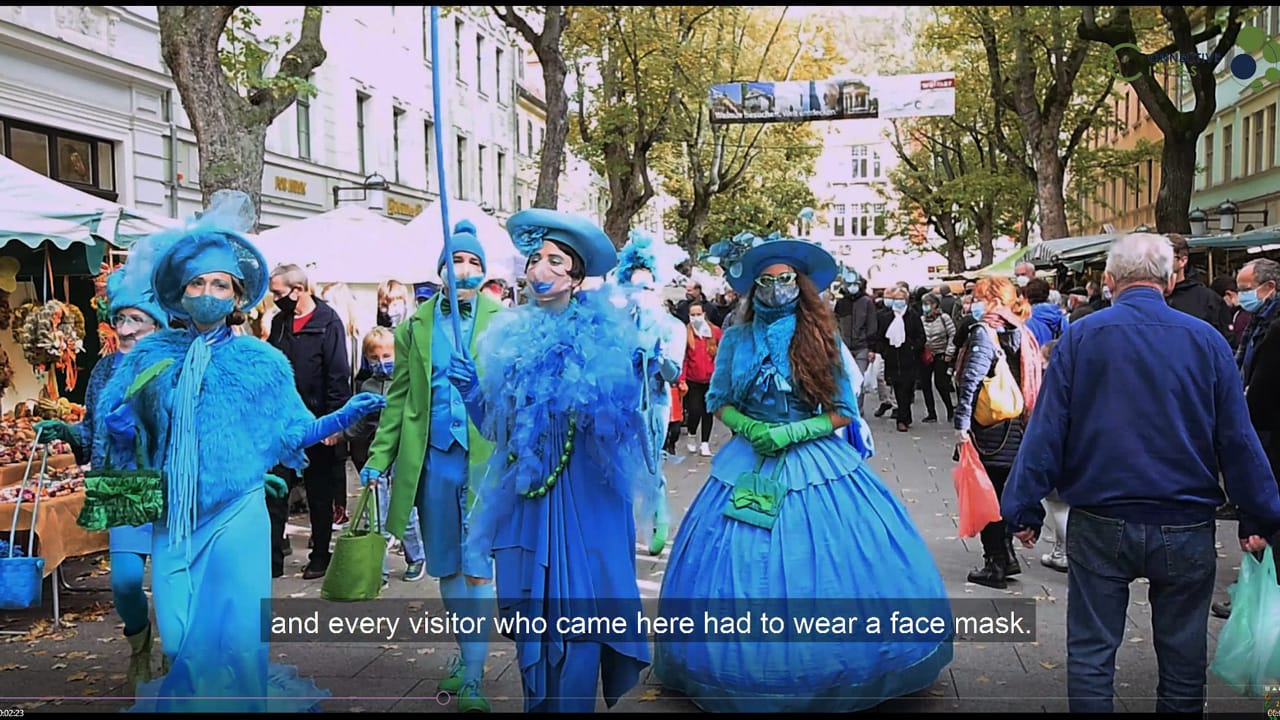
Weimar: Economic response to COVID-19

Weimar, a city that attracts thousands of tourists from all over the world every year. Watch how did the local city guides, hoteliers and small shop owners react to the lockdown? And what did the local authorities do?

Mehr: https://youtu.be/SxLgSY2aW6g

Join us and watch a special series of videos and podcasts that will show how to overcome a crisis from many different points of view. More videos, podcasts and interviews coming soon on our COVID-19 page.

Provision of basic services: water supply

Water has been a critical commodity in the fight against the Corona. It has been used in regularly washing hands and maintaining hygiene. Cities/ municipalities therefore, have been in the forefront in ensuring that there is enough supply of water.

On the 27th of October, 2020, 13 participants from various cities/ municipalities in Kenya, South Africa, Tanzania, Zambia and Zimbabwe came together to engage on the subject of water supply. The composition of the participants varied from cities/municipalities to local government associations including Kiambu, Lusaka, Mbeya, Nairobi and Pretoria. The aim was to engage each other on the challenges being faced and the changes that need to be adopted going forward in the Water, Sanitation and Hygiene (WASH) sector.

Program

Four presentations were made in this session and the scope covered views and experiences from the cities (Nairobi City County), research work and civil society organizations (Ferrial Adam – researcher & Water and Sanitation for the Urban Poor- WSUP). The session was moderated and gave room for response to the presentations and sharing of experiences from other cities. The session sought to respond to the following questions:

  1. What have been the core challenges for the municipalities?
  2. What measures have municipalities put in place?
  3. How do the municipalities deal with vulnerable groups which were most affected by the pandemic?
  4. Have there been any lessons learned already for long term strategies to improve cities’ resilience (i.e. preparedness for pandemics or similar events in the future)?

Presentations

A Civil Society Response to the Water Crisis During Covid-19 – a Place for Activist Citizen Science
Ms. Ferrial Adam

Nairobi City County Response to Covid-19
Mr. Mario Kainga

How can the Global WASH Sector Respond Better in Future Crises?
(Blog: https://www.wsup.com/blog/how-can-the-global-wash-sector-respond-better-in-future-crises/)
Mr. Kariuki Mugo & Ms. Eden Mati

Results

The presentations and discussions confirmed that most cities in SSA have inadequate coverage of the basic service; water. The sector players need to look into more sustainable solutions to the gap in provision of the service as opposed to short term measures in response to emergencies that are not long lasting. The highlights of the session were:

  • most of the countries in Africa are still water scarce.
  • there had to be sporadic interventions to reach the vulnerable in society who had no water & that the actors should not ignore the poor at their peril.
  • water has value hence encouraging the consumers not to pay has a negative impact on the service providers.
  • water utilities need operational sustainability plans that will stand in emergencies.
  • need for structured mandates & coordination mechanisms for institutions.
  • ensure equity in access to basic urban services.
  • the mapping of the water stressed communities using online tool by the activists is commendable and worth upscaling and replicating.

Infection chains – preventing infections through distance, communication and support for the informal sector

Around 100 municipal practitioners from more than 20 Latin American and European cities, including Brazil, Peru, Mexico, Colombia, Costa Rica, Chile, Ecuador, El Salvador, Spain, the United Kingdom and Germany, participated in two virtual events on the topic of “Infection Chains – preventing infection through distance, communication and supporting the informal sector”.

During the virtual exchange of experiences, which was held as part of the series of events on “Municipal response to COVID-19”, the participants presented and discussed practical examples from their cities and exchanged experiences on the topics of infection chains and prevention measures, as well as on the topic of crisis communication.

In the first virtual event, the challenges in the areas of infection chain tracing and Covid-19 testing strategies were discussed intensively, because they represent urgent problems for many Latin American cities. The exchange of experiences revealed that crisis communication in particular is an important concern for municipalities – in European as well as Latin American cities alike.

Municipal practitioners face the challenge of raising public awareness of the need for the measures taken over a long period of time. Therefore, the focus of the second event was on the topic of communication. Among other things, strategies of cities were presented on how municipal crisis communication can be designed. It was discussed how cities can inform their residents about public restrictions and Covid-19 in a transparent, inclusive and understandable way.

The virtual events provided space for an interactive exchange of experiences, which was very positively received. All participants took part in a lively discussion and were in favour of continuing the offer.

The languages offered included Spanish, Portuguese, English and (partly) German.

Programme

During the two events, six good practices from Essen and Stuttgart (Germany), Aracaju, Niterói, Belo Horizonte (Brazil) and Naucalpan (Mexico) were presented.

Participants also gained a new perspective on the pandemic from the presentation of three studies on municipal management of Covid-19 by the Brazilian municipal associations “Asociación Brasileña de Municipios” and “Confederación Nacional de Municipios,” as well as “Design Thinkers Group Spain” and “Whiteboard Innovation Israel”.

The aim of the virtual event was also to actively involve the participants. The space for questions between the presentations and the subsequent discussion were used intensively for exchange.

The following questions were discussed during the two events:

  1. What measures can be taken to interrupt infection chains and what role can the municipality play in this?
  2. How can infections be traced and what are local challenges in doing so?
  3. What is the role of the informal sector in relation to infections?
  4. What strategies can be taken to make crisis communication inclusive, transparent and understandable?
  5. How can communities with limited access to digital communication tools be reached?

Good practice presentations

Presentations on 14.10-2020

Decentralised mobile sample collection strategy of the city of Essen.
Jörg Spors, Hygiene Officer of the Fire Department of the City of Essen, Germany

Measures taken by municipalities to combat the COVID-19 pandemic.
Eduardo Tadeu Pereira, Director “Asociación Brasileña de Municipios” (ABM), Brazil

Fighting the pandemic with strategic management and innovative measures, Aracaju, Brazil.
Waneska de Souza Barboza, Aracaju Health Department, Aracaju City Hall, representative of the National Front of Mayors (FNP), Brazil

Government action to combat Covid-19 in Naucalpan, Mexico.
Mauricio Eduardo Aguirre Lozano, Secretary of the Municipality of Naucalpan, Mexico

Survey on covid-19: focus on local government and support from federal agencies.
Carla Albert, Health Worker, Confederación Nacional de Municipios (CNM), Brazil

Presentations on 05.11.2020

Opening Speech “Global Human Research Project”. Jorge Roriguez Nieto,
Design Thinkers Group Spain and Amir Hoshia, Whiteboard Innovation Isreal.

Integrative Crisis Communication, Stuttgart, Germany.
Ayşe Özbabacan, Integrative Crisis Communication Officer, Stuttgart, Germany,
Simone Fischer, Integration Policy Officer, Stuttgart, Germany,
Reinhard Schröter, Operations Manager Bus and Tram, Stuttgarter Verkehrsbetriebe, Stuttgart, Germany.

Covid-19 and the implications on the sewage system, Niterói, Brazil.
Camilla Franco, Undersecretary of Health, Niterói Municipal Health Secretariat, Niterói, Brazil

Communication in Crisis: Citizens, Passers-by & Customers, Belo Horizonte, Brazil.
Hugo Salomão França, Director of International Relations, Belo Horizonte City Hall, Brazil.

Results

Through peer consultation, participants were able to share their knowledge and experiences around the topics of infection chains and crisis communication, as well as analyse common challenges. Furthermore, thanks to international expertise and the presentation of good practice examples, new approaches to solutions were disseminated.

After the virtual session, participants can continue their exchange on the Connective Cities virtual platform.

Local Economic Development and Job Creation in MENA

Local Economic Development (LED) remains a top priority for the MENA countries as a driver for economic stability and job creation for a region with one of the highest unemployment rates in the world. While many resources are invested in fostering local economic development in the MENA countries led by governments, however, there is often a lack of systematic access to practice-oriented solutions.

More than 40 local urban practitioners from 22 municipalities and 10 countries from the MENA region and Germany took part of the virtual dialogue event organized by the Connective Cities project. The dialogue event consisted of five virtual sessions held between the Sep 29th – Oct 7th 2019, focusing on facilitating the exchange of know-how and experiences through peer-to-peer learning among municipal representatives and urban practitioners. Moreover, the dialogue event aimed at enriching the analysis and planning capacity of the participating municipal representatives to address existing challenges of implementing LED and job creation programs.

Throughout the Dialogue event, participants showed tremendous commitment to the program with a level of excitement that remained high till the last day of the dialogue where they learned how to present their LED project concepts in less than 3 minutes; an activity that reflected their understanding of project development process as well as the peer-to-peer exchange methodology.

This report reflects in detail the main results of the virtual dialogue event.

Virtual Global Exchange

The exchange was designed to bring together urban practitioners from all over the globe. The goal was to ignite creativity, innovation, solidarity and motivation, while creating and enhancing this global community of practice around the common purpose of combating the global COVID-19 pandemic and its consequences with smart local solutions and strategies.

During the first week, urban practitioners and experts from different municipalities, the civil society, business and academia, presented a total of 56 Good Practices in 18 sessions and gave insights into their experienced challenges and local solutions to deal with the pandemic. The exchange were centered around the nine topics were Public Health, Crisis Management, Economic Response, Housing, Education, Digitalisation, Crisis Communication, Innovation, and Green Urban Recovery.

The second week was about receiving practical “How To” workshops with practical exercises on topics that came up repeatedly during the exchange events such as: social media usage, digital tools, and how to plan for virtual meetings. Finally, the newly learned mindsets and tools could be applied in a 4-hour solution design workshop.

Download documentation

Climate Resilient Urban Development in Southeast Europe

From October 26th until November 6th 2020 around 30 urban practitioners from 11 Southeast European cities (from 8 different countries Georgia, Bosnia and Herzegovina, Montenegro, Belarus, Serbia, Slovenia, Ukraine, Germany) came together virtually to exchange their experiences and expertise in the field of Urban Mobility and Green Urban Infrastructure. Especially challenges in waste management, transportation and public lighting system and water revitalization were discussed intensively, as they represent pressing issues for many Southeast European cities.

The aim of the workshop was to jointly work out comprehensive project plans which can be the basis for technical and financial proposals for funding. The workshop focused on the following topics:

  1. Green Infrastructure – based on the notion that protecting and enhancing nature and natural processes are consciously taken into consideration in the context of spatial planning and territorial development.
  2. Urban Mobility – developing and implementing sustainable urban mobility plans (SUMP) including private as well as public transportation.

The event was a follow-up to the virtual dialogue event conducted in June 2020 with representatives of 24 municipalities as well as international experts. Where, based on innovative methodologies such as Design Thinking, participants from 9 countries worked on their first project ideas.

These two weeks of synchronous and asynchronous workshops were participated by the officials from institutions, representatives from urban networks that share the project’s objectives, and experienced professional from the civil society and the private sector, who work in the thematic areas as well as academia in the field of urbanism, spatial planning, geography, climate change and other disciplines. During the workshop, also donor organizations were invited to get to know the projects, to answer questions of the municipalities and to support financial proposals and grant applications written in a professional way.

Municipal expert exchange to COVID-19- compact

Topics: Public Health & Crisis Management / Economy, Housing & Education / Digitalisation & Communication / Innovation

Time: 23 November – 3 December 2020

Cities worldwide are severely affected by the impacts of COVID-19. Unlike national governments, municipalities are in close contact with their citizens and are responsible for the implementation of measures decided by governments to reduce the spread of Corona infections.

Cities worldwide also have collected important experiences, which will be of immense relevance in the global fight against the virus. The crisis has shown how important the resilience of municipalities is: this directly applies to local crisis management and disaster preparedness as well as to the need for constantly adaptive urban planning. The current crisis has shown and proven once again that resilience is an essential capacity of municipalities.

To continue tackling the challenges of the pandemic in the future and to find suitable solutions to minimise its negative impact, it is now necessary to learn from and share experiences that will support the joint development of further measures. In the framework of its COVID-19 Municipal response dialogue, Connective Cities is organising a virtual global exchange series on “Municipal Response to COVID-19” from 23 November to 3 December 2020 and kindly invites you to be part of this series of events. This international exchange effort takes place in cooperation with engaged urban practitioners, municipal experts as well as local experts from academia, civil society and business.

More information

Announcement: Prize of the Carl and Anneliese Goerdeler Foundation 2021

Topic: Exemplary measures to overcome the corona induced crisis

In memory of Carl Goerdeler’s communal political activities as Lord Mayor of the City of Leipzig and his resistance against the Nazi regime, the Carl and Anneliese Goerdeler Foundation awards a Communal Political Prize to honour outstanding achievements in communal administration practice. The award is intended to serve the peaceful cooperation of municipalities and municipal alliances that brings people together, especially in Europe (as defined by the Council of Europe) and abroad. At the same time, mutual learning for the benefit of the inhabitants is to be promoted.

The call for proposals is also in the context of the activities of the Connective Cities project, which is a cooperation between the Deutsche Gesellschaft für Internationale Zusammenarbeit (GIZ) GmbH, Engagement Global gGmbH / Servicestelle Kommunen in der Einen Welt and the German Association of Cities. Implementation partners include selected regional and national city associations in Africa, America, Europe and Asia and their member cities. The project is financed by the German Federal Ministry for Economic Cooperation and Development (BMZ).

Description of content and target group

The prize serves to honour outstanding achievements (“best practices”) in local government or regional communities of responsibility, if necessary also involving civil society forces. The award is intended to honour cooperation between municipalities or municipal alliances with the participation of a German municipality or municipal alliances. The cooperation should have taken place in areas relevant to the management of the pandemic (e.g. health, civil protection, security, urban services, mobility, schools/education, economic development or similar). This should have sustainable positive effects in the following areas: strengthening civil society and/or social cohesion, improving services of general interest, modernising public administration, strengthening economic power, promoting European and global integration.

Funding

Euro 2,000 (in the case of two or more equivalent applications, the prize money can also be split) and publicity award.

The application must be accompanied by documents (in German or English) which observe the following points (max. 10 pages)

  1.  Contact person/contact of the applying municipality or region
  2.  Information about the submitting municipality or region/presentation of the partner municipality or region
  3.  Presentation of the solution approach as “best practice”, if necessary also in virtual form (showcase)
  4.  Actors (who were involved)
  5.  Achieved benefits for citizens
  6.  Transfer potentials

Applications to be submitted by 16 November 2020 (extended)

The winner or winners will be selected by a jury of representatives of the participating institutions. The jury’s decision is made in accordance with the principles of strict party political neutrality.  The award ceremony takes place annually at the beginning of February to commemorate the anniversary of Carl Goerdeler’s death on February 2, 1945. The award is presented in close cooperation with the City of Leipzig and is performed by the Lord Mayor of the City of Leipzig at a ceremony.

Jury

  • Ellen Kramer, German Association for International Cooperation (GIZ), Chairwoman
  • Prof. Dr. Ulrich Brieler, City of Leipzig
  • Marianne Goerdeler, Carl and Anneliese Goerdeler Foundation
  • Lina Furch, Council of European Municipalities and Regions (CEMR), German Section
  • Dr. Ferdinand Schuster, Institute for the Public Sector

Contact

Ricarda Meissner, ricarda.meissner@giz.de,  Tel. 0049(0)228 4460 1138

Klaudia Sonntag, klaudia.Sonntag@giz.de , Tel: 0049 (0) 228 4460 1587

More information about the price:

Kommunalpolitischer Preis der Carl und Anneliese Goerdeler-Stiftung 2021
[pdf, 190 kb]
 

www.publicgovernance.de/goerdelerpreis

Civil society initiatives during and after the corona pandemic

More than 15 municipal representatives from Jordan, Palestine, Iraq, Tunis, Libya, Morocco and Algeria participated in the fourth virtual event of the knowledge-exchange series on Municipal Response to the COVID-19 Pandemic. The aim of the event is to showcase good practices that reveals what civil society organizations are doing on the ground, and the added value they bring to municipal response to the pandemic.

 The virtual event provided the space for an interactive exchange of experiences and all participants have engaged in a lively discussion bringing their local expertise to their peers.

Program

In this virtual event, three good practices were shared from Beni-Khalled (Tunisia), Greater Amman (Jordan), Zletin (Libya). The moderated plenary session provided an opportunity for discussion between the presenters and the participants. The participants were then encouraged to continue with the exchange on the virtual platform where other resources were shared in addition to the session outputs. Overall, the following set of questions were addressed by the presenters:

  1. What have been the core challenges for civil society organizations in their role of supporting municipalities during the pandemic?
  2. What measures have civil society organizations put in place?
  3. How do the civil society organizations deal with vulnerable groups which were most affected by the pandemic?
  4. Are civil society organizations cooperating with municipalities to set different development-or service-related priorities in the aftermath of the pandemic?
  5. What are the lessons learned from the perspective of civil society organizations?

Presentations of good practices in Arabic (for members only)

Civil society initiatives supporting municipal response to the pandemic in Beni- Khalled, Tunisia and the community development sector.
Ms. Leila Ben Gacem, Beni-Khalled municipality

The role of civil society and the community development sector in the Greater Amman Municipality
Ms. Ghaida’a Al Hadidi; Greater Amman Municipality

Civil society and private sector initiatives to alleviate the impacts of the pandemic and the lock-down in Zletin, Libya
Dr. Taha Wali; Zletin Municipality in Libya

Results

The input given and discussion thereafter confirmed the immediate role of civil society in monitoring the pandemic’s impact on municipal service delivery as well as facilitating engagement with affected communities, a critical part of ensuring contextually relevant responses.

 In order to follow through with the initiatives in the municipalities, Connective Cities provided a practice-oriented exchange between network members on Connective Cities platform where members could share their challenges and interventions in the provision of their civil society responses.

More: COVID-19-Update