Podcast with Nadia Odjo: “Smart Schooling”

 “We learned to use what we have.”

Listen to Nadia Odjo, a SmartSchooling natural from Jacmel, Haiti, and founder of the B.R.I.T.E Initiative. She implemented distance learning at her school by her own besides a disconnected community that even had problems setting up e-mail accounts.

More: https://youtu.be/YKV8qFFVbEs

Join us and watch a special series of videos and podcasts that will show how to overcome a crisis from many different points of view. More videos, podcasts and interviews coming soon on our COVID-19 page.

Podcast with Magnolia Vega: Crisis Communication

Learn through Magnolia Vega, communication officer in a district of Bogotá, how to keep informed 7 million citizens during the pandemics and how to orchestrate between 60 communication officers – in a very personal effort – to unify their message under one brand.

More: https://youtu.be/CPOgSxQkRYs

Join us and watch a special series of videos and podcasts that will show how to overcome a crisis from many different points of view. More videos, podcasts and interviews coming soon on our COVID-19 page.

Podcast with Armin Berger: Digital Innovation

Welcome to Berlin, where thousands of artists lost their stages because of lockdown. Learn how Armin Berger got support from the senator of culture and how good ideas emerged during breakfast to fill Berlin with new life: Berlin(a)Live

More: https://youtu.be/UwqjbiMlIGE

Join us and watch a special series of videos and podcasts that will show how to overcome a crisis from many different points of view. More videos, podcasts and interviews coming soon on our COVID-19 page.

Impact of Covid-19 on the tourism sector

The tourism sector has been adversely affected by the Covid-19 pandemic. This ranges from the from SMEs to the international sector players including the airlines, the hotel industry, travel agencies and other associated players. Many African countries are tourist destinations thus must have been dented by the lock downs and closure of airspaces. Upon opening though, a lot of domestic tourism has been promoted.

Connective Cities sought to understand the nature of the impact on the sector players and some of the measures being put in place to cushion against the negative impacts and future pandemics.

Program

With the knowledge that a lot of the players in this sector come from the private sector, little wonder it is that the 11 participants were drawn from the private sector. This was a moderated session and the examples from Mpumalanga in South Africa, those from Asia and the global perspective on response to the pandemic gave a clear picture of the impacts and response measures. In this session we sought to answer these questions:

  1. What have been the core challenges for the sector players?
  2. What measures have you put in place?
  3. Have there been any lessons learned already for long term strategies to improve the sector’s resilience (i.e. preparedness for pandemics or similar events in the future)?

Presentations

Tourism recovery process- the case for Mpumalanga Province, South Africa
Mr. Oupa Pilane

Covid-19 and the tourism crisis: how some municipal authorities around the world are supporting tourism sector recovery
Ms. Jennifer Bartlett

Responding to Covid-19 challenges- how Nepal’s tourism sector is finding its way out
Deepak Adhikary

Results

  • Tourism in Mpumalanga province was on a positive trajectory until Covid-19 struck and the sector was adversely affected like in many other countries where tourism is a major economic activity
  • Massive job losses experienced in many countries as well
  • Mpumalanga thus collaborated with the private sector to develop the tourism recovery plan that will protect & rejuvenate supply, re-ignite demand and strengthen enabling capability.
  • From a global lense, a lot is going on with expected post-crisis growth in market demand for nature-based & wellness travel.

COVID-19: Economic impact and recovery

The Covid-19 pandemic has had a deteriorating impact on the national and local government economic resources. When most governments directed a shift in the normal way of life where businesses thrived, and goods and services exchanged, many businesses were affected. In economies that largely depend on informal labour market, a lot of people have lost their livelihoods. The governments have been torn between life and livelihoods as the interaction of people propels the spread of the virus.

Against this concern, Connective Cities organized a virtual exchange on the 10th of November, 2020 for cities to share on how their revenue stream has been affected and the measures they are putting in place to cushion against the current and possible future pandemics. 7 participants from Ghana, Kenya and South Africa with a representation of Tshwane, Kumasi, Nelson Mandela Bay, Rustenburg and some local government associations were present to exchange and discuss.

Program

This was a moderated session with two main presentations from the City of Tshwane shedding light on their economic recovery plan and the Kenya Private Sector Association highlighted the different ways in the Government of Kenya is supporting the key economic sectors to cushion against the negative impacts. The discussions were enriching to the participants as many cities/municipalities run out of resources to run their operations including provision of services. The questions that were being answered in this session included?

  1. What have been the core challenges for the municipalities?
  2. What measures have municipalities put in place?
  3. How do the municipalities deal with vulnerable groups which were most affected by the pandemic?
  4. Have there been any lessons learned already for long term strategies to improve cities’ resilience (i.e. preparedness for pandemics or similar events in the future)?

Presentations

City of Tshwane’s proposal on economic recovery
Dr. Lardo Stander

SME economic impact of Covid-19, recovery and resilience of cities- Nairobi and Towns in Kenya
Mr. Mairura Omwenga

Results

The City of Tshwane’s economic recovery plan confirmed how fragile the local economies of most African cities are. The quick response to cushion the SMEs & the citizens while safeguarding the City’s purse is a good call.

Access to funds by SMEs & informal businesses will propel the bouncing back of the economic lifeline. The special focus on vulnerable groups is commendable.

The case from Kenya highlighted the impact of Covid-19 on different economic sectors including housing, manufacturing/ SMEs, road transport, community service and professional services. In all these sectors, massive job losses have been experienced but the national government has put in measures to cushion eg establishing SME credit guarantee scheme with local banks and giving tax rebates. The Telcom company offering mobile money services was required to reduce transaction costs up to certain amounts.

Podcasts with Salih Mahmod on Public Health Innovation

Meet Salih Mahmod, a young Iraqi that rebuilt his maker space entirely after ISIS left Mosul and knew what to do after the hospitals in his city lost their medical supplies in the middle of the pandemic.

More: https://youtu.be/JkgV4-eN9Ww

Join us and watch a special series of videos and podcasts that will show how to overcome a crisis from many different points of view. More videos, podcasts and interviews coming soon on our COVID-19 page.

Kiel: Entrepreneurship and Digitalisation

We traveled to Kiel, where we captured deep insights from a city that, as a digital champion, had to adapt quickly. How do you keep your StartUp community alive if people cannot meet personally?

More: https://youtu.be/-QxhW-Gx-3M

Join us and watch a special series of videos and podcasts that will show how to overcome a crisis from many different points of view. More videos, podcasts and interviews coming soon on our COVID-19 page.

Provision of basic services: solid waste management

Effective solid waste management service is vital in ensuring a sanitary environment for any population. With changes in lives and partial or total lock-downs, the provision of this crucial service was interrupted. With the spread of the virus, the general public is now using a lot of medical equipment including surgical gloves and masks. The unsafe disposal of this waste including the increase of medical waste, increases the risks and hazards especially to the waste handlers both formal and informal.

The virtual session on the 29th of October, 2020 was to highlight the issues that cities/municipalities are grappling with to ensure that this service is adequately provided, the workers are safe, and minimize the spread of the virus through the medical waste. Through cross-pollination kind of exchange between cities/municipalities in SSA and Kosovo, a very insightful discussion was experienced. 14 participants from Ghana, Kenya, Kosovo and Zambia with representatives from Nairobi, Kisumu, Accra, Kiambu, Gjilan and Vushtrri cities/ municipalities actively engaging.

Program

5 presentations from cities/municipalities and input from UNEP defined the discussions. The presentations were from Nairobi City, Accra, Municipality of Vushtrri, Municipality of Gjilan and then we got the recommendations from UNEP on how cities can improve solid waste management during the pandemic. The session was moderated and provided an opportunity for discussion and exchange among the participants. The cities/municipalities sought to answer the following questions:

  1. What have been the core challenges for the municipalities?
  2. What measures have municipalities put in place?
  3. How do the municipalities deal with vulnerable groups which were most affected by the pandemic?
  4. Have there been any lessons learned already for long term strategies to improve cities’ resilience (i.e. preparedness for pandemics or similar events in the future)?

Presentations

Solid waste management in Nairobi during the Covid-19 period
Ms. Patricia Akinyi

Covid-19 and solid waste management in Ghana
Ms. Charlotte Akwaah-Adjei

Current situation in the Municipality of Vushtrri – waste management system
Mayor Xhafer Tahiri

Solid waste management in the Municipality of Gjilan
Mayor Lutfi Haziri

UNEP’s recommendation to cities on solid waste management
Mr. Muhammed Omotola

Results

Different cities/municipalities are at different levels in solid waste management with Municipalities like Vushtrri having waste separation and recycling practices. Nairobi City had a lot to learn from the two municipalities in Kosovo. Cities need to be intentional about continuous improvement in the waste management chain. With the rich and diverse input, the discussions were beneficial.

The highlights of the session were:

  • The pandemic led to increase in domestic waste as lock downs loomed and also use of medical equipment (masks & gloves) by the public.
  • Financial constraints were a hindrance to ensuring timely provision of this basic service. There is need for budgeting and allocation of resources.
  • Intensive communication and education of the public and the municipal staff on proper handling of waste including promoting waste separation even at household level.
  • Digitalization of systems and procedures to minimize contact including payment for services.
  • Need for effective environmental policies and guidelines on management of waste especially the hazardous medical waste.
  • Coordination of the different levels of government and other sector players.
  • How past pandemics/ disasters have helped municipalities like Gjilan prepare for covid-19. We shouldn’t waste this pandemic and instead use the lessons learnt to prepare for future emergencies.
  • Establishing of emergency preparedness facilities and crisis management teams.

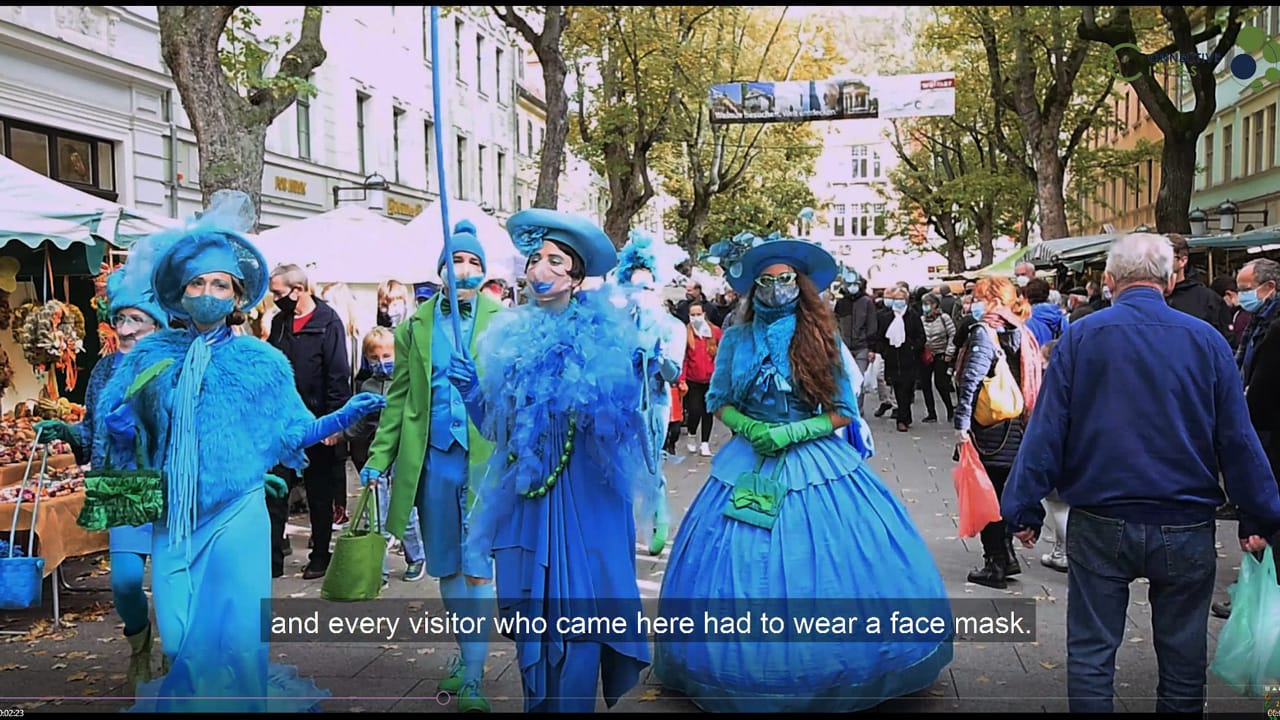
Weimar: Economic response to COVID-19

Weimar, a city that attracts thousands of tourists from all over the world every year. Watch how did the local city guides, hoteliers and small shop owners react to the lockdown? And what did the local authorities do?

Mehr: https://youtu.be/SxLgSY2aW6g

Join us and watch a special series of videos and podcasts that will show how to overcome a crisis from many different points of view. More videos, podcasts and interviews coming soon on our COVID-19 page.

Provision of basic services: water supply

Water has been a critical commodity in the fight against the Corona. It has been used in regularly washing hands and maintaining hygiene. Cities/ municipalities therefore, have been in the forefront in ensuring that there is enough supply of water.

On the 27th of October, 2020, 13 participants from various cities/ municipalities in Kenya, South Africa, Tanzania, Zambia and Zimbabwe came together to engage on the subject of water supply. The composition of the participants varied from cities/municipalities to local government associations including Kiambu, Lusaka, Mbeya, Nairobi and Pretoria. The aim was to engage each other on the challenges being faced and the changes that need to be adopted going forward in the Water, Sanitation and Hygiene (WASH) sector.

Program

Four presentations were made in this session and the scope covered views and experiences from the cities (Nairobi City County), research work and civil society organizations (Ferrial Adam – researcher & Water and Sanitation for the Urban Poor- WSUP). The session was moderated and gave room for response to the presentations and sharing of experiences from other cities. The session sought to respond to the following questions:

  1. What have been the core challenges for the municipalities?
  2. What measures have municipalities put in place?
  3. How do the municipalities deal with vulnerable groups which were most affected by the pandemic?
  4. Have there been any lessons learned already for long term strategies to improve cities’ resilience (i.e. preparedness for pandemics or similar events in the future)?

Presentations

A Civil Society Response to the Water Crisis During Covid-19 – a Place for Activist Citizen Science
Ms. Ferrial Adam

Nairobi City County Response to Covid-19
Mr. Mario Kainga

How can the Global WASH Sector Respond Better in Future Crises?
(Blog: https://www.wsup.com/blog/how-can-the-global-wash-sector-respond-better-in-future-crises/)
Mr. Kariuki Mugo & Ms. Eden Mati

Results

The presentations and discussions confirmed that most cities in SSA have inadequate coverage of the basic service; water. The sector players need to look into more sustainable solutions to the gap in provision of the service as opposed to short term measures in response to emergencies that are not long lasting. The highlights of the session were:

  • most of the countries in Africa are still water scarce.
  • there had to be sporadic interventions to reach the vulnerable in society who had no water & that the actors should not ignore the poor at their peril.
  • water has value hence encouraging the consumers not to pay has a negative impact on the service providers.
  • water utilities need operational sustainability plans that will stand in emergencies.
  • need for structured mandates & coordination mechanisms for institutions.
  • ensure equity in access to basic urban services.
  • the mapping of the water stressed communities using online tool by the activists is commendable and worth upscaling and replicating.