Municipal Response to COVID-19: Crisis Management

On 28th of April a virtual workshop on Crisis Management amid Covid-19 was held as part of the Connective Cities Series on Municipal Response to COVID-19. The event focused on the importance of multi-sectoral cooperation and fast communication strategies in unpredictable circumstances.

Approximately 15 participants from Georgia, Armenia, Azerbaijan, Belarus, Moldova and Ukraine took part in the workshop.

The event focused on

  • Presenting crisis communication strategies/approaches
  • Introducing community-based disaster risk reduction methodology
  • Providing recommendations about possible next steps

After the event all attendees were given certificates of completion of the workshop.

Program

This virtual event was opened by welcoming remarks made by Dr. Piotr Żuber. Dr. Żuber provided background information of the workshop and briefly overviewed the agenda. Following the introduction, Mr. Edmunds Akitis, International Consultant, advanced into leading the core sessions.

The workshop revolved around the following three main topics:

  • Crisis Communication
  • Building back better in the pandemic period / recovery
  • Community based disaster risk management

Each segment was followed by a session of questions and answers, allowing participants to grasp the content more thoroughly. Attendees were also given floor to present practices and challenges of crisis management from their respective municipalities.

Presentations

  1. General Presentation of Crisis Management – Mr. Edmunds Akitis, International Consultant
  2. Evaluation of good municipal practices in the pandemic period – Mr. Edmunds Akitis, International Consultant
  3. Methodology of community-based disaster risk management planning – Mr. Edmunds Akitis, International Consultant

Results

During this online workshop representatives from multitudes of municipalities exchanged their experiences and insights of crisis and its communication in their communities. Moreover, they were introduced to some successful practices as well as generally acclaimed structures of communication approaches. Identification of fake news and establishment of early warning systems were some of the highlighted topics discussed during the event.

Multidimensional: The COVID-19 urban restoration programme “Lviv tomorrow”

Ukraine, like most countries around the world, is strongly affected by Corona since March 2020. Individual cities experience little government support and are largely left to their own devices to combat and deal with COVID-19. Despite this challenge and only limited financial resources within the city budget, the city of Lviv managed to take quick and effective action.

The city, which is in northwestern Ukraine and has a population of about 750,000, established the “Lviv tomorrow” program to mitigate the negative consequences of COVID-19 and create the preconditions for improving the social, economic and cultural situation in the city. The program consists of 80 different projects, of which more than 50 already have been implemented.

An important pillar of the program is safety and health. The city of Lviv doubled the number of hospital beds available and set up its own COVID-19 testing laboratory. This allowed the number of COVID-19 tests to increase from 200-400 to over 3000 per day, speeding up the tracking of infected individuals and thus simplifying pandemic response.

The city also established new digital solutions that make it easier for the population to stay at and work from home. For example, a portal was created where the population can pay digitally for city services.

Especially the cultural sector was hit hard by the restrictions necessary to combat the pandemic. The city of Lviv is countering this by promoting open-air events and smaller cultural events, for example on balconies. This way, not only jobs in the cultural industry can be preserved, but also part of the life quality in the city can remain. In the uncertain times of the pandemic, cultural events are also a important psychological support for the population.

Another component of the “Lviv tomorrow” program is economic development. One project, for example, supports local food producers. In cooperation with supermarkets, food produced in Lviv is promoted and labeled with “made in Lviv” stickers.

With its extensive “Lviv tomorrow” program, the city of Lviv is taking action on many different levels to combat the pandemic and its effects. Not only the immediate aspects of the pandemic, such as the number of hospital beds, but also other areas of coexistence, such as cultural life, are included. Thus, not only acutely fighting the spread of Corona, but also creating a long-term perspective for the post COVID-19 city.

Contact:

Mr. Oleksandr Kobzarev
Director of the City Institute. Center of strategic planning in Lviv, Ukraine
o.kobzarev@city-institute.org

More Information:

LVIV TOMORROW. RESTORATION PROGRAM [pdf 11 pp.]

Interaktive Präsentation über Lviv (Only for those registered on the Connective Cities Platform)

Municipal Response to COVID-19 in the Area of Governance

Approximately 50 participants from Georgia, Ukraine, Belarus, Moldova, Montenegro, Poland, Kyrgyzstan, Romania, Czech Republic, Estonia, Bosnia and Herzegovina, Argentina, Bolivia, Armenia, Azerbaijan, Albania and Germany (16 countries) participated in the virtual event of the knowledge-exchange series on Municipal Response to COVID-19 in the area of governance.

The event focused on exploring the role of e-governance in combating COVID-19. It reviewed how municipalities manage to ensure the supply of essential municipal services with the help of efficient e-governance systems. During the event various topics were discussed, such as:

  • Crisis management experiences and existing challenges
  • Exploration of how we can enhance or scale-up strategies to meet current crisis-induced demands.

The web-seminar explored the impact of the COVID-19 outbreak on municipal plans/strategies and municipal services, the actions and communication strategies deployed in response, and the cooperation of municipalities with national governments as well as international organizations.  

Program

 In this virtual event, Dr. Giorgi Khishtovani presented the methodology and results of the research on COVID-19 governance responses within the Connective Cities network. Thereafter, two good practices were shared from Tartu (Estonia) and La Paz (Bolivia). The moderated panel discussion covered the topics of e-governance and the effectiveness of ICT solutions at municipal levels during the COVID-19 pandemic. The participants were then encouraged to continue with the exchange on the virtual platform Connective Cities where other resources were shared in addition to the session outputs.

Presentations of good practices

Municipal Business and Governance Response to COVID-19: Tartu Case
Raimond Tamm, Deputy Mayor of Tartu, Tartu, Estonia.

Public Services and I-Government in COVID-19 Era
Roberto Zambrana Flores, La Paz, Bolivia.

Results

During this online exchange representatives from multitudes of municipalities exchanged their experiences and insights in the fields of municipal response in health, business, and governance. This virtual exchange brought together city leaders and field experts in health, business, and governance to discuss prevalent trends, opportunities, and challenges emerging, along with the development and reinvention of municipal responses amid the COVID-19 pandemic.

Interview with Henning Schulz: Digitalisation

Gütersloh, Deutschland a former paper-based municipality that developed its own digital agenda within three years and moved online and into home offices within very few days.  Henning Schulz, its former mayor, tells us how did they made it in an organized way.

More: https://youtu.be/XzxhxwU8ibA

Join us and watch a special series of videos and podcasts that will show how to overcome a crisis from many different points of view. More videos, podcasts and interviews on our COVID-19 page.

Her City

There is a lack of knowledge in participatory urban planning and design, particularly in involving vulnerable groups in urban development processes. Research has shown that participatory urban development with girls and young women, local actors, as well as multi-level decision-makers, creates opportunities for more inclusive, equal and sustainable urban development.

Thus, Her City provides an opportunity to build capacity on a larger scale. Her City provides municipal professionals, urban actors and local decision-makers with a solid toolbox for mainstreaming youth, gender and socioeconomic perspectives by strategically involving girls and young women in urban planning and design.

Her City’s ambition is to contribute to a range of the 2030 Agenda Sustainable Development Goals (SDGs): SDG3 on health and well-being, SDG5 on gender equality, SDG10 on reducing inequality, SDG11 on sustainable cities and communities, SDG16 on peace, justice and strong institutions and SDG17 on partnerships. However, previous experiences have shown that this approach also contributes to implementing other SDGs on the local level.

Interview with Hugo Salomão França: Crisis Communication

Bem-vindo to Belo Horizonte, Brasil, a city that communicates to its own citizens and also helps partner cities and organizations worldwide.  Learn how Hugo Salomão França and his team helped to make sense of this unprecedent situation.

More: https://youtu.be/hzdH0EqS0bg

Join us and watch a special series of videos and podcasts that will show how to overcome a crisis from many different points of view. More videos, podcasts and interviews on our COVID-19 page.

Interview with Ahmad Zeyad: Public Health and Crisis Management

Avoid bureaucracy, gather verified urban data and rely on your own strengths – watch through Ahmad Zeyad what it took to reduce infection rates in Amman, Jordan.

More: https://youtu.be/c8j22Qo_IkI

Join us and watch a special series of videos and podcasts that will show how to overcome a crisis from many different points of view. More videos, podcasts and interviews on our COVID-19 page.

Interview with Awande Buthelezi: Crisis Management and Digitalisation

Awande Buthelezi from Johannesburg, South Africa, shows how did he and his NGO handled to know who was in need of essential supplies such as water when there was no existing data about the precise locations.

More: https://youtu.be/r4WG9clnn40

Join us and watch a special series of videos and podcasts that will show how to overcome a crisis from many different points of view. More videos, podcasts and interviews on our COVID-19 page.

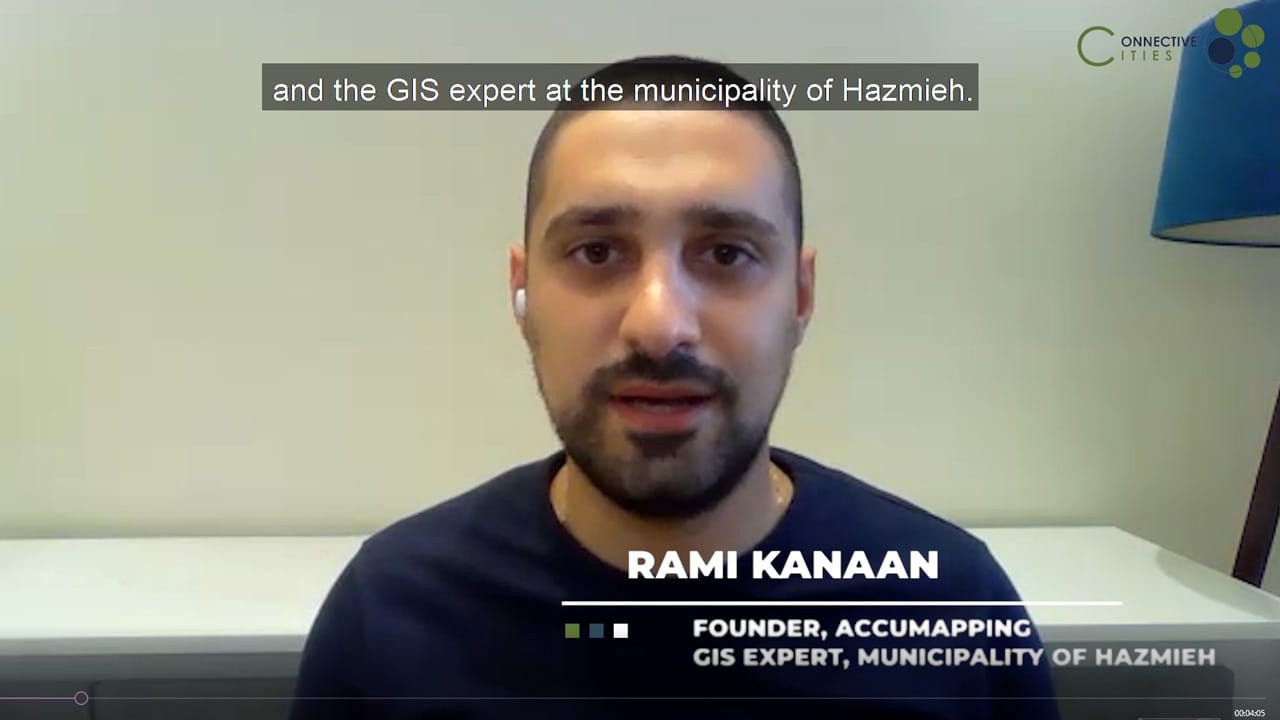
Interview with Rami Kanaan: Digitalisation and Public Health

Hazmieh, Lebanon, a city located at the entrance of Beirut. Rami Kanaan, a proud Lebanese, told us how to control infection chains to prevent the virus from spreading and how can police and ambulances profit from this.

More: https://youtu.be/WGlsNTODLbc

Join us and watch a special series of videos and podcasts that will show how to overcome a crisis from many different points of view. More videos, podcasts and interviews on our COVID-19 page.

Interview with Faola Hodaj on Innovation Ecosystems

Learn through Faola Hodaj, Director of Innovation at Municipality of Tirana, how did the municipality reflect this innovative spirit through its services and response to the pandemic.

More: https://youtu.be/BpnLZLcky00

Join us and watch a special series of videos and podcasts that will show how to overcome a crisis from many different points of view. More videos, podcasts and interviews on our COVID-19 page.