


"The Guangzhou International Award for Urban Innovation is dedicated to decentralised, city-to-city cooperation and sharing lessons learned from experience. Its focus covers the three pillars of sustainability: social, economic and environmental, and two additional domains – governance and technology.
The fourth edition of the Guangzhou Award was a remarkable show of these links between innovation and learning from different stakeholders. This publication is an attempt to extend the prestige of the initiatives that were shortlisted for the award, and to spread their legacy to even broader audiences."
Category: Sustainable mobility
Together, equal and self-determined
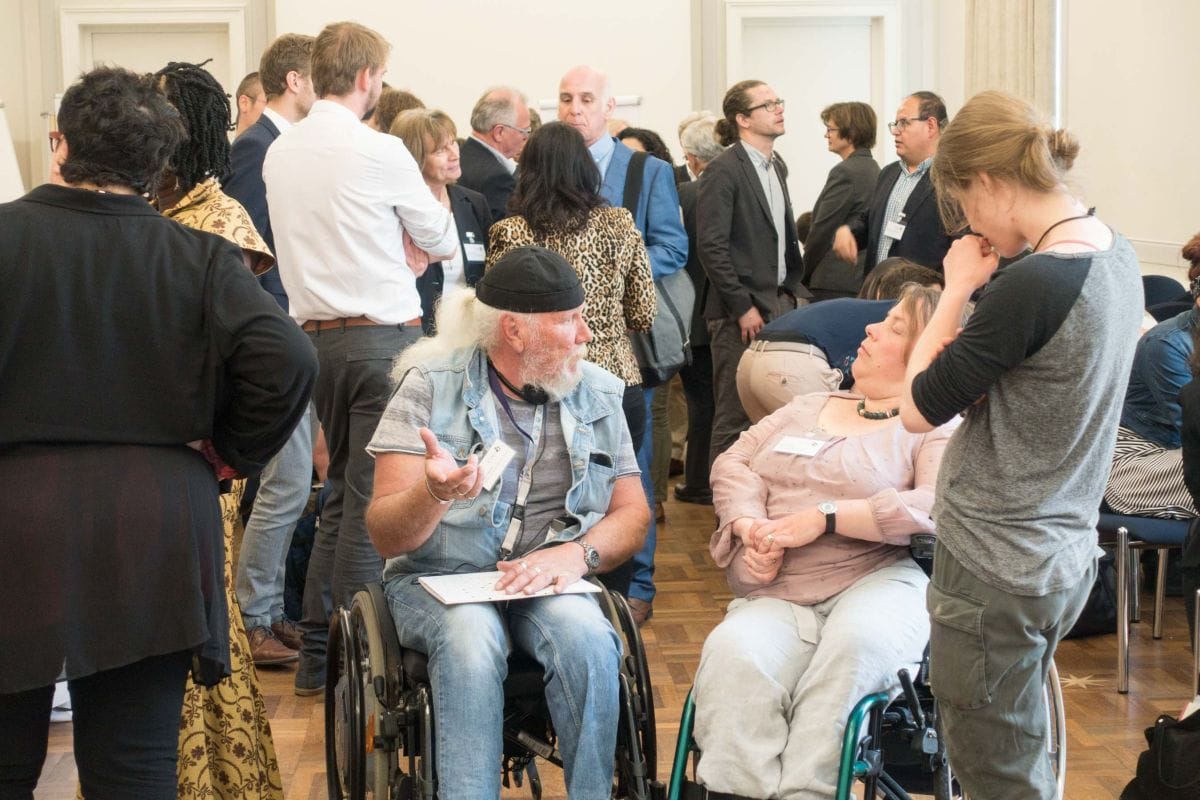
Citizens of Bonn with disabilities should be fully included in city life in every circumstance, just like everyone else: That is the goal of the Federal City of Bonn. To this end, it has developed the “Disability Policy Participation Plan for the Federal City of Bonn” – participatory and inclusive.
Urban Transitions Alliance Roadmaps

Industrial legacy cities face unique challenges, as they transition towards vibrant, sustainable and equitable urban centers. Cities around the world can learn lessons from where these cities have been, and how they are moving forward. The new report, "Urban Transitions Alliance Roadmaps: Sustainability Transition Pathways from Industrial Legacy Cities" details four transition pathways that eleven post-industrial cities have undertaken, with implementation ideas and best practices for each. These cities are all a part of the Urban Transitions Alliance, which was built on the premise that by connecting industrial legacy cities from the US, Germany, Poland and China through their transition stories and visions of sustainable urban development, common challenges and transition pathways would emerge.
Reflecting the thematic priorities of the Alliance members, the chapters subsequently focus on challenges and solutions in the fields of Infrastructure, Energy, Mobility, and Social Transition. Each topic is explored in terms of background, barriers and opportunities related to the industrial legacy context. Transition priorities and innovative approaches from the different regions are outlined in key pathways and exemplified in case studies from the Alliance cities and districts. Some of the conditions described might apply in various degrees to cities beyond the industrial legacy context – that is why transition experiences and pathways from the Urban Transitions Alliance can be of value to cities around the globe.
Mexico City: The role of public transport in tackling air pollution and accessibility

Over the last two decades, Mexico City has implemented many successful mobility projects to partly relieve its saturated public transport system and diminish air pollution generated by vehicles, while also providing more transportation options for people in peripheral locations or vulnerable situations.
The City’s decision to diversify its public transport offer and to invest in new mobility options such as BRTs and bike-sharing systems proved successful and allowed to partially relieve the pressure put on the saturated metro system. The government has also learned from its previous errors, such as the Tren Suburbano’s lack of accessibility. This project showed the importance of taking into account user accessibility and the involvement of stakeholders in a transportation project, instead of focusing mainly on feasibility and infrastructure.
Sustainable Urban Transport: Avoid-Shift-Improve (A-S-I)

"Cities today are challenged with meeting steadily increasing mobility demands. Providing additional road space has not helped to solve the pressing problems of unacceptable levels of congestion, air quality deterioration and increasing greenhouse gas (GHG) emissions in cities. In return, cities have not become more livable, and mobility remains far away from being human-centered.
What is required, therefore, is a fundamental rethinking of the paradigm by which mobility and city planning is guided. Inspired by the principles of sustainability, an alternative approach focuses on the mobility needs of people instead of car infrastructure. The approach, known as A-S-I (from Avoid/ Reduce, Shift/Maintain, Improve), seeks to achieve significant GHG emission reductions, reduced energy consumption, less congestion, with the final objective to create more livable cities."
Guadalajara: Revisiting Public Space Interventions through the Via RecreActiva

"Every Sunday, Guadalajara closes more than 60 kilometers of streets to car traffic, opening them up for public use by pedestrians, cyclists and performers. Since starting the "Via RecreActiva," Guadalajara has more open space for recreation, a new collective image of public space and a revitalized movement for transit equity.
The Via RecreActiva has had a clear “before” and “after” effect on the surrounding community. It marks the consolidation of both political and economic power around the importance of and investment in public space. The momentum created by civil society groups that advocated for the Via RecreActiva shifted demand for basic public infrastructure leading to new political commitments. This has increased transparency, created new roles for public space activists in municipal institutions, and institutionalized participatory processes."
Remarkable Women in Transport

Transport systems can only become truly inclusive and gender-responsive if the voices, perspectives and experiences of women are reflected at all levels in the transport sector. Thus, as it is still a largely male-dominated field, it is imperative to focus on increasing the number of women working on transport.
TUMI endeavours to support this transformational change by empowering women experts and stimulate behavioural change in the transport sector and in cities all around the world. As visibility is key to change mind-sets, this first round of TUMI’s Remarkable Women in Transport series introduces more than 60 highly qualified women transport experts, and highlights their contribution to sustainable mobility solutions on the ground – by women, for the entire society.
This publication is meant to showcase the diversity of female change makers in transport.
Reclaiming the Streets of Fortaleza, Brazil

The Institute for Transportation and Development Policy works around the world to design and implement high- quality transport systems and policy solutions that make cities more livable, equitable, and sustainable.
Content of this issue:
The Effects of Transportation on Early Childhood Development
Fortaleza’s Progress Shows that Change is Still Possible in Brazil
Bucheon City Goes from a Car-Centric City to a People-Friendly Vision
In Cairo, ITDP Works to Improve Transport Access for Women
America, The Netherlands, and Oil Crisis: 50 Years Later
Frequency Is Freedom
Scooters, E-bikes, Rideshares, and More: Learning from Dockless Bikeshar
On Mexico City’s Buses, a Little Technology Goes a Long Way
MOBILIZE Dar es Salaam
In Jakarta’s Urban Villages Women Are Moving Mobility Forward
“Women-only” Transport: A "Solution" To What End?
As Cities in the US and Europe Explore Electrification, China Is Taking the Lead
Transforming Streets in São Pauo
From the Narrow Lanes of Agra to the BRT Lanes of Pune: 20 Years of the ITDP India Program
New Resources from ITDP
Content of this issue:
The Effects of Transportation on Early Childhood Development
Fortaleza’s Progress Shows that Change is Still Possible in Brazil
Bucheon City Goes from a Car-Centric City to a People-Friendly Vision
In Cairo, ITDP Works to Improve Transport Access for Women
America, The Netherlands, and Oil Crisis: 50 Years Later
Frequency Is Freedom
Scooters, E-bikes, Rideshares, and More: Learning from Dockless Bikeshar
On Mexico City’s Buses, a Little Technology Goes a Long Way
MOBILIZE Dar es Salaam
In Jakarta’s Urban Villages Women Are Moving Mobility Forward
“Women-only” Transport: A "Solution" To What End?
As Cities in the US and Europe Explore Electrification, China Is Taking the Lead
Transforming Streets in São Pauo
From the Narrow Lanes of Agra to the BRT Lanes of Pune: 20 Years of the ITDP India Program
New Resources from ITDP
International Evaluation of Public Policies for Electromobility in Urban Fleets

"Transportation electrification is commonly seen as a key measure to reduce greenhouse gas (GHG) emissions and mitigate climate change. Many urban environments are also grappling with severe air pollution and the resulting threats to public health, and cities are increasingly evaluating and implementing robust policies to encourage the adoption of electric vehicles (EVs). Governments are also interested in the economic, industrial, and employment benefits from local development and manufacturing of emerging technologies such as EVs and their supporting infrastructure. Research shows that countries that adopt stringent environmental standards and a coordinated strategy for electromobility secure early-mover advantage for their firms, leading to the conditions that allow for industrial competitiveness in international markets."
How to get from Planning to Financing Sustainable Urban Mobility Projects?

Cities in Latin America have made a variety of advances towards designing projects that seek not only to confront the problems created in recent decades by urbanisation and the impact of climate change, but also to improve the quality of life for the whole population due to a healthier, better protected environment.
Bogotá, meanwhile, is currently drawing up a transformational sustainable mobility and urban development project with the support of the C40 Cities Finance Facility (CFF). It includes a 25-kilometre cycleway from the south to the north of the city, with finance being sought from a wide variety of sources. The support provided by the CFF will include the delivery of several technical studies and collaborative workshops to ensure project sustainability, capacity development and public participation.
This workshop served to promote an exchange of knowledge between cities in Colombia and Latin America which are in the process of preparing, financing or even implementing similar projects.