


Many governments have difficulty in formulating a NUP due to insufficient capacity, ever changing political contexts, complex relationships between government departments/ministries, and political pressures from interest groups. Consultation is key during the formulation phase to build consensus. Good policy formulation requires political will, visionary leadership, organizational know-how, effective consultative mechanisms, and good negotiating skills on the part of the ministry or department in charge of urban issues. This Guide suggests that before starting the formulation process, it is essential that a thorough diagnosis of the urban sector is carried out, with extensive data collection, review and analysis. It is also advisable to assess the available capacity (human, financial, institutional and technical). Following this, aspects to consider in the formulation of a NUP include the selection of the lead agency, the quality of the data and information that is available, how the various stakeholders will participate, what resources are available, how the process will be coordinated, and what the context is – the needs and issues that will frame the policy.
According to this practical guide, a national urban policy (1) responds to the country’s development priorities, (2) is based on sound evidence, and (3) is focused on outcomes. This handbook provides practical steps and a coordinated process to formulate an urban policy that adheres to five key principles: participation, inclusion, affordability, sustainability and implementability.
Author: erik
Solutions for and by cities

"The Guangzhou International Award for Urban Innovation is dedicated to decentralised, city-to-city cooperation and sharing lessons learned from experience. Its focus covers the three pillars of sustainability: social, economic and environmental, and two additional domains – governance and technology.
The fourth edition of the Guangzhou Award was a remarkable show of these links between innovation and learning from different stakeholders. This publication is an attempt to extend the prestige of the initiatives that were shortlisted for the award, and to spread their legacy to even broader audiences."
Reducing Air Pollution
As a follow-up to the Regional Dialogue and Practitioners´ Workshop on “Sustainable urban mobility and climate change” that took place from 20th – 22nd February, 2018 in Tbilisi, Georgia, an expert mission by two German urban practitioners from the cities of Hagen and Heidelberg took place from March 11 – 13, 2019 to support local stakeholders in Kragujevac to elaborate a concept to establish a clean air zone in the city.
Legal aspects of the development engagement of municipal enterprises

Municipal economy is close to the public sector and this gives rise to special duties of action and due diligence which can have an impact on development policy. The report explores the scope and prerequisites of the commitment, which may differ depending on the organisational form, the form of the articles of association or statutes, or the registered office of a municipal enterprise.
It shows the legal framework and thus offers the necessary support for the municipal economy in its engagement, addresses open questions and removes ambiguities so that even more municipal enterprises follow the successful examples of successful municipal development policy.
[In German only]
Rethinking the ecosystem of international city networks

Cities have emerged as major players on the international scene in recent years. Yet, their ambition to project themselves internationally and to influence global agendas is not a new phenomenon. Cities have operated through organised networks for decades. The first international organisation of cities was the International Union of Local Authorities, created in 1913. Towards the end of the past century, the regional integration processes of the 1990s engendered a proliferation of city networks, especially in Europe but also in Latin America, Africa and Asia. In 2004, the founding of United Cities and Local Governments as a platform for international municipalism marked a turning point.
Today city networks play a growing role in defining and implementing some of the main global agendas. Their involvement in the United Nations Conference on Climate Change, their success in adding a territorial dimension to the UN 2030 Agenda, and their participation in the Steering Committee of the Global Partnership for Effective Development Co-operation, are good examples of how city networks are making their voice heard. But the increasing importance attributed to urbanisation processes on international development agendas has also caused a reconfiguration of the ecosystem of city networks that brings with it both risks and opportunities.
This volume seeks to analyse the changing dynamics of the ecosystem of city networks, focusing on how the main platforms operate, what influence they have on global agendas, what services they provide and how they coordinate their efforts. By zooming in on the strategies networks have been developing to enhance their influence and make their operations more effective, the volume examines the added value they provide.
Municipal action in times of flight, migration and integration

Osnabrück, as a city of peace, lives the guiding principle “peace as a task – committed to peace” and is proud of their lived diversity – immigrants have been part of the citizens for decades. On-going high migration intensities, an increasingly diverse society but also recent refugee movements require a new thinking in the sense of a holistic integration management in which the city council, the city administration, citizenry and institutions work closely together.
Together, equal and self-determined
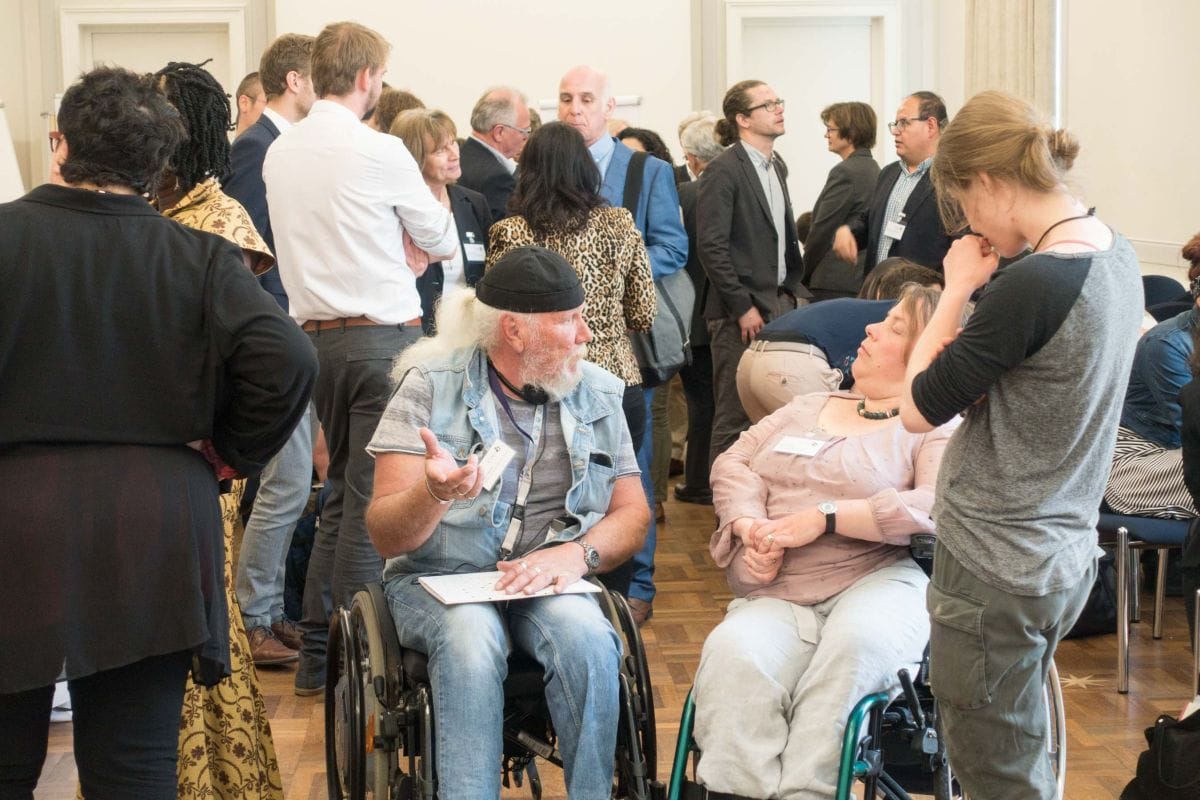
Citizens of Bonn with disabilities should be fully included in city life in every circumstance, just like everyone else: That is the goal of the Federal City of Bonn. To this end, it has developed the “Disability Policy Participation Plan for the Federal City of Bonn” – participatory and inclusive.
Urban Transitions Alliance Roadmaps

Industrial legacy cities face unique challenges, as they transition towards vibrant, sustainable and equitable urban centers. Cities around the world can learn lessons from where these cities have been, and how they are moving forward. The new report, "Urban Transitions Alliance Roadmaps: Sustainability Transition Pathways from Industrial Legacy Cities" details four transition pathways that eleven post-industrial cities have undertaken, with implementation ideas and best practices for each. These cities are all a part of the Urban Transitions Alliance, which was built on the premise that by connecting industrial legacy cities from the US, Germany, Poland and China through their transition stories and visions of sustainable urban development, common challenges and transition pathways would emerge.
Reflecting the thematic priorities of the Alliance members, the chapters subsequently focus on challenges and solutions in the fields of Infrastructure, Energy, Mobility, and Social Transition. Each topic is explored in terms of background, barriers and opportunities related to the industrial legacy context. Transition priorities and innovative approaches from the different regions are outlined in key pathways and exemplified in case studies from the Alliance cities and districts. Some of the conditions described might apply in various degrees to cities beyond the industrial legacy context – that is why transition experiences and pathways from the Urban Transitions Alliance can be of value to cities around the globe.
Including Urban Metabolism Principles in Decision-Making

Circular economy and urban metabolism concepts have recently received great attention both in the political and academic arenas, starting a roll-over process of the “take, make, and dispose” dominant economic model that is leading to an ongoing increase of resource consumption and waste generation. However, there is a relative lack of guidelines for introducing such concepts in a decision-making process able to support the design of appropriate policies and strategies and the definition of specific actions to cope with such challenges. This paper attempts to contribute to the recent efforts at incorporating these concepts in policy and decision-making processes by providing a methodology for the development of strategic plans for waste prevention and resource management. The proposed methodology, developed within the Urban_WINS project, combines different quantitative–analytical and qualitative methods and tools, together with a participatory process. The methodology was tested in eight EU cities and allowed to formulate several measures and actions aimed at addressing the challenges posed by the current consumption patterns. Moreover, the participatory approach led to the legitimization of the strategic plans, as well as to raise awareness among stakeholders. Although it might require specific tailor-made adjustments, this methodology is suitable to be replicated in other contexts.
Addressing Urban and Human Settlement Issues in National Adaptation Plans

"The Addressing Urban and Human Settlement Issues in National Adaptation Plans Supplementary Guide aims to comprehensively address urban and human settlement issues in National Adaptation Plans (NAPs) at the formulation and implementation stage.
The guide primarily targets decision-makers at the national level working on NAPs, both within and outside UNFCCC focal point ministries, while it also targets a broader set of stakeholders at the national and sub-national levels who are interested in NAPs or who may be involved in their implementation."