


"Climate science must be accessible to urban policymakers, because without them, there will be no limiting global warming to 1.5°C. In cities and urban areas, there are actions that policymakers—along with residents and stakeholders, such as civil society, the academic community, and those in business and finance—can take to help limit warming and adapt to the impacts of climate change. The effects of a city’s actions are not limited to its own borders or region, and, likewise, lessons learned in some cities and urban areas can serve as inspiration and resources for solutions in other urban areas. This Summary for Urban Policymakers is synthesised from SR1.5, the Fifth Assessment Report of the Intergovernmental Panel on Climate Change (IPCC), and relevant supporting research […]. It translates the key scientific
findings and policy observations of the IPCC Special Report on Global Warming of 1.5°C for officials and policymakers of the world’s cities and urban areas."
Author: erik
International Evaluation of Public Policies for Electromobility in Urban Fleets

"Transportation electrification is commonly seen as a key measure to reduce greenhouse gas (GHG) emissions and mitigate climate change. Many urban environments are also grappling with severe air pollution and the resulting threats to public health, and cities are increasingly evaluating and implementing robust policies to encourage the adoption of electric vehicles (EVs). Governments are also interested in the economic, industrial, and employment benefits from local development and manufacturing of emerging technologies such as EVs and their supporting infrastructure. Research shows that countries that adopt stringent environmental standards and a coordinated strategy for electromobility secure early-mover advantage for their firms, leading to the conditions that allow for industrial competitiveness in international markets."
Multi-Level Climate Governance Supporting Local Action
How can different instruments for multi-level climate governance support the realisation of local climate mitigation and adaptation potentials? This study guides through the contemporary discourse, outlines the build-up of governance capacity and presents different applications and relevant stakeholders. Thereby, it strengthens the applicability of multi-level climate governance.
SDG 11 Synthesis Report

The Sustainable Development Goals(SDGs) are a universal call to action to end poverty, protect the planet and ensure that all people enjoy peace and prosperity. Goal11, one of the 17 SDGs, is about all of these dimensions, with a specific focus on urban areas and settings. This synthesis report is the first publication showing the progress, challenges and opportunities of global monitoring of this Sustainable Development Goal.
This report complements the 2018 Secretary-General’s Progress Report on SDGs which shows progress in the form of story lines, and the 2018 Secretary-General’s first quadrennial report on progress made in the implementation of the New Urban Agenda.
The State of African Cities 2018

The aim of The State of African Cities 2018: The geography of African investment report is to contribute to development policies that can turn African cities into more attractive, competitive and resilient foreign direct investment (FDI) destinations. Attracting global FDI is highly competitive and crosses various geographic scales, therefore regional cooperation by cities and nations is critical. But FDI is not a panacea since it has both positive and negative effects and careful choices need to be made by cities in their pursuit of FDI, if it is to lead to inclusive economic growth. This report aims to provide guidance on these choices and to facilitate understanding of the complexity of global investment in Africa.
Festivals as Integrative Sites Valuing Tangible and Intangible Heritage for Sustainable Development

The city is always suspended as a case of ‘heres’ and ‘elsewheres’, connected … and that is why artists may be doing a better job than southern, or northern, theorists in ‘painting’, ‘composing’, ‘dancing’ and ‘writing’ cities into being.
Festivals provide a window onto practices which integrate tangible and intangible heritage in the context of wider sustainable development challenges.
This report presents an anthology of festivals, collated by researchers and practitioners, which reveals the possibilities, promise and pitfalls of planning for culture and sustainable development.
How to get from Planning to Financing Sustainable Urban Mobility Projects?

Cities in Latin America have made a variety of advances towards designing projects that seek not only to confront the problems created in recent decades by urbanisation and the impact of climate change, but also to improve the quality of life for the whole population due to a healthier, better protected environment.
Bogotá, meanwhile, is currently drawing up a transformational sustainable mobility and urban development project with the support of the C40 Cities Finance Facility (CFF). It includes a 25-kilometre cycleway from the south to the north of the city, with finance being sought from a wide variety of sources. The support provided by the CFF will include the delivery of several technical studies and collaborative workshops to ensure project sustainability, capacity development and public participation.
This workshop served to promote an exchange of knowledge between cities in Colombia and Latin America which are in the process of preparing, financing or even implementing similar projects.
From Waste to Resource – Integrated Municipal Solid Waste Management Solutions
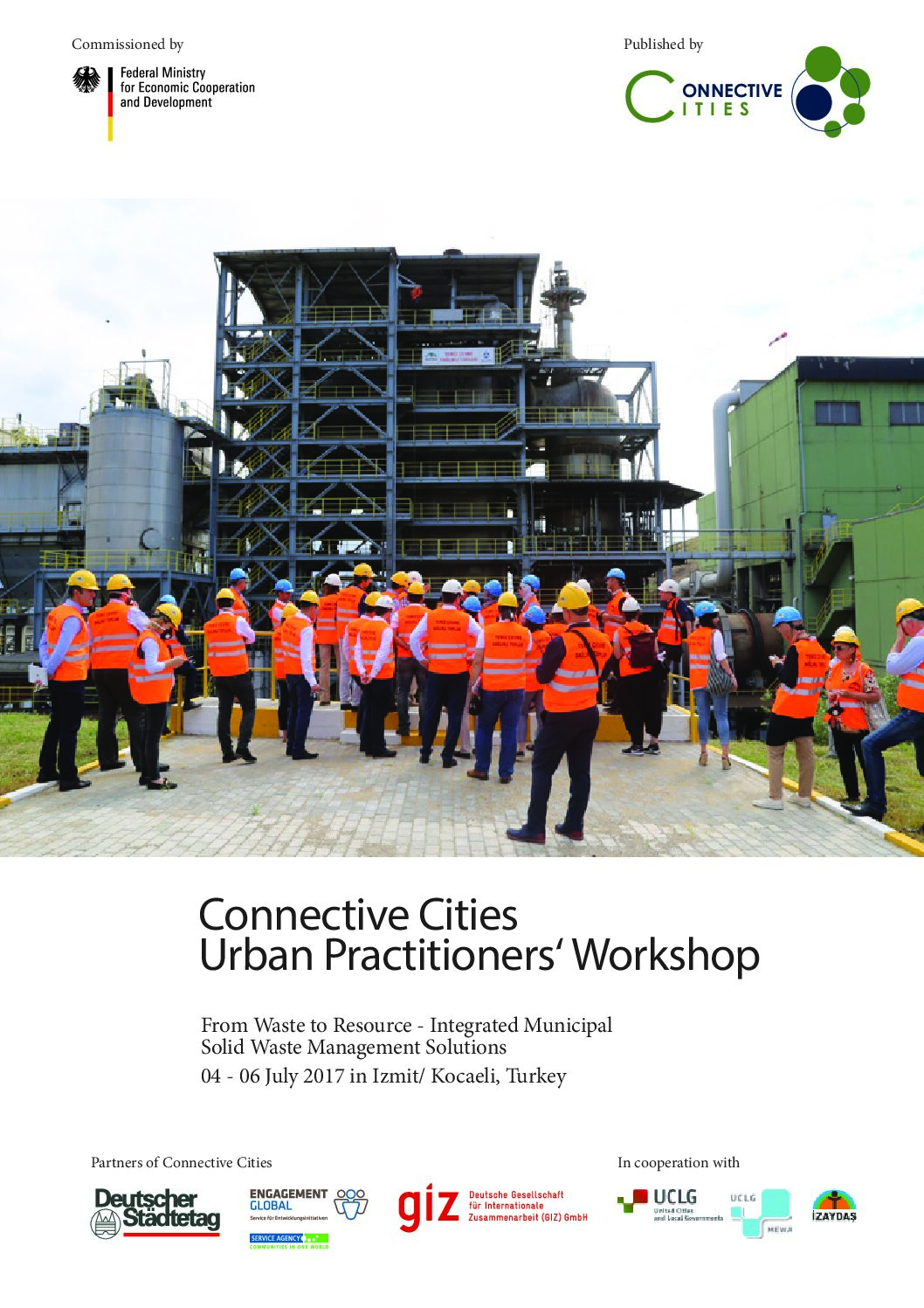
In collaboration with UCLG-MEWA and in the framework of the “Municipal know-how for host communities in the Middle-East” programme, Connective Cities organised a practitioners’ workshop on integrated solid waste management in İzmit/ Kocaeli, Turkey from July 4-6th, 2017.
The workshop aimed at fostering exchange between urban waste management practitioners from Turkey and Germany through good practice presentations and peer-to-peer advisory in order to create local action plans that improve solid waste management in an integrative manner.
The report provides a brief summary of the workshop, describing the starting situation in Turkey and featuring key discussion points, presented good practices and the project ideas developed in the workshop.
Solutions for gender fair cities

"This report is the product of the Womanability research-action project. It reveals the numerous, and sometimes unexpected, obstacles to the equal access and enjoyment of public spaces by women, from a lack of green spaces, accessible public transportation, and public toilets, to persistent harassment and outright violence. Building on these experiences and observations, the report offers a series of recommendations and best practices, many developed by women themselves, for creating the gender equal cities of the future. […]"
Regional Peer-Learning and Action Planning Workshop
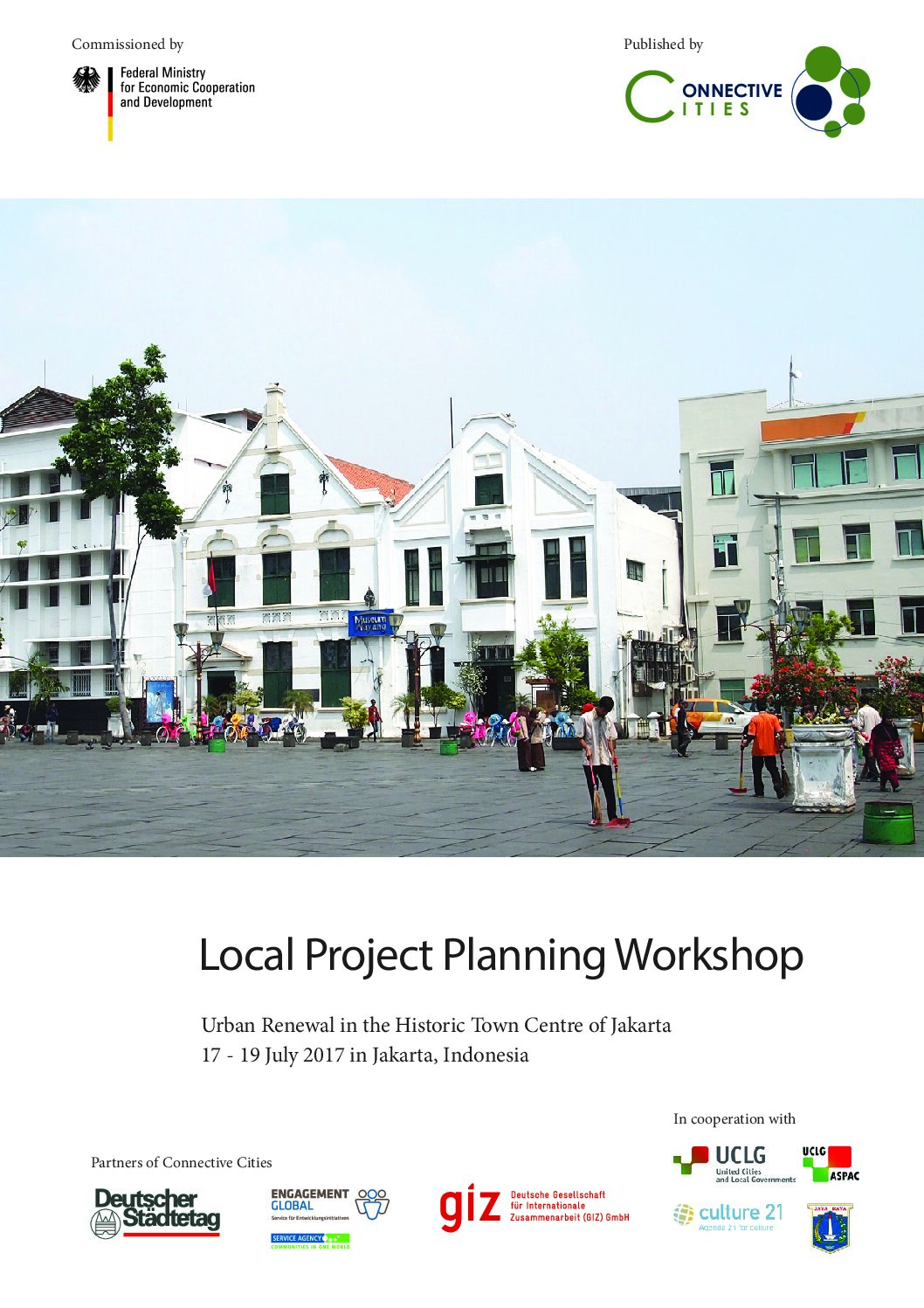
Together with UCLG World Secretariat and UCLG Asia-Pacific, Connective Cities organised the Regional Peer-Learning and Action Planning Workshop on “Urban Renewal in Historic Town Centres and Public Space Improvement” in Jakarta, Indonesia from 17 – 19 July 2017.
During the three-day workshop urban heritage specialists and planners from the Asian region and Germany discussed and advised the ongoing urban renewal of Jakarta’s Historic Town Centre Kota Tua as well as supported the proccess of drafting the application for UNESCO World Heritage Site.
This short report provides summary of the workshop, describing particular challenges faced in Kota Tua, featuring good practices presented at the event and summarising the recommendations developed in a joint work of experts.