


In 2017, the County Government of Nairobi declared Mukuru to be a Special Planning Area (SPA), paving the way for the preparation of an integrated Local Physical Development Plan (LPDP) for this large informal settlement in collaboration with its residents and partner organizations.
The SPA covers Mukuru Kwa Njenga, Mukuru Kwa Reuben and Viwandani which together accommodate around 300,000 low-income residents, many of them living in extreme income poverty.
Implementing this ambitious integrated plan will require finance for a wide range of infrastructure services and affordable housing as well as complementary financial interventions to support micro- and small enterprises.
This publication sets out a financing mechanism for the envisaged upgrading investments in informal settlements in Nairobi, pejoratively called “slums”. Mobilizing the vast amounts of capital required will face critical challenges, with affordability and land tenure at the forefront.
An important aspect of this report is how the upgrading of Mukuru and other informal settlements in Nairobi could be linked to these institutional innovations which seek to deliver infrastructure services and affordable housing at scale.
International experience on slum upgrading finance is examined early in the report in order to draw out general trends that provide a useful backdrop for Nairobi. The cases of India, Morocco and Egypt are set out and a general approach to slum upgrading finance presented.
Category: The social city
Urban Migration: Strengthening Cooperation with Civil Society

"While migration is often seen as a national issue, and most of the mandate around immigration, refugees and asylum falls to the central government, it is often cities and local governments that have to directly deal and address the needs of newly arrived migrants, and the inclusion of long-term migrant residents. […] At the same time, civil society organizations (CSOs) have taken an increasingly important role in supporting migrants by undertaking initiatives that raise awareness, facilitate access to basic services, advocate for their rights and strengthen social inclusion. The role of CSOs as key partners for local authorities in the governance of migration and other urban governance issues is widely recognized, but it is not always clear how to articulate these partnerships and coordinate efforts while securing the autonomy of these organizations and avoiding potential tensions or conflicts of interest."
In June 2019, UCLG ́s Learning team coordinated a workshop and peer learning event focusing on “Building trust through strengthened cooperation: the role of civil society in the urban governance of migration” in Sfax, Tunisia. The workshop was part of the Mediterranean City to City Migration (MC2CM) project. In the process of the event some key learnings and recommendations have been worked out. The documentation includes case studies from Sfax, Tunisia; Malaga, Spain; Brital, Lebanon; Douala, Cameroon and Meknes, Morocco.
Heatwave Guide for Cities

"Heatwaves are deadly and their impacts are on the rise globally due to climate change. People living in urban areas are amongst the hardest hit when a heatwave occurs because these are hotter than the surrounding countryside. Along with climate change, urbanization is one of the most transformative trends of this century and the last. Over half the world now lives in urban areas and this is projected to increase to two-thirds by 2050. It is crucial that cities incorporate heat-reduction tactics such as green spaces into their plans for growth or retrofit them in built areas. […] This practical guide is designed with, and for, people working in city government to understand, reduce the risk of, and respond to, heatwaves in their cities."
Affordable housing: profiles of five metropolitan cities

Global urban growth is a fact. Cities have expanded beyond their own administrative borders, resulting in metropolitan territories with large physical dimensions. The metropolises of the world are engines of growth, the nodes in major streams of people, goods, wealth, knowledge, creativity and innovation. […] On the other hand, because they are diverse and complex, the same metropolises also tend to be fragmented, generating profound inequalities within their own territories. Metropolitan opportunities and inequalities arise in almost every aspect of the lives of urban dwellers, starting with one of the most fundamental universal human rights: the right to adequate housing and shelter.
The report portrays the efforts of the city authorities of Berlin, Buenos Aires, Kuala Lumpur, Montréal and Singapore in order to ensure affordable housing for all citizens.
Making Affordable Housing a Reality in Cities

"Cities are growing at an unprecedented rate, presenting an incredible opportunity for the development of local economies. However, their residents need good, affordable housing – and this remains a challenge around the world. Well-functioning property markets can act as a financial springboard for enterprises and job creation. An enabling environment for affordable housing can be developed with the right infrastructure, investment and macroeconomic policies targeted towards social and financial inclusion. The challenge of affordability requires not just short-term fixes but also long-term strategies. Solutions will need to address both the supply side and the demand side of the housing market, and involve public-sector, private-sector and non-profit stakeholders."
The Future of Cities

This report identifies challenges influencing the future of cities in Europe and beyond in fields like environmental impact, ageing, health, housing, social segregation, governance and mobility. It also presents several perspectives from which to look at resolving these issues. It is an initiative of the Joint Research Centre (JRC)i, the science and knowledge service of the European Commission (EC), supported by the Commission’s Directorate-General for Regional and Urban Policy (DG REGIO). The main aim is to raise open questions and steer discussions on what the future of cities can, and should be, both within the scientific and policymaker communities. The report benefits greatly from the collective intelligence put forward by the Members of the EC Community of Practice on Cities and is linked to aninteractive online platform, which is s designed to raise open questions and steer discussions for sharing and accumulating knowledge on the future of cities.
Solutions for and by cities

"The Guangzhou International Award for Urban Innovation is dedicated to decentralised, city-to-city cooperation and sharing lessons learned from experience. Its focus covers the three pillars of sustainability: social, economic and environmental, and two additional domains – governance and technology.
The fourth edition of the Guangzhou Award was a remarkable show of these links between innovation and learning from different stakeholders. This publication is an attempt to extend the prestige of the initiatives that were shortlisted for the award, and to spread their legacy to even broader audiences."
Municipal action in times of flight, migration and integration

Osnabrück, as a city of peace, lives the guiding principle “peace as a task – committed to peace” and is proud of their lived diversity – immigrants have been part of the citizens for decades. On-going high migration intensities, an increasingly diverse society but also recent refugee movements require a new thinking in the sense of a holistic integration management in which the city council, the city administration, citizenry and institutions work closely together.
Together, equal and self-determined
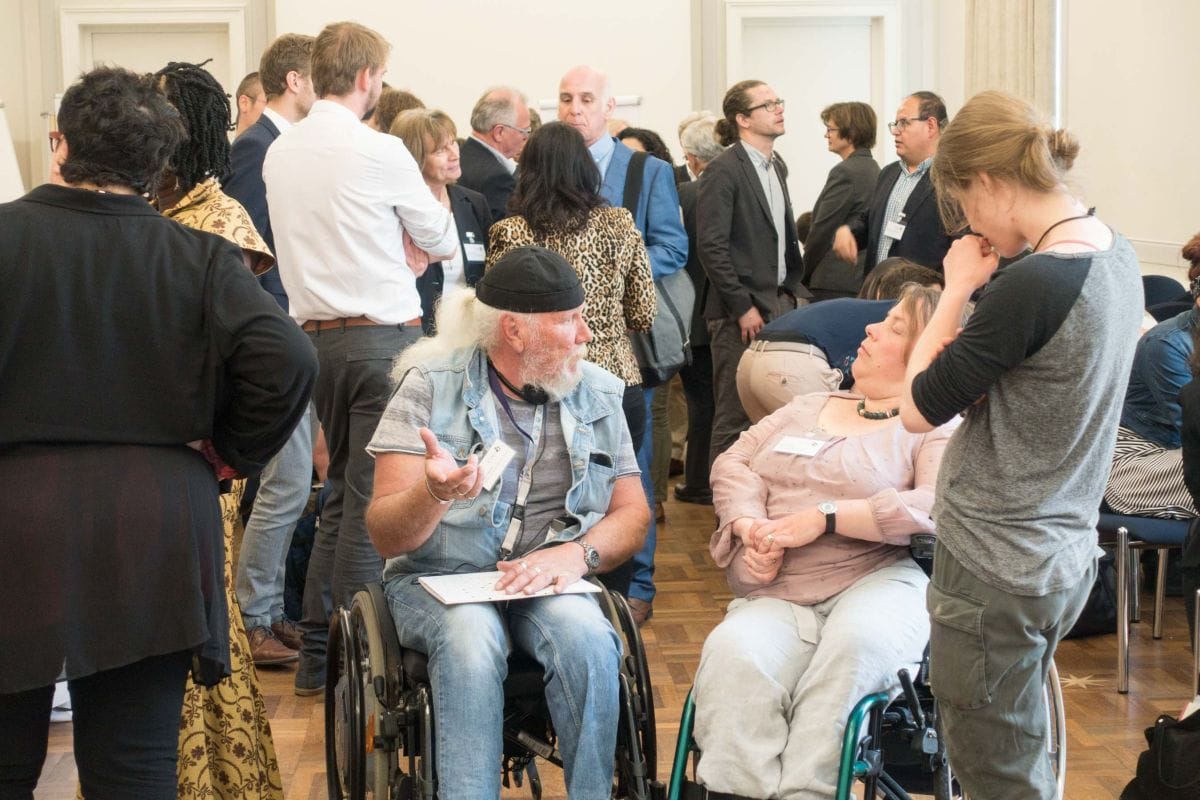
Citizens of Bonn with disabilities should be fully included in city life in every circumstance, just like everyone else: That is the goal of the Federal City of Bonn. To this end, it has developed the “Disability Policy Participation Plan for the Federal City of Bonn” – participatory and inclusive.
Urban Transitions Alliance Roadmaps

Industrial legacy cities face unique challenges, as they transition towards vibrant, sustainable and equitable urban centers. Cities around the world can learn lessons from where these cities have been, and how they are moving forward. The new report, "Urban Transitions Alliance Roadmaps: Sustainability Transition Pathways from Industrial Legacy Cities" details four transition pathways that eleven post-industrial cities have undertaken, with implementation ideas and best practices for each. These cities are all a part of the Urban Transitions Alliance, which was built on the premise that by connecting industrial legacy cities from the US, Germany, Poland and China through their transition stories and visions of sustainable urban development, common challenges and transition pathways would emerge.
Reflecting the thematic priorities of the Alliance members, the chapters subsequently focus on challenges and solutions in the fields of Infrastructure, Energy, Mobility, and Social Transition. Each topic is explored in terms of background, barriers and opportunities related to the industrial legacy context. Transition priorities and innovative approaches from the different regions are outlined in key pathways and exemplified in case studies from the Alliance cities and districts. Some of the conditions described might apply in various degrees to cities beyond the industrial legacy context – that is why transition experiences and pathways from the Urban Transitions Alliance can be of value to cities around the globe.