


The in-person meetings of the school partnership between Osterode in Germany and Kaolack in Senegal, which were postponed due to the pandemic, were replaced by a video project. The students recorded on video scenes from their everyday lives and how the COVID-19 pandemic is being tackled. They used the footage to produce a film entitled ‘A day in the world’.
Author: erik
Successful launch of the event series “Insight Sessions: Post-COVID Urban Futures”

On 28 July 2021, the virtual event series “Insight Sessions: (Post-)COVID Urban Futures” started with an exciting kick-off event on “COVID-19 Recovery & SDG 11”. The event series is part of this year’s Connective Cities COVID-19 programme and facilitates a reoccurring exchange between urban practitioners worldwide on various topics of sustainable urban development in the (post-)COVID-19 era.
The COVID-19 Recovery & SDG 11 launch event took place virtually in the Connective Cities community with over 80 participants, including from Germany, Lebanon, Georgia, South Africa, Mozambique, Zambia, Jordan and Palestine.
Programme
The event started with a brief overview of the Connective Cities COVID-19 programme 2021, including funding opportunities from Engagement Global/ SKEW. This was followed by a panel discussion on the challenges and opportunities of the COVID-19 crisis for achieving Sustainable Development Goal (SDG) 11 of making cities sustainable, safe, inclusive and resilient. The following urban practitioners shared their knowledge and perspectives on this topic:
- Faola Hodaj, Director of Innovation, Municipality of Tirana, Albania
- Karim Elgendy, Sustainable City Strategist, London UK / MENA – Recipient of the 2013 Global Green Building Entrepreneurship Award by the World Green Building Council
- Aditya Kumar, Executive Director, NGO Development Action Group, Cape Town, South Africa
- Hilmar von Lojewski, Head of the Department of Urban Development, Building, Housing and Transport, Association of German Cities, Berlin, Germany
The panel discussion focused on municipal innovation and digitisation processes in response to the COVID-19 pandemic and their contribution to achieving SDG 11. Furthermore, the main lessons of the pandemic for resilient urban planning and sustainable housing in German and international municipalities were elaborated. Building on this, the panelists discussed the challenges that the pandemic has created for the provision of adequate housing and basic services in informal settlements. In addition to the COVID-19 pandemic, the recent flood in Germany was also part of the panel discussion. It was evaluated which strategies and measures municipalities can take to increase their resilience to future climate-related risks. The discussion was followed by a Q&A session in which the panelists answered and commented on questions and contributions from the audience. In a short survey at the end of the session, participants expressed their interest on the most important COVID-19-related municipal challenges and the desired topics for the next Insight Sessions.
Results
The panel discussion emphasised that municipal innovation and digitalisation processes should be inclusive, participatory and transparent in order to maximise the contribution to urban sustainability and resilience. It was also highlighted that agile and adaptive local governments and integrated ways of working are needed to find effective responses to the COVID-19 pandemic and achieve SDG 11 in the long term. Regarding the recent flood disaster in Germany and other parts of the world, it was also pointed out that evidence-based, agile and responsive municipal crisis management is key to resilient urban development.
In addition, it was discussed that the COVID-19 pandemic has tended to contribute to a suburbanisation process of cities through increased home office work opportunities and social distancing measures. On the other hand, it was revealed that the pandemic has also contributed to an increase in the importance of the neighbourhood in urban life, laying the groundwork for mixed-use urban development and “15-minute cities”.
Using the example of Cape Town, South Africa, it was also highlighted that the COVID-19 pandemic tended to have a devastating impact on informal settlements. It was argued that the COVID-19-related lockdowns have undermined the socio-economic situation of many, especially informal, urban dwellers, which in turn has led to a deterioration in the food and housing security of these residents. In order to improve the socio-economic well-being and resilience of these informal settlements, the need for responsive local governments and citizen participation in development projects was highlighted.
Presentation
Insight Session: COVID 19 Recovery & SDG 11 [pdf, 24 Seiten, 2mb]
Outlook
The event was the kick-off for the new series of “Insight Sessions: (Post-)COVID Urban Futures”, which will take place on Wednesdays every three weeks and to which we cordially invite you. In the upcoming Insight Session on Wednesday 18 August 2021, we will focus on the topic of “Digital literacy and digital municipal Service design in (Post-)COVID Cities“. Further, there will be a special session on 25 August on “The importance of disaster preparedness in cities and municipalities: experiences and lessons learned“. Information on the programme of upcoming events will be available soon on our website and in the Connective Cities Community.
We are looking forward to welcoming you in the events!
The importance of disaster preparedness in cities and municipalities – experiences and lessons learned

The event series “Insight Sessions: Post-COVID Urban Futures” is part of this year’s Connective Cities Corona programme and facilitates a regular, open exchange on relevant topics of the post-COVID-19 era for municipal practitioners and relevant experts worldwide. Different topics of sustainable urban development during and after the COVID-19 pandemic will be discussed and innovative approaches in this regard will be shared in brief and concise virtual exchange formats. The aim of these events is to provide impulses that encourage participants to reflect on their progress so far and think about innovative solutions. The open discussion rounds will take place on Wednesdays once every three weeks.
We are pleased to invite you to the third event in the series on „The importance of disaster preparedness in cities and municipalities: experiences and lessons learned“ on Wednesday August 25th, 2021 from 10:00 – 11:30 CEST.
European cities have experienced flooding many times in history, however, the scale and numbers of losses of life from the flooding in July 2021 have been devastating. Hitting the long safely imagined temperate zone, the events reveal the importance and urgency of discussing measures to enhance disaster preparedness and strengthen resilience in cities around the globe. The need of cities worldwide to adapt to a changing climate and an increasing number of extreme weather events is more prominent than ever to save lives, reduce economic losses and protect critical infrastructure.
In this session we will reflect on the experienced challenges and lessons learned from devastating flood events around the globe and discuss how we can better prepare for extreme weather events, improve multi-hazard early warning systems and strengthen public awareness of disaster risks with urban practitioners and experts from the field.
A detailed agenda will be provided shortly. The event will take place virtually in the Connective Cities Community.
Date: Wednesday, August 25th
Time: 10:00-11:30 CEST
Event language: English (translation tba)
If you have any further questions, please do not hesitate to contact us.
Contact: paulina.koschmieder@giz.de
Digital literacy and digital municipal service design in Post-COVID-19 Cities

The event series “Insight Sessions: Post-COVID Urban Futures” is part of this year’s Connective Cities Corona programme and facilitates a regular, open exchange on relevant topics of the post-COVID-19 era for municipal practitioners and relevant experts worldwide. Different topics of sustainable urban development during and after the COVID-19 pandemic will be discussed and innovative approaches in this regard will be shared in brief and concise virtual exchange formats. The aim of these events is to provide impulses that encourage participants to reflect on their progress so far and think about innovative solutions. The open discussion rounds will take place on Wednesdays once every three weeks.
We are pleased to invite you to the second event in the series on “Digital literacy and digital municipal service design in Post-COVID-19 Cities” on Wednesday August 18, 2021 from 10:00 – 11:30 CEST.
The COVID-19 pandemic accelerated the digital transformation of public services. With the establishment of pandemic response measurements like contact tracking or remote work there was the sudden need for the immediate digital implementation of municipal services. Now that we are living with the pandemic for more than one year, the new digital reality has become the new normality for many, but not for all of us.
Through the rapid digitalisation process many have been left out who either are missing in digital literacy or don´t have the access to technology to participate. This problem is especially relevant for municipalities as they have the responsibility to include all citizens in their activities and allow them to participate in the society. The (new?) digital divide becomes apparent in the fields of education, communication and many more. In this session, we will exchange on and discuss the challenges municipalities are facing to overcome the digital divide while still enhancing their digital services and good examples in that regard.
A detailed agenda will be provided shortly. The event will take place virtually in the Connective Cities Community:
Date: Wednesday, 18.08.2021
Time: 10:00-11:30 CEST
Event language: English (translation tba)
If you have any further questions, please do not hesitate to contact us.
Contact: paulina.koschmieder@giz.de
2021 State of Cities Climate Finance

The 2021 State of Cities Climate Finance Report examines the current state of urban climate investment, the barriers to reaching the needed investment levels, and the steps to overcoming these challenges. Produced by the Cities Climate Finance Leadership Alliance (the Alliance), the report contributes to the Alliance’s mission to mobilize city level climate finance at scale by 2030. The report also contributes to the Leadership for Urban Climate Investment framework initiative hosted by the Alliance, which aims to create a strong global architecture for subnational climate finance and tracking.
The COVID-19 pandemic brought unprecedented challenges for cities globally. Cities have borne the brunt of the COVID-19 pandemic, with high mortality and infection rates and staggering economic losses. Many residents have and continue to endure months of pain. Job losses, most especially among women and young people, have led to stunning increases in poverty and hunger, threatening decades of development gains.
The pandemic recovery, however, opens a once in a generation opportunity to build sustainable, clean, inclusive, green cities that are fit for an imminent, unprecedented wave of urban growth. How we design power generation, transport and buildings in cities will be decisive in getting on track to achieve the Paris Agreement and the Sustainable Development Goals.
The report delivers its findings in two parts:
- The Landscape of Urban Climate Finance (Part 1). Authored by the Cities Climate Finance Leadership Alliance Secretariat (Climate Policy Initiative) in partnership with the Atlantic Council’s Adrienne Arsht-Rockefeller Foundation Resilience Center, Part 1 presents for the first time a comprehensive estimate of global urban climate finance. The Landscape was developed by tracking all sources of climate finance flows to urban areas and estimating urban climate investments in the buildings and transport sectors. Part 1 also presents some of the Alliance’s activities to address barriers to investment.
- The Enabling Conditions for Urban Climate Finance (Part 2). Authored by the World Bank, Part 2 analyzes enabling frameworks and presents solutions for mobilizing climate finance for low-carbon, climate-resilient urban development pathways. It seeks to provide a common level of understanding of the terminologies, knowledge, and themes used by climate policy and climate finance practitioners, city-level urban planners, and municipal finance officials.
The Executive Summary summarizes the key findings from both Parts, including the current context for city-level climate action, estimated urban climate finance flows, the enabling conditions needed to mobilize more finance, and steps to address the urban climate investment gap.
Bizerte – pioneering municipal energy efficiency in Tunisia

Bizerte municipality in Tunisia has set an ambitious vision to transition into a smart municipality by 2050. The municipal plan integrates smart components into the development of future projects, namely in the management of mobility, energy, building and housing, public services, and integrated management. In order to concretize this vision, the municipality has partnered with a wide spectrum of stakeholders including representatives of civil society (the Association Bizerte 2050, the association Hippo Dirutus), development agencies, research institutions as well as companies and regional representatives of the private sector. As part of the action plan towards this vision, the municipality has successfully piloted a number of projects including the energy retrofitting of municipal building and improving energy efficiency in municipal vehicular fleet.
Research of good practices on the subject of health, business, and governance at municipal level during the COVID-19 pandemic

The report aims to explore municipal initiatives and measures taken to address health, governance, and business sector challenges caused by the COVID-19 pandemic.
The report is structured as follows:
The first part reviews the methodology of country identification for further investigation of good practices at national and city level.
The second, third, and fourth parts consist of good practices in the areas of health, governance, and business during the COVID-19 pandemic, including data analysis in selected countries and a brief overview of municipal practices in response to COVID-19. Good practices were selected from low and medium income countries from Africa, Asia and Southeast Europe.
In the final section, the cities’ challenges and recommendations for Connective Cities are reviewed and conclusions regarding the research findings are also presented.
Connective Cities’ COVID-19 programme 2021

After last year’s Connective Cities event series “Municipal Response to COVID-19”, which was well received by over 750 participants from different cities and municipalities around the world, Connective Cities is again offering a comprehensive programme on COVID-19 this year. Last year, the programme focused on sharing experiences of immediate municipal measures during the pandemic – this year, the perspective will be broadened to include municipal recovery from the pandemic, also in the context of the 2030 Agenda. Instead of pure exchange formats, the second part of the Corona programme will derive proven methods from Connective Cities as well as use new approaches to promote a deeper municipal exchange of experiences. In this sense, it is planned that municipal practitioners jointly address current COVID-19-related topics in compact learning processes. The aim here is the (further) development of (project) initiatives and guidelines for municipal challenges as well as the elaboration and dissemination of existing approaches to solutions. Building on the previous momentum, challenges related to COVID-19 can thus be dealt with in greater depth and in a practical manner.
Aspects already addressed in the previous year will thus be further developed. Connective Cities will focus on the following topics in this year’s COVID-19 programme:
- Local economy & industry
- Digitalisation & communication
- Public health & public services
- Crisis management
- Climate neutral urban development
- Gender sensitivity in the pandemic
- Innovation
For more information on our COVID-19 activities this year, watch our information video and visit our
COVID-19 webpage.
Towards Climate Neutrality in Lviv
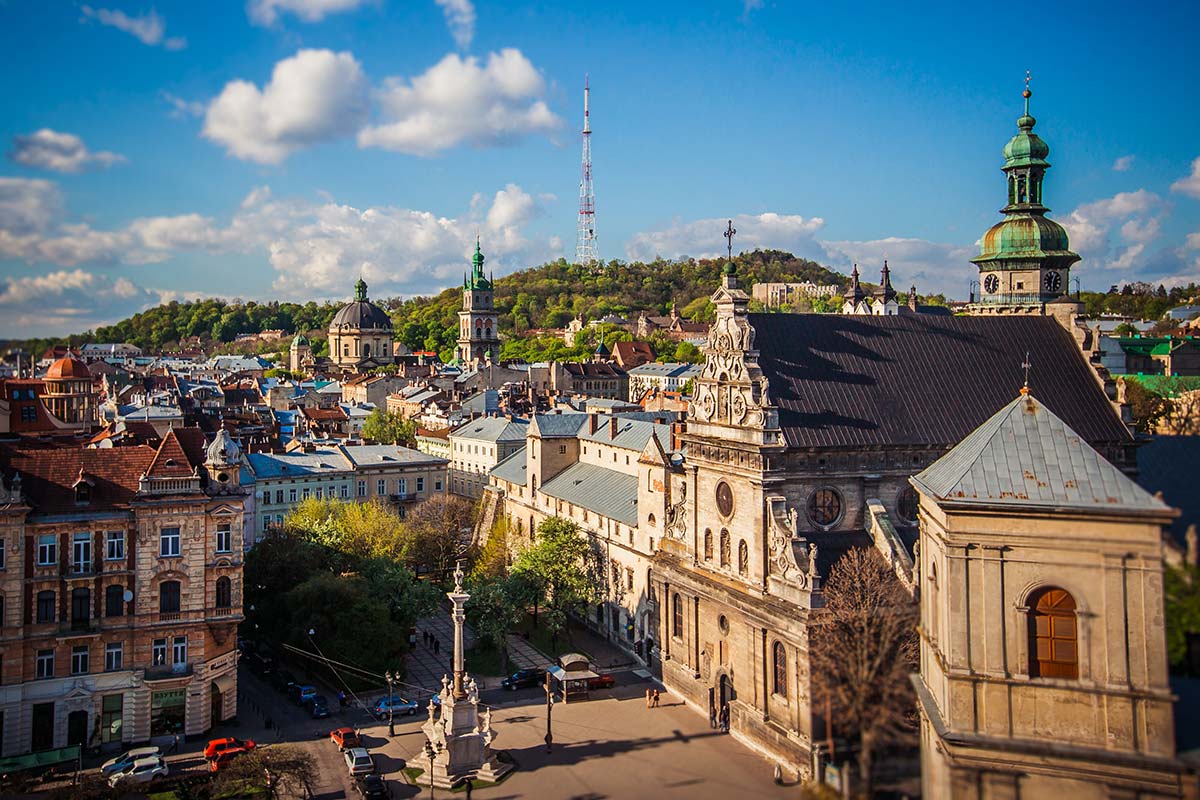
Lviv has the vision to become a climate neutral city. Starting off with the systemic implementation of energy solutions, Lviv has developed a concept of energy efficient districts Sykhiv and Ryasne. Now Lviv is moving towards climate neutrality with a Positive Energy District concept within a SPARCS project.
Municipal response to COVID-19 in the governance sector
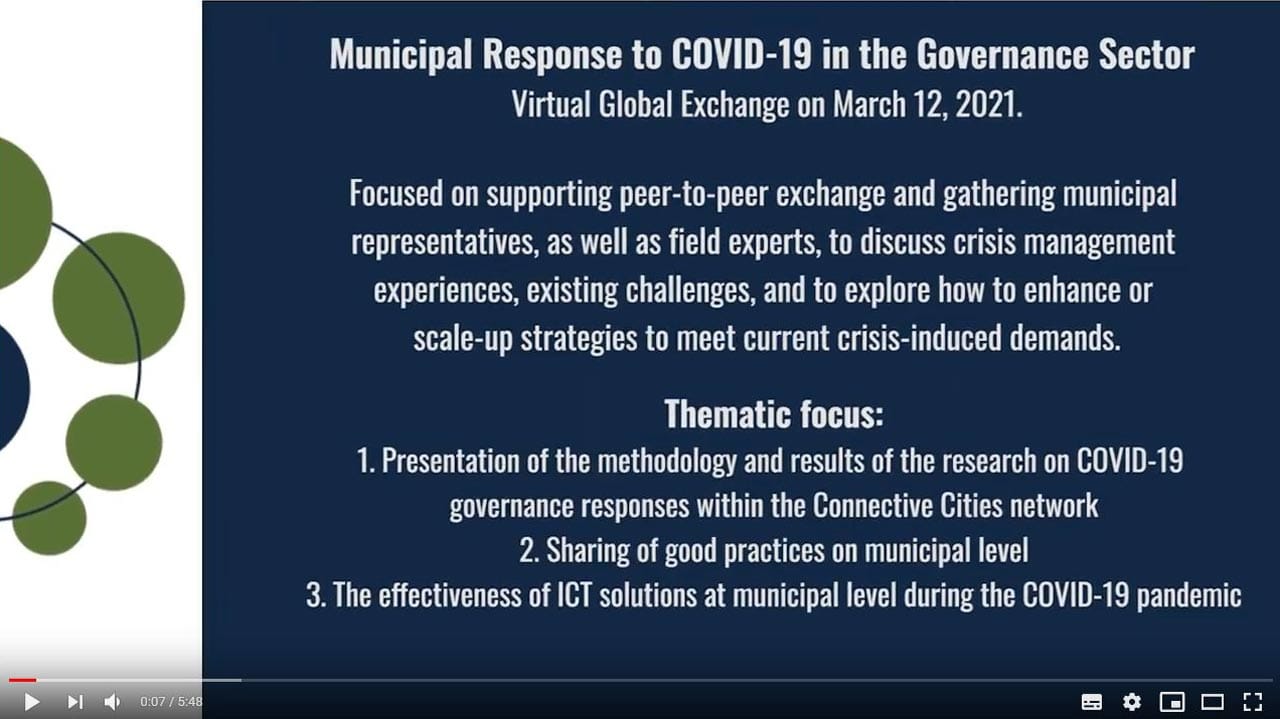
Thematic focus:
1. Methodology and results of the research on COVID-19 governance responses within the Conncetive Cities network in Southeast Europe
2. Sharing good practices on municipal level
3. The effectiveness of ICT solutions at muncipal level
More: https://youtu.be/joIlOoZdPWg
More good practices, articles, videos, podcasts and interviews on our COVID-19 page.