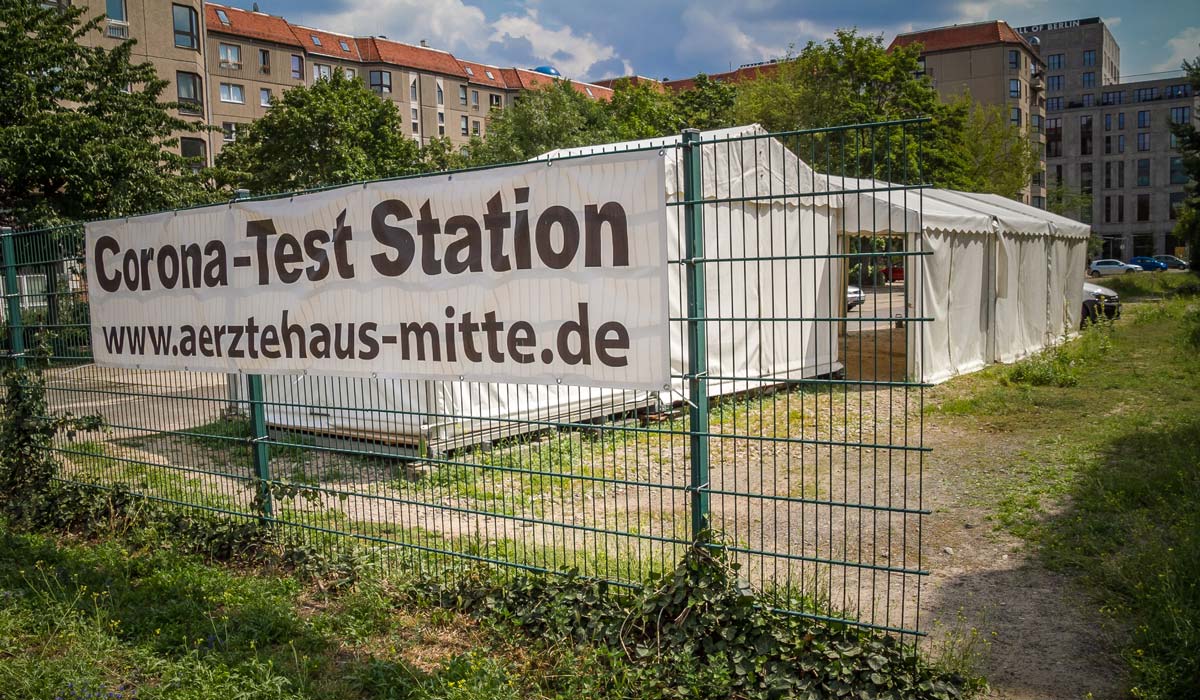
Municipal response to COVID-19 in the health sector

Focusing on exploring tools and protocols that cities have been employing to control and monitor the spread of infection and reviewing the efficiency and effectiveness of such tools and protocols.

More: https://youtu.be/iy9Zb3HL2GQ

More good practices, articles, videos, podcasts and interviews on our COVID-19 page.

Karak in Jordan: local actions for climate protection

In line with the Nationally Determined Contribution (NDC) of Jordan for 2030, Karak municipality has committed to a 14% reduction of the municipality’s greenhouse gases (GHG) emissions with an aim to counteract climate change. Besides the capital city Amman, Karak municipality is the first municipality in Jordan to construct renewable energy projects and is committed to a sustainable future for the city. This objective is expressed through the actions agreed upon in the city’s Sustainable Energy & Climate Action Plan (SECAP), focusing not only on reducing the energy consumption through energy efficiency, or producing more clean energy, but also on improving the existing infrastructures in the city.

Capacity building for gender equality at the local level

Local governments and their local government associations play a large role in advancing gender equality at the local level through policy and programming. Local government associations also play a core role in awareness raising on and implementation of gender equality measures

The study aims to provide an overview and an inventory, highlighted by concrete cases, of what is happening in the field of promoting gender equality in the international work of the UCLG membership.

With this publication the CIB Working Group Secretariat explored how UCLG’s political gender strategy can be included in the many of projects and programmes. At the same time, it provides instruments and tools that will help UCLG members to implement gender strategies in their work. The brochure consist of guidelines, technical tools as well as twelve case studies, composed to demonstrate how local government development cooperation projects can concretely improve gender equality at both the local and regional level.

Connective Cities’ network in Sub-Saharan Africa – our achievements in the 3rd phase

Review of the dialogue events, issues addressed during the learning processes, project ideas supported and good practices shared, as well as insights in the current activities of the established working groups of Connective Cities’ network in Sub-Saharan Africa.

More: https://youtu.be/Js4YZ5vxUMI

More videos on our YouTube channel

Germany’s health offices and their fast-track response to the COVID-19 crisis

The COVID-19 pandemic is a major challenge for Germany’s health offices. Many responded quickly at the start of the pandemic by reorganising their work procedures, but staff shortages and poor digital infrastructure has made their work harder.

Strengthening the local implementation of the Sustainable Development Goals (SDGs) through local reviews and monitoring

Connective Cities organised an international virtual dialogue event aimed to strengthen local implementation of the SDGs through local reviews and monitoring. The event was held in partnership with United Cities and Local Governments (UCLG) and PLATFORMA and co-hosted by the City of Bonn, which is a front runner in municipal SDG strategies and reporting and published its first Voluntary Local Review (VLR) in October 2020.
Almost 60 participants from 19 countries in Europe, Asia, Africa, North and Latin America were able to experience the benefits of working in a global learning community. Participants came from a broad variety of backgrounds, including municipalities, civil society, local government associations, international city networks, universities and United Nations agencies.
The dialogue event focused on three main thematic issues

  • data availability and data collection systems,
  • data-driven policy development and contribution to different levels of governance, and
  • quality citizen dialogue and stakeholder engagement.

During the sessions, participants had the opportunity to exchange on 15 good practice examples, discuss eight challenges related to the main topic and jointly develop pragmatic solutions for four sample cases: the National Association of Municipalities of Mozambique (ANAMM), Bonn (Germany), Lviv (Ukraine) and Manizales (Colombia). These solutions will be translated into projects and will be further developed in the next few months.

This report summarises the main results of the virtual dialogue event.

More information: documentation: Strengthening the local implementation of SDGs through local reviews and monitoring

Space-blind strategies don’t work for COVID-19

The Organisation for Economic Cooperation and Development (OECD) recently analysed how cities have responded to the COVID-19 pandemic. Soo-Jin Kim, Head of the OECD’s Urban Policies and Reviews Unit, calls for locally-adapted solutions now and for the post-COVID era.

Since March 2020, local health authorities have often dominated the headlines. Citizens’ trust in local politicians has significantly increased. Which role have municipalities played so far in responding to the COVID 19 crisis?

Soo-Jin Kim: Since the very beginning of the pandemic, municipalities have not waited for national governments to tell them what to do – they started to act immediately. They have deployed a range of measures to inform the public about necessary measures, ensure that people comply with social distancing and lockdown rules, support the shift to tele-working and take care of the most vulnerable such as the elderly and the poor. They have also worked to keep basic public services running, including the health system, and help the local economy survive the crisis. So I would describe municipalities as ‘essential workers’.

In addition, regardless of the crisis, we should not forget that municipalities are always key public actors. Subnational governments are responsible for an average of 40 per cent of all public spending across OECD countries. In federal states such as Germany or Switzerland, it’s even 50 to 60 per cent!

Development of a context-appropriate pilot composting plant in Quito, Ecuador

Experts from the public company for integral waste management in Quito (Ecuador) and the municipal company Stadtreinigung Hamburg (Germany) exchanged their expertise on the design of a pilot composting plan.

The idea to design a sustainable organic waste management system in the Municipal District of Quito was developed in the framework of the Connective Cities dialogue event “Plastic waste – The contribution of municipal waste management to solving the problem” in Hamburg (Germany). The German municipal company Stadtreinigung Hamburg hosted in 2019 the dialogue event and nearly 40 municipal practitioners from different countries, including Ecuador, participated.

As Ecuador’s second largest city in terms of population, Quito produces 2,000 tonnes of waste per day, which is deposited in the city’s only landfill, El Inga, which is rapidly reaching full capacity. Almost 60 % of the waste is organic material, and about 5 % of the organic waste generated comes from the vegetable and fruit market and is deposited directly in the landfill. The waste sector alone is responsible for 13 % of the city’s emissions, mainly methane emissions from the decomposition of this organic waste in the city’s landfill. This challenge was one of the motivations for the professionals of the municipal waste company “Empresa Pública Metropolitana de Gestión Integral de Residuos Sólidos” (EMGIRS-EP) to apply for the event in 2019.

One of the follow-up activities from this international event resulted in the willingness to participate in an expert mission to advice on the design of a pilot composting plant to contribute to a sustainable organic waste management system in Quito. The main outcome of the exchange was the design of a concrete and context-appropriate composting plant with a capacity of 3,000 to 4,000 tons/year, with a view to possible long-term expansion if the financial resources are available (20,000 to 40,000 tons/year).

Municipal energy efficiency projects in MENA

By 2030, the population in the MENA-region is expected to increase to 487 million people, 63 per cent of whom will live in cities and their surroundings. The expected population growth will increase the energy demand thus increasing the risk of future energy constraints.

Within the ambit of the learning process on municipal energy efficiency projects in MENA, the virtual dialogue event was held on the 18 – 20 May 2021. The dialogue event aimed at promoting the exchange of expertise on good practices for planning and implementing energy efficiency projects.

The virtual dialogue event was attended by 23 municipalities joining from Algeria, Germany, Jordan, Lebanon, Palestine, Tunisia and Turkey. Working in groups, participants exchanged ideas, worked in collaboration, and developed project concepts addressing local needs and opportunities for energy efficiency in their cities. Throughout the dialogue event, participants showed high commitment to the program with a level of excitement that was particularly evident on day 3 of the event dedicated for peer advisory on challenges and developing project ideas.

The virtual dialogue event had the following direct outcomes:

  1.  Formation of a regional Community of Practice (CoP) that included 23 different municipalities from five countries in MENA in addition to Germany.
  2. Establishment of institutional relationships among municipalities with shared vision to achieve energy transformation and efficiency.
  3. Enrichment of the capacity of more than 23 municipal representatives in the field of energy efficiency project development and the showcasing of 21 different good practices from MENA, Germany, Southeast Europe, Southampton and South Africa.
  4. Successfully enabling the peer-to-peer advisory among different municipalities during group activities, in the main sessions, and during offline times.
  5. Development of 7 energy efficiency project ideas that are ready to be expanded into fullscale project proposal.

This report documents in detail the dialogue event.

Insight Sessions: Post-COVID Urban Futures

The new event series “Insight Sessions: Post-COVID Urban Futures” is part of this year’s Connective Cities Corona programme and facilitates a regular, open exchange on relevant topics of the post-COVID-19 era for municipal practitioners and relevant experts worldwide. Different topics of sustainable urban development during and after the COVID-19 pandemic will be discussed and innovative approaches in this regard will be shared in brief and concise virtual exchange formats. The aim of these events is to provide impulses that encourage participants to reflect on their progress so far and think about innovative solutions. The open discussion rounds will take place on Wednesdays once every three weeks. 

We are pleased to invite you to the opening event and first discussion of the Insight Sessions series focusing on the topic “COVID-19 Recovery & SDG 11” on Wednesday, 28 July 2021, from 10:00 to 11:45 a.m. CEST

The opening event will start with a brief introduction to this year’s Connective Cities Corona programme. Subsequently, a panel discussion will explore the challenges and opportunities of the COVID-19 crisis for achieving SDG 11 towards making cities more inclusive, safe, resilient and sustainable. During this panel discussion, municipal practitioners and experts from different urban sectors and world regions will share their diverse perspectives and insights on this topic. The panelists (tbc) are:

  • Faola Hodaj, Director of Innovation, Municipality of Tirana, Albania
  • Karim Elgendy, Sustainable City Strategist, London UK / MENA – Recipient of the 2013 Global Green Building Entrepreneurship Award by the World Green Building Council
  • Aditya Kumar, Executive Director, NGO Development Action Group, Cape Town, South Africa
  • Hilmar von Lojewski, Councillor for Urban Planning, Building, Housing and Traffic, Association of German Cities / Cologne, Germany

 A detailed agenda of the opening event can be found here. The preliminary schedule of the series of Insight Sessions will be shared soon.  The event will take place virtually in the Connective Cities Community

Insight Session: COVID-19 Recovery and SDG 11 | Connective Cities Network (connective-cities.net)

Date: Wednesday, the 28th of July 2021

Time: 10:00 – 11:45 a.m. CEST 

Event language: English. Translation available in: Russian, French, Arabic. 

.

If you have any further questions, please do not hesitate to contact us:

Contact: paulina.koschmieder@giz.de