


"While migration is often seen as a national issue, and most of the mandate around immigration, refugees and asylum falls to the central government, it is often cities and local governments that have to directly deal and address the needs of newly arrived migrants, and the inclusion of long-term migrant residents. […] At the same time, civil society organizations (CSOs) have taken an increasingly important role in supporting migrants by undertaking initiatives that raise awareness, facilitate access to basic services, advocate for their rights and strengthen social inclusion. The role of CSOs as key partners for local authorities in the governance of migration and other urban governance issues is widely recognized, but it is not always clear how to articulate these partnerships and coordinate efforts while securing the autonomy of these organizations and avoiding potential tensions or conflicts of interest."
In June 2019, UCLG ́s Learning team coordinated a workshop and peer learning event focusing on “Building trust through strengthened cooperation: the role of civil society in the urban governance of migration” in Sfax, Tunisia. The workshop was part of the Mediterranean City to City Migration (MC2CM) project. In the process of the event some key learnings and recommendations have been worked out. The documentation includes case studies from Sfax, Tunisia; Malaga, Spain; Brital, Lebanon; Douala, Cameroon and Meknes, Morocco.
Category: Documentation
Digitalisation in the Lives of Urban Migrants

As increased migration, particularly to urban centres, and digitalisation play a greater role in development cooperation, more research on how these phenomena interact will become critical. Information communication technologies (ICTs) offer pathways for potentially making it easier for migrants to settle in, whether it be through e-government programmes or by accessing social networks that can help in finding housing and work. To better understand how ICTs fit into urban migrants’ lives, researchers from the German Development Institute have used new survey data in Bogota comparing how long-term residents, short-term residents, and Venezuelan migrants access and use ICTs.
Towards the Localization of the SDGs

"This Report explores the involvement of Local and Regional Governments (LRGs) in the localization of the Sustainable Development Goals (SDGs). Following UN guidelines, it complements the Voluntary National Reviews (VNRs) submitted by 143 countries to the High-Level Political Forum (HLPF) throughout the first four- year cycle of voluntary reporting. It delivers first-hand information from LRGs in 80 different countries, including 24 of the 47 countries reporting in 2019."
Climate Protection and Air Pollution Control

Many air pollution control measures also help to protect the climate and vice versa. It is essential to use the synergies for environment and health.
The publication presents examples of various strategies and measures for clean air in municipalities and provides ideas on how these two areas can be interlinked.
The 8 Principles of Sidewalks

"Walking is the most democratic way to commute. It is the oldest and most common mode of transport in the world, not to mention being a far healthier option – for both people and cities. The 8 Principles of Sidewalks systematizes the most relevant Brazilian and international references into a single publication about the planning, design and construction of sidewalks that meet the needs of people walking. The goal of this guide is to provide deeper insight into the role of sidewalks in spaces that provide opportunity for social interaction among people."
Innovative financial instruments in urban development and housing policy

November 24-26, 2014 for the 3rd Connective Cities Dialogue Event to exchange on innovative financial instruments in urban development and housing policy.
Revolving Funds, Microcredits and other innovative financial instruments are relevant in urban development as well as in housing policy. They are of highest concern if no sufficient classical funding is available, where self-help approaches are to be strengthened and where unprofitable real estates are supposed to be brought back to the markets. Local actors from developing and emerging countries were asked to contribute to the Dialogue with their vast experience regarding instruments such as micro-credits, small scale support of housing and further innovative financing instruments.
The Dialogue’s event objective was to provide all participants with good insight to good practices in the field and to invite them on the other hand to contribute to the dialogue with their experience. Based on examples, the practitioners introduced during the workshop, the experts discussed challenges and needs for improving urban financing practice and governance.
Promoting Innovative and Sustainable Start-ups
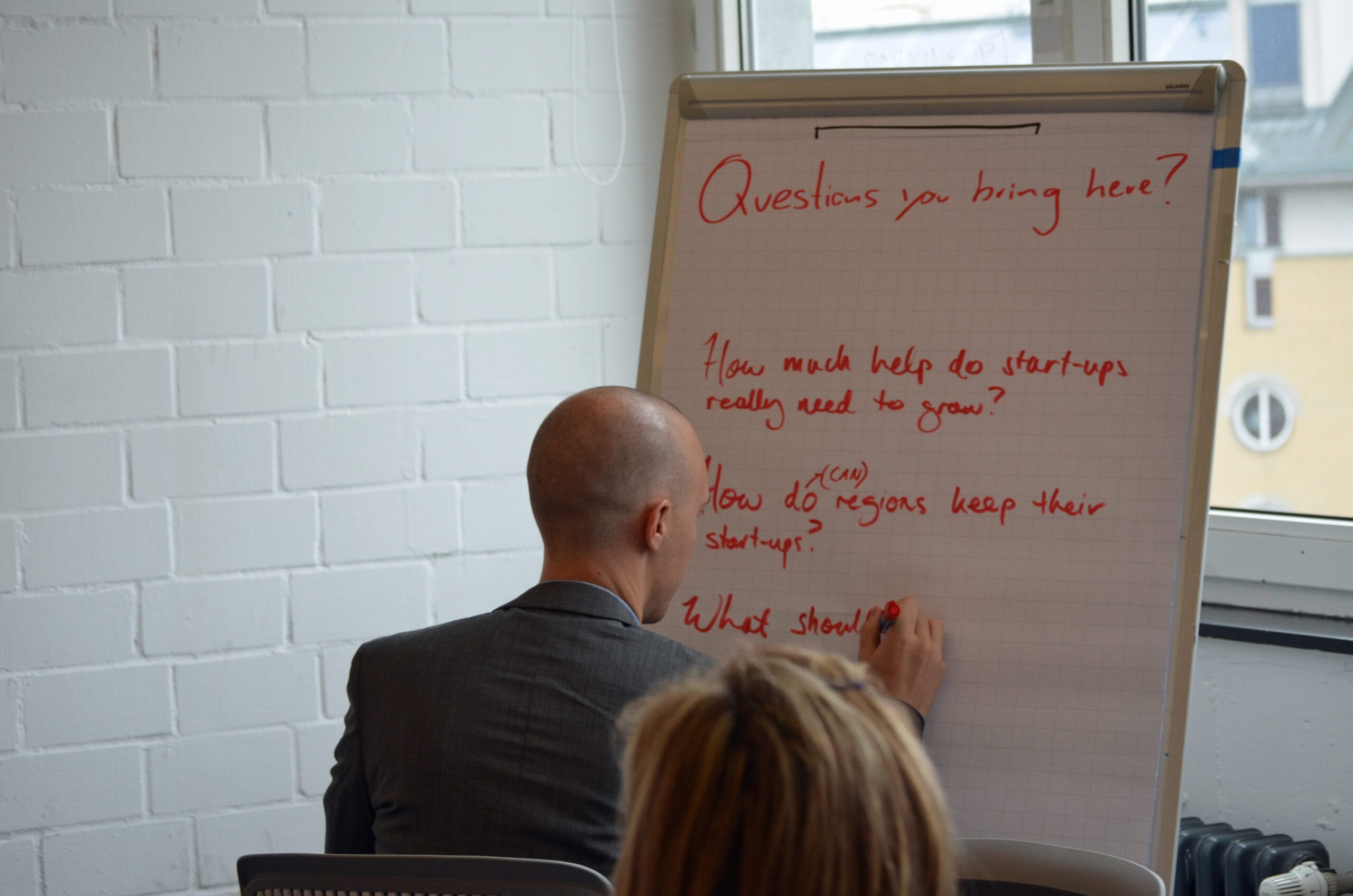
From the 11th to 13th of December, 2014, the 4th Connective Cities Dialogue Event took place at Betahaus, Berlin and brought together German and international local stakeholders who are directly connected to the field of local economic development and start-up promotion.
The participants consisted of city officials in charge of economic development and representatives of start-up promoting institution from German and Asian cities.
For urban socio-economic cooperation, applied research and knowledge work, as well as for the creation of new labour ecosystems or community-based businesses, co-working spaces, incubators and innovation labs are increasingly relevant concepts. They demonstrate new ‘grassroots-driven’ practices of urban coordination, collaboration-centric architecture and technology-based work. The co-creation of socio economic environments following principles of e.g. peer-to-peer commerce and collaborative consumption, is a blooming phenomena that demonstrates the demand for new approaches of life long learning, urban development as well as regional economic development support practice. These functions state that mentioned approaches are relevant and integrative instruments for fostering urban initiatives.
Municipal sustainable energy production and efficiency: planning and implementing innovative solutions
Energy is a major component for both local and global economic development. It is needed for transport, industrial and commercial activities, buildings and infrastructure, water distribution, and food production. Most of these activities take place in or around cities, which are on average responsible for more than 75% of a country’s Gross Domestic Product (GDP) . With their high concentration of industry, transport systems, buildings and households, municipalities consume large amounts of energy (estimated between 60 and 80% of the global primary energy) and emit between 50 and 60% of the world’s total greenhouse gases. The majority of this energy consumption goes into buildings and transport.
Despite the increasing energy demand in cities, it is at the municipal level that considerable potential to plan for and to produce energy sustainably and strengthen energy efficiency exists.
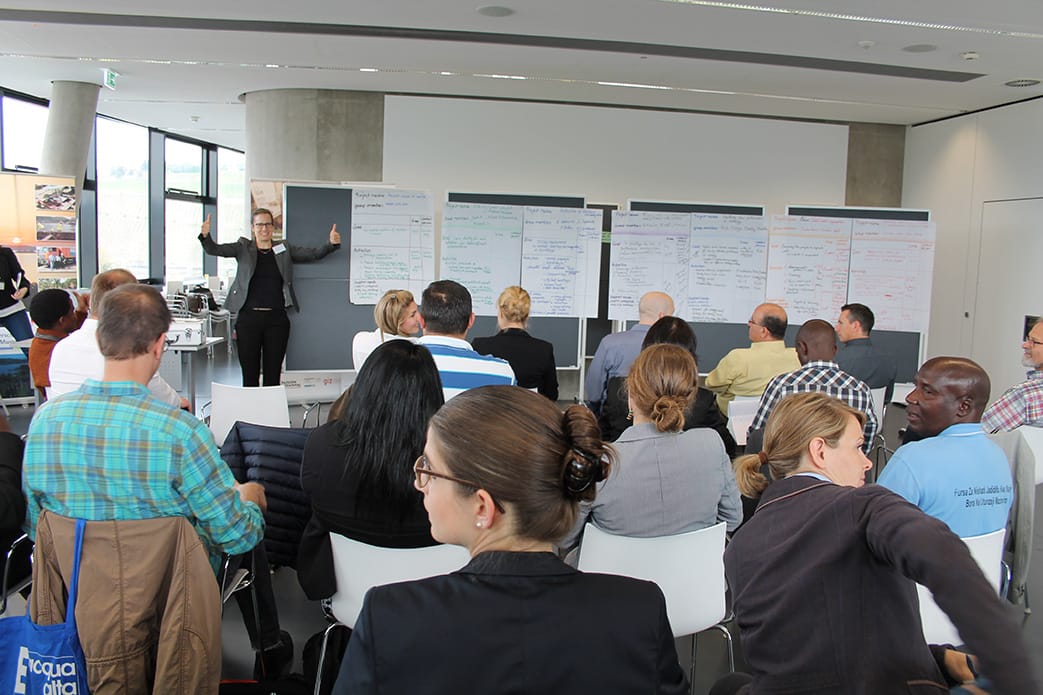
The international exchange platform Connective Cities and its initiators, the Deutsche Gesellschaft für Internationale Zusammenarbeit (GIZ) GmbH, the German Association of Cities and Engagement Global / Service Agency Communities in One World, organized a Dialogue Event on “Municipal sustainable energy production and efficiency: planning and implementing innovative solutions” from 9 to 11 May 2016 in Würzburg, Germany to specifically look into good practices, challenges and solutions to this crucial topic.
The event took place at the Fraunhofer Institute for Silicate Research ISC in Würzburg and was organized in cooperation with the City of Würzburg.
Planning integrated solid waste management at the municipal level
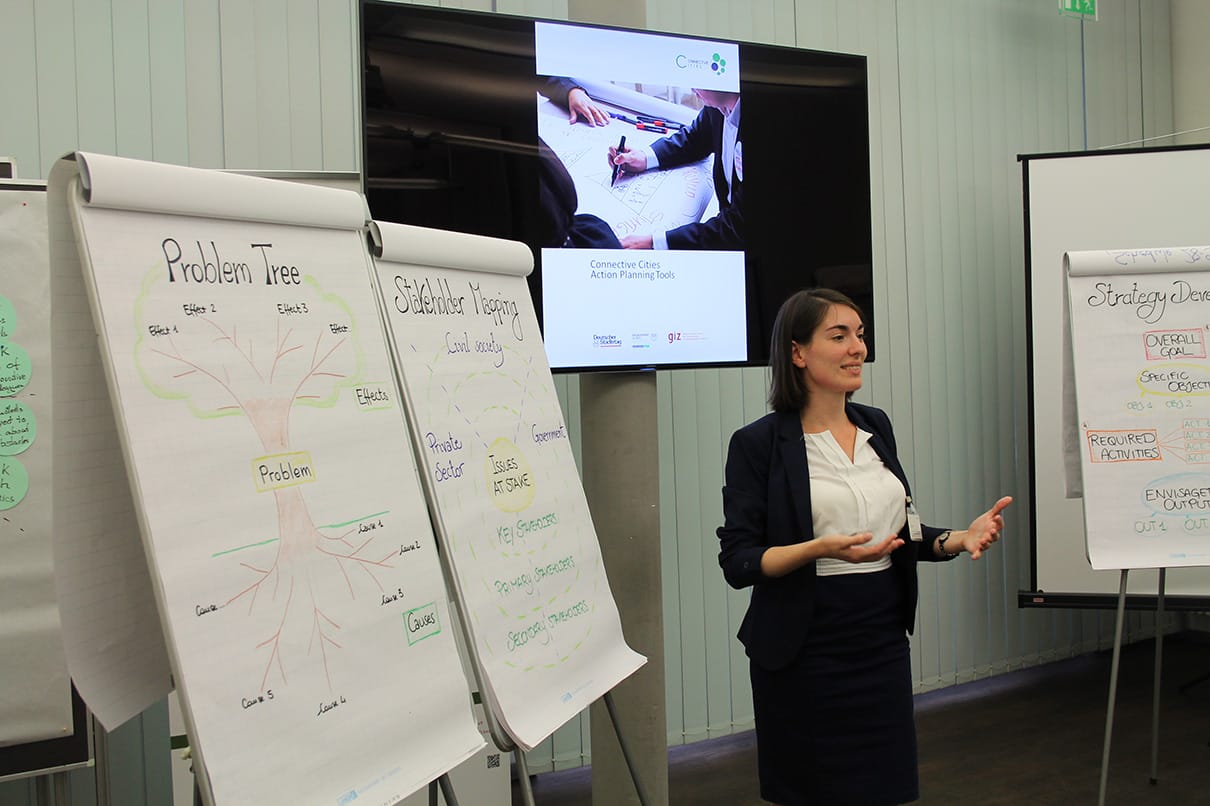
In cooperation with the Hanseatic City of Rostock, the international urban networking platform Connective Cities and its initiators, the Deutsche Gesellschaft für Internationale Zusammenarbeit (GIZ) GmbH, the German Association of Cities and Engagement Global / Service Agency Communities in One World, invited German and international stakeholders from Tunisia, Morocco, France, Italy, Zimbabwe, Austria, Albania and Egypt to exchange their experience and showcase their good practices in Rostock from 26 to 28 September. The dialogue event on ‚Planning integrated solid waste management at the municipal level‘ was hosted by the Hanseatic City of Rostock.
The dialogue event attracted German and international municipal actors with first-hand experience in solid waste management including representatives of municipalities, municipal companies as well as representatives from civil society, academia and business, active in municipal projects in this thematic area.
The main objective of the exchange was to showcase examples of good practices on implementing integrated solid waste management in each municipality and to check the regional applicability of the presented solutions. The event in Rostock could furthermore foster learning among participants through discussions of current challenges, such as the involvement of the informal sector and approaches to waste separation and recycling. In smaller working groups, experts and practitioners exchanged views on obstacles that municipalities face in practice and discuss possible solutions.
Transforming cities: from industrial centres to sustainable urban areas
Industrial urban areas in Europe and North America as well as in several Asian and Latin American countries are facing huge spatial challenges in restructuring their urban centres and regions after having lost their traditional economic base. Integrated urban development schemes are needed to make this transformation sustainable and to introduce new urban functions while preserving the industrial heritage. The spatial implication of structural change and the organisation of such transformation call for innovative strategies to revitalise the areas and uses of the traditional manufacturing cores, economically, socially and environmentally.
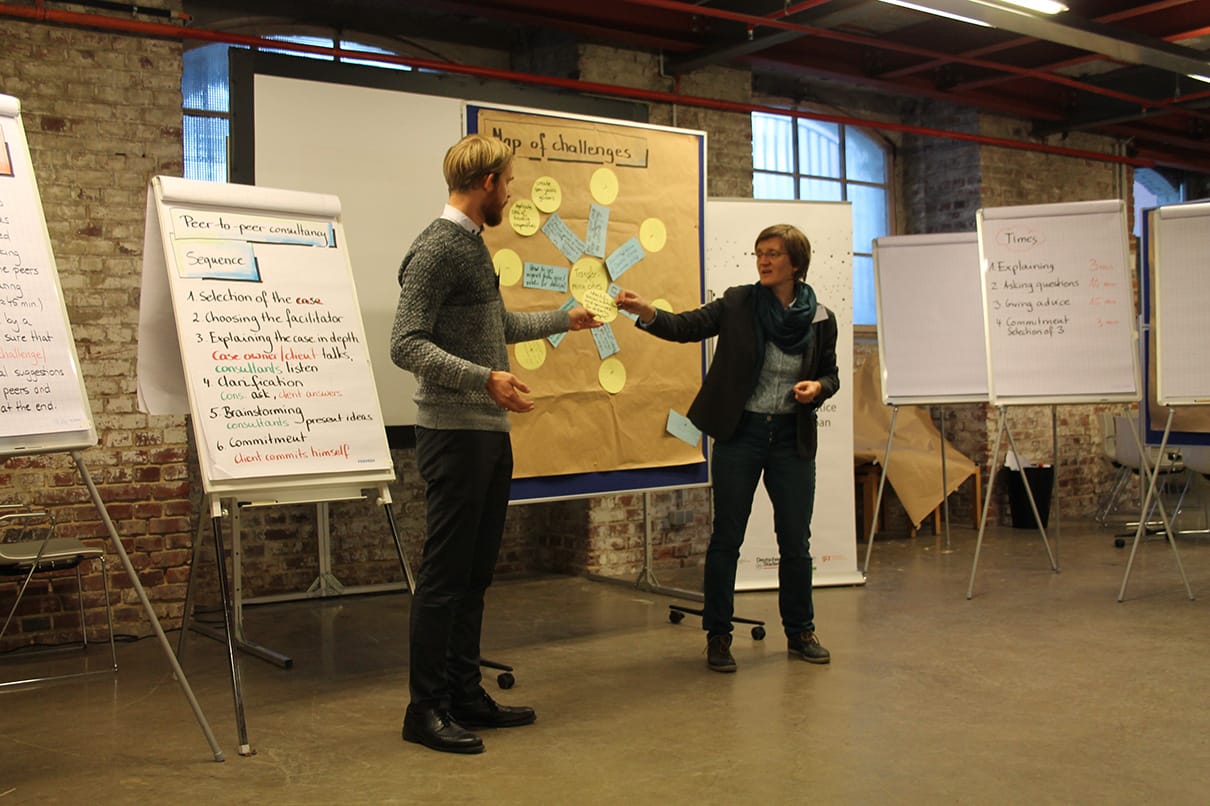
The international exchange platform Connective Cities and its initiators, the Deutsche Gesellschaft für Internationale Zusammenarbeit (GIZ) GmbH, the German Association of Cities and Engagement Global / Service Agency Communities in One World, organized a Dialogue Event on “Transforming Cities: From Industrial Centres to Sustainable Urban Areas” from 5 to 7 December 2016 in Bocholt, Germany to specifically look into good practices, challenges and solutions to this crucial topic. The event was organized in cooperation with the City of Bocholt which shared its own experience with urban transformation by hosting the event in one of the former textile factories of the city, now converted into a textile museum. The dialogue event attracted German and international municipal actors with first-hand experience in the transformation of post-industrial urban areas, its planning and its implementation, including representatives of municipalities, municipal institutes as well as representatives from civil society, academia and business, active in municipal projects in this thematic area. Urban practitioners from Germany, Ukraine, Brazil, Colombia, Cuba, Bosnia and Herzegovina, Belgium, the Netherlands and China joined together to present their good practices but also to share their challenges and discuss viable practical solutions for their local needs.