


This sourcebook on climate-proof urban development addresses key issues at the interface of climate change and urban development. Its content builds on the knowledge gained in the global project ‘Cities Fit for Climate Change’ (CFCC). It has been elaborated over the project’s three-year course through great contributions by the project partners from Chile, India and South Africa. The sourcebook is divided into three parts:
Part I describes the thematic context and provides a background to the global CFCC project. It introduces the Climate-Proof Urban Development Approach (ClimPUDA), a framework for practitioners to address climate change in the urban context. The considerations entailed in this approach are used throughout the sourcebook and constitute its conceptual foundation.
Part II focuses on good practices of climate-proof urban development. Different case studies from the Global North and the Global South represent the broad range of experiences available. Each case study is analysed based on four Fields of Action (FoA) which are part of ClimPUDA. They are (1) Governance and Management, (2) Policies and Strategies, (3) Measures: From Policy to Action, and (4) Capacity Development.
Part III provides further information in terms of capacity building in the field of climate-proof urban development and also contains all sources on which the sourcebook is based.
Category: Cities and climate change
How to Formulate a National Urban Policy

Many governments have difficulty in formulating a NUP due to insufficient capacity, ever changing political contexts, complex relationships between government departments/ministries, and political pressures from interest groups. Consultation is key during the formulation phase to build consensus. Good policy formulation requires political will, visionary leadership, organizational know-how, effective consultative mechanisms, and good negotiating skills on the part of the ministry or department in charge of urban issues. This Guide suggests that before starting the formulation process, it is essential that a thorough diagnosis of the urban sector is carried out, with extensive data collection, review and analysis. It is also advisable to assess the available capacity (human, financial, institutional and technical). Following this, aspects to consider in the formulation of a NUP include the selection of the lead agency, the quality of the data and information that is available, how the various stakeholders will participate, what resources are available, how the process will be coordinated, and what the context is – the needs and issues that will frame the policy.
According to this practical guide, a national urban policy (1) responds to the country’s development priorities, (2) is based on sound evidence, and (3) is focused on outcomes. This handbook provides practical steps and a coordinated process to formulate an urban policy that adheres to five key principles: participation, inclusion, affordability, sustainability and implementability.
Rethinking the ecosystem of international city networks

Cities have emerged as major players on the international scene in recent years. Yet, their ambition to project themselves internationally and to influence global agendas is not a new phenomenon. Cities have operated through organised networks for decades. The first international organisation of cities was the International Union of Local Authorities, created in 1913. Towards the end of the past century, the regional integration processes of the 1990s engendered a proliferation of city networks, especially in Europe but also in Latin America, Africa and Asia. In 2004, the founding of United Cities and Local Governments as a platform for international municipalism marked a turning point.
Today city networks play a growing role in defining and implementing some of the main global agendas. Their involvement in the United Nations Conference on Climate Change, their success in adding a territorial dimension to the UN 2030 Agenda, and their participation in the Steering Committee of the Global Partnership for Effective Development Co-operation, are good examples of how city networks are making their voice heard. But the increasing importance attributed to urbanisation processes on international development agendas has also caused a reconfiguration of the ecosystem of city networks that brings with it both risks and opportunities.
This volume seeks to analyse the changing dynamics of the ecosystem of city networks, focusing on how the main platforms operate, what influence they have on global agendas, what services they provide and how they coordinate their efforts. By zooming in on the strategies networks have been developing to enhance their influence and make their operations more effective, the volume examines the added value they provide.
Urban Transitions Alliance Roadmaps

Industrial legacy cities face unique challenges, as they transition towards vibrant, sustainable and equitable urban centers. Cities around the world can learn lessons from where these cities have been, and how they are moving forward. The new report, "Urban Transitions Alliance Roadmaps: Sustainability Transition Pathways from Industrial Legacy Cities" details four transition pathways that eleven post-industrial cities have undertaken, with implementation ideas and best practices for each. These cities are all a part of the Urban Transitions Alliance, which was built on the premise that by connecting industrial legacy cities from the US, Germany, Poland and China through their transition stories and visions of sustainable urban development, common challenges and transition pathways would emerge.
Reflecting the thematic priorities of the Alliance members, the chapters subsequently focus on challenges and solutions in the fields of Infrastructure, Energy, Mobility, and Social Transition. Each topic is explored in terms of background, barriers and opportunities related to the industrial legacy context. Transition priorities and innovative approaches from the different regions are outlined in key pathways and exemplified in case studies from the Alliance cities and districts. Some of the conditions described might apply in various degrees to cities beyond the industrial legacy context – that is why transition experiences and pathways from the Urban Transitions Alliance can be of value to cities around the globe.
Addressing Urban and Human Settlement Issues in National Adaptation Plans

"The Addressing Urban and Human Settlement Issues in National Adaptation Plans Supplementary Guide aims to comprehensively address urban and human settlement issues in National Adaptation Plans (NAPs) at the formulation and implementation stage.
The guide primarily targets decision-makers at the national level working on NAPs, both within and outside UNFCCC focal point ministries, while it also targets a broader set of stakeholders at the national and sub-national levels who are interested in NAPs or who may be involved in their implementation."
Mexico City: The role of public transport in tackling air pollution and accessibility

Over the last two decades, Mexico City has implemented many successful mobility projects to partly relieve its saturated public transport system and diminish air pollution generated by vehicles, while also providing more transportation options for people in peripheral locations or vulnerable situations.
The City’s decision to diversify its public transport offer and to invest in new mobility options such as BRTs and bike-sharing systems proved successful and allowed to partially relieve the pressure put on the saturated metro system. The government has also learned from its previous errors, such as the Tren Suburbano’s lack of accessibility. This project showed the importance of taking into account user accessibility and the involvement of stakeholders in a transportation project, instead of focusing mainly on feasibility and infrastructure.
Gender-inclusive climate action in cities

"In recent years, a small number of extraordinary women have emerged as key leaders on global action to tackle climate change. However, more generally, women are grossly under-represented in high-level climate negotiations; tend to be disproportionately vulnerable to climate impacts; and climate solutions tend to ignore gender-specific issues, perpetuating a general bias of infrastructure and services designed predominantly for men. This report sets out proposals for how to correct these imbalances and, through focusing on an inclusive climate action approach, to ensure that investment to cut emissions and improve resilience will benefit the full diversity of urban citizens, rich and poor, men and women."
Municipal sustainable energy production and efficiency: planning and implementing innovative solutions
Energy is a major component for both local and global economic development. It is needed for transport, industrial and commercial activities, buildings and infrastructure, water distribution, and food production. Most of these activities take place in or around cities, which are on average responsible for more than 75% of a country’s Gross Domestic Product (GDP) . With their high concentration of industry, transport systems, buildings and households, municipalities consume large amounts of energy (estimated between 60 and 80% of the global primary energy) and emit between 50 and 60% of the world’s total greenhouse gases. The majority of this energy consumption goes into buildings and transport.
Despite the increasing energy demand in cities, it is at the municipal level that considerable potential to plan for and to produce energy sustainably and strengthen energy efficiency exists.
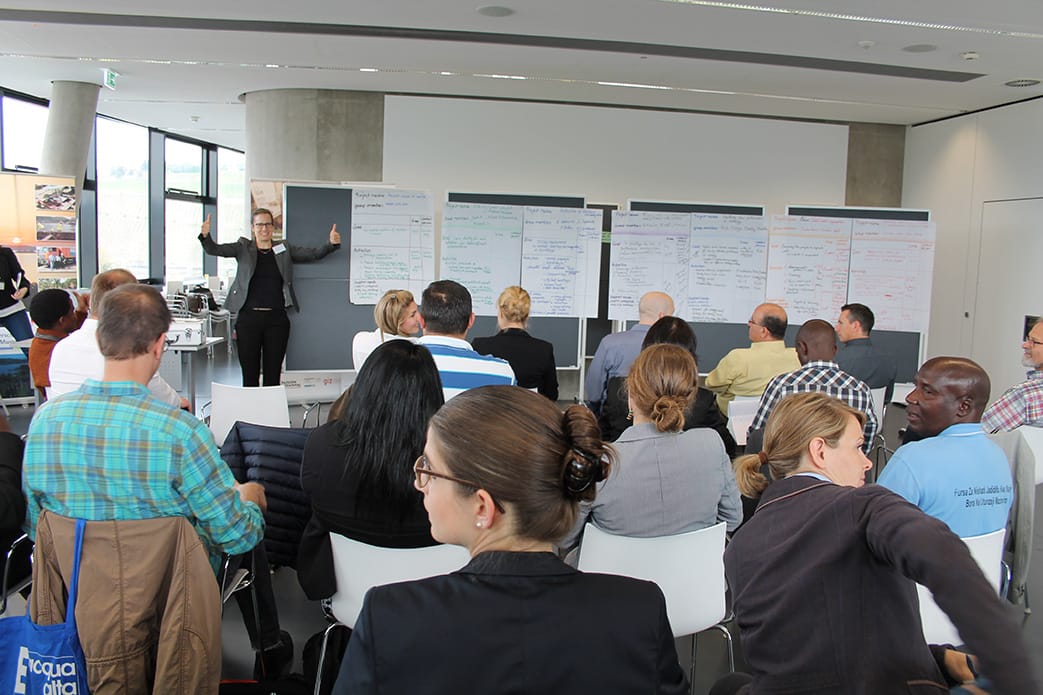
The international exchange platform Connective Cities and its initiators, the Deutsche Gesellschaft für Internationale Zusammenarbeit (GIZ) GmbH, the German Association of Cities and Engagement Global / Service Agency Communities in One World, organized a Dialogue Event on “Municipal sustainable energy production and efficiency: planning and implementing innovative solutions” from 9 to 11 May 2016 in Würzburg, Germany to specifically look into good practices, challenges and solutions to this crucial topic.
The event took place at the Fraunhofer Institute for Silicate Research ISC in Würzburg and was organized in cooperation with the City of Würzburg.
Würzburg and Mwanza share a gift from the sky
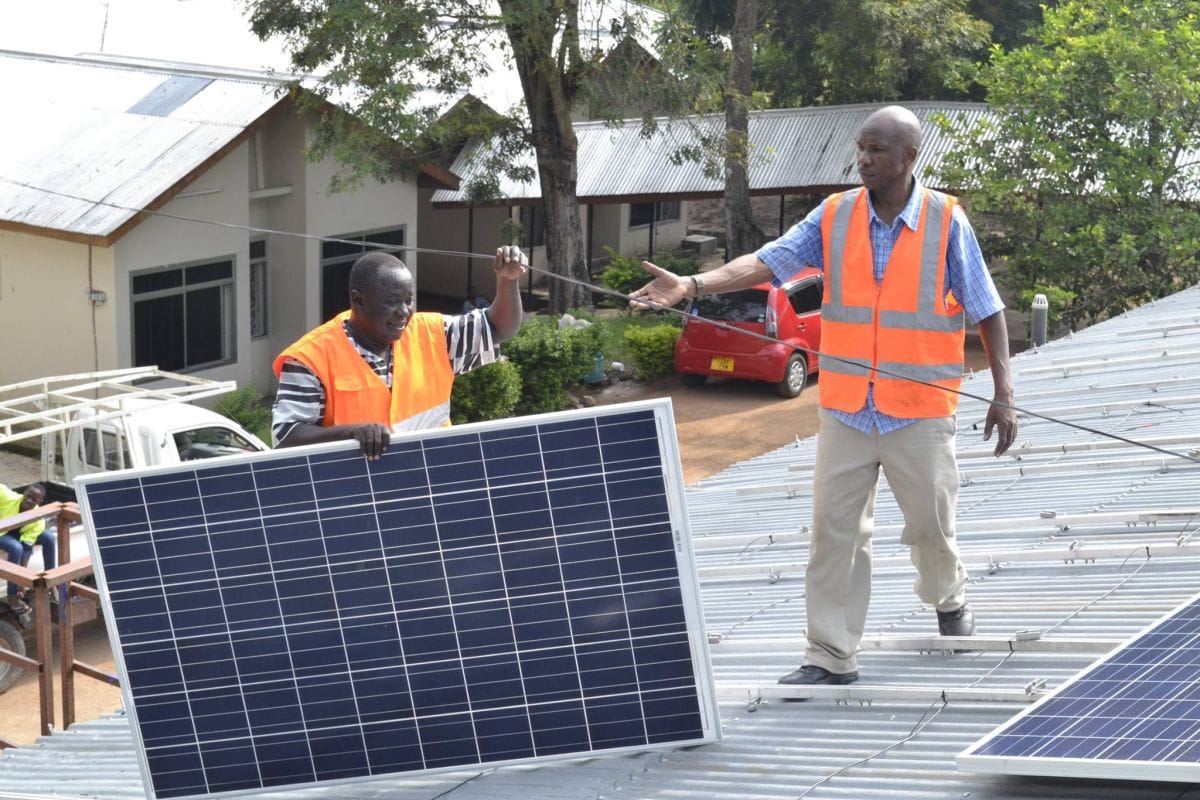
Climate change affects all cities. Anyone who wants to do something about it must reduce CO2 emissions. This can be achieved by increasingly replacing fossil fuels with renewable energies and generating solar power, for example. In Tanzania’s Mwanza, this is particularly worthwhile – and has welcome side effects.
What the IPCC Special Report on Global Warming of 1.5°C means for Cities

"Climate science must be accessible to urban policymakers, because without them, there will be no limiting global warming to 1.5°C. In cities and urban areas, there are actions that policymakers—along with residents and stakeholders, such as civil society, the academic community, and those in business and finance—can take to help limit warming and adapt to the impacts of climate change. The effects of a city’s actions are not limited to its own borders or region, and, likewise, lessons learned in some cities and urban areas can serve as inspiration and resources for solutions in other urban areas. This Summary for Urban Policymakers is synthesised from SR1.5, the Fifth Assessment Report of the Intergovernmental Panel on Climate Change (IPCC), and relevant supporting research […]. It translates the key scientific
findings and policy observations of the IPCC Special Report on Global Warming of 1.5°C for officials and policymakers of the world’s cities and urban areas."