Sustainable, informed and participatory land management and land use planning in rapidly growing cities in Sub Saharan Africa

Connective Cities Sub Saharan Africa organized a three part series of workshops on the topic of ‘Sustainable, informed and participatory land management and land use planning in rapidly growing cities’ as subsequent steps to the dialogue event held in May. The objectives of the series were to support the cities better understand their projects, provide an opportunity for review by German experts, train on proposal writing and offer financial advisory.

 The conceptual approach was based on:

  • analyzing the status quo of the process and the individual projects
  • integrating all stakeholders of the relevant projects
  • co-designing solutions through interactive learning
  • harnessing the skills within the group of the project owners supported with expert advice
  • outcome driven to achieve the main goal to enable the participants finalize their relevant proposals

Four municipalities from Cameroon, South Africa and Zambia presented their project ideas and the gaps therein. These project ideas are:

  1. Development of socio-economic initiatives that will complement biodiversity protection and management and enhance cultural and heritage resources in eThekwini Municipality, South Africa
  2. Adams-R603 Settlement Plan- eThekwini, South Africa
  3. Integrated Land Management System for Livingstone City Council, Zambia
  4. Development of the banks of Lake Baleng with rest & recreational areas in the Commune of Bafoussam II, Cameroon
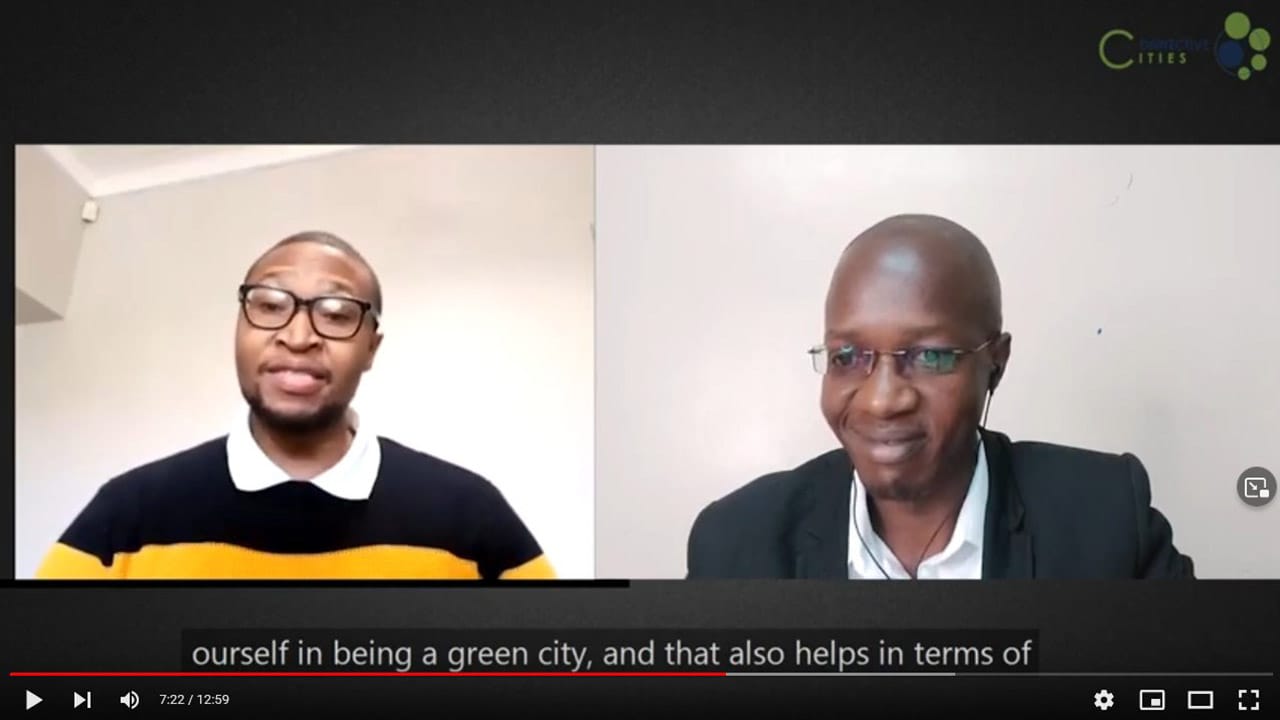
Integration of nature based solutions in land use planning

The citizens of Durban are proud of their “green” metropolis. The fact that public spaces have been kept green or have been restored to their natural state is the result of a movement with its origins in the 1980s, the “Open Space Network”. In this podcast, Sabelo Nkosi, responsible for biodiversity planning at eThekwini Municpality, describes the work of the network, in which communities, science, SMEs and the city administration are equally involved. The green spaces not only provide biodiversity, they also mitigate the impacts of climate change and help people adapt more easily.

Watch the video on YouTube:

https://youtu.be/8rOm9WgRzHo

Call for participation: The post-COVID City – towards greener cities

Connective Cities and its partners invite you to the sixth Insight Session, which will be held under the title “The post-COVID City – bringing together urban practitioners to work towards greener cities” virtualy on 18 October, 10:00-11:30 CEST.

The Insight Session will address the question “The city after Corona? When urban planners, climate scientists and health experts work together, the result can only be green”. The session is part of the so-called Urban October. During the month of October, UN-Habitat and partner organisations organise activities and discussions on sustainable urbanisation. The Insight Session will focus on the challenges and lessons learned in designing cities to better resist the spread of disease and redesigning urban planning to adapt to the risks of health crises.

Further information:  Insight Session: The post-COVID City – bringing together urban practitioners to work towards greener cities | Connective Cities Network

Event Language: English

The Insight Session will be moderated by Franziska Loibl, Ute Maas and Tino Bosire. If you have any further questions, please do not hesitate to contact us:

Franziska Loibl (franziska.loibl@giz.de)
Ute Maas (ute.maas@giz.de)
Tino Bosire (tino.bosire@giz.de)

Cities Challenge: 2030 Agenda meets Urban Climate Action

What does a climate-friendly, inclusive, safe, resilient and sustainable city look like in practice? In 2019, GIZ’s CitiesChallenge 2030 ideas competition set out to showcase and support examples for this all over the world. More than 30 projects replied to the calls for application. GIZ and BMZ selected four winning projects to be Urban Living Labs:

  • In Portoviejo, Ecuador, women in a poor peri-urban settlement acted as guardians to support the vulnerable and the sick, working together with the municipal disaster management department. With the help of students and experts from universities and professional organisations, they managed to secure paths and public spaces from landslides.
  • In Jordan’s capital Amman, an NGO created microforests in high-density, precarious neighbourhoods. This triggered cross-sectoral cooperation between stakeholders, who together tested novel planting methods to improve air quality, combat heat islands and create rainwater storage.
  • In Windhoek, Namibia, slum dwellers on the outskirts of the city created a neighbourhood park that invites people to stay and play while protecting their homes from seasonal flooding. They also planned the future development of their own settlement through a participatory process, supported by the municipality.
  • In the Serbian capital Belgrade, food service operators and digital start-ups in the Serbian capital Belgrade saved food from being destroyed. Instead, they made it available to families in need while improving urban food security and reducing the burden on landfills.

These four Urban Living Labs show some of the many ways that interventions in cities bring local governments, experts, communities and entrepreneurs together. By working together with local partners, they improved the resilience and quality of life for vulnerable groups, ensured access to public services, used resources more sustainably, and promoted climate change mitigation and adaptation.