


Tackling the impact of destructions – whether they stem from natural hazards, armed conflict, or acute urban distress – requires responses that consider the needs of all social groups and provides opportunities for social inclusion and economic development, while also acknowledging the specific needs, priorities, and identities of communities.
For this reason, culture – including tangible and intangible cultural heritage and creativity – is essential both as an asset and as a tool for city reconstruction and recovery. Placing culture at the heart of urban reconstruction and recovery strategies and processes is critical to effectively restoring the physical and social fabrics of cities.
Culture – an often overlooked and underestimated framework and value – is the foundation upon which cities are built. Cities are not just a collection of buildings but are people, their stories, and how they interact with each other through their cultural identity and sense of place.
Investing in cultural institutions, spaces, and heritage can help build bridges between sparring communities in post-conflict urban areas and make disaster recovery quick, sustainable, and more effective.
This joint Position Paper of World Bank and UNESCO serves as a guide for urban practitioners, operating on the ground, as well as national and local authorities, to integrate culture, both as an asset and as a tool, in all phases of city reconstruction and recovery.
Category: Integrated urban development
What the IPCC Special Report on Global Warming of 1.5°C means for Cities

"Climate science must be accessible to urban policymakers, because without them, there will be no limiting global warming to 1.5°C. In cities and urban areas, there are actions that policymakers—along with residents and stakeholders, such as civil society, the academic community, and those in business and finance—can take to help limit warming and adapt to the impacts of climate change. The effects of a city’s actions are not limited to its own borders or region, and, likewise, lessons learned in some cities and urban areas can serve as inspiration and resources for solutions in other urban areas. This Summary for Urban Policymakers is synthesised from SR1.5, the Fifth Assessment Report of the Intergovernmental Panel on Climate Change (IPCC), and relevant supporting research […]. It translates the key scientific
findings and policy observations of the IPCC Special Report on Global Warming of 1.5°C for officials and policymakers of the world’s cities and urban areas."
International Evaluation of Public Policies for Electromobility in Urban Fleets

"Transportation electrification is commonly seen as a key measure to reduce greenhouse gas (GHG) emissions and mitigate climate change. Many urban environments are also grappling with severe air pollution and the resulting threats to public health, and cities are increasingly evaluating and implementing robust policies to encourage the adoption of electric vehicles (EVs). Governments are also interested in the economic, industrial, and employment benefits from local development and manufacturing of emerging technologies such as EVs and their supporting infrastructure. Research shows that countries that adopt stringent environmental standards and a coordinated strategy for electromobility secure early-mover advantage for their firms, leading to the conditions that allow for industrial competitiveness in international markets."
Multi-Level Climate Governance Supporting Local Action
How can different instruments for multi-level climate governance support the realisation of local climate mitigation and adaptation potentials? This study guides through the contemporary discourse, outlines the build-up of governance capacity and presents different applications and relevant stakeholders. Thereby, it strengthens the applicability of multi-level climate governance.
Festivals as Integrative Sites Valuing Tangible and Intangible Heritage for Sustainable Development

The city is always suspended as a case of ‘heres’ and ‘elsewheres’, connected … and that is why artists may be doing a better job than southern, or northern, theorists in ‘painting’, ‘composing’, ‘dancing’ and ‘writing’ cities into being.
Festivals provide a window onto practices which integrate tangible and intangible heritage in the context of wider sustainable development challenges.
This report presents an anthology of festivals, collated by researchers and practitioners, which reveals the possibilities, promise and pitfalls of planning for culture and sustainable development.
How to get from Planning to Financing Sustainable Urban Mobility Projects?

Cities in Latin America have made a variety of advances towards designing projects that seek not only to confront the problems created in recent decades by urbanisation and the impact of climate change, but also to improve the quality of life for the whole population due to a healthier, better protected environment.
Bogotá, meanwhile, is currently drawing up a transformational sustainable mobility and urban development project with the support of the C40 Cities Finance Facility (CFF). It includes a 25-kilometre cycleway from the south to the north of the city, with finance being sought from a wide variety of sources. The support provided by the CFF will include the delivery of several technical studies and collaborative workshops to ensure project sustainability, capacity development and public participation.
This workshop served to promote an exchange of knowledge between cities in Colombia and Latin America which are in the process of preparing, financing or even implementing similar projects.
From Waste to Resource – Integrated Municipal Solid Waste Management Solutions
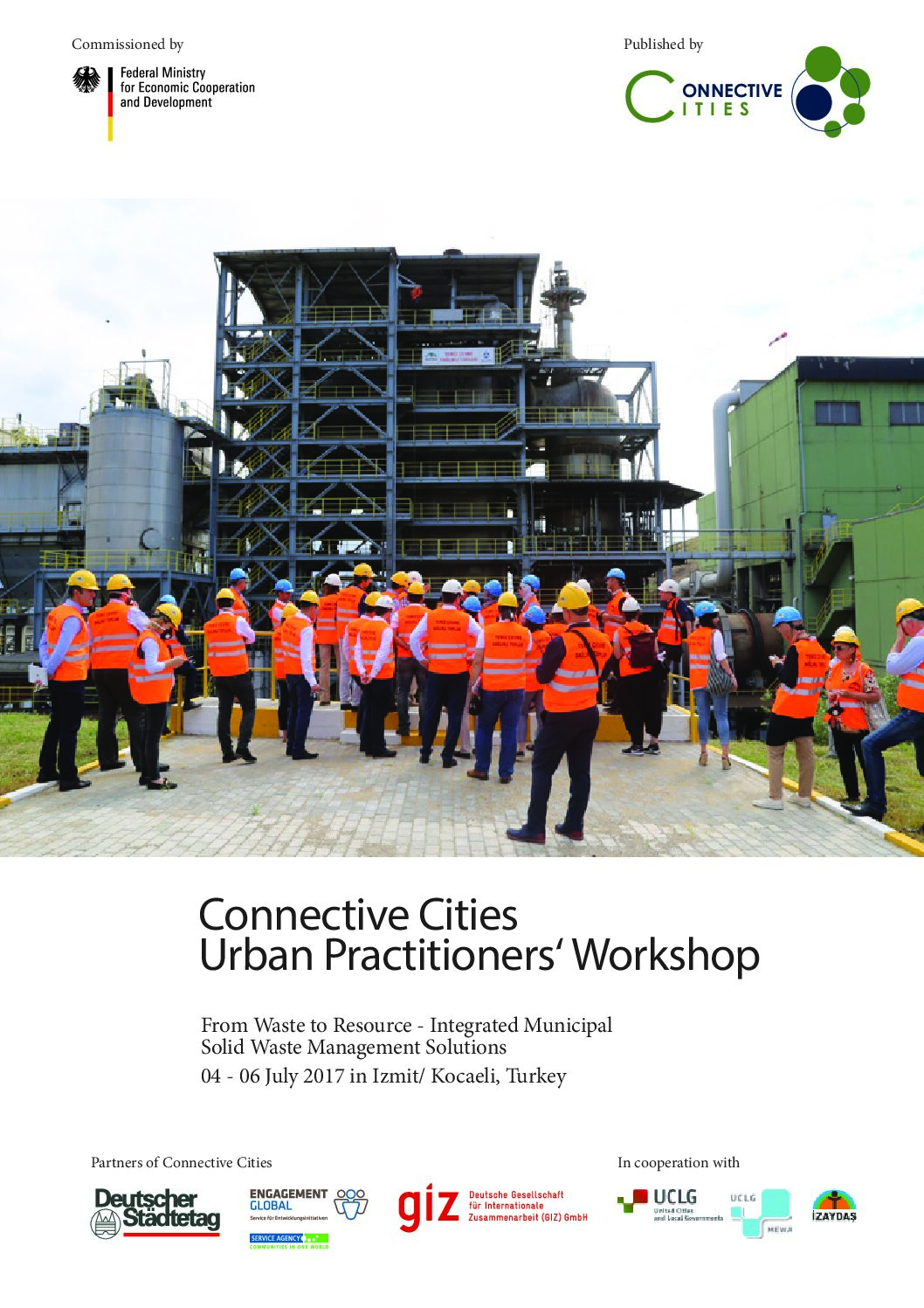
In collaboration with UCLG-MEWA and in the framework of the “Municipal know-how for host communities in the Middle-East” programme, Connective Cities organised a practitioners’ workshop on integrated solid waste management in İzmit/ Kocaeli, Turkey from July 4-6th, 2017.
The workshop aimed at fostering exchange between urban waste management practitioners from Turkey and Germany through good practice presentations and peer-to-peer advisory in order to create local action plans that improve solid waste management in an integrative manner.
The report provides a brief summary of the workshop, describing the starting situation in Turkey and featuring key discussion points, presented good practices and the project ideas developed in the workshop.
Solutions for gender fair cities

"This report is the product of the Womanability research-action project. It reveals the numerous, and sometimes unexpected, obstacles to the equal access and enjoyment of public spaces by women, from a lack of green spaces, accessible public transportation, and public toilets, to persistent harassment and outright violence. Building on these experiences and observations, the report offers a series of recommendations and best practices, many developed by women themselves, for creating the gender equal cities of the future. […]"
Regional Peer-Learning and Action Planning Workshop
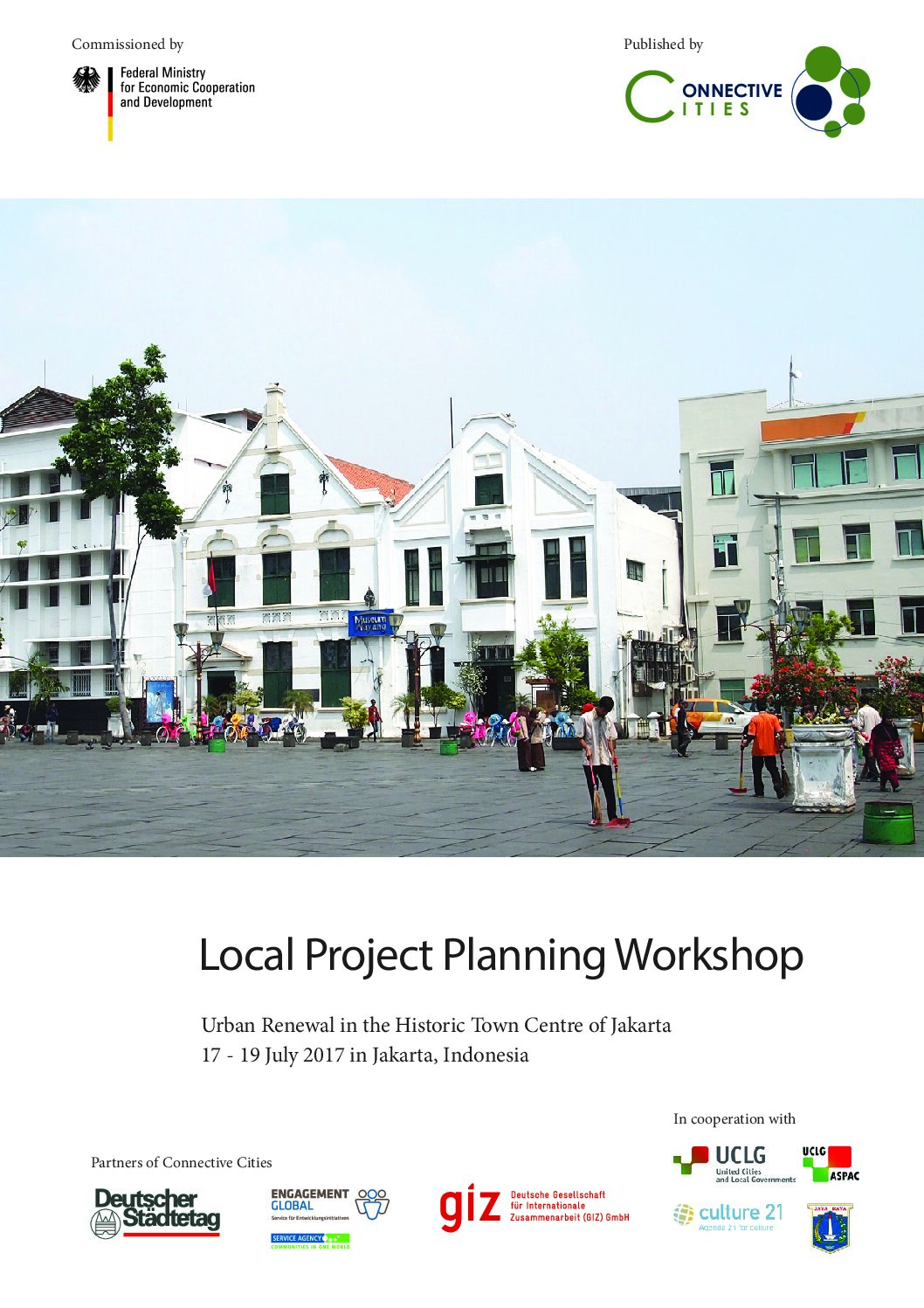
Together with UCLG World Secretariat and UCLG Asia-Pacific, Connective Cities organised the Regional Peer-Learning and Action Planning Workshop on “Urban Renewal in Historic Town Centres and Public Space Improvement” in Jakarta, Indonesia from 17 – 19 July 2017.
During the three-day workshop urban heritage specialists and planners from the Asian region and Germany discussed and advised the ongoing urban renewal of Jakarta’s Historic Town Centre Kota Tua as well as supported the proccess of drafting the application for UNESCO World Heritage Site.
This short report provides summary of the workshop, describing particular challenges faced in Kota Tua, featuring good practices presented at the event and summarising the recommendations developed in a joint work of experts.
Connective Cities Local Project Planning Workshop
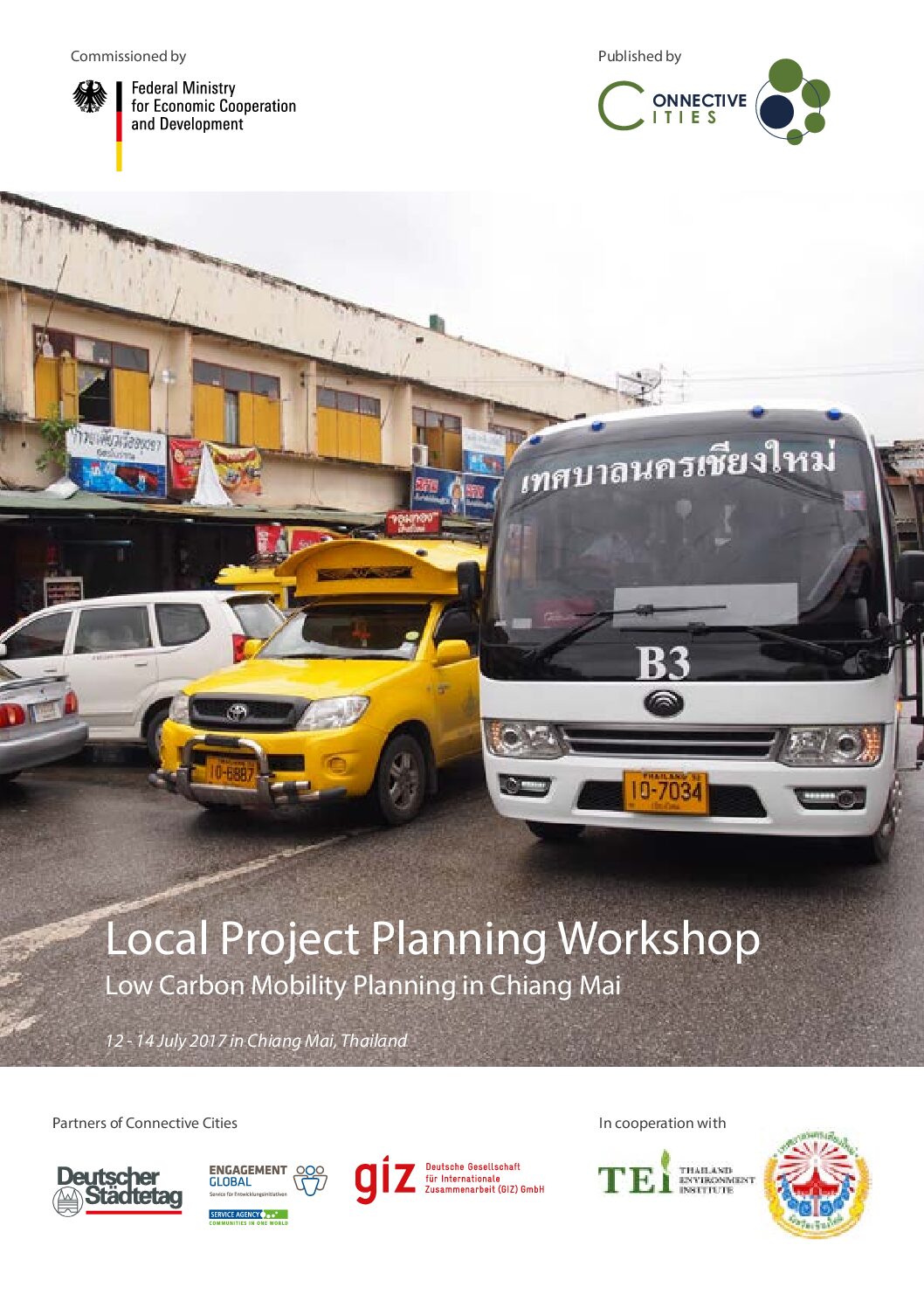
Urban transport planners and representatives of civil society and private sector from Chiang Mai Municipality in Northern Thailand and from Germany gathered on July 12-14, 2017 for a three-day workshop to discuss and advise the urban mobility planning of Chiang Mai and identify practical solutions for embarking on a low carbon mobility strategy.
This short report provides summary of the workshop, describing particular challenges faced by Chiang Mai, featuring good practices and baseline studies presented during the event as well as showcasing solutions developed in a joint work of experts.