


"Every Sunday, Guadalajara closes more than 60 kilometers of streets to car traffic, opening them up for public use by pedestrians, cyclists and performers. Since starting the "Via RecreActiva," Guadalajara has more open space for recreation, a new collective image of public space and a revitalized movement for transit equity.
The Via RecreActiva has had a clear “before” and “after” effect on the surrounding community. It marks the consolidation of both political and economic power around the importance of and investment in public space. The momentum created by civil society groups that advocated for the Via RecreActiva shifted demand for basic public infrastructure leading to new political commitments. This has increased transparency, created new roles for public space activists in municipal institutions, and institutionalized participatory processes."
Category: Integrated urban development
Remarkable Women in Transport

Transport systems can only become truly inclusive and gender-responsive if the voices, perspectives and experiences of women are reflected at all levels in the transport sector. Thus, as it is still a largely male-dominated field, it is imperative to focus on increasing the number of women working on transport.
TUMI endeavours to support this transformational change by empowering women experts and stimulate behavioural change in the transport sector and in cities all around the world. As visibility is key to change mind-sets, this first round of TUMI’s Remarkable Women in Transport series introduces more than 60 highly qualified women transport experts, and highlights their contribution to sustainable mobility solutions on the ground – by women, for the entire society.
This publication is meant to showcase the diversity of female change makers in transport.
Reclaiming the Streets of Fortaleza, Brazil

The Institute for Transportation and Development Policy works around the world to design and implement high- quality transport systems and policy solutions that make cities more livable, equitable, and sustainable.
Content of this issue:
The Effects of Transportation on Early Childhood Development
Fortaleza’s Progress Shows that Change is Still Possible in Brazil
Bucheon City Goes from a Car-Centric City to a People-Friendly Vision
In Cairo, ITDP Works to Improve Transport Access for Women
America, The Netherlands, and Oil Crisis: 50 Years Later
Frequency Is Freedom
Scooters, E-bikes, Rideshares, and More: Learning from Dockless Bikeshar
On Mexico City’s Buses, a Little Technology Goes a Long Way
MOBILIZE Dar es Salaam
In Jakarta’s Urban Villages Women Are Moving Mobility Forward
“Women-only” Transport: A "Solution" To What End?
As Cities in the US and Europe Explore Electrification, China Is Taking the Lead
Transforming Streets in São Pauo
From the Narrow Lanes of Agra to the BRT Lanes of Pune: 20 Years of the ITDP India Program
New Resources from ITDP
Content of this issue:
The Effects of Transportation on Early Childhood Development
Fortaleza’s Progress Shows that Change is Still Possible in Brazil
Bucheon City Goes from a Car-Centric City to a People-Friendly Vision
In Cairo, ITDP Works to Improve Transport Access for Women
America, The Netherlands, and Oil Crisis: 50 Years Later
Frequency Is Freedom
Scooters, E-bikes, Rideshares, and More: Learning from Dockless Bikeshar
On Mexico City’s Buses, a Little Technology Goes a Long Way
MOBILIZE Dar es Salaam
In Jakarta’s Urban Villages Women Are Moving Mobility Forward
“Women-only” Transport: A "Solution" To What End?
As Cities in the US and Europe Explore Electrification, China Is Taking the Lead
Transforming Streets in São Pauo
From the Narrow Lanes of Agra to the BRT Lanes of Pune: 20 Years of the ITDP India Program
New Resources from ITDP
Cleverly threaded
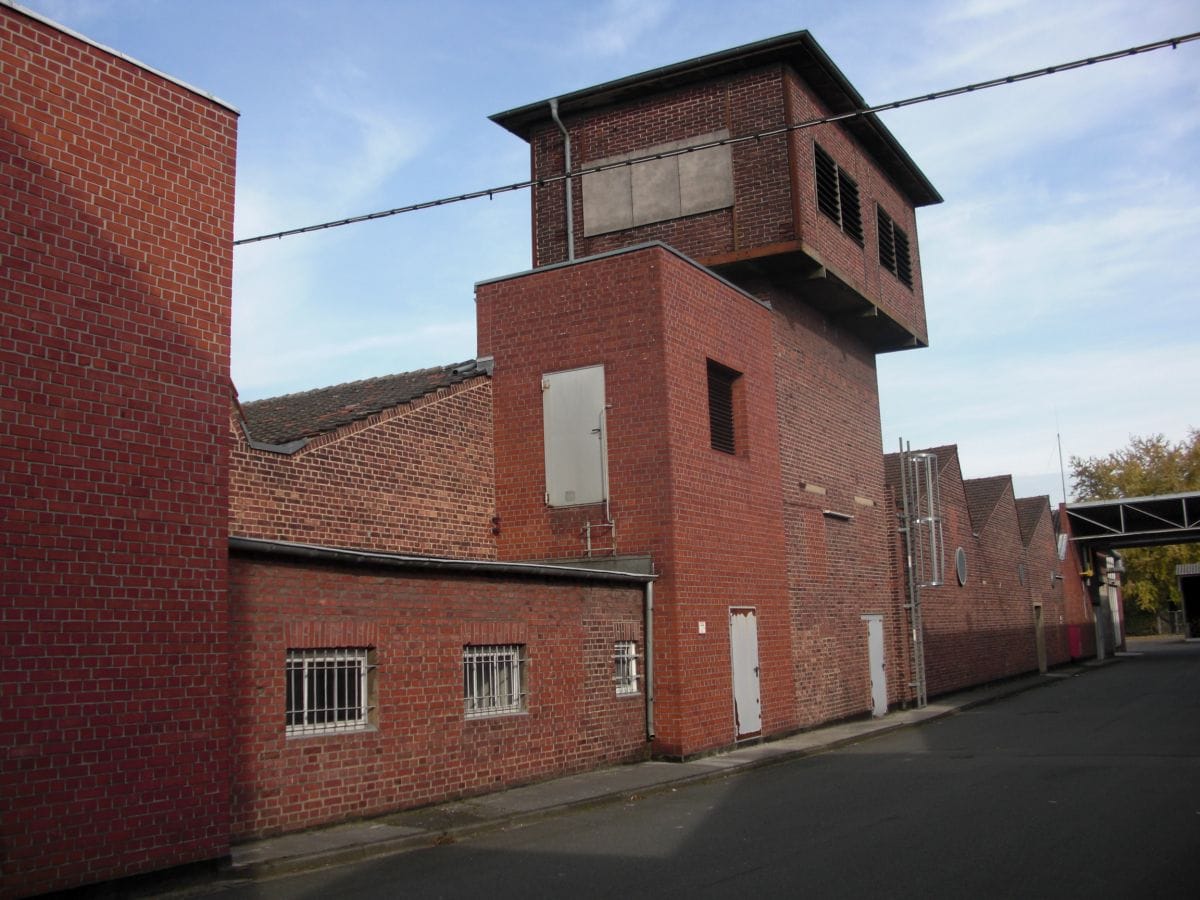
The industrial wasteland around Bocholt’s old spinning mills was almost exclusively used as a warehouse and was considered a “forbidden city”. Bocholt envisioned its conversion into a lively residential and cultural quarter. Now the first construction phase for urban living and working has started with private investment.
Gender-inclusive climate action in cities

"In recent years, a small number of extraordinary women have emerged as key leaders on global action to tackle climate change. However, more generally, women are grossly under-represented in high-level climate negotiations; tend to be disproportionately vulnerable to climate impacts; and climate solutions tend to ignore gender-specific issues, perpetuating a general bias of infrastructure and services designed predominantly for men. This report sets out proposals for how to correct these imbalances and, through focusing on an inclusive climate action approach, to ensure that investment to cut emissions and improve resilience will benefit the full diversity of urban citizens, rich and poor, men and women."
Upward and Outward Growth

“New analysis of the upward and outward growth of 499 cities over time confirms that the challenges of rapid outward expansion are greatest in lower-income cities that have weak planning and land governance and less mature financial markets. Unmanaged urban expansion increases the costs of service provision, deepens spatial inequities, and imposes heavy economic and environmental burdens. This paper highlights three key equity challenges linked to rapid outward expansion in cities of the global South: distorted land markets, deficient services in growing areas, and disjointed informal expansion. […]”
Municipal sustainable energy production and efficiency: planning and implementing innovative solutions
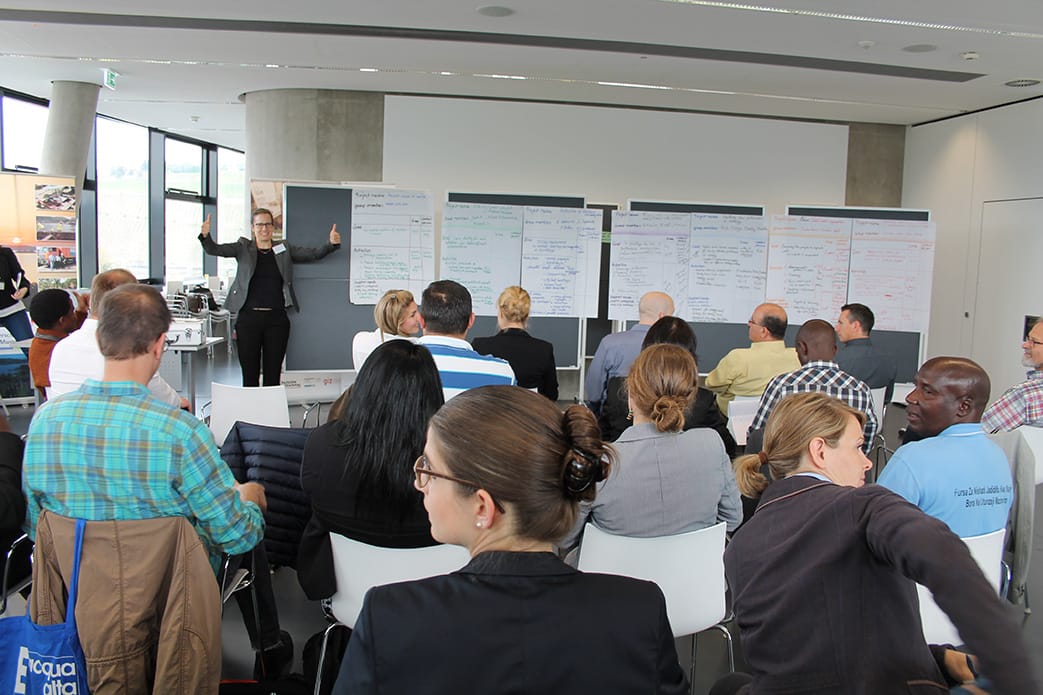
Energy is a major component for both local and global economic development. It is needed for transport, industrial and commercial activities, buildings and infrastructure, water distribution, and food production. Most of these activities take place in or around cities, which are on average responsible for more than 75% of a country’s Gross Domestic Product (GDP) . With their high concentration of industry, transport systems, buildings and households, municipalities consume large amounts of energy (estimated between 60 and 80% of the global primary energy) and emit between 50 and 60% of the world’s total greenhouse gases. The majority of this energy consumption goes into buildings and transport.
Despite the increasing energy demand in cities, it is at the municipal level that considerable potential to plan for and to produce energy sustainably and strengthen energy efficiency exists.
The international exchange platform Connective Cities and its initiators, the Deutsche Gesellschaft für Internationale Zusammenarbeit (GIZ) GmbH, the German Association of Cities and Engagement Global / Service Agency Communities in One World, organized a Dialogue Event on “Municipal sustainable energy production and efficiency: planning and implementing innovative solutions” from 9 to 11 May 2016 in Würzburg, Germany to specifically look into good practices, challenges and solutions to this crucial topic.
The event took place at the Fraunhofer Institute for Silicate Research ISC in Würzburg and was organized in cooperation with the City of Würzburg.
Transforming cities: from industrial centres to sustainable urban areas
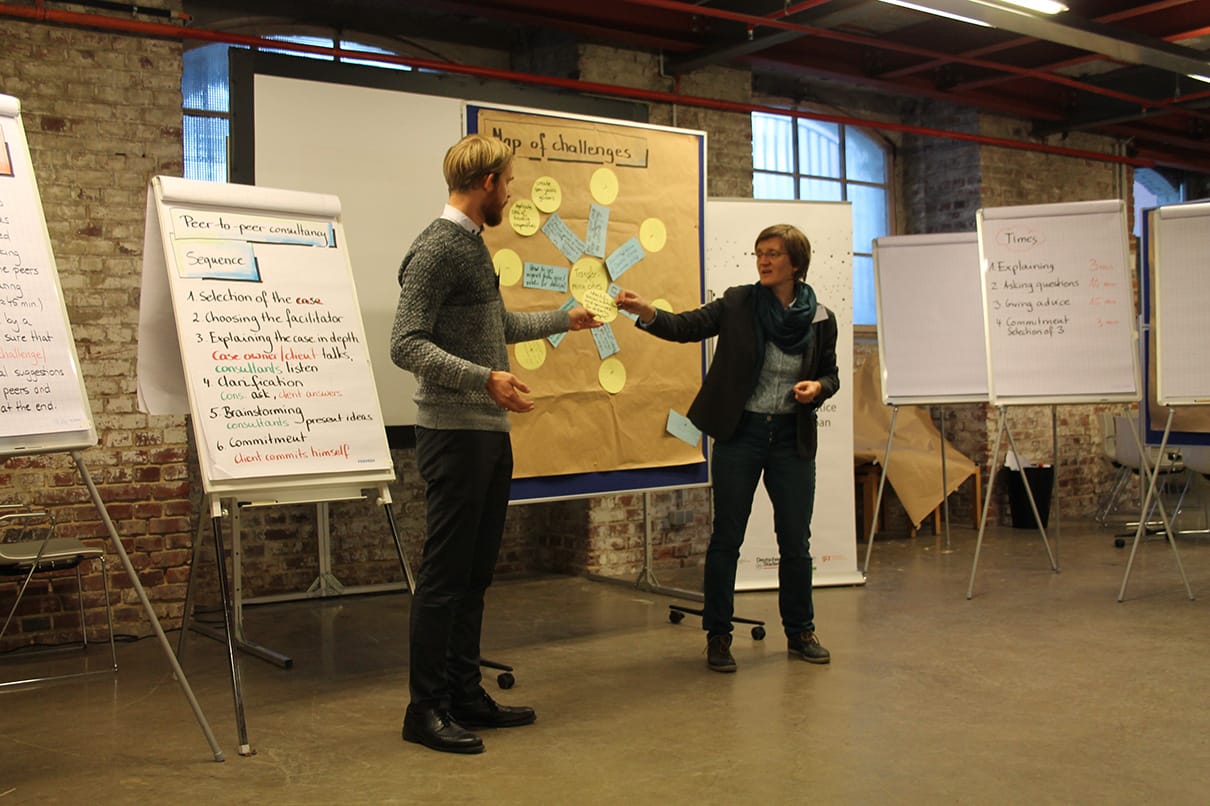
Industrial urban areas in Europe and North America as well as in several Asian and Latin American countries are facing huge spatial challenges in restructuring their urban centres and regions after having lost their traditional economic base. Integrated urban development schemes are needed to make this transformation sustainable and to introduce new urban functions while preserving the industrial heritage. The spatial implication of structural change and the organisation of such transformation call for innovative strategies to revitalise the areas and uses of the traditional manufacturing cores, economically, socially and environmentally.
The international exchange platform Connective Cities and its initiators, the Deutsche Gesellschaft für Internationale Zusammenarbeit (GIZ) GmbH, the German Association of Cities and Engagement Global / Service Agency Communities in One World, organized a Dialogue Event on “Transforming Cities: From Industrial Centres to Sustainable Urban Areas” from 5 to 7 December 2016 in Bocholt, Germany to specifically look into good practices, challenges and solutions to this crucial topic. The event was organized in cooperation with the City of Bocholt which shared its own experience with urban transformation by hosting the event in one of the former textile factories of the city, now converted into a textile museum. The dialogue event attracted German and international municipal actors with first-hand experience in the transformation of post-industrial urban areas, its planning and its implementation, including representatives of municipalities, municipal institutes as well as representatives from civil society, academia and business, active in municipal projects in this thematic area. Urban practitioners from Germany, Ukraine, Brazil, Colombia, Cuba, Bosnia and Herzegovina, Belgium, the Netherlands and China joined together to present their good practices but also to share their challenges and discuss viable practical solutions for their local needs.
Würzburg and Mwanza share a gift from the sky
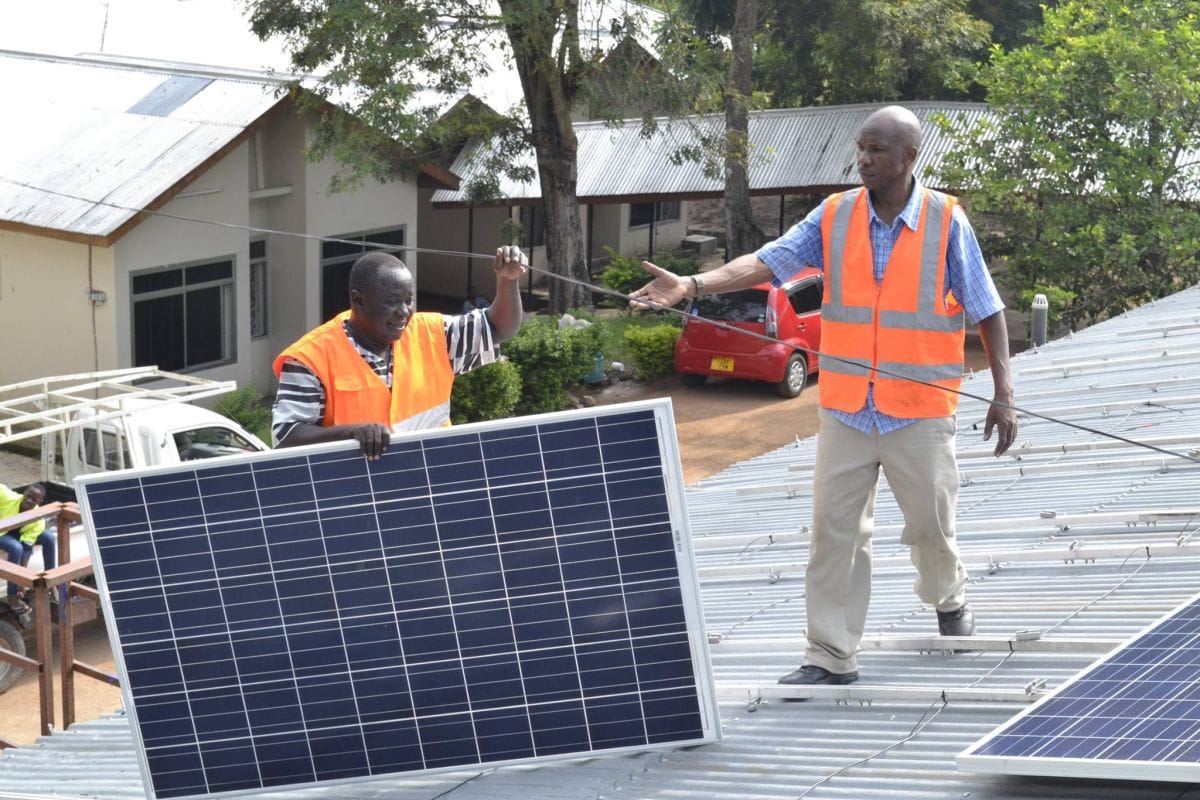
Climate change affects all cities. Anyone who wants to do something about it must reduce CO2 emissions. This can be achieved by increasingly replacing fossil fuels with renewable energies and generating solar power, for example. In Tanzania’s Mwanza, this is particularly worthwhile – and has welcome side effects.
Safety and public space

Around the world, troubling levels of violence against women result in a restricted or complete lack of rights and opportunities for women and girls. For a majority of the world’s population, who is increasingly concentrated in large cities, this violence takes place in public spaces which are not restricted by jurisdictional borders, i.e., the metropolitan territories that to a great extent are managed by the members of Metropolis.
This report addresses the lack of safety that women and girls face in public spaces, and presents the findings of a review of the policies and programmes that metropolitan governments have established to proactively respond to these concerns. It sheds light on the involvement of Metropolis members to ensure that women and girls have the right to the metropolitan city, by mapping policies, strategies and instruments that foster safer and more accessible streets, squares, parks, neighborhoods and eventually the totality of metropolitan public spaces.