


There is more than enough wood available in the town of Lörrach and its proximity to the Black Forest. The idea was born to build a climate-neutral industrial estate in timber construction on the Lauffenmühle site. To date, there have only been individual commercial buildings constructed from wood in Germany, but no industrial estate with a comparable concept. Parts of the historic factory buildings on the site with their natural stone façades are to be integrated into the new utilisation structure.
Author: erik
Climate-positive construction with circular materials
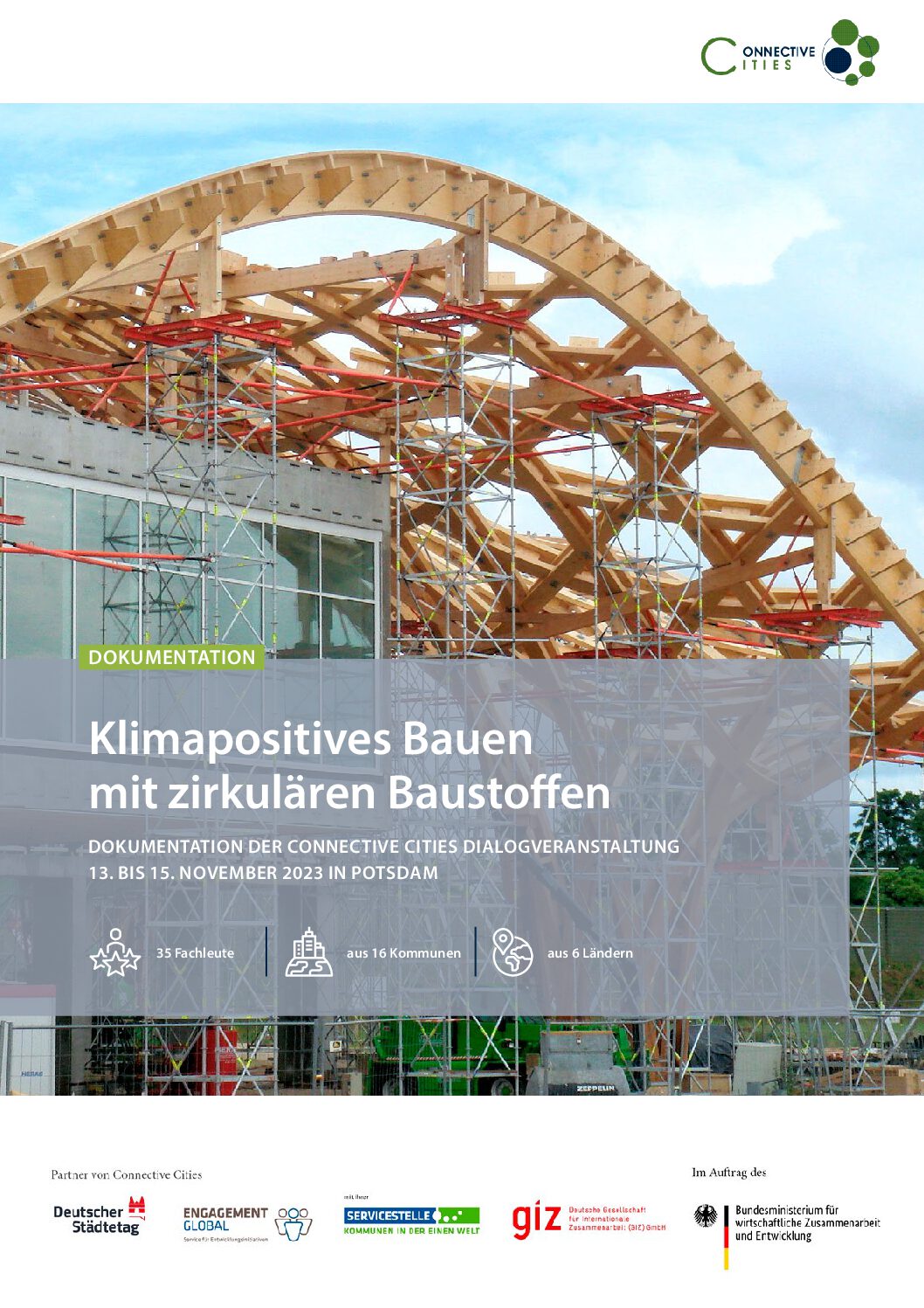
Demand for living space is growing around the world, particularly within cities, which makes the construction industry a major sector in every economy. However, producing and processing raw materials for construction are significant contributors to environmental damage and carbon emissions. The construction sector also uses a lot of energy (sometimes known as “grey energy”) not only when producing construction materials and during the building phase itself, but also while the building is operated for heating, cooling and electricity use. Organic materials such as wood and bamboo could play a vital role in decarbonising the construction industry.
More than 30 representatives of municipalities, academia, business and civil society gathered at the Potsdam Institute for Climate Impact Research from 13 to 15 November 2023 for an event hosted by Connective Cities and the city of Potsdam to share ideas and experiences about the transformation to climate-friendly construction. They presented their experiences from Bhutan, Germany, Indonesia, Nepal, South Africa and Tanzania, and developed ideas for specific local projects. While in Potsdam they visited examples of good practice, such as a wood-built nursery school and the construction site of a pavilion which is being built with organic and recycled materials.
This documentation provides insights into the conference content and results.
Further impressions can also be found on the conference website “Climate-friendly construction with organic and recycled materials“
Eredvi Municipality (Georgia) grants renewable energy solutions for IDP settlements

Eredvi Municipality, located just five kilometers from Tskhinvali, has been navigating the challenges stemming from the 2008 Russian-Georgian War, remaining under the de facto control of the breakaway Republic of South Ossetia. Despite these challenges, the local government, operating from Tbilisi, has dedicated efforts to aid internally displaced families dispersed throughout Georgia.
The Eredvi Municipality’s Good Practices center on implementing sustainable solar power projects in internally displaced persons (IDP) settlements in eastern Georgia. Through a collaborative initiative with Lithuanian companies and financing, the municipality aims to address energy needs, providing free electricity to 692 families and municipal facilities while drawing inspiration from Lithuania’s successful experience in renewable energy solutions.
Banepa preserves traditional construction methods using bio-based materials

This good practice describes how the town of Banepa is restoring its historic centre and a retirement home using traditional building methods. Bio-based building materials such as wood, bamboo, brick and clay are much more sustainable and earthquake-resistant than cement or concrete.
Learning Process: Renewable Energy Options on the Municipal Level
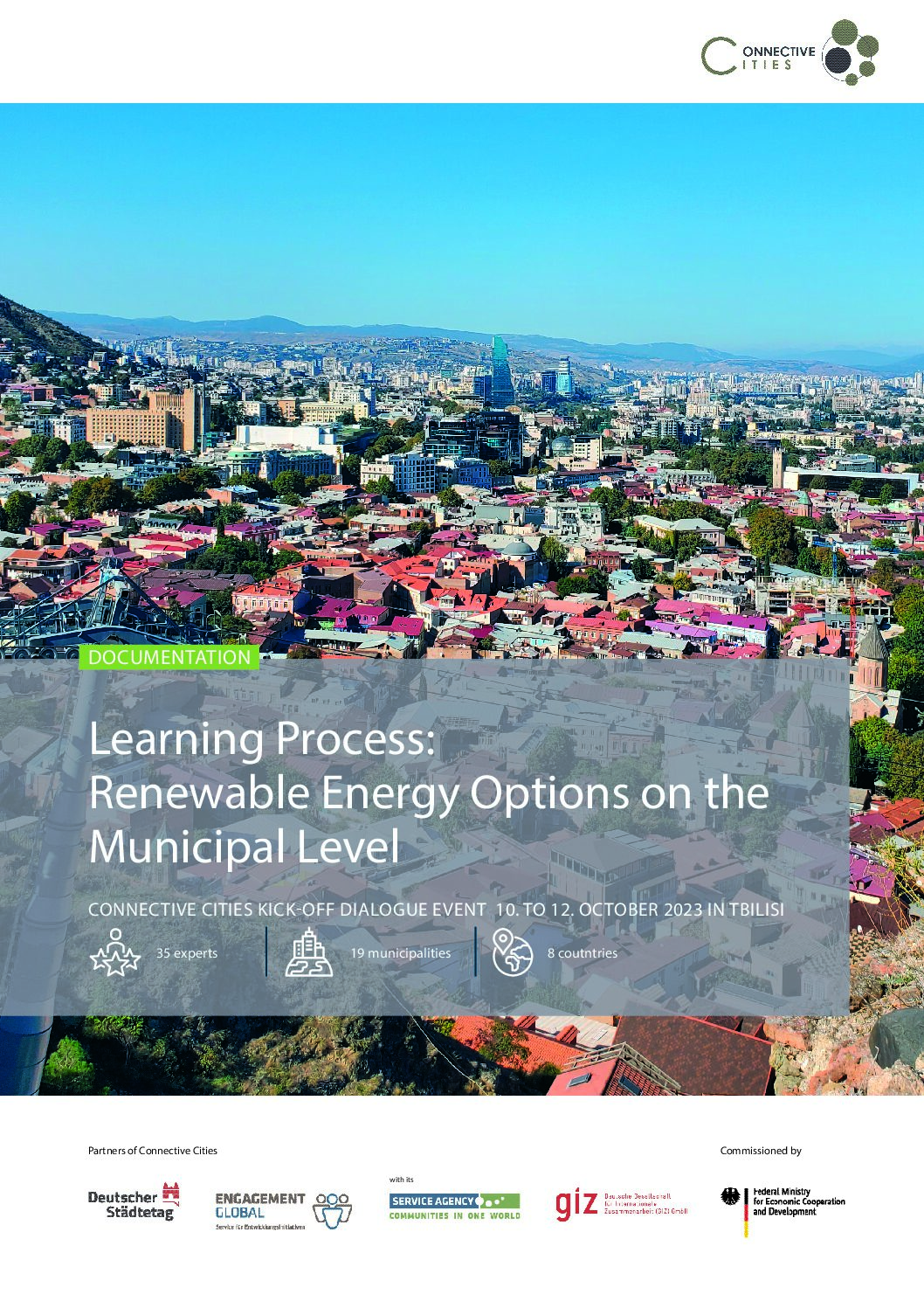
The Connective Cities Kick-off Dialogue Event, held from 10 to 12 October 2023, brought together municipalities from various countries to discuss and share insights on “Renewable Energy Options on the Municipal Level.” Key participating municipalities were represented from Albania, Bosnia and Herzegovina, Germany, Georgia, Moldova, Montenegro, Serbia, and Ukraine.
During the event, innovative strategies in renewable energy were showcased, with participating municipalities engaging in collaborative learning and group deliberations to delve into the nuances impacting their renewable energy endeavors. Utilizing a design thinking approach, the Dialogue Event sought to uncover and address gaps and obstacles within current municipal strategies by scrutinizing the unique circumstances of each participating city.
With a diverse attendance of over 35 individuals representing 19 municipalities across 8 countries in Southeast Europe and Germany, the event featured presentations of successful practices and projects from 9 municipalities, aimed at sparking interactive discussions among attendees. Many participants encountered similar challenges in advancing renewable energy initiatives, highlighting the necessity to bolster knowledge and expertise to progress in this area.
This event is the starting point for a learning process in which project ideas are developed over the course of approximately one year until they are ready for realisation.
This documentation shows the promising initial results.
All presentations and a photo gallery of the dialog event can be found on our Connective Cities Community: Group Topics | Connective Cities Network (connective-cities.net)
Women’s leadership in municipalities

As part of the network activities in the MENA region, an insight session was held on 5 February 2024 to delve into the opportunities and challenges influencing women’s leadership and representation in municipalities.
Gender equality and the inclusion of women in decision-making processes has been catapulted to the forefront of the political debate in the last few decades in the MENA region. Efforts to promote women’s leadership in municipalities are promising, with some states implementing policies aimed at increasing women’s representation. Despite this progress, persistent challenges such as limited access to education and institutional barriers, hinder women’s progress towards leadership positions.
In this insight session, participants have engaged in discussions about the importance of women’s leadership in municipalities and the related challenges, while acknowledging the progress that has been achieved. Dr. Manal Al-Abdallat, the director of the women’s regional network at the Greater Amman municipality, has presented an overview of the tools that increased women’s representation in municipalities including the establishment of women’s empowerment units. Nonetheless, she highlighted that women’s limited access to funds for lobbying limits their chances of success in election campaigns. An additional challenge is the phenomenon of nominating a single candidate for tribal representation, which puts women at a disadvantage compared to male candidates.
Related publication:
Municipal Observatory for Gender Mainstreaming
A guide for municipalities in the MENA region
Banepa preserves traditional construction methods using bio-based materials

The historic town centre of Banepa in Nepal extends along a road for a distance of around 1.2 kilometres. Many of the houses have been in poor condition, making the town less attractive.
This good practice describes how the town of Banepa is restoring its historic centre and a retirement home using traditional construction methods. Bio-based building materials such as wood, bamboo, brick and clay are significantly more sustainable and earthquake-resistant than cement or concrete.
In order to allay the concerns of the local population, the municipality is first refurbishing one building to provide an example of the methods that will be applied to the others. It is working together with the Nepalese RP Foundation, which has over 25 years of experience in the renovation of historical buildings.
This good practice was presented at the Connective Cities dialogue event on climate-friendly construction with organic and recycled materials in Potsdam.
Involvement of civil society actors on both sides is crucial

Yarinacocha is located in the Ucayali region of the Peruvian Amazon. The city of around 100,000 inhabitants is close to the regional capital Pucallpa. 26% of Yarinacocha’s population live in poverty, 3.6% in extreme poverty. A large proportion of the urban population has no access to clean drinking water. All the district’s wastewater is discharged into the Ucayali River and the Yarinacocha Lagoon untreated. This has a negative impact on the environment, health, tourism, and economic development in the region.
To meet the increasing challenges of climate protection and climate change adaptation, the Yarinacocha district administration has developed an action program in collaboration with their German Partner City Cologne. This program includes the planning and implementation of improvement measures in areas such as the provision of municipal, climate and environmentally relevant basic services, the use of renewable energies, the preservation of biodiversity and local economic development through value chains. The district administration is working on building appropriate planning and project management capacities in the administration and establishing mechanisms to increase the participation of relevant interest groups from civil society, in particular indigenous actors, and universities, in local planning and decision-making processes. To support these objectives, an expert is supporting the district administration and the climate partnership between Yarinacocha and Cologne in the framework of the program “Experts fund for Municipal Partnerships Wordwide”, which is implemented by GIZ and SKEW.
In this good practice partnership-based cooperation with indigenous communities and their organizations as well as the commitment of political decision-makers are important success factors, e.g. to set up a center for indigenous medicine in Yarinacocha or to implement projects benefitting the indigenous population in the areas of local governance, biodiversity, and autonomous indigenous energy supply.
Kufranja ‘the city of Oxygen’

As part of the activities of the working group “destination management organization and product design in tourism”, Kufranja municipality in Jordan has hosted a workshop on ecotourism and designing touristic trails’. The workshop was attended by key actors in this field including representatives of the tourism ministry in Ajloun governorate, the Royal Society for Nature Conservation, and Bookagri.com which is an agritourism experiences and destinations development company. The tourism expert, Hanane Haber, has provided an overview of the principles of establishing sustainable tourism in Kufranja municipality that is known as “the city of oxygen”.
Building Resilience: Insights from the Project Planning Workshop

The Connective Cities Project Planning Workshop, themed “Resilience in Times of War – Municipal Exchange between Ukraine and Germany,” unfolded in Munich, Germany, from November 28th to 29th, 2023. This gathering brought together municipal representatives and technical experts with a collective goal – to strengthen a more resilient and sustainable future for Ukraine. The workshop, occurring just a month after the 6th German-Ukrainian Partnership Conference in Leipzig, aimed to emphasize the pivotal role of cities and municipalities in shaping the nation’s post-war trajectory.
Diverse Participation and Collaborative Learning
Representatives from diverse Ukrainian municipalities, such as Sambir, Sumy, Brovary, Lutsk, Vinnitsa, Trostyanets, Berenzhany, Zbarazh, Mykolaiv, Melitopol, and Novovolynsk, comprised the active participation of over 35 delegates in the Connective Cities event. Kosovo had representation from Prishtina and Gllogoc, and Germany was represented by Munich and Eichenau. The event also featured participation from municipal utilities Gersthofen & Cologne (RheinEnergie) and delegates from the private sector. The diverse mix aimed at fostering collaborative learning, as cities shared their successes and challenges, recognizing the importance of joint experiences in the journey towards resilience.
Thematic Focus Areas
The workshop delved into three crucial thematic areas:
- Regional and Local Economic Development
- Renewable Energy Options on the Municipal Level
- Integrated Urban Development
Skilled technical experts facilitated discussions on topics ranging from green urban development to energy grid optimization and cluster development, providing valuable insights for participants to implement in their respective municipalities.