Municipal Response to COVID-19 for Sustainable Urban Development in Southeast Europe and Caucasus

The COVID-19 pandemic tested the robustness and resourcefulness of mostly all municipal services, from transportation and waste management to recreation and communication, pushing cities to reinvent new ways to serve their citizens. Besides, pandemic-centered protocols set new behavioral patterns – many of which were quite stressful for urban economies. Others, on the contrary, made both city leaders and citizens rethink the status-quo regarding sustainability and resilience. They created the opportunity for a green and circular economy to determine the mood of the recovery. Thus, a deep and better understanding of a city’s systems and operation is required in order to move towards sustainable development and greater resilience. If cities manage to learn from the COVID-19 crisis and proactively apply long-term prevention and risk reduction approaches, they will meet future emergencies better prepared or avoid some of them.

The following report summarizes the study on municipal response to COVID-19 pandemic. The study was conducted in September 2020, more than half a year after the global emergency was announced. It covers cities of Albania, Armenia, Azerbaijan, Belarus, Bosnia and Herzegovina, Georgia, Kosovo, North Macedonia, Moldova, Montenegro, Serbia and Ukraine.

Interview with Awande Buthelezi: Crisis Management and Digitalisation

Awande Buthelezi from Johannesburg, South Africa, shows how did he and his NGO handled to know who was in need of essential supplies such as water when there was no existing data about the precise locations.

More: https://youtu.be/r4WG9clnn40

Join us and watch a special series of videos and podcasts that will show how to overcome a crisis from many different points of view. More videos, podcasts and interviews on our COVID-19 page.

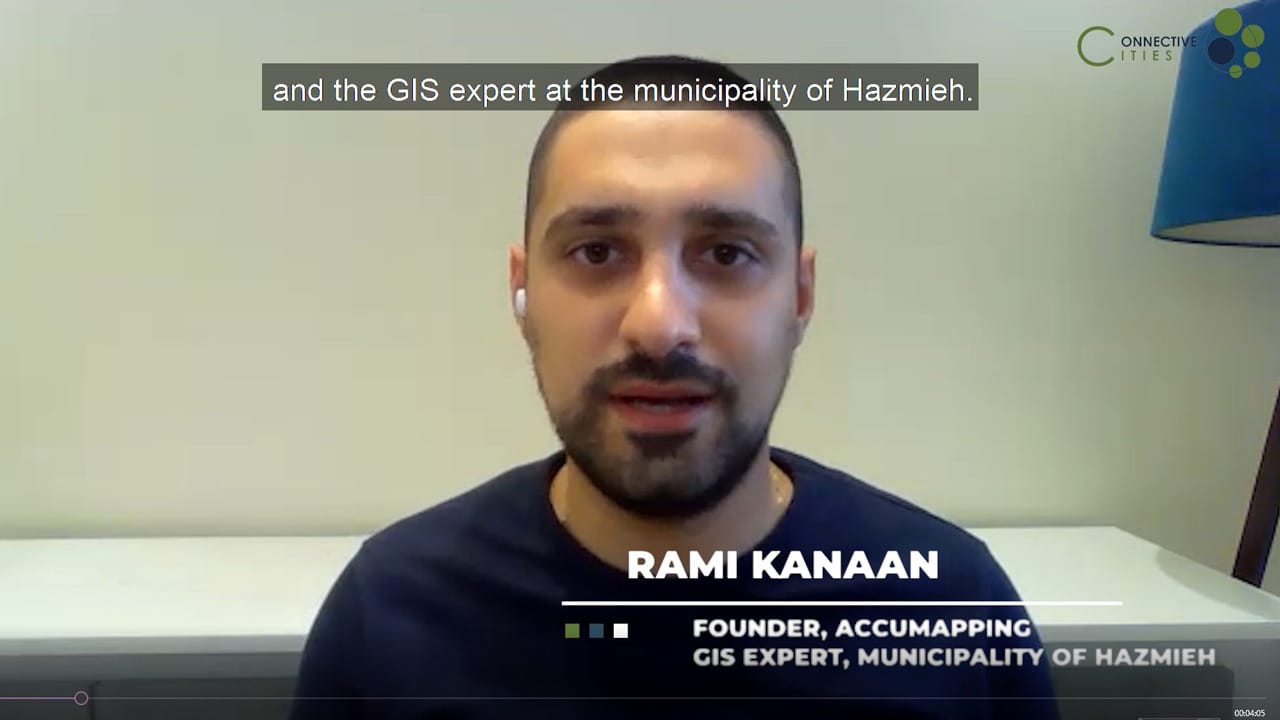
Interview with Rami Kanaan: Digitalisation and Public Health

Hazmieh, Lebanon, a city located at the entrance of Beirut. Rami Kanaan, a proud Lebanese, told us how to control infection chains to prevent the virus from spreading and how can police and ambulances profit from this.

More: https://youtu.be/WGlsNTODLbc

Join us and watch a special series of videos and podcasts that will show how to overcome a crisis from many different points of view. More videos, podcasts and interviews on our COVID-19 page.

Implementing the Non-Motorised Transport Pilot corridor in Kampala City, Uganda

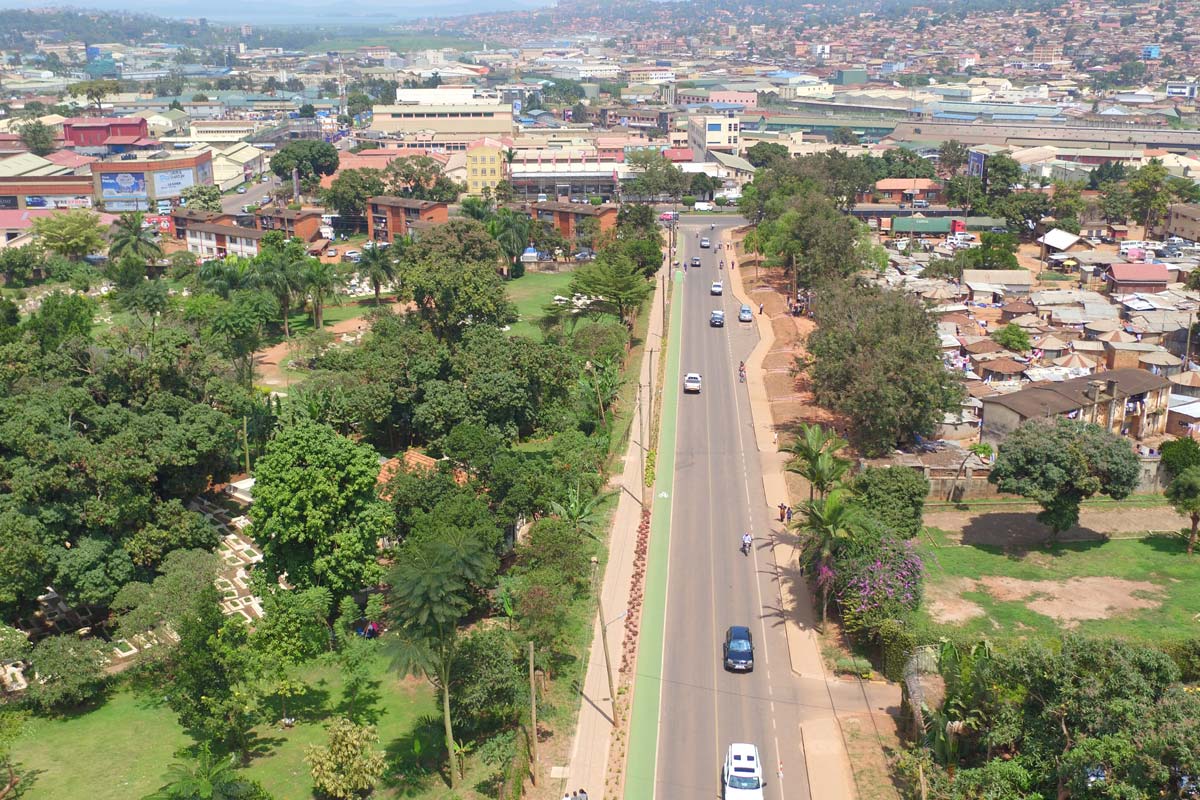
Integration of Non-Motorised Transport (NMT) infrastructure in most African cities has always been an afterthought. This has been witnessed by the uncoordinated mix of modes in the urban areas and the continuous effects it has had on the economy and the functioning of major towns and urban areas. The City of Kampala has decided to trailblaze in this area of transforming urban mobility in East Africa, a region renowned for traffic congestion and stressful commuting. This was necessitated by the ever-increasing urban population and the resultant increased demand on infrastructure. Namiremebe Road and Luwum street were chosen as the pilot areas for the program as they pass through the city center and are the major public transport hub for in the city. The aim of the program was to have an integrated network for all modes.

Interview with Faola Hodaj on Innovation Ecosystems

Learn through Faola Hodaj, Director of Innovation at Municipality of Tirana, how did the municipality reflect this innovative spirit through its services and response to the pandemic.

More: https://youtu.be/BpnLZLcky00

Join us and watch a special series of videos and podcasts that will show how to overcome a crisis from many different points of view. More videos, podcasts and interviews on our COVID-19 page.

Municipal experts wanted: Implementing vaccination and communication strategies on the local level

Is your city administration currently carrying out or planning a Covid-19 vaccination campaign implementing national vaccination strategies? Has your city made first experiences in launching a communication and outreach campaign to your citizens about the vaccinations?

On the 22nd and 25th of March 2021, Connective Cities will hold a two-day response dialogue on “Covid-19: The local implementation of vaccination strategies and related communication in municipalities”.

The event brings together municipal experts from Germany with international municipal actors to discuss how municipalities can better deal with the challenges involved in implementing and communicating Covid-19 vaccination strategies at the local level. One thematic focus of the event will be communication strategies that municipal actors can adopt to inform citizens on the vaccination as well as to manage expectations and to create trust.

Municipal experts from public health departments, communications departments or Covid-19-related crisis units are warmly invited to apply for participation in the two-day online event (approx. 3 hours per session).

Please contact us if you would like to present a concrete case or project idea from your city. This could cover, for example:

  • How your municipality is carrying out Covid-19 vaccinations among existing challenges (e.g. vaccinating as many people as possible in the shortest period of time, lack of infrastructure for mass vaccination, decentralised vaccinations/the use of mobile vaccination teams, vaccine hesitancy or the spread of misinformation among citizens, difficulty of reaching vulnerable and at risk persons); and/or
  • How to organise a public information campaign on the vaccinations and the mentioned challenges.

If the topic falls into your area of expertise and you wish to participate in the discussion without presenting a specific case, we also invite you to contact us.

More information: Call for participants [pdf, 190 kb, 2 pp.]

Contact:

Alice Balbo, alice.balbo@staedtetag.de, +49 (0)221-3771-573

Nikola Krause, nikola.krause@engagement-global.de, +49 (0)228-20717-2672

Thiago Garcia, thiago.garcia@engagement-global.de, +49 (0)228-20717-2633

The deadline to apply for participating in the event is 12th March 2021.

Interview with Daniel Onyango on Crisis Communication

Nairobi, Kenia, a troubled place that woke up Daniel Onyango and friends’ creativity to rose awareness for the safety measures. He lives in one of the biggest informal settlement of the capital where people did not understand the magnitude of COVID-19.

More: https://youtu.be/SVi5u3_5y-s

Join us and watch a special series of videos and podcasts that will show how to overcome a crisis from many different points of view. More videos, podcasts and interviews coming soon on our COVID-19 page.

Interview with Leila Ben Gacem: Social Innovation

Beni Khalled, Tunisia, a city famous for its citrus farms, is home of Leila Ben Gacem, social entrepreneur and as elected city councillor head of the Finance Committee. The brave woman worked late hours throughout the first lockdown in order to coordinate volunteers, health companies and municipal activities through social entrepreneurship skills.

More: https://youtu.be/w4ihfI_Gg00

Join us and watch a special series of videos and podcasts that will show how to overcome a crisis from many different points of view. More videos, podcasts and interviews coming soon on our COVID-19 page.

Podcast with Dr. Lardo Stander: Economic Response and Housing

“The social compact is critical in order to respond quickly and appropriately to future pandemics.”

Economic modelling to better understand crisis scenarios; mapping vulnerable groups for targeted help. Dr. Lardo Stander from Pretoria, South Africa, told us how did they deal with the South African slums’ economic and housing problems during lockdown.

More: https://youtu.be/Z2XUO7wxIPI

Join us and watch a special series of videos and podcasts that will show how to overcome a crisis from many different points of view. More videos, podcasts and interviews coming soon on our COVID-19 page.

Podcast with Nadia Odjo: “Smart Schooling”

 “We learned to use what we have.”

Listen to Nadia Odjo, a SmartSchooling natural from Jacmel, Haiti, and founder of the B.R.I.T.E Initiative. She implemented distance learning at her school by her own besides a disconnected community that even had problems setting up e-mail accounts.

More: https://youtu.be/YKV8qFFVbEs

Join us and watch a special series of videos and podcasts that will show how to overcome a crisis from many different points of view. More videos, podcasts and interviews coming soon on our COVID-19 page.