Voices from Connective Cities – Abasan Al-Kabira municipality

The representatives of Abasan Al-Kabira municipality in Palestine talk about how they are acting as Connective Cities’ Ambassador in Palestine, by organising several workshops for municipalities in Gaza to promote the regional network’s activities in different thematic areas such as crisis management, response to the Covid-19 pandemic, circular economy, local economic development and renewable energy. They also confirmed that working with Connective Cities on several projects and benefitting from knowledge exchange with their peers have enabled the municipality to progress in achieving its SDG-related targets and has resulted in developing capacities of the municipal employees.

Watch video at YouTube:

https://youtu.be/HcA0zewDtaQ

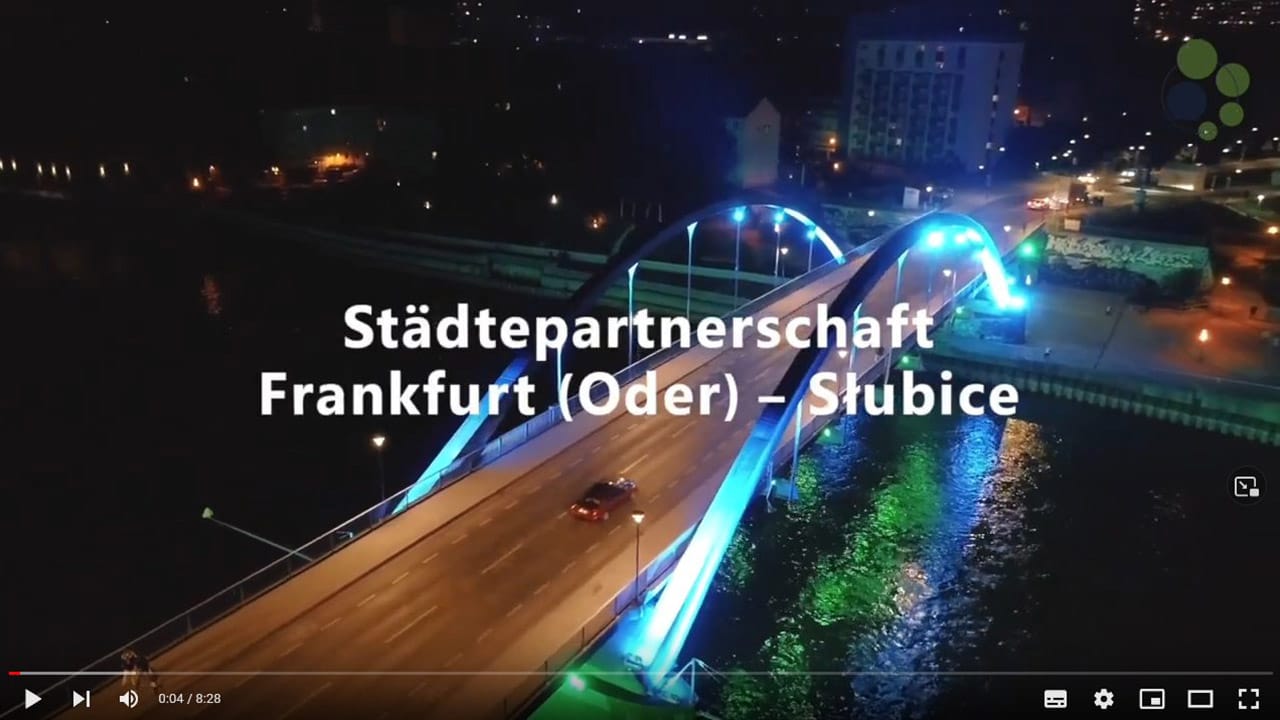
Frankfurt (Oder) – Slubice: Together against the pandemic

The Corona pandemic had a great impact on the lives of people in the partner city of Słubice and Frankfurt (Oder). Especially citizens living at the border area were impacted by the restrictions – commuters could no longer pass to the other side of the river for work, families could no longer see each other. Despite all this, it was possible to organise support with great civil society commitment through direct and rapid communication, which underlined the importance of cohesion at the boarders.

Learn how the two cities have worked together to tackle the challenges of the pandemic and successfully strengthened their partnership!”

Watch Video at YouTube: https://youtu.be/k0uCJE_yCac

The Development of Covid-19 recovery solutions at municipal level in the area of digitalisation and crisis management in the Southeast European region (SEE)

This report summarizes the activities developed under the project “The Development of COVID-19 Recovery Solutions at Municipal Level in the Areas of Digitalization and Crisis Management.” The project covered Southeast Europe and was conducted from September 2021 until December 2021.

The Report describes in detail the capacity-building processes conducted to support municipal resilience within the working groups of digitalization and crisis management over the course of several months, while also highlighting good practices that were identified and small urban initiatives that were developed together during the collaboration with urban practitioners from across the SEE region.

Additionally, the report covers processes and steps undertaken to support the expansion of the Connective Cities Network through encouraging more active and practical involvement of its current and new members.

For presentations and explanatory videos please refer also to

Development of Covid-19 recovery solutions at municipal level in the area of digitalisation 

Development of Covid-19 recovery solutions at municipal level in the areas of Crisis Management

Designing Disaster Risk Reduction strategies from local to national levels by harnessing the INFORM platform

The INFORM suite is a multi-stakeholder forum for developing shared, quantitative analysis that is relevant to humanitarian crises and disasters. Led by the Joint Research Centre of the European commission, INFORM also includes organisations from the humanitarian and development sector, donors, and various technical partners. Together, these actors have come together in developing a suite of quantitative and analytical products that support decision-making on humanitarian crises and disasters. Such products aim to empower and support decision making at different aspects of the disaster management cycle, specifically in the prevention, preparedness, and response phases. INFORM develops tools and methodologies for use at the global level and supports the application of their products at a subnational level. The scope and application of the various products from the INFORM suite can bridge the gap faced by many countries and cities, in harnessing data on risk for developmental planning.

The Global Initiative on Disaster Risk Management (GIDRM) and the Connective Cities project are grateful to the representatives from INFORM in delivering an Insight Moment on how to harness the platform and its applications in a real-world context to our Connective Cities Community. Specifically to Dr. Karmen Poljansek (JRC) who gave an introduction to the INFORM Suite and INFORM’s core principles; Dr. Andrew Thow (OCHA) who presented the subnational programme of INFORM and showcased the INFORM subnational model for the Sahel-Region; Mrs. Galiya Ibragimova (UNDRR) who presented the development and implementation of Central Asian and Caucasian, as well as the south-eastern Europe INFORM subnational models; and Dr. Luca Galimberti (JRC) who showed the prototype of INFORM subnational dashboard including other INFORM analytics.

The Insight Moment underlined the relevance of rigorous information systems as essential for Risk-informed Urban Development in obtaining high quality and real time data. The availability and accessibility of such a powerful tool like the INFORM platform and its various products prove to be effective solutions to such deeply rooted problems that act as a barrier for resilient and sustainable development globally. The INFORM suite developed by the JRC proves itself to be an invaluable tool, contributing to RIUD. INFORMS core principles Global, Open, Reliable and Flexible allow cities to harness high-quality and open-source data on the risks they face, to ensure that development and developmental gains can be secured at local as well as national and transboundary levels.

The recording of the session and the presentation files from the representatives can be accessed through the following page: Insight moment – Harnessing the INFORM platform as a tool for national authorities to design the DRR strategies at different levels, from local to national | Connective Cities Network (connective-cities.net).

Digitalisation for efficient integrated risk management

Gütersloh is a city in North-Western Germany with a population of more than 100,000 people. It was essential for the city to develop lean technology solutions to deal with the uncertainty from the COVID-19 pandemic, to efficiently control the spread of the virus and ensure the protection of the people.

Development of Covid-19 recovery solutions at municipal level in the areas of Crisis Management

To support crisis management capacity building in cities and municipalities, four intensive workshops were conducted with urban practitioners and relevant representatives throughout SEE. The workshop consisted of two parts: a learning activity, followed by collective work. These events took place online, using Miro and video conference tools, with 2-4 facilitators.

Watch video at YouTube:
https://youtu.be/aHCv6FHJRYo

More: First Response Mechanisms, Fake News and Crisis Communication – Insights into the Southeast Europe (SEE) Crisis Management Working Group

Southeast European (SEE) Regional Network continues exchange on recovery methods and practices

A total of up to 100 urban practitioners and experts participated in the Network Events held on behalf of Connective Cities international network initiative and Covid-19 Program. Two separate events held on 12th of November and 13th of December 2021, served as final big get-togethers of the year 2021 for the SEE Network members, leaving them with some food for thought and the floor for exchanges widely open for an upcoming year.

First Event on November 12, 2021 – “Connective Cities virtual exchange discussing the Southeast European Network’s development and presenting good municipal practices in the area of digitalization and crisis management” – was devoted to supporting peer-to-peer exchange and gathering municipal representatives, as well as field experts, to discuss crisis management and digitalization experiences, existing challenges, and to explore how scale-up strategies could be enhanced to meet crisis-induced demands. To cover these topics, the event was divided into three parts ensuring representation of all types of interaction as well as exchange. The web-seminar featured a Keynote speaker, who focused on COVID-19 and long-term challenges for territorial policies, followed by 3 case-study presentations on municipal responses to COVID-19 in terms of digitalization and crisis management from Melitopol (Ukraine), Tbilisi (Georgia) and Mostar (Bosnia and Herzegovina) – these examples demonstrated diverse practices taken up by each municipality during recent times. A panel discussion about the importance of digitalization for efficient crisis management at local governance level amid COVID-19 served as a closing ground of the event, ensuring an all-encompassing discussion on challenges, visions and possible peer-to-peer exchanges in the regards of topics discussed all throughout the day.

Recording and resources of the first session can be found on Connective Cities Platform here.