Transforming cities: from industrial centres to sustainable urban areas

Industrial urban areas in Europe and North America as well as in several Asian and Latin American countries are facing huge spatial challenges in restructuring their urban centres and regions after having lost their traditional economic base. Integrated urban development schemes are needed to make this transformation sustainable and to introduce new urban functions while preserving the industrial heritage. The spatial implication of structural change and the organisation of such transformation call for innovative strategies to revitalise the areas and uses of the traditional manufacturing cores, economically, socially and environmentally. 

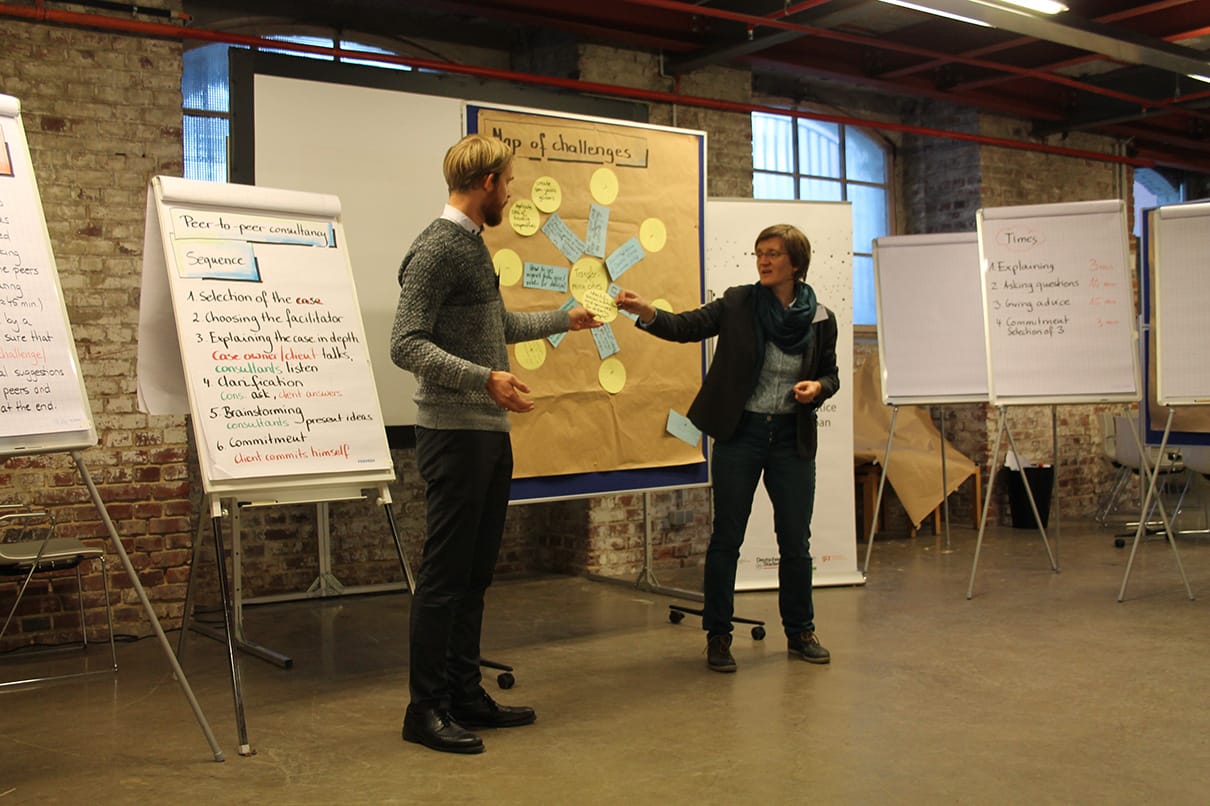
The international exchange platform Connective Cities and its initiators, the Deutsche Gesellschaft für Internationale Zusammenarbeit (GIZ) GmbH, the German Association of Cities and Engagement Global / Service Agency Communities in One World, organized a Dialogue Event on “Transforming Cities: From Industrial Centres to Sustainable Urban Areas” from 5 to 7 December 2016 in Bocholt, Germany to specifically look into good practices, challenges and solutions to this crucial topic. The event was organized in cooperation with the City of Bocholt which shared its own experience with urban transformation by hosting the event in one of the former textile factories of the city, now converted into a textile museum. The dialogue event attracted German and international municipal actors with first-hand experience in the transformation of post-industrial urban areas, its planning and its implementation, including representatives of municipalities, municipal institutes as well as representatives from civil society, academia and business, active in municipal projects in this thematic area. Urban practitioners from Germany, Ukraine, Brazil, Colombia, Cuba, Bosnia and Herzegovina, Belgium, the Netherlands and China joined together to present their good practices but also to share their challenges and discuss viable practical solutions for their local needs.

Culture in City Reconstruction and Recovery

Tackling the impact of destructions – whether they stem from natural hazards, armed conflict, or acute urban distress – requires responses that consider the needs of all social groups and provides opportunities for social inclusion and economic development, while also acknowledging the specific needs, priorities, and identities of communities.
For this reason, culture – including tangible and intangible cultural heritage and creativity – is essential both as an asset and as a tool for city reconstruction and recovery. Placing culture at the heart of urban reconstruction and recovery strategies and processes is critical to effectively restoring the physical and social fabrics of cities.
Culture – an often overlooked and underestimated framework and value – is the foundation upon which cities are built. Cities are not just a collection of buildings but are people, their stories, and how they interact with each other through their cultural identity and sense of place.
Investing in cultural institutions, spaces, and heritage can help build bridges between sparring communities in post-conflict urban areas and make disaster recovery quick, sustainable, and more effective.
This joint Position Paper of World Bank and UNESCO serves as a guide for urban practitioners, operating on the ground, as well as national and local authorities, to integrate culture, both as an asset and as a tool, in all phases of city reconstruction and recovery.

What the IPCC Special Report on Global Warming of 1.5°C means for Cities

"Climate science must be accessible to urban policymakers, because without them, there will be no limiting global warming to 1.5°C. In cities and urban areas, there are actions that policymakers—along with residents and stakeholders, such as civil society, the academic community, and those in business and finance—can take to help limit warming and adapt to the impacts of climate change. The effects of a city’s actions are not limited to its own borders or region, and, likewise, lessons learned in some cities and urban areas can serve as inspiration and resources for solutions in other urban areas. This Summary for Urban Policymakers is synthesised from SR1.5, the Fifth Assessment Report of the Intergovernmental Panel on Climate Change (IPCC), and relevant supporting research […]. It translates the key scientific
findings and policy observations of the IPCC Special Report on Global Warming of 1.5°C for officials and  policymakers of the world’s cities and urban areas."

International Evaluation of Public Policies for Electromobility in Urban Fleets

"Transportation electrification is commonly seen as a key measure to reduce greenhouse gas (GHG) emissions and mitigate climate change. Many urban environments are also grappling with severe air pollution and the resulting threats to public health, and cities are increasingly evaluating and implementing robust policies to encourage the adoption of electric vehicles (EVs). Governments are also interested in the economic, industrial, and employment benefits from local development and manufacturing of emerging technologies such as EVs and their supporting infrastructure. Research shows that countries that adopt stringent environmental standards and a coordinated strategy for electromobility secure early-mover advantage for their firms, leading to the conditions that allow for industrial competitiveness in international markets."

Solutions for gender fair cities

"This report is the product of the Womanability research-action project. It reveals the numerous, and sometimes unexpected, obstacles to the equal access and enjoyment of public spaces by women, from a lack of green spaces, accessible public transportation, and public toilets, to persistent harassment and outright violence. Building on these experiences and observations, the report offers a series of recommendations and best practices, many developed by women themselves, for creating the gender equal cities of the future. […]"

Taller de Proyecto de Connective Cities en América Latina

Ante la creciente urbanización en América Latina, las ciudades se ven enfrentadas a grandes desafíos de la movilidad urbana. También las ciudades de municipios alemanes, en muchos casos se ven frente a desafíos similares. Estos desafíos se refieren a temas como la integración de barrios menos privilegiados, al transporte eficiente entre vivienda y trabajo para los ciudadanos o al aseguramiento de un sistema de transporte en favor de un desarrollo económico local. Al mismo tiempo se busca garantizar una buena calidad del aire, mejorando así la salud de los ciudadanos y el clima urbano.

En respuesta a la demanda por parte de expertos de la práctica municipal latinoamericana y alemana, Connective Cities organizó en 2015 un evento en Bogotá Colombia acerca del tema Movilidad Urbana. Durante ese evento, se expresó la necesidad para la realización de otro taller con el enfoque en los sistemas integrados de movilidad y sus relaciones con inclusión social y mitigación del cambio climático. Ante esto, Connective Cities ofrece en mayo de 2016 un taller referente a Sistemas Integrados de Movilidad para Ciudades Inclusivas y Amables con el Clima. El presente documento resume los resultados de dicho taller.

4th Connective Cities Asian Dialogue Event

Road transport accounts for over 80% of the total transport emissions in Asia. If no countermeasures are taken, CO2 emissions resulting from the transport sector are projected to rise by 70% by 2050. At the same time, 64.5% of Asia’s population will be urban by 2050. Therefore, the extremely rapid increase of urban population in Asia and the rising CO2 emissions resulting from the transport sector lead to a high demand for climate-friendly means of urban transport.

The 4th Connective Cities Practitioners’ Workshop, which took place from 27 to 29 September 2016 in Bangkok, Thailand, brought together representatives from China, Georgia, Indonesia, the Philippines, Thailand and Germany to exchange on the varied and complex tasks of sustainable urban mobility and climate change focusing on climate-friendly means of urban transport to reduce air pollution.

City region food systems and food waste management

Rapid urban growth; growing food and nutrition insecurity; unbalanced food availability, distribution and access; environmental degradation, resource scarcity and climate change; unsustainable production and consumption patterns, including generation of food waste – all of these have important developmental implications for both urban and rural areas alike. It is increasingly recognised that in order to respond to these challenges, integrated territorial development and balanced urban-rural linkages must be pursued for the benefit of both urban and rural populations. City region food systems (CRFS) offer concrete policy and programme opportunities within which these developmental issues can be addressed and through which rural and urban areas and communities in a given city region can be directly linked. These specifically address Sustainable Development Goal (SDG) Target 11a – to support positive economic, social and environmental links between urban, peri-urban and rural areas – and are instrumental in linking SDG 11 with SDG 2 (on sustainable agriculture and food and nutrition security) and SDG 12 (on sustainable production and consumption).

This publication documents thirteen case studies from city regions around the world which are developing CRFS projects, programmes, and policies, including those related to the prevention, reduction and management of food waste. Lessons learned from the case studies for sustainable development of CRFS call for local, city regional, and (sub) national governments to institutionalise city region food systems, providing them an institutional setting and budget, linking them to larger city region development plans, and monitoring their developmental impacts across urban and rural areas.

Greening Cities and Promoting Urban Green Growth

Representatives of municipalities, business and science from Asian countries and from Germany met in Chiang Mai from the 4-6 November 2014 for the first Asian Dialogue Event of the International Community of Practice for Sustainable Urban Development, Connective Cities, to exchange experience on “Greening Cities and Promoting Urban Green Growth”.

Operationalizing the Urban NEXUS

This study “features an essential step ahead in putting the NEXUS intopractice for a sustainable urban future by delivering an approach, which encourages new ways of thinking and action in institutions, policy making and society at large.”

“The aim of this publication is to provide a conceptual foundation and hans-on approach that serves to inspire, identify and implement NEXUS solutions for integrated, resource-efficient development in metropolitan regions. It shall thereby spark exchange, debate, and learning across sectors and scales.”