


Cities are already leading the way with ambitious plans to accelerate action on climate change. With more political will, community support and collaboration, cities can make an even greater contribution to securing a climate safe future.
The seven cities showcased here report that the planning process is an opportunity to engage internal and external stakeholders on the level of ambition needed and the roles different players can take. Co-creating the vision for the city and collaborating on the development of solutions ensures stakeholders have ownership of the process, support the long-term vision and take action themselves.
While each city has taken a different approach to the style and structure of their climate action plan/s, all of them demonstrate ambition and accelerated delivery as core objectives. The approaches highlighted in this report are intended to inspire other cities across the C40 Cities Climate Leadership Group and beyond to follow suit and play their part in delivering the objectives of the Paris Agreement.
Rather than attempt to summarise each city’s plan, the case studies presented in this report highlight a particular aspect that could be of interest to other cities.
Category: Participation and urban planning
Urban Migration: Strengthening Cooperation with Civil Society

"While migration is often seen as a national issue, and most of the mandate around immigration, refugees and asylum falls to the central government, it is often cities and local governments that have to directly deal and address the needs of newly arrived migrants, and the inclusion of long-term migrant residents. […] At the same time, civil society organizations (CSOs) have taken an increasingly important role in supporting migrants by undertaking initiatives that raise awareness, facilitate access to basic services, advocate for their rights and strengthen social inclusion. The role of CSOs as key partners for local authorities in the governance of migration and other urban governance issues is widely recognized, but it is not always clear how to articulate these partnerships and coordinate efforts while securing the autonomy of these organizations and avoiding potential tensions or conflicts of interest."
In June 2019, UCLG ́s Learning team coordinated a workshop and peer learning event focusing on “Building trust through strengthened cooperation: the role of civil society in the urban governance of migration” in Sfax, Tunisia. The workshop was part of the Mediterranean City to City Migration (MC2CM) project. In the process of the event some key learnings and recommendations have been worked out. The documentation includes case studies from Sfax, Tunisia; Malaga, Spain; Brital, Lebanon; Douala, Cameroon and Meknes, Morocco.
Resilient Cities, Resilient Lives

“The world is more densely populated and more interconnected than ever before. From extreme weather to refugee crises, from disease pandemics to cyberattacks, today’s state of play requires new models of governance to mitigate risk and respond to challenges. Business-as-usual models of reactive planning and siloed decision-making will not generate the fundamental strength and flexibility essential for us to thrive in the face of the shocks and stresses of the 21st century. […] The launch of 100 Resilient Cities program (100RC) by the Rockefeller Foundation acknowledged that the escalating trends of urbanization, globaliza- tion, and climate change pose tremendous risks, but also offer a tremendous opportunity. This report shares 100RC’s knowledge about what it takes to catalyze an urban resilience movement.”
The Future of Cities

This report identifies challenges influencing the future of cities in Europe and beyond in fields like environmental impact, ageing, health, housing, social segregation, governance and mobility. It also presents several perspectives from which to look at resolving these issues. It is an initiative of the Joint Research Centre (JRC)i, the science and knowledge service of the European Commission (EC), supported by the Commission’s Directorate-General for Regional and Urban Policy (DG REGIO). The main aim is to raise open questions and steer discussions on what the future of cities can, and should be, both within the scientific and policymaker communities. The report benefits greatly from the collective intelligence put forward by the Members of the EC Community of Practice on Cities and is linked to aninteractive online platform, which is s designed to raise open questions and steer discussions for sharing and accumulating knowledge on the future of cities.
The 8 Principles of Sidewalks

"Walking is the most democratic way to commute. It is the oldest and most common mode of transport in the world, not to mention being a far healthier option – for both people and cities. The 8 Principles of Sidewalks systematizes the most relevant Brazilian and international references into a single publication about the planning, design and construction of sidewalks that meet the needs of people walking. The goal of this guide is to provide deeper insight into the role of sidewalks in spaces that provide opportunity for social interaction among people."
Mixed reality for public participation in urban and public space design

Mixed reality is a new technology that enables visual experiences where physical environments and digital objects coexist and interact with each other in a realistic way. In practice, this means you can look through a mobile device and see digital objects and models as if they were really there. This report is based on more than two years of research by a team of UN-Habitat urban planners and Ericsson researchers. Mixed reality technology – although still in its infancy – might offer the opportunity to bridge the divide between inhabitants and their cities, making change literally appear before their eyes and giving entire neighborhoods the chance to weigh in on how their future smart city will look, feel and serve their needs.
This new visually realistic blending of reality with virtual imagination can create a more intuitive space for planners, architects, residents and other stakeholders to viscerally experience and re-imagine future environments. Architectural sketches and designs can be made more legible and accessible, thus pulling users into the process of design and strengthening the long-term viability and buy-in of urban projects.
How to Formulate a National Urban Policy

Many governments have difficulty in formulating a NUP due to insufficient capacity, ever changing political contexts, complex relationships between government departments/ministries, and political pressures from interest groups. Consultation is key during the formulation phase to build consensus. Good policy formulation requires political will, visionary leadership, organizational know-how, effective consultative mechanisms, and good negotiating skills on the part of the ministry or department in charge of urban issues. This Guide suggests that before starting the formulation process, it is essential that a thorough diagnosis of the urban sector is carried out, with extensive data collection, review and analysis. It is also advisable to assess the available capacity (human, financial, institutional and technical). Following this, aspects to consider in the formulation of a NUP include the selection of the lead agency, the quality of the data and information that is available, how the various stakeholders will participate, what resources are available, how the process will be coordinated, and what the context is – the needs and issues that will frame the policy.
According to this practical guide, a national urban policy (1) responds to the country’s development priorities, (2) is based on sound evidence, and (3) is focused on outcomes. This handbook provides practical steps and a coordinated process to formulate an urban policy that adheres to five key principles: participation, inclusion, affordability, sustainability and implementability.
Solutions for and by cities

"The Guangzhou International Award for Urban Innovation is dedicated to decentralised, city-to-city cooperation and sharing lessons learned from experience. Its focus covers the three pillars of sustainability: social, economic and environmental, and two additional domains – governance and technology.
The fourth edition of the Guangzhou Award was a remarkable show of these links between innovation and learning from different stakeholders. This publication is an attempt to extend the prestige of the initiatives that were shortlisted for the award, and to spread their legacy to even broader audiences."
Cleverly threaded
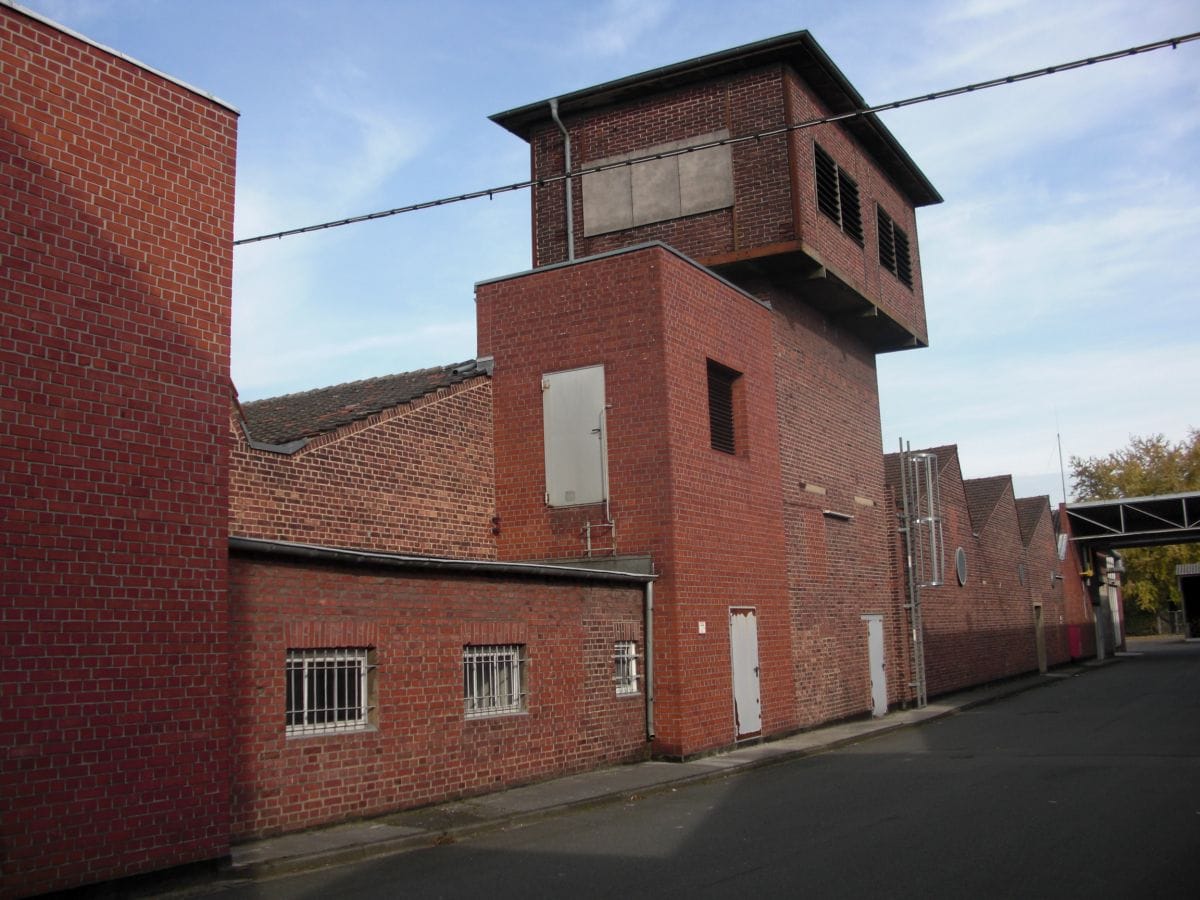
The industrial wasteland around Bocholt’s old spinning mills was almost exclusively used as a warehouse and was considered a “forbidden city”. Bocholt envisioned its conversion into a lively residential and cultural quarter. Now the first construction phase for urban living and working has started with private investment.
Upward and Outward Growth

“New analysis of the upward and outward growth of 499 cities over time confirms that the challenges of rapid outward expansion are greatest in lower-income cities that have weak planning and land governance and less mature financial markets. Unmanaged urban expansion increases the costs of service provision, deepens spatial inequities, and imposes heavy economic and environmental burdens. This paper highlights three key equity challenges linked to rapid outward expansion in cities of the global South: distorted land markets, deficient services in growing areas, and disjointed informal expansion. […]”