


"Cities today are challenged with meeting steadily increasing mobility demands. Providing additional road space has not helped to solve the pressing problems of unacceptable levels of congestion, air quality deterioration and increasing greenhouse gas (GHG) emissions in cities. In return, cities have not become more livable, and mobility remains far away from being human-centered.
What is required, therefore, is a fundamental rethinking of the paradigm by which mobility and city planning is guided. Inspired by the principles of sustainability, an alternative approach focuses on the mobility needs of people instead of car infrastructure. The approach, known as A-S-I (from Avoid/ Reduce, Shift/Maintain, Improve), seeks to achieve significant GHG emission reductions, reduced energy consumption, less congestion, with the final objective to create more livable cities."
Category: Municipal services
Remarkable Women in Transport

Transport systems can only become truly inclusive and gender-responsive if the voices, perspectives and experiences of women are reflected at all levels in the transport sector. Thus, as it is still a largely male-dominated field, it is imperative to focus on increasing the number of women working on transport.
TUMI endeavours to support this transformational change by empowering women experts and stimulate behavioural change in the transport sector and in cities all around the world. As visibility is key to change mind-sets, this first round of TUMI’s Remarkable Women in Transport series introduces more than 60 highly qualified women transport experts, and highlights their contribution to sustainable mobility solutions on the ground – by women, for the entire society.
This publication is meant to showcase the diversity of female change makers in transport.
Reclaiming the Streets of Fortaleza, Brazil

The Institute for Transportation and Development Policy works around the world to design and implement high- quality transport systems and policy solutions that make cities more livable, equitable, and sustainable.
Content of this issue:
The Effects of Transportation on Early Childhood Development
Fortaleza’s Progress Shows that Change is Still Possible in Brazil
Bucheon City Goes from a Car-Centric City to a People-Friendly Vision
In Cairo, ITDP Works to Improve Transport Access for Women
America, The Netherlands, and Oil Crisis: 50 Years Later
Frequency Is Freedom
Scooters, E-bikes, Rideshares, and More: Learning from Dockless Bikeshar
On Mexico City’s Buses, a Little Technology Goes a Long Way
MOBILIZE Dar es Salaam
In Jakarta’s Urban Villages Women Are Moving Mobility Forward
“Women-only” Transport: A "Solution" To What End?
As Cities in the US and Europe Explore Electrification, China Is Taking the Lead
Transforming Streets in São Pauo
From the Narrow Lanes of Agra to the BRT Lanes of Pune: 20 Years of the ITDP India Program
New Resources from ITDP
Content of this issue:
The Effects of Transportation on Early Childhood Development
Fortaleza’s Progress Shows that Change is Still Possible in Brazil
Bucheon City Goes from a Car-Centric City to a People-Friendly Vision
In Cairo, ITDP Works to Improve Transport Access for Women
America, The Netherlands, and Oil Crisis: 50 Years Later
Frequency Is Freedom
Scooters, E-bikes, Rideshares, and More: Learning from Dockless Bikeshar
On Mexico City’s Buses, a Little Technology Goes a Long Way
MOBILIZE Dar es Salaam
In Jakarta’s Urban Villages Women Are Moving Mobility Forward
“Women-only” Transport: A "Solution" To What End?
As Cities in the US and Europe Explore Electrification, China Is Taking the Lead
Transforming Streets in São Pauo
From the Narrow Lanes of Agra to the BRT Lanes of Pune: 20 Years of the ITDP India Program
New Resources from ITDP
Municipal sustainable energy production and efficiency: planning and implementing innovative solutions
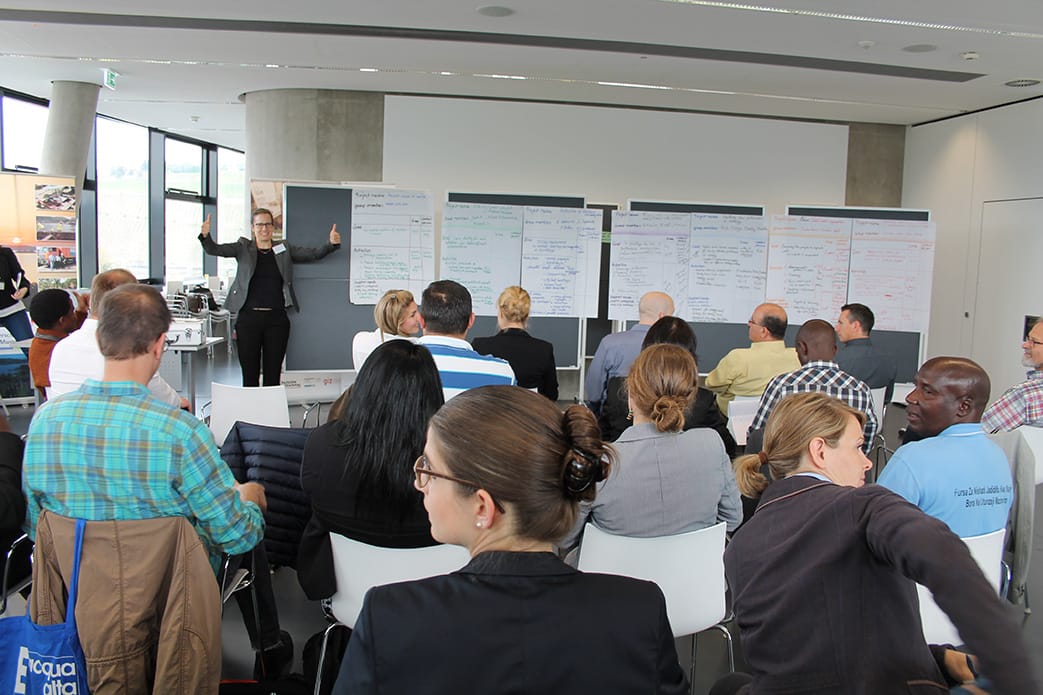
Energy is a major component for both local and global economic development. It is needed for transport, industrial and commercial activities, buildings and infrastructure, water distribution, and food production. Most of these activities take place in or around cities, which are on average responsible for more than 75% of a country’s Gross Domestic Product (GDP) . With their high concentration of industry, transport systems, buildings and households, municipalities consume large amounts of energy (estimated between 60 and 80% of the global primary energy) and emit between 50 and 60% of the world’s total greenhouse gases. The majority of this energy consumption goes into buildings and transport.
Despite the increasing energy demand in cities, it is at the municipal level that considerable potential to plan for and to produce energy sustainably and strengthen energy efficiency exists.
The international exchange platform Connective Cities and its initiators, the Deutsche Gesellschaft für Internationale Zusammenarbeit (GIZ) GmbH, the German Association of Cities and Engagement Global / Service Agency Communities in One World, organized a Dialogue Event on “Municipal sustainable energy production and efficiency: planning and implementing innovative solutions” from 9 to 11 May 2016 in Würzburg, Germany to specifically look into good practices, challenges and solutions to this crucial topic.
The event took place at the Fraunhofer Institute for Silicate Research ISC in Würzburg and was organized in cooperation with the City of Würzburg.
Planning integrated solid waste management at the municipal level
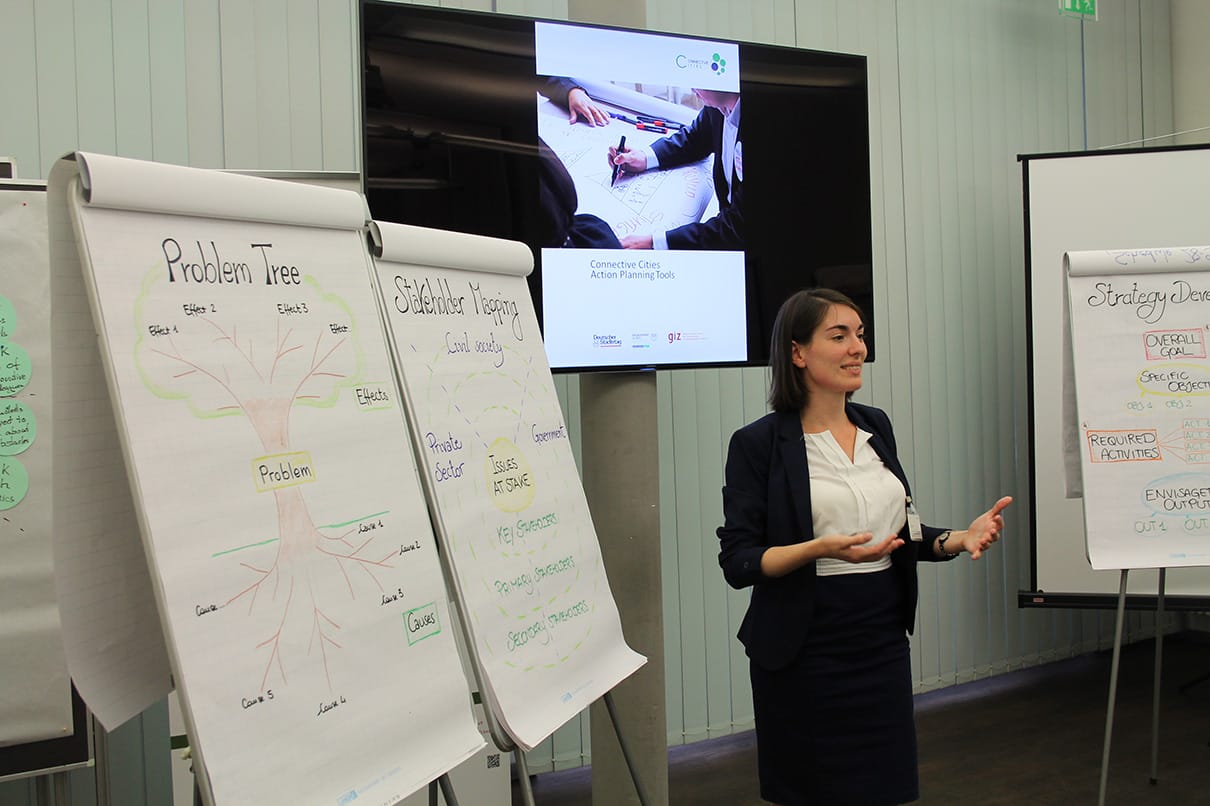
In cooperation with the Hanseatic City of Rostock, the international urban networking platform Connective Cities and its initiators, the Deutsche Gesellschaft für Internationale Zusammenarbeit (GIZ) GmbH, the German Association of Cities and Engagement Global / Service Agency Communities in One World, invited German and international stakeholders from Tunisia, Morocco, France, Italy, Zimbabwe, Austria, Albania and Egypt to exchange their experience and showcase their good practices in Rostock from 26 to 28 September. The dialogue event on ‚Planning integrated solid waste management at the municipal level‘ was hosted by the Hanseatic City of Rostock.
The dialogue event attracted German and international municipal actors with first-hand experience in solid waste management including representatives of municipalities, municipal companies as well as representatives from civil society, academia and business, active in municipal projects in this thematic area.
The main objective of the exchange was to showcase examples of good practices on implementing integrated solid waste management in each municipality and to check the regional applicability of the presented solutions. The event in Rostock could furthermore foster learning among participants through discussions of current challenges, such as the involvement of the informal sector and approaches to waste separation and recycling. In smaller working groups, experts and practitioners exchanged views on obstacles that municipalities face in practice and discuss possible solutions.
Würzburg and Mwanza share a gift from the sky
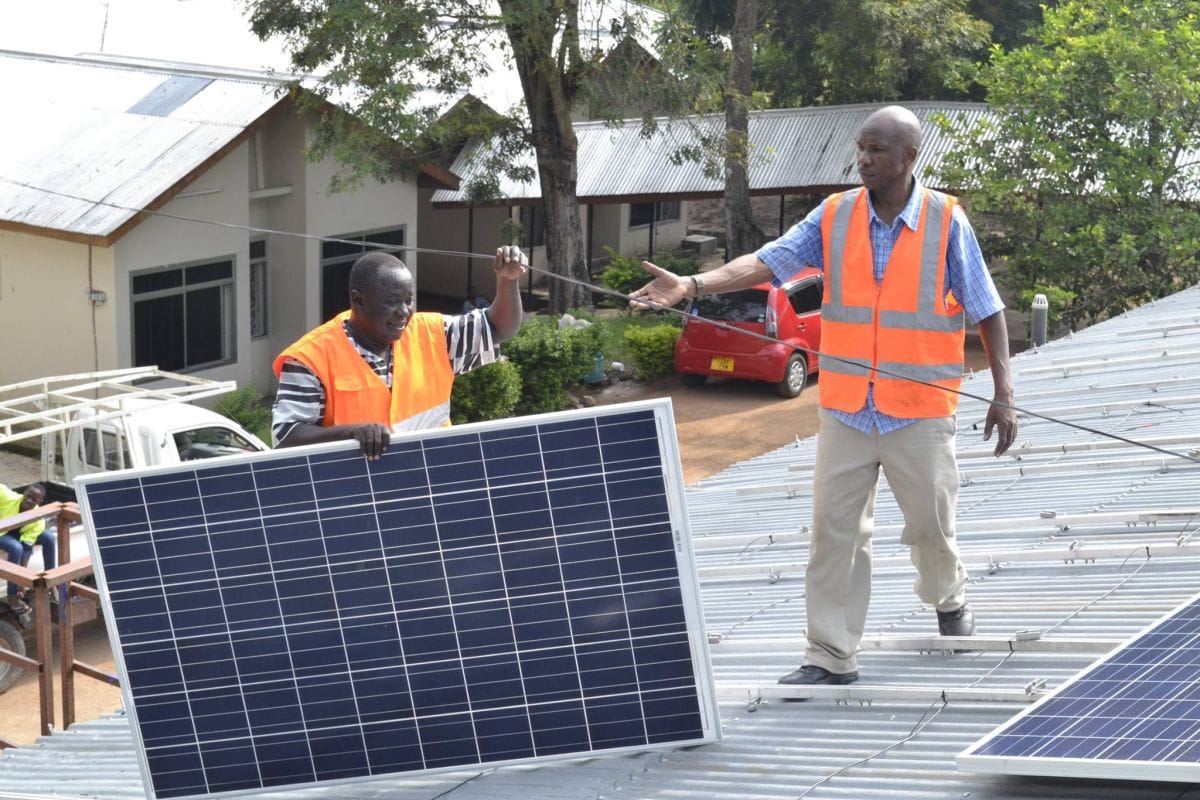
Climate change affects all cities. Anyone who wants to do something about it must reduce CO2 emissions. This can be achieved by increasingly replacing fossil fuels with renewable energies and generating solar power, for example. In Tanzania’s Mwanza, this is particularly worthwhile – and has welcome side effects.
…smart, smarter, Nuremberg: Where progress is tradition
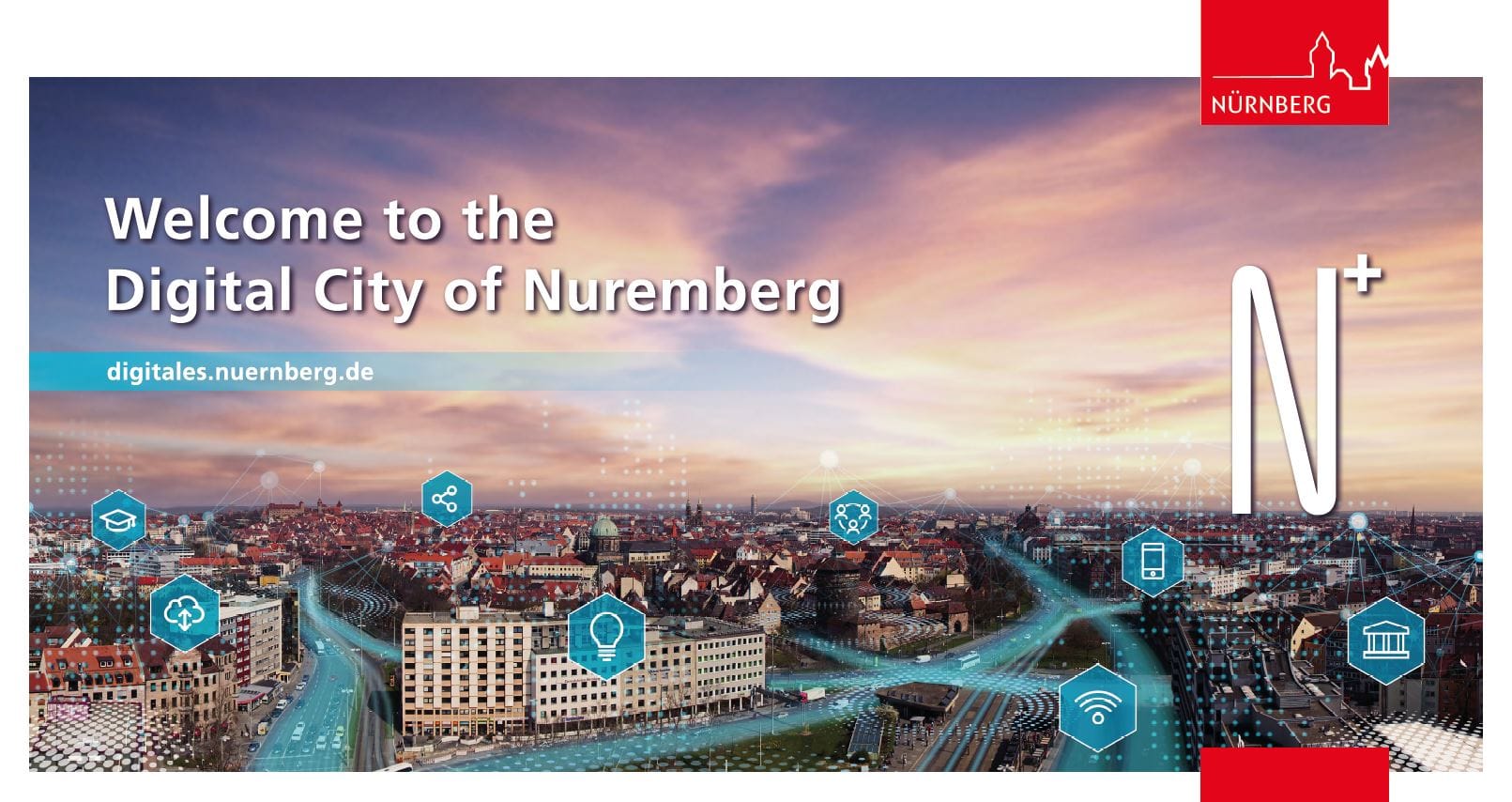
Germany’s first railway departed from Nuremberg. Today new points are set here: The administration is developing a municipal digital strategy because major issues of our time, such as mobility, can no longer be solved otherwise. The city is networking and shaping digital Change.
International Evaluation of Public Policies for Electromobility in Urban Fleets

"Transportation electrification is commonly seen as a key measure to reduce greenhouse gas (GHG) emissions and mitigate climate change. Many urban environments are also grappling with severe air pollution and the resulting threats to public health, and cities are increasingly evaluating and implementing robust policies to encourage the adoption of electric vehicles (EVs). Governments are also interested in the economic, industrial, and employment benefits from local development and manufacturing of emerging technologies such as EVs and their supporting infrastructure. Research shows that countries that adopt stringent environmental standards and a coordinated strategy for electromobility secure early-mover advantage for their firms, leading to the conditions that allow for industrial competitiveness in international markets."
How to get from Planning to Financing Sustainable Urban Mobility Projects?

Cities in Latin America have made a variety of advances towards designing projects that seek not only to confront the problems created in recent decades by urbanisation and the impact of climate change, but also to improve the quality of life for the whole population due to a healthier, better protected environment.
Bogotá, meanwhile, is currently drawing up a transformational sustainable mobility and urban development project with the support of the C40 Cities Finance Facility (CFF). It includes a 25-kilometre cycleway from the south to the north of the city, with finance being sought from a wide variety of sources. The support provided by the CFF will include the delivery of several technical studies and collaborative workshops to ensure project sustainability, capacity development and public participation.
This workshop served to promote an exchange of knowledge between cities in Colombia and Latin America which are in the process of preparing, financing or even implementing similar projects.
From Waste to Resource – Integrated Municipal Solid Waste Management Solutions
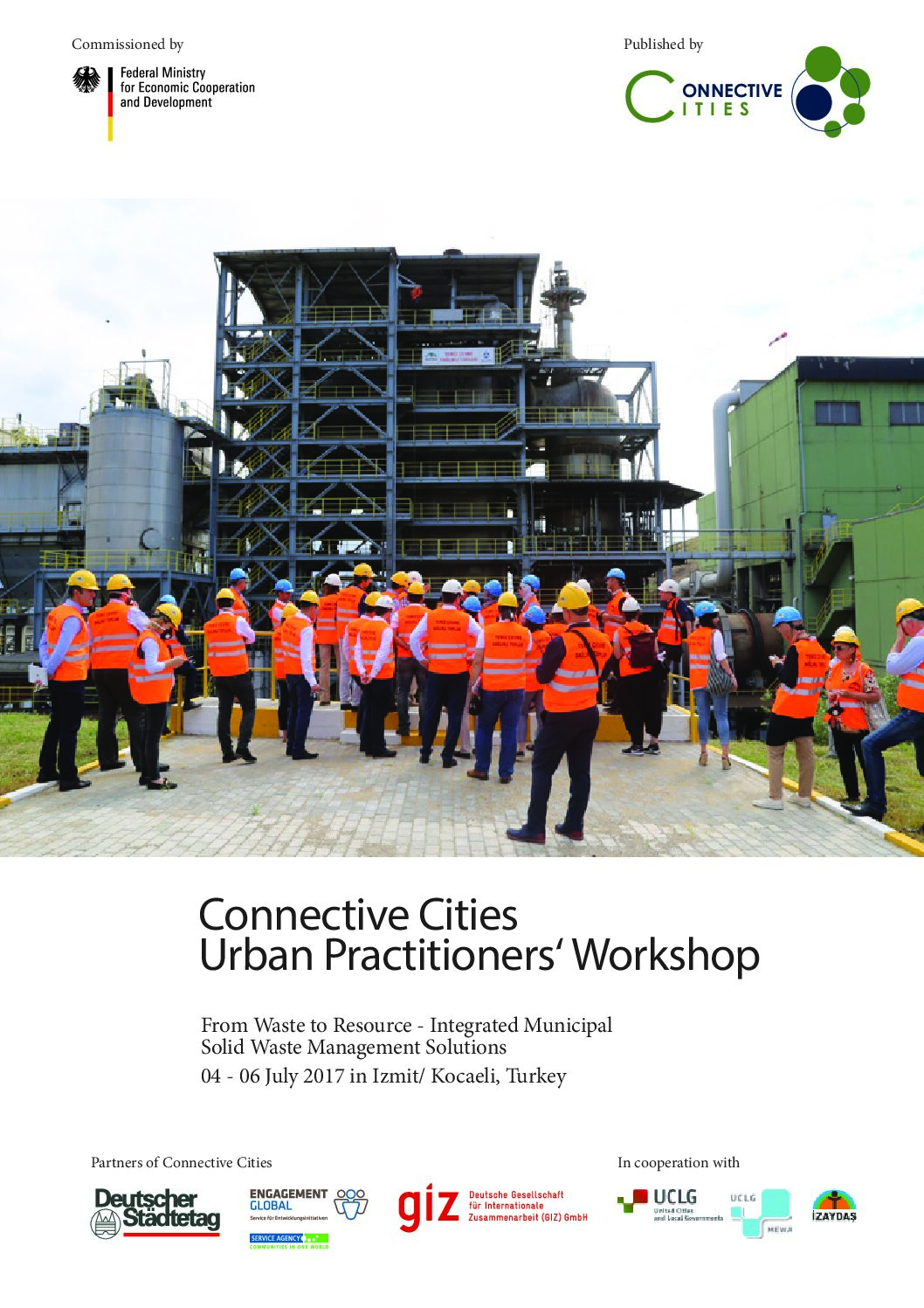
In collaboration with UCLG-MEWA and in the framework of the “Municipal know-how for host communities in the Middle-East” programme, Connective Cities organised a practitioners’ workshop on integrated solid waste management in İzmit/ Kocaeli, Turkey from July 4-6th, 2017.
The workshop aimed at fostering exchange between urban waste management practitioners from Turkey and Germany through good practice presentations and peer-to-peer advisory in order to create local action plans that improve solid waste management in an integrative manner.
The report provides a brief summary of the workshop, describing the starting situation in Turkey and featuring key discussion points, presented good practices and the project ideas developed in the workshop.