Living alongside water instead of fearing it

Bangkok’s first significant piece of green infrastructure, Chulalongkorn Centenary Park (CCP), aims to lessen the risk of flooding in the city and other ecological issues. The Park can store up to one million gallons of water during periods of heavy rainfall. The Park is an example of alternative landscape strategies for reducing urban flooding and, a reminder of the city’s ability to live alongside water rather than fear it in the face of climate change.

Municipal Policy Award of the Carl and Anneliese Goerdeler Foundation 2023

Municipalities make an important contribution to climate protection – in Germany and worldwide. They not only work directly on the implementation of the 2030 Agenda, but have often additionally committed themselves to further climate protection. Municipalities also face similar challenges worldwide and can therefore benefit from close cooperation and lively exchange. This is especially true for cross-border cooperation projects, which require particularly high motivation, courage and, last but not least, organisational and assertiveness skills during the ongoing pandemic.

In 2023, the Carl and Anneliese Goerdeler Foundation’s Municipal Policy Award will honour cross-border municipal cooperation projects on participatory municipal climate protection and adaptation measures with prize money of 2,000 euros. Outstanding cooperations of municipalities or municipal alliances with the participation of a German municipality or municipal alliance are sought.

All important information about the award and your application can be found in the competition announcement: pdf-Download  [in German]

Deadline extension: The deadline for applications is Monday, 31 October 2022.

The prize is awarded in memory of the communal political work of Carl Goerdeler as Mayor of the City of Leipzig and his resistance activities against Nazi rule. The award is intended to serve the peaceful cooperation of municipalities and municipal alliances that unites people and to promote mutual learning for the benefit of the residents.

Contact:

Ricarda Meissner
ricarda.meissner@giz.de 
Phone: +49 (0)228 4460 1138

Klaudia Sonntag
klaudia.Sonntag@giz.de 
Phone: +49 (0) 228 4460 1587

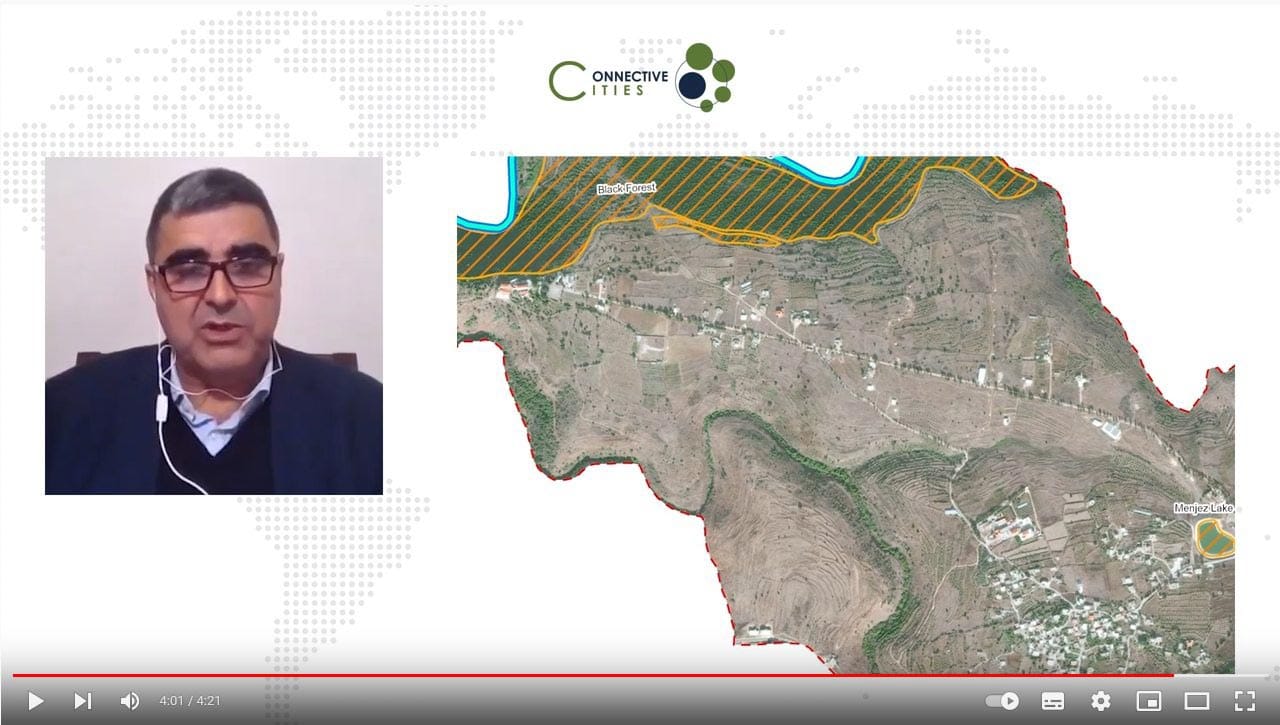
Menjez: A model-municipality in northern Lebanon rural area

The city of Menjez is considered a model of how a recently established small municipality can advocate for the conservation of nature and biodiversity, improve infrastructure and ultimately achieve many SDGs.

Connective Cities interviewed Dr. Georges Youssef, Mayor of Menjez, to learn how the municipality in the northern Lebanon rural area managed to turn its ecosystem into a priority.

– English and Arabic subtitles available –

Watch video at YouTube:

https://youtu.be/tjhfh3KhuBs

Envisaging the Future of Cities

Urbanization is intertwined with several existential global challenges: Cities do not exist in isolation from global challenges. The emergence of urbanization as a global megatrend is intertwined with the existential challenges that the world has faced in the last 50 years, including climate change, rising inequality and the rise in zoonotic viruses with the latest being the novel coronavirus pandemic, which triggered the worst public health crisis in a century and the worst economic recession since the Great Depression. These challenges will in different ways, leave their imprints on the future of cities.

In UN-Habitat’s new World Cities Report 2022 – Envisaging the Future of Cities, three scenarios, or three paths were identified, that the world’s cities could take at this critical juncture.

  • In the worst-case or “high damage” scenario, we assume that policy-making and governance will become even weaker and more ineffective. The destructive effects of the pandemic, climate change, inequality, poverty, and long-running conflicts, if not adequately addressed, will have disastrous consequences for cities in both developed and developing countries, though the latter would suffer most because of existing vulnerabilities. If 80 per cent of the economic damage inflicted by COVID-19 persists for a decade, then the number of people living in poverty could increase by more than 200 million by 2050.
  • The middling, or “pessimistic scenario”, foresees a reversion to the status quo before the pandemic. This business-as-usual approach would be characterised by exploitation and exclusion of informal sector workers, systemic discrimination of the urban poor, unimaginative policies and poor implementation on the climate crisis, public transport, or urban regeneration programmes and renewal. Cities could be locked into cycles of poverty, poor productivity, unhealthy living conditions and become inequality traps for decades.
  • The report, however, also envisages an optimistic future. Governments and donors would invest in urban development sufficiently to create just, resilient, healthy, and prosperous cities everywhere. By 2050, there could be 260 million people lifted out of poverty compared to the pre-COVID baseline. National governments would embrace peace and diplomacy to resolve their differences rather than pursuing military action, avoiding drastic global economic consequences such as those inflicted on the supply of food and energy by the war in Ukraine. Governments would manage the remainder of the COVID-19 pandemic competently, balancing health outcomes and economic recovery, and thus smoothing out global supply chains. They would also prepare adequately for the next pandemic.

Sustainable Urban Energy Planning in Southeast Europe (SEE)

Video about Connective Cities’ learning process II conducted in May 2021 – June 2022 to support municipalities in fine-tuning their project ideas in the fields of energy efficiency and renewable energy and developing them further towards bankable project proposals.

Watch video at YouTube:

https://youtu.be/TET3myNbj2I

More information on the dialogue event in November 2021:

Development of bankable project proposals for sustainable urban energy planning in Southeast Europe

Partnerships for Circularity

Through strategic partnerships, Jerash municipality in Jordan was able to overcome impediments in solid waste management and embark on a path of circularity.  By partnering with multiple stakeholders, the municipality succeeded in designing strategies for effective solid waste management and overcoming challenges related to insufficient operating budget, low collection coverage, waste dumping, and the associated environmental and public health concerns.

Safe, colourful, liveable streets and places in Belo Horizonte, Brazil

Two 30 km/h zones were planned in Belo Horizonte as traffic calming measures and successfully implemented in 2019 to reduce car traffic and make neighbourhoods safer and more liveable. This change process took place with the broad participation of the local retail community, the residents and, in particular, the local schools. The public acceptance was very high. The project was inspired by peer-to-peer consultations during a dialogue event in Bremen and a subsequent expert mission of German experts to Belo Horizonte. The project now serves as a model for further similar action in other districts.

Video: Pop-up bike lanes during the Pandemic

Reducing the number of accidents, while at the same time increasing safety for everyone? Bogotá showed us, that this is possible and that the key to promote sustainable urban planning and environmentally friendly mobility are pop-up bike lanes. The concept of pop-up bike lanes, which emerged especially due to the COVID pandemic, is spreading not only in Bogotá, but also worldwide, for example in Berlin.

Both cities face the challenge that for a long time the principle of the car-friendly city was pursued in urban and transport planning. With an increase in cyclists during the pandemic and the limitation of public space, it was necessary to rethink and meet the needs of residents, for example to increase road safety for cyclists. This Good Practice outlines the undertaken measures in transport planning, the opinions of residents to the new concept and how in the end all road users can benefit from pop-up bike lanes in the long term, whether in Bogotá or Berlin.

The Protagonists are:

  • Sebastián Posada García (Bicycle and Pedestrian Sub-Dictorate, Bogotá)
  • Dr. Lea Wisken (Head of Cycling and Pedestrian Coordination Office, Berlin)

Watch video at YouTube (with mit English or Spanish sub-title):

https://youtu.be/TQGLzHmxxE4

Urban gardens of Amman

The pandemic and its associated lockdowns have uncovered an acute need for food security in urban areas. To address this need, Greater Amman Municipality (GAM) in Jordan has embarked on several projects to foster urban gardening in the capital Amman, in coordination with various associations, funding agencies, and the local community.

Green Urban Development: learning from inspiring examples of implementation

How do we promote climate neutral urban development?

The world must drastically reduce its CO2 emissions by 2050 to avert the worst impacts of climate change. Globally, we are seeing an influx into cities over the past 30 years and, cities are one of the main spaces where CO2 emissions are directly caused. Emissions in urban areas stem from construction projects, traffic flows, increasing energy consumption from a growing population, production of waste and other factors. “However, the urban space is also the solution space for the climate change,” said one of the participants in the working groups on Green Urban Development. This sentiment was also reflected in a study conducted by the German Advisory Council on Global Change, among other studies carried out globally.

Urban solutions include, for example, the use of new mobility formats such as traffic-calmed urban spaces, roll-out of innovative of e-mobility and bike lane solutions, the reduction of pollution from resource intensive economic sectors, more sustainable building and renovation practices based on circularity, development of urban spaces to promote local economic cycles and community activities and, decentralized energy supply and waste concepts.

Aim of the working groups on Green Urban Development

The COVID-19 program “Green Urban Development” was implemented in cooperation with the consulting company Mesopartner and the Wuppertal Institute. The program included three working groups, each with 3 to 4 cities and their representatives, mostly partners from local city governments or local research institutions. The objective was to promote the implementation of concrete projects that promote climate neutral city efforts

The three working groups had the following focus areas:

  • Working Group 1: Mobility solutions in cities
  • Working group 2: The transformation of urban spaces and reuse of “urban space” through new community formats and mobility solutions
  • Working Group 3: A mixed group linking urban energy, mobility and spatial approaches

From the formation of the working groups, it became clear that solution approaches often overlap or, that different solutions can approaches create synergies. This also enabled an exchange of experiences between the working groups. The participating cities in the program were Bhuj/Ahmedabad, Belo Horizonte, Kochi, Lalitpur, Dortmund, Buenos Aires, Quito, Montevideo, Hamburg, Kigali, Kisumu and Bremen.

First, second and third process steps: From ideas to concrete project proposals

In a first step, project ideas were developed in the respective working group:

  • Creation of a bicycle traffic concept using the example of the bicycle paths in Lalitpur
  • Creation of a child-friendly environmental zone in the neighborhood and the design of speed-reduced recreation areas
  • Greening of roofs to create a sustainable and green urban environment and combining it with renewable energy solutions and urban gardening activities
  • Municipal bio-waste management at the neighborhood level in collaboration with local citizens
  • Promotion of traffic-calming zones in Kigali
  • Increasing green, retention and infiltration areas in cities.
  • Application of sensor technologies to analyze neighborhoods and places with high Co2 emissions.
  • Planning pop-up bike lanes and building safe bike lanes.
  • Last-mile connectivity solutions and electro-based logistics solutions in the center of cities.

In bilateral meetings the topics of interest were explored, and the cities exchange on their experiences.

In a second step of the project, larger network meetings were organized in each working group. Here, the cities in the respective working group exchanged their experiences and presented inspiring implementation approaches. A variety of solution approaches and experience reports were exchanged here, including the creation of a pollution mapping and the e-mobility concept of Kigali, first last mile connectivity approaches in Buenos Aires, the development of the e-mobility hub in Quito, pop-up lanes in Berlin, environmental zones and bike lanes approaches in Belo Horizonte, the development of first bike lanes and app sharing concepts in Lalitpur, etc.

Based on this concrete exchange across the working groups, further bilateral experience exchange meetings were initiated to further develop initial ideas of prototypes. The prototypes included:

  • Delivery/unloading areas and electronic transport via hubs in the old city of Buenos Aires
  • Child-friendly and traffic-calming spaces in Bhuj
  • Scaling up bicycle infrastructure projects and app-sharing solutions in Lalitpur.

Based on these prototypes, concrete project proposals were developed with the objective to start fund raising for the implementation of the initiatives. In the Urban Space working group, Bhuj will implement the project “Safe access to schools for children through child-friendly and traffic-calmed zones.” The mobility-urban space-energy working group developed a project for Belo Horizonte, the establishment of an urban ecology laboratory. The exchanges in the Mobility Working Group eventually led to the project “Applied Technology for Loading and Unloading Public Zones in Buenos Aires”.

Implementation of Green City Pioneer of Change Events

In addition to the internal network exchange in the working groups, other stakeholders from cities around the world were involved in the reflection process for new climate-neutral city solutions. For this purpose, two large “Green City Pioneer of Change” workshops were organized, where in each of them more than 50 international participants were presented. The events had the objective to share good practices as well as to reflect jointly on key success factors and challenges. 

Detailed information

A variety of input speeches, video presentations, presentations, workshop results and good practices can be found on the Connective Cities website from various documented events:

Connective Cities Lab- Expert Input
with Climate City Expert Prof. Oliver Lah (Wuppertal Institut), 11. November 2021: https://community.connective-cities.net/en/node/968

Participation of the three working groups in Design Thinking Workshops (15-17.11 2021):

https://community.connective-cities.net/en/node/959

https://community.connective-cities.net/en/node/960

https://community.connective-cities.net/en/node/961

Working group meeting with exchange of good practices in the working group „Mobility“

https://community.connective-cities.net/en/node/1102

Working group meeting with exchange of good practices in the working group Urban Space, Mobility, Energy (03.12.21)

https://community.connective-cities.net/en/node/1095

First large Green City Pioneers of Change Event (19.01.2022)

https://community.connective-cities.net/en/node/1111

Second Green City Pioneers of Change Event (25.02.22)

https://community.connective-cities.net/en/node/1130