


To build cities of the future, which provide good quality of life, improved economic robustness, and harmony with nature, India needs unique solutions that are not only efficient but also offer services and benefits to all segments of society. It has chosen to leverage data in creating these solutions by facilitating the real-time sharing of data among stakeholders through an open, neutral, and secure platform, the India Urban Data Exchange (IUDX). IUDX is all about the use of data for public good and enabling data providers to create innovative services and generate value.
Category: Integrated urban development
Social housing for the socially disadvantaged

The capacity of the municipality of Plovdiv to provide adequate housing for the socially vulnerable is insufficient. Through the construction of social housing, socially disadvantaged people are now supported in the municipality of Plovdiv and the project itself is expected to promote the integration of the targeted people into society.
Menjez: A model-municipality in northern Lebanon rural area
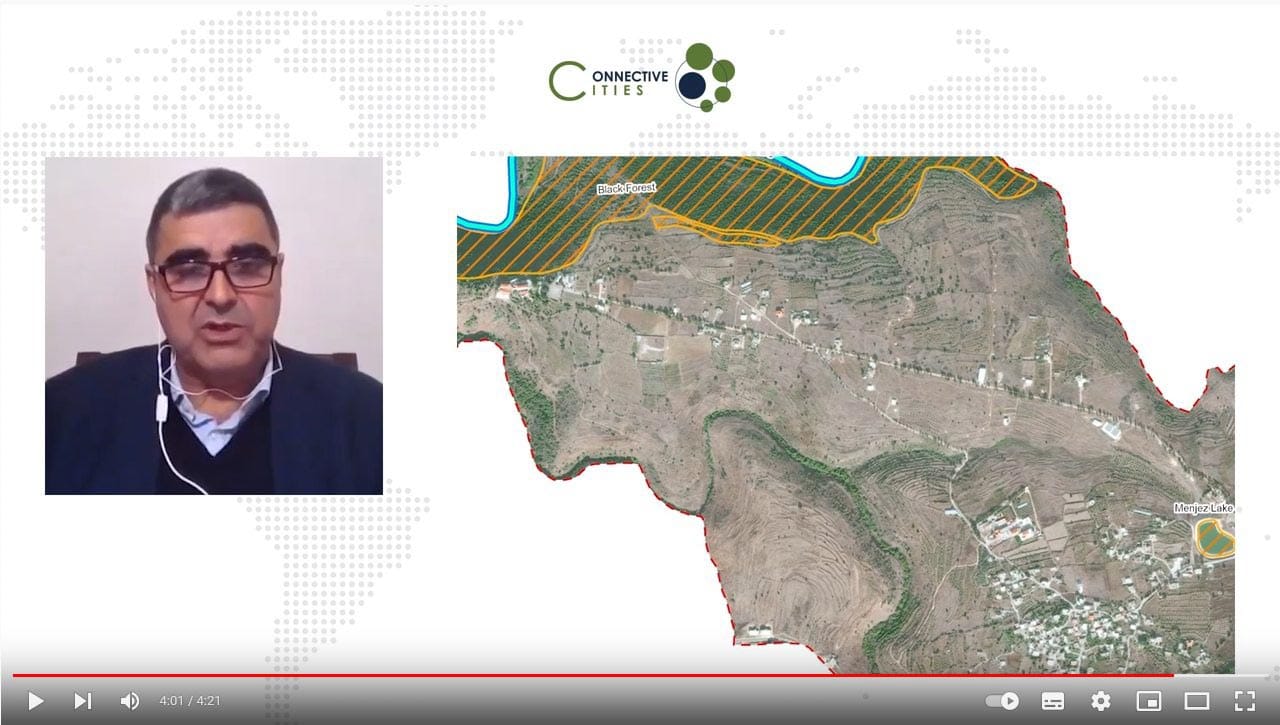
The city of Menjez is considered a model of how a recently established small municipality can advocate for the conservation of nature and biodiversity, improve infrastructure and ultimately achieve many SDGs.
Connective Cities interviewed Dr. Georges Youssef, Mayor of Menjez, to learn how the municipality in the northern Lebanon rural area managed to turn its ecosystem into a priority.
– English and Arabic subtitles available –
Watch video at YouTube:
Envisaging the Future of Cities

Urbanization is intertwined with several existential global challenges: Cities do not exist in isolation from global challenges. The emergence of urbanization as a global megatrend is intertwined with the existential challenges that the world has faced in the last 50 years, including climate change, rising inequality and the rise in zoonotic viruses with the latest being the novel coronavirus pandemic, which triggered the worst public health crisis in a century and the worst economic recession since the Great Depression. These challenges will in different ways, leave their imprints on the future of cities.
In UN-Habitat’s new World Cities Report 2022 – Envisaging the Future of Cities, three scenarios, or three paths were identified, that the world’s cities could take at this critical juncture.
- In the worst-case or “high damage” scenario, we assume that policy-making and governance will become even weaker and more ineffective. The destructive effects of the pandemic, climate change, inequality, poverty, and long-running conflicts, if not adequately addressed, will have disastrous consequences for cities in both developed and developing countries, though the latter would suffer most because of existing vulnerabilities. If 80 per cent of the economic damage inflicted by COVID-19 persists for a decade, then the number of people living in poverty could increase by more than 200 million by 2050.
- The middling, or “pessimistic scenario”, foresees a reversion to the status quo before the pandemic. This business-as-usual approach would be characterised by exploitation and exclusion of informal sector workers, systemic discrimination of the urban poor, unimaginative policies and poor implementation on the climate crisis, public transport, or urban regeneration programmes and renewal. Cities could be locked into cycles of poverty, poor productivity, unhealthy living conditions and become inequality traps for decades.
- The report, however, also envisages an optimistic future. Governments and donors would invest in urban development sufficiently to create just, resilient, healthy, and prosperous cities everywhere. By 2050, there could be 260 million people lifted out of poverty compared to the pre-COVID baseline. National governments would embrace peace and diplomacy to resolve their differences rather than pursuing military action, avoiding drastic global economic consequences such as those inflicted on the supply of food and energy by the war in Ukraine. Governments would manage the remainder of the COVID-19 pandemic competently, balancing health outcomes and economic recovery, and thus smoothing out global supply chains. They would also prepare adequately for the next pandemic.
Sustainable Urban Energy Planning in Southeast Europe (SEE)

Video about Connective Cities’ learning process II conducted in May 2021 – June 2022 to support municipalities in fine-tuning their project ideas in the fields of energy efficiency and renewable energy and developing them further towards bankable project proposals.
Watch video at YouTube:
More information on the dialogue event in November 2021:
Development of bankable project proposals for sustainable urban energy planning in Southeast Europe
Partnerships for Circularity

Through strategic partnerships, Jerash municipality in Jordan was able to overcome impediments in solid waste management and embark on a path of circularity. By partnering with multiple stakeholders, the municipality succeeded in designing strategies for effective solid waste management and overcoming challenges related to insufficient operating budget, low collection coverage, waste dumping, and the associated environmental and public health concerns.
Safe, colourful, liveable streets and places in Belo Horizonte, Brazil

Two 30 km/h zones were planned in Belo Horizonte as traffic calming measures and successfully implemented in 2019 to reduce car traffic and make neighbourhoods safer and more liveable. This change process took place with the broad participation of the local retail community, the residents and, in particular, the local schools. The public acceptance was very high. The project was inspired by peer-to-peer consultations during a dialogue event in Bremen and a subsequent expert mission of German experts to Belo Horizonte. The project now serves as a model for further similar action in other districts.
Video: Pop-up bike lanes during the Pandemic

Reducing the number of accidents, while at the same time increasing safety for everyone? Bogotá showed us, that this is possible and that the key to promote sustainable urban planning and environmentally friendly mobility are pop-up bike lanes. The concept of pop-up bike lanes, which emerged especially due to the COVID pandemic, is spreading not only in Bogotá, but also worldwide, for example in Berlin.
Both cities face the challenge that for a long time the principle of the car-friendly city was pursued in urban and transport planning. With an increase in cyclists during the pandemic and the limitation of public space, it was necessary to rethink and meet the needs of residents, for example to increase road safety for cyclists. This Good Practice outlines the undertaken measures in transport planning, the opinions of residents to the new concept and how in the end all road users can benefit from pop-up bike lanes in the long term, whether in Bogotá or Berlin.
The Protagonists are:
- Sebastián Posada García (Bicycle and Pedestrian Sub-Dictorate, Bogotá)
- Dr. Lea Wisken (Head of Cycling and Pedestrian Coordination Office, Berlin)
Watch video at YouTube (with mit English or Spanish sub-title):
Voices from Connective Cities – Jerash municipality

Representatives from the Jordan municipality of Jerash tell how they have benefited from the exchange with other experts at the events and workshops organised by Connective Cities. They were able to take away many ideas for their own projects in the areas of gender-sensitive local economic development, waste management and plastic recycling, which aim at a zero-waste municipality.
Watch video at YouTube:
Creating inclusive public spaces for women

Public spaces can bring together communities and facilitate cultural expression and diversity, so it is important to look at how public spaces can promote women-city relationship building. Femmedina, a combination of the terms “femmes” (women) and “medina” (historical city), is the name of a project implemented in the historic center of Tunis. The project has the ambition to foster this relationship building.