|


|
|
|
Heat affects us all. It is one of the world’s fastest-growing and deadliest climate risks.
However, we are not powerless against it. Municipalities around the world are developing and sharing comprehensive strategies. These range from heat action plans and green and blue infrastructure planning to smart rainwater management, the use of AI, and the creation of digital twins for risk-informed crisis management.
Naturally, municipalities have also been tackling this crucial topic within the Connective Cities framework. We’ve put together a selection of examples from the Connective Cities context along with additional resources for you.
 Heat in the City – The Connective Cities Deep Dive Learning Process
From 2023-2025, six municipalities joined forces to analyse the impact of heatwaves and heat islands, and developed solutions tailored to local conditions.
Detailed interim report: https://www.connective-cities.net/en/media-center/heat-in-the-city-2/
Cities Leading by Example
This guidebook on risk-informed planning and heat mitigation, developed by the Connective Cities’ Deep Dive, serves as a practical guide for municipal actors, urban planners, policymakers and community leaders who wish to adopt a risk-informed approach and integrate heat adaptation into their planning processes.
https://www.connective-cities.net/wp-content/uploads/2025/10/cities-leading_guidebook.pdf
 The „Walkable Triangle“ in Kisumu, Kenya
The pedestrian-friendly redeveloped commercial district is now a lovely place to linger with its mature trees keeping it pleasantly cool and the air fresh
https://www.connective-cities.net/media-center/das-walkable-triangle-in-kisumu-kenia/
Greater climate protection and quality of life: Green corridors in the MENA region lower ambient temperatures in cities and their surroundings
An AI-based visualisation exercise focusing on green corridors and green neighbourhoods, designed to bring together different perspectives on urban planning from the fields of administration, politics and academia. https://www.connective-cities.net/en/media-center/greater-climate-protection-and-quality-of-life-green-corridors-in-the-mena-region/
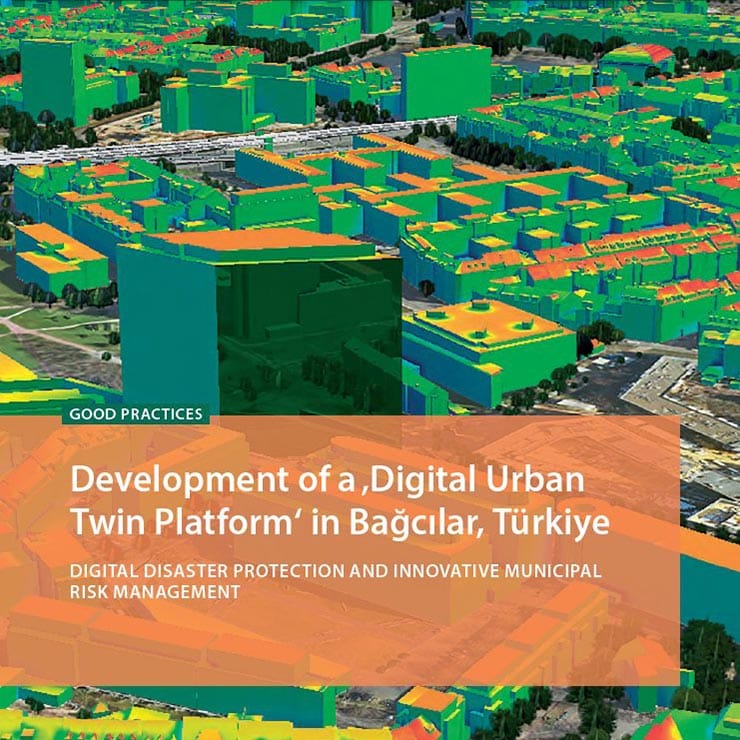 The Digital Twin Platform of Bağcilar, Türkiye
Read about how a municipality in Istanbul combines citizen services with data-driven urban risk management also in terms of heat assessments.
https://www.connective-cities.net/en/media-center/the-digital-twin-platform-of-bagcilar-turkiye/
Ibero-American Urban Climate Atlas
This project covers 11 cities in Spain and South America. The research aims to analyse the local context of each city with regard to the impact of heat islands. The objective is to assess changes in temperature patterns and their territorial effects within cities.
Union of Ibero-American Capital Cities (UCCI) and ICLEI South America
https://e-library.iclei.org/uploads/IBER_ATLAS_EN_2.pdf
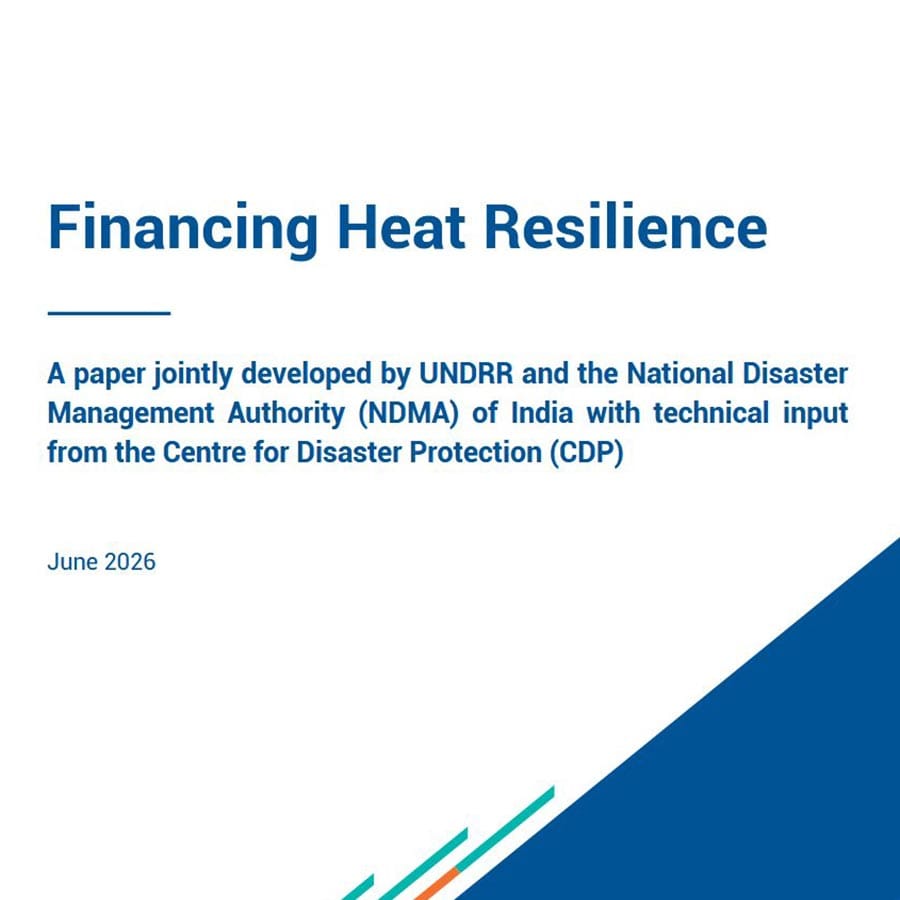 Financing heat resilience
How governments can finance heat resilience through risk-informed investments, innovative financing mechanisms, and resilient infrastructure.
United Nations Office for Disaster Risk Reduction (UNDRR), Centre for Disaster Protection, National Disaster Management Authority (India)
https://www.undrr.org/publication/documents-and-publications/financing-heat-resilience
Heat Action Plans in Local Government Practice (in German)
Implementation of the recommendations for drawing up heat action plans in local government practice (Plan°C)
German Institute for Urban Studies (Difu)
https://repository.difu.de/items/c805c6fb-c3c1-4288-b1c9-eff356fb04bd
 Smart Sponge Cities and Modern Heavy Rainfall Management (in German)
Ideas on how cities can further strengthen their climate and risk resilience and protect themselves against both heavy rainfall events and droughts
German Association of Cities
https://www.staedtetag.de/positionen/positionspapiere/2026/diskussionspapier-smarte-schwammstadt-modernes-starkregenmanagement
|
Connective Cities participated in the United Cities and Local Governments (UCLG) World Congress 2026, held from 22–25 June in Tangier, Morocco. Under the overarching theme “A New Generation of Universal Local Public Services,” the Congress brought together more than 3,000 local and regional leaders, municipal practitioners, city networks and development partners from around the world.
As part of the Local4Action Track, Connective Cities, together with the Association of German Cities, organised the 90-minute Lab “From Challenge to Practice: How Municipalities Turn Local Plans into Public Services.”
The Lab addressed a challenge shared by municipalities worldwide: while local strategies and development plans are often well designed, translating them into effective, inclusive and sustainable public services remains a complex task. Rather than focusing solely on success stories, the session encouraged municipalities to share real implementation experiences, discuss practical challenges and learn from one another.
Gabi Schock from the City of Krefeld (Germany) opened the session with insights into strategic municipal waste management, demonstrating how citizen participation can become a key success factor in planning and implementing public services. Using Krefeld’s waste management strategy as an example, she illustrated how local government, political representatives, businesses and citizens were involved at an early stage of the planning process. The presentation showed that participation not only increases public acceptance of new measures but also helps integrate local knowledge into decision-making, identify potential conflicts early on and develop sustainable long-term solutions. Krefeld’s experience highlighted that successful municipal service delivery is built on transparent governance, continuous dialogue and trust-based cooperation with citizens.
The second case was presented by H.E. Governor Issa Timamy of Lamu County (Kenya), who introduced the Kiunga Solar-Powered Desalination Initiative. The project addresses the challenge of providing reliable access to clean drinking water in a remote border region. By using solar-powered desalination technology, Lamu County has not only improved water supply but also reduced dependence on fossil fuels and strengthened resilience to climate change. Governor Timamy emphasised that the initiative’s success was made possible through close cooperation between the County Government, local communities and development partners. The project demonstrates how integrated municipal planning can simultaneously contribute to improved public services, better health outcomes, social cohesion and local economic development. In recognition of these achievements, Lamu County received the UCLG Peace Prize, accompanied by prize money of €20,000.
The two presentations highlighted a common message: effective public service delivery is achieved where technical solutions are combined with good governance, active citizen participation and strong local partnerships.
The second half of the Lab shifted from presentations to collaborative problem-solving.
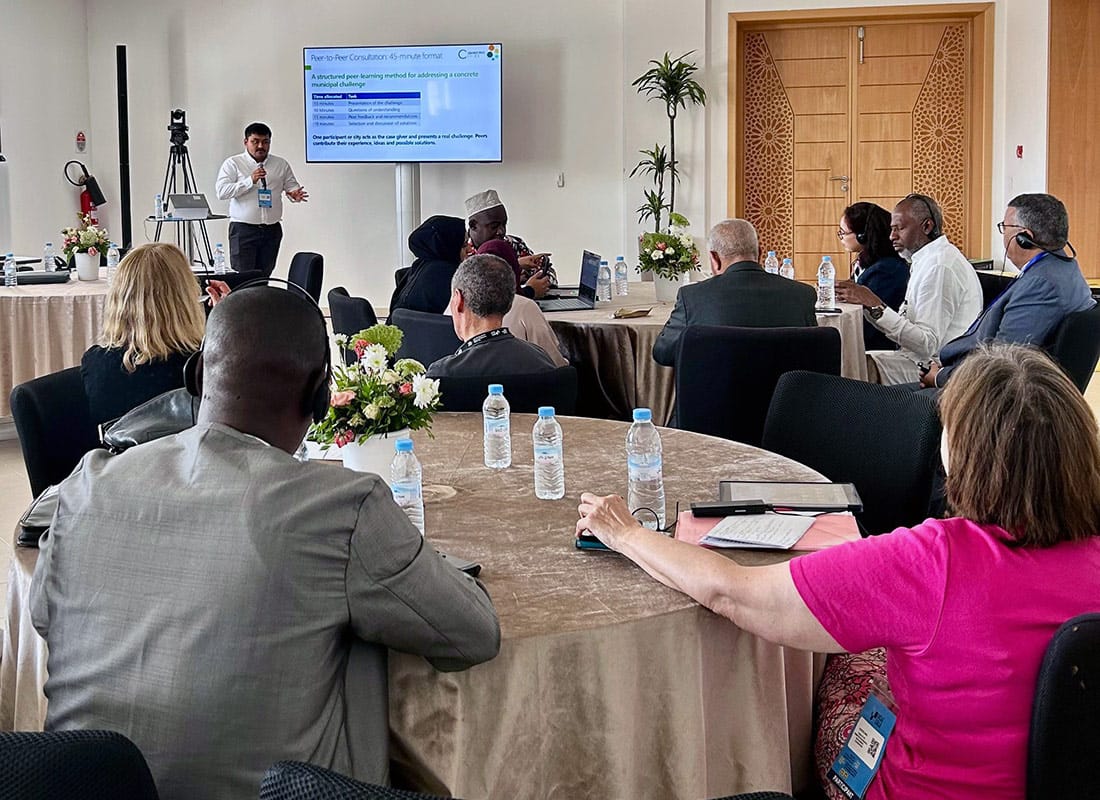
A representative of the Municipality of Pékine (Senegal) presented a real implementation challenge: complex procurement procedures, lengthy administrative processes and staff turnover were delaying infrastructure projects and slowing down municipal service delivery.
Participants jointly analysed the challenge during a facilitated Peer-to-Peer Consultation and developed a range of practical recommendations. Proposed solutions included:
The discussion demonstrated that municipalities across different regions often face remarkably similar implementation challenges. This is precisely where the Connective Cities approach creates value: structured municipal exchange enables practitioners to jointly develop practical solutions that can be adapted to their respective local contexts.
The Lab also illustrated how international municipal exchange can move beyond traditional good practice presentations. By openly discussing implementation challenges and working together to identify solutions, peer learning becomes a practical instrument for strengthening local public service delivery.
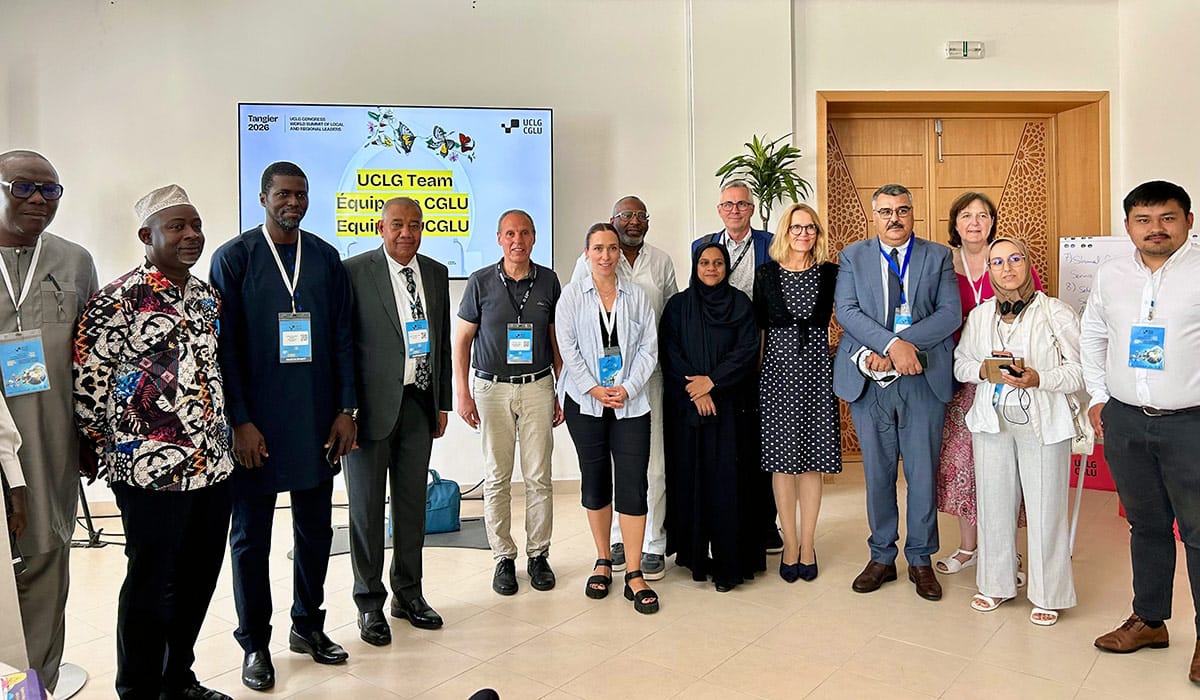
The Connective Cities team and participants in the Lab | Photo: Connective Cities
See also: Highlights of the UCLG World Congress
From 22 to 25 June 2026, the World Organisation of Local Authorities (UCLG) held its World Congress in Tangier, Morocco. With the theme of ‘A New Generation of Universal Local Public Services’, over 3,000 delegates from around the world gathered.
The organisation brings together national associations of local authorities, as well as over 1,000 local authorities from seven regions of the world: Africa, the Asia-Pacific region, Europe, Eurasia, the Middle East and West Asia, and Latin America and North America. The UCLG therefore represents around five billion people, accounting for 70 per cent of the world’s population.
The UCLG World Congress is held every three years. Alongside the technical discussions held in numerous Barcamps and side events, and the many networking opportunities, the Congress marked the start of a new governance cycle for the international local government movement. The Presidium, which consists of a President and six Co-Presidents representing different regions, was re-elected. The delegates elected Uğur İbrahim Altay, Mayor of Konya, Turkey, as the new UCLG President for the 2026–2029 term.
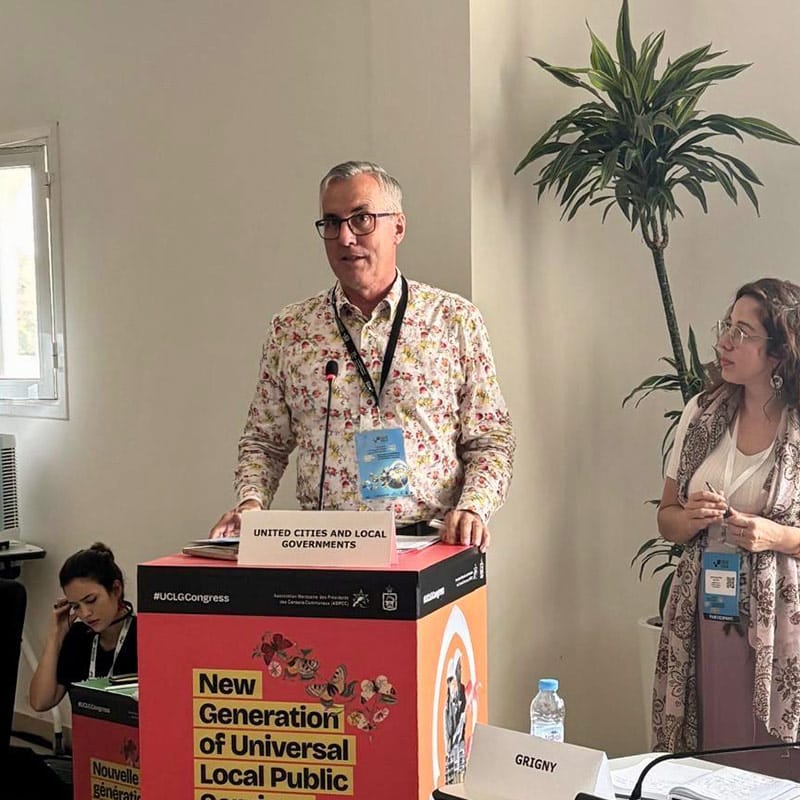
The Congress also renewed UCLG’s governing bodies, including the World Council and the Executive Bureau. Representing Germany on the new World Council are Dr Ursula Sautter (Mayor of Bonn), Jörk Cardeneo (City Councillor, Düsseldorf) and Andreas Wolter (City Councillor, Cologne). The election process reflects UCLG’s commitment to balanced regional representation and shared political leadership within the global municipal movement.
Another milestone was the first-ever UCLG Women’s Assembly, which brought together women mayors, governors and local leaders from around the world. Discussions focused on advancing gender equality in local governance, strengthening women’s political leadership and further developing the Feminist Municipal Movement within UCLG. The Assembly reaffirmed that gender equality is a fundamental component of resilient, inclusive and future-oriented local governance. During the Assembly, Mayor Dr Ursula Sautter also proposed introducing a gender-balanced co-presidency model for the next UCLG mandate.
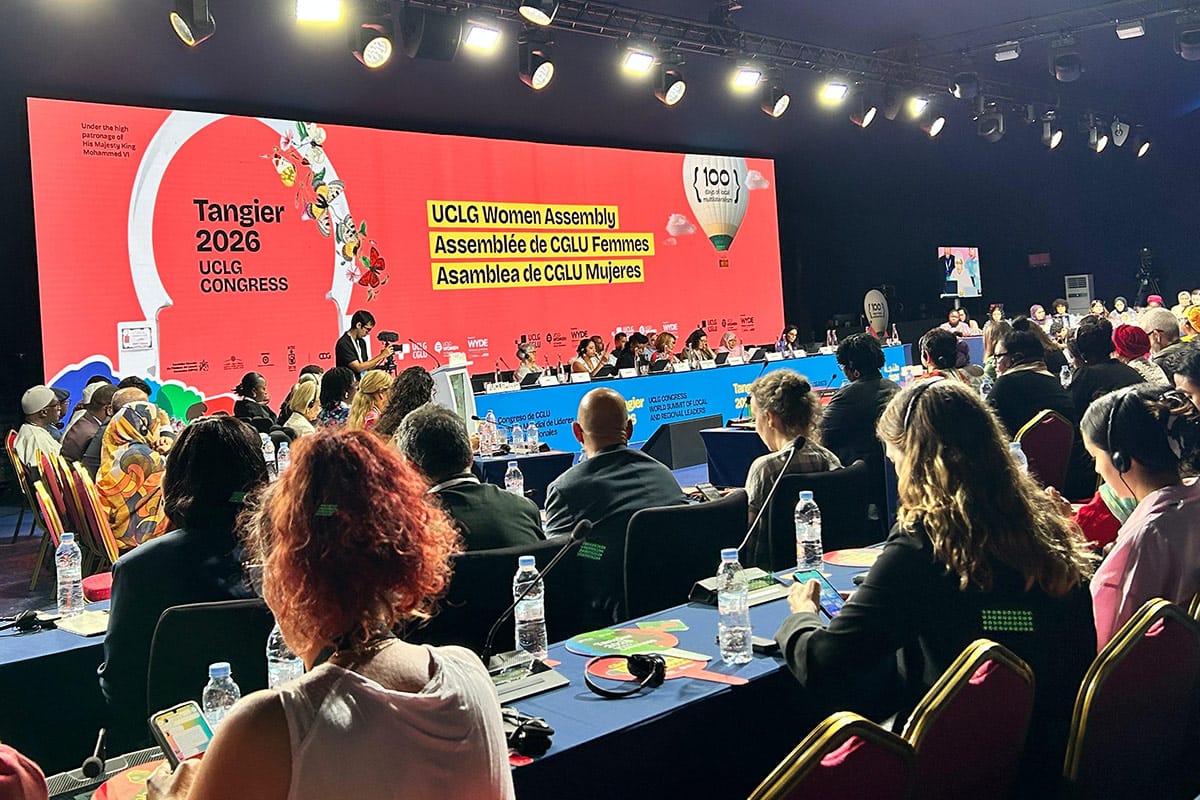
In the ‘Tangier Outcome Document – A New Generation of Universal Local Public Services’, the delegates also reaffirmed the central role of local and regional governments in providing inclusive, accessible and resilient public services. The focus was on issues such as affordable housing, climate resilience, digital transformation, social inclusion and international municipal cooperation.
In this context, the Connective Cities Lab ‘From Challenge to Practice: How Municipalities Turn Local Plans into Public Services’ demonstrated how how structured peer learning can support municipalities in bridging the gap between planning and implementation and in developing practical solutions to shared urban challenges.
We are pleased to invite you to our upcoming virtual Insight Session on ‘nature-based solutions for urban resilience’, which will take place on July 15, 2026 from 1:00 PM to 2:30 PM CET.
Cities in sub-Saharan Africa, Germany, and other regions are increasingly relying on nature-based solutions to address flooding, climate risks, biodiversity loss, and the associated urban development challenges. However, integrating these approaches into municipal planning, management, and implementation remains a complex task.
This Insight Session brings together research, policy and community network perspectives to present practical approaches for planning, integrating and implementing nature-based solutions.
We invite the following discussion partners:
Andreas Wolter, President of Climate Alliance
Presentation: From Local Action to Collective Impact: How Municipal Networks Advance Climate Resilience
Andreas Wolter will present the Climate Alliance network and highlight its role in supporting municipalities to strengthen local climate action. His presentation will provide important insights into how city networks learn from each other, promote knowledge exchange, advocacy, and collaboration, while simultaneously helping municipalities translate climate commitments into practical measures – such as nature-based solutions to strengthen municipal resilience.
McKenna Davis Senior Fellow and Coordinator for Nature-Based Solutions at Ecologic Institute, Berlin
Presentation: Mainstreaming Nature-based Solutions: Insights and Practical Examples from the Urban Governance Atlas
McKenna Davis will share insights and practical examples from the Urban Governance Atlas and the Climate Adaptation Naturally project, highlighting how nature-based solutions can be integrated into municipal policy and planning.
Dr. Kirk B. Neu,Researcher in the fields of landscape architecture, landscape planning and urban resilience
Presentation: Evidence-based Lessons on Planning Nature-based Solutions for Flood Resilience in Sub-Saharan African Cities
Drawing on research from Ghana and the wider Sub-Saharan African region, Kirk Enu will present practical lessons on how municipalities can use research evidence to plan and implement nature-based solutions for inclusive flood resilience.
The event offers participants the following:
The event will be held in English, with French translation provided.
Date:Wednesday, July 15, 2026
Time:13:00 – 14:30 CET
Format:On-line
Registration: https://community.connective-cities.net/en/node/1607
We cordially invite municipal practitioners, urban planners, climate and resilience experts, researchers, development partners and other interested members of the Connective Cities network to participate.
We look forward to welcoming you to the event.
If you have any questions or require support, please contact: moses.munuve@giz.de
On July 8th, 2026, Connective Cities hold an online Insight Session to explore ways, by which urban forests can be cultivated under difficult climate conditions. Attempts to do so are notoriously difficult in dry regions with high temperatures and low precipitation, where the usage of scarce water resources has to be distributed between (urban) populations, local businesses, agriculture and industry. Planting and watering urban trees is regularly considered secondary under such circumstances, leading to unsuccessful attempts of urban afforestation due to a lack of financial support and maintenance work. The Insight Session was joined by 34 participants from 13 countries, representing a broad range of municipalities from Africa and the Middle East.
Over the past decades, the Miyawaki-method of planting tiny forests has become an outstanding success story around the globe. In this technique developed by Japanese botanist Akira Miyawaki, a small dense forest is made from native trees and plants. The specifically dense way of planting a miscellany of indigenous plants accelerate the growth of flora and fauna, so that after around five years, micro forests may already be entirely self-sustaining. The forests improve air quality, reduce heat and bring back lost biodiversity, thereby stabilizing ecosystems and countering the environmental degradation as a result of the climate crisis. A videographic overview of the Miyawaki-Method can be found here.
Stefan Scharfe, speaking on behalf of Miya-Forest, a forest-planting/educating/researching NGO based in Eberswalde, Germany explained the success of the Miyawaki method through the instance, that planting trees is usually broadly accepted among a range of actors such as urban populations, housing providers and local administrations. However, the participatory approach of planting urban micro forests must be facilitated through a small group of core actors who take ownership of the project. Especially a thorough soil study can significantly increase the chances of the micro forests to become self-sustainable after an initial, intense phase of watering and caring.
Coming from the highly urbanized and biodiversically degraded context of Amman, Jordan’s Capital, Deema Assaf from the ecological research studio TAYYŪN joined the Insight Session as a second speaker, providing the participants with valuable hands-on insights from the MENA region. Mrs. Assaf elaborated on the tedious work with paleobotanists to collect evidence of indigenous species from the region, proven evolutionary resilient towards the local climate conditions. The seeds of these plants known to the soil form the base for a multi-layered ecosystem featuring canopy, sub-canopy, shrubs and ground cover tiers. Over the course of its growth, the micro forest attracts insects, mushrooms and birds. Also edible plants may be included, turning micro forests into sites of (urban) gardening.
In result, the Insight Session provided the participants with new inspiration for their own project development within the scope of the currently running Connective Cities learning processes on ‘Nature at the Heart of Municipal Resilience’ and ‘Green Corridors in the City and its Surroundings’. The potential of the Miyawaki Method to produce fast and self-reinforcing benefits through various ecosystem services and according to the local circumstances makes urban micro forests a tangible and fitting intervention in the current situation of intensifying climate crisis. However, forestry-related preparation – i.e. soil data and seedlings –, as well as institutional backing, secured funding and maintenance of the planting project are key elements for micro forests to thrive.
Connective Cities provides the network for future engagement on the topic and looks forward to share expertise among urban practitioners
From 8 to 12 June 2026, Connective Cities, in partnership with the South African Local Government Association (SALGA) and the Waterberg District Municipality, organised an international expert mission on economic transition and green industrial development at the municipal level. The mission brought together municipal representatives, researchers, and experts from industry and practice from South Africa (SALGA, Waterberg District Municipality, and the local municipalities of Lephalale and Mogalakwena), Germany (the Economic Development Agencies of the Cities of Karlsruhe and Heilbronn, as well as the Baden-Württemberg RegioClusterAgency), Namibia (Lüderitz Town Council), and Kenya (the County Government of Nakuru). Participants exchanged experiences, discussed shared challenges, and explored the opportunities that the emerging green hydrogen economy—based on the production of hydrogen using renewable energy sources—offers for local and regional development.
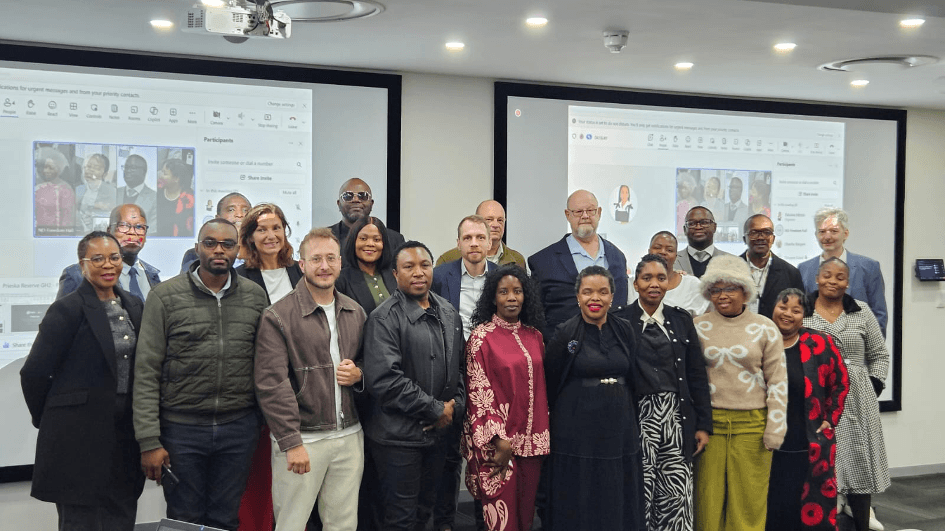
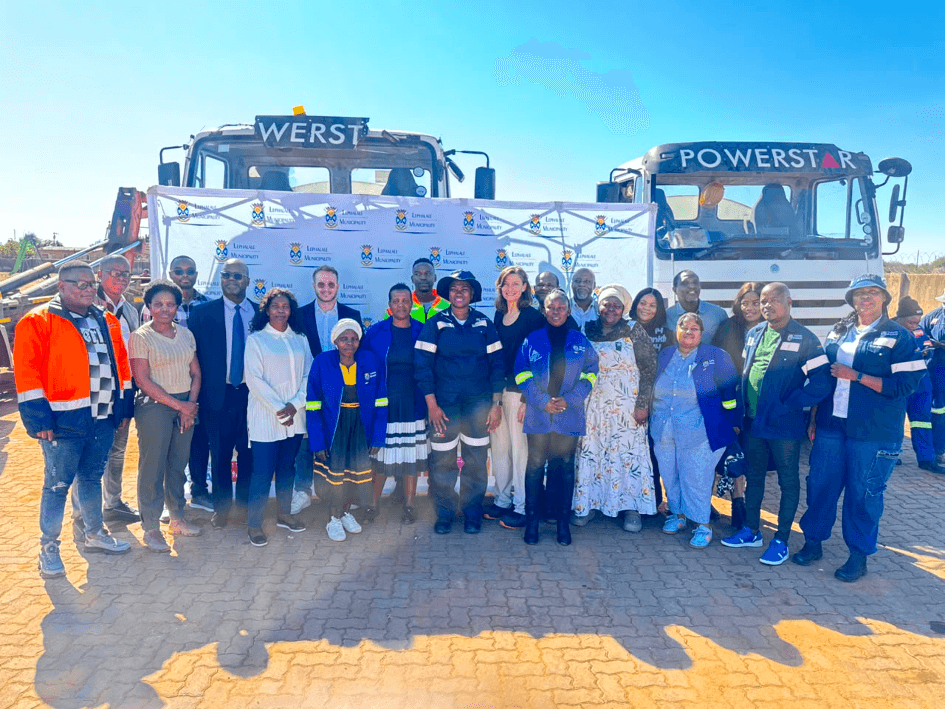
The mission formed part of broader efforts for the Just Energy Transition and complemented the work of South Africa’s Just Energy Transition Municipal Council (JETMC), which is strengthening municipal readiness for a shift toward cleaner and more sustainable energy systems. Through policy discussions, technical presentations, and site visits to strategic infrastructure such as the Eskom Matimba Power Station and Exxaro Solar Power Station, participants gained valuable insights into the challenges and opportunities facing regions transitioning from coal-dependent industries.
Central themes of the mission were the role of green hydrogen in driving local economic development, industrial diversification, and job creation. Waterberg District Municipality highlighted the importance of ensuring that the transition is both environmentally sustainable and socially inclusive. Participants learned about progress made in Waterberg District municipality in cooperation with both Lephalale and Mogalakwena Local Municipalities, including municipal skills development initiatives, governance structures, funding mobilization efforts, and partnerships supporting green hydrogen capacity building.
The Waterberg Development Initiative (WDI) presented its vision for a coordinated regional development model that aligns municipalities, industry, and communities around shared economic and sustainability goals. Discussions also featured contributions from national government representatives, development partners, and municipalities already advancing hydrogen-related projects, demonstrating growing momentum behind South Africa’s hydrogen economy.
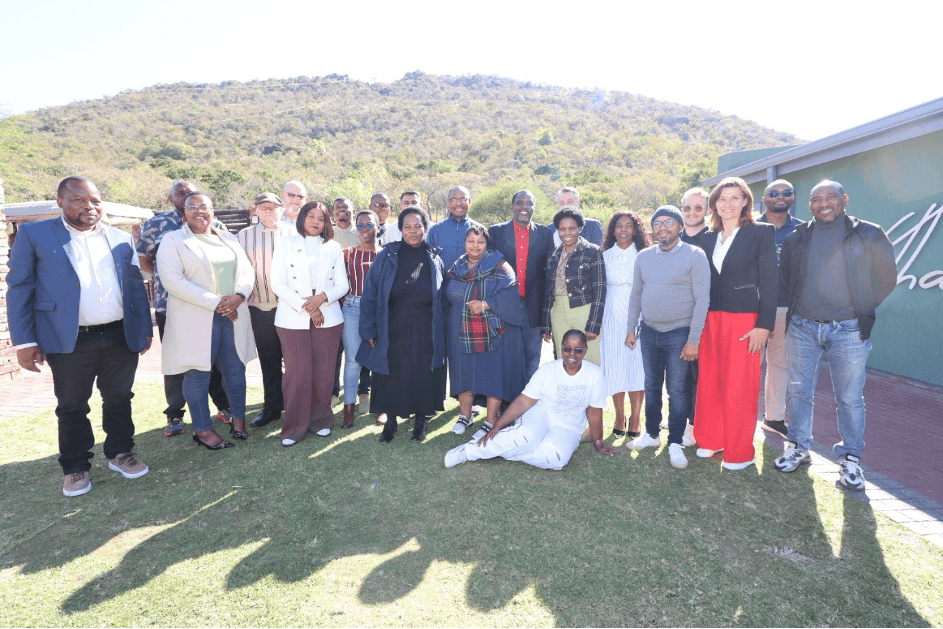
The mission concluded with a strategy workshop, where participants jointly developed a 36-month roadmap for regional development. The roadmap identified priority actions in infrastructure development, skills readiness, investment attraction, and partnership building to support the creation of a future “Waterberg Hydrogen Corridor.” These outcomes complemented Hydrogen Cities Working group discussions on municipal capability development, finance mobilization, and energy access, while addressing challenges such as financing constraints and uneven municipal preparedness.
The expert mission reinforced the critical role municipalities play in South Africa’s energy transition. Through international collaboration, knowledge exchange, and practical planning, the initiative demonstrated how green industrialization can drive sustainable economic growth while ensuring communities remain at the center of the transition to a cleaner, more resilient future.
Date: Wednesday 8 July 2026
Time: 11:00 – 12:00 CEST
Language: English – French simultaneous translation
How can forests be planted sustainably in urban areas with chronically low precipitation and/or heat waves?
The Miyawaki-Method is a reforestation technique which has become popular in recent years due to its efficiency in growing vegetation in small urban spaces within a very short time period. In order to accelerate growth, the method builds on three key principles: The exclusive use of native plant species that are used to the soil; which are planted in extreme density; and form a multi-layered ecosystem featuring canopy, sub-canopy, shrubs and ground cover tiers. A videographic overview of the Miyawaki-Method can be found here.
Not only can micro forests serve as cooling green corridors in urban geographies; they may also be classified as nature-based solutions, which are essential for various ecosystem services, not least disaster prevention. According to the method’s founder Dr. Akira Miyawaki, native forests are nearly thirty times more resilient and offer protection against natural disasters compared to non-native species.
While the Miyawaki-Method has been developed in Japan in the 1970s, it only recently has become to spread globally, with many applications in India but also growing popularity in Europe, North America and other parts of the world. However, as droughts become more frequent around the globe, watering-intensive Miyawaki afforestation may also face increasing difficulties in implementation. Can Urban Micro Forests therefore be considered a suitable intervention and nature-based solution in municipalities affected by frequent drought – for instance across Africa and the Middle East?
The MIYA-forest network from Eberswalde, Germany is one recent example of civil society-led practices to spread tiny forests according to the Miyawaki-method, both in Germany and the MENA region. In this ConnectiveCities Insight session, Board Member Stefan Scharfe will present the association’s best practices, which—in addition to planting more than 40 micro-forests since 2021—also include educational and scientific work.
As our second speaker, Deema Assaf from TAYYŪN, an Amman-based research and ecological design studio, will share her experience planting Miyawaki forests. The architect pioneered the Miyawaki method in the Middle East, planting the region’s first such forest in Amman in 2018 and going on to lead multiple native forest plantings across the city. Her work spans native seed harvesting and propagation, community planting workshops, and regenerative, permaculture-based design.
Please register for the event on the Connective Cities Community Platform: Urban Micro Forests in drought-affected Regions
If you have any questions or need assistance, please do not hesitate to contact:
lennart.kreuzfeld@giz.de
We look forward to welcome you in our discussion!
How can municipalities translate strategies and local development plans into effective public services? This question lies at the heart of the Connective Cities Lab “From Challenge to Practice: How Municipalities Turn Local Plans into Public Services”, organised in cooperation with the Association of German Cities.
Municipalities around the world face similar challenges when implementing local development plans. In this Lab, municipal representatives from different regions will share practical experiences: What obstacles had to be overcome? Which approaches proved successful? And what lessons can be adapted to other local contexts?
Following a series of short case presentations, participants will engage in a moderated peer-to-peer exchange to discuss challenges and jointly explore practical solutions for effective local public service delivery.
Objectives of the Lab
We look forward to welcoming municipal practitioners, experts, and partner organisations from around the world.
Participation: The Lab will take place exclusively in person as part of the UCLG World Congress 2026. All participants and speakers must register through the official Congress registration system: https://registration.uclgcongresstangier2026.com/