Impact of Covid-19 on the tourism sector

The tourism sector has been adversely affected by the Covid-19 pandemic. This ranges from the from SMEs to the international sector players including the airlines, the hotel industry, travel agencies and other associated players. Many African countries are tourist destinations thus must have been dented by the lock downs and closure of airspaces. Upon opening though, a lot of domestic tourism has been promoted.

Connective Cities sought to understand the nature of the impact on the sector players and some of the measures being put in place to cushion against the negative impacts and future pandemics.

Program

With the knowledge that a lot of the players in this sector come from the private sector, little wonder it is that the 11 participants were drawn from the private sector. This was a moderated session and the examples from Mpumalanga in South Africa, those from Asia and the global perspective on response to the pandemic gave a clear picture of the impacts and response measures. In this session we sought to answer these questions:

  1. What have been the core challenges for the sector players?
  2. What measures have you put in place?
  3. Have there been any lessons learned already for long term strategies to improve the sector’s resilience (i.e. preparedness for pandemics or similar events in the future)?

Presentations

Tourism recovery process- the case for Mpumalanga Province, South Africa
Mr. Oupa Pilane

Covid-19 and the tourism crisis: how some municipal authorities around the world are supporting tourism sector recovery
Ms. Jennifer Bartlett

Responding to Covid-19 challenges- how Nepal’s tourism sector is finding its way out
Deepak Adhikary

Results

  • Tourism in Mpumalanga province was on a positive trajectory until Covid-19 struck and the sector was adversely affected like in many other countries where tourism is a major economic activity
  • Massive job losses experienced in many countries as well
  • Mpumalanga thus collaborated with the private sector to develop the tourism recovery plan that will protect & rejuvenate supply, re-ignite demand and strengthen enabling capability.
  • From a global lense, a lot is going on with expected post-crisis growth in market demand for nature-based & wellness travel.

COVID-19: Economic impact and recovery

The Covid-19 pandemic has had a deteriorating impact on the national and local government economic resources. When most governments directed a shift in the normal way of life where businesses thrived, and goods and services exchanged, many businesses were affected. In economies that largely depend on informal labour market, a lot of people have lost their livelihoods. The governments have been torn between life and livelihoods as the interaction of people propels the spread of the virus.

Against this concern, Connective Cities organized a virtual exchange on the 10th of November, 2020 for cities to share on how their revenue stream has been affected and the measures they are putting in place to cushion against the current and possible future pandemics. 7 participants from Ghana, Kenya and South Africa with a representation of Tshwane, Kumasi, Nelson Mandela Bay, Rustenburg and some local government associations were present to exchange and discuss.

Program

This was a moderated session with two main presentations from the City of Tshwane shedding light on their economic recovery plan and the Kenya Private Sector Association highlighted the different ways in the Government of Kenya is supporting the key economic sectors to cushion against the negative impacts. The discussions were enriching to the participants as many cities/municipalities run out of resources to run their operations including provision of services. The questions that were being answered in this session included?

  1. What have been the core challenges for the municipalities?
  2. What measures have municipalities put in place?
  3. How do the municipalities deal with vulnerable groups which were most affected by the pandemic?
  4. Have there been any lessons learned already for long term strategies to improve cities’ resilience (i.e. preparedness for pandemics or similar events in the future)?

Presentations

City of Tshwane’s proposal on economic recovery
Dr. Lardo Stander

SME economic impact of Covid-19, recovery and resilience of cities- Nairobi and Towns in Kenya
Mr. Mairura Omwenga

Results

The City of Tshwane’s economic recovery plan confirmed how fragile the local economies of most African cities are. The quick response to cushion the SMEs & the citizens while safeguarding the City’s purse is a good call.

Access to funds by SMEs & informal businesses will propel the bouncing back of the economic lifeline. The special focus on vulnerable groups is commendable.

The case from Kenya highlighted the impact of Covid-19 on different economic sectors including housing, manufacturing/ SMEs, road transport, community service and professional services. In all these sectors, massive job losses have been experienced but the national government has put in measures to cushion eg establishing SME credit guarantee scheme with local banks and giving tax rebates. The Telcom company offering mobile money services was required to reduce transaction costs up to certain amounts.

Kiel: Entrepreneurship and Digitalisation

We traveled to Kiel, where we captured deep insights from a city that, as a digital champion, had to adapt quickly. How do you keep your StartUp community alive if people cannot meet personally?

More: https://youtu.be/-QxhW-Gx-3M

Join us and watch a special series of videos and podcasts that will show how to overcome a crisis from many different points of view. More videos, podcasts and interviews coming soon on our COVID-19 page.

Final Report: Virtual Global Exchange

The exchange was designed to bring together urban practitioners from all over the globe. The goal was to ignite creativity, innovation, solidarity and motivation, while creating and enhancing this global community of practice around the common purpose of combating the global COVID-19 pandemic and its consequences with smart local solutions and strategies.

During the first week, urban practitioners and experts from different municipalities, the civil society, business and academia, presented a total of 56 Good Practices in 18 sessions and gave insights into their experienced challenges and local solutions to deal with the pandemic. The exchange were centered around the nine topics were Public Health, Crisis Management, Economic Response, Housing, Education, Digitalisation, Crisis Communication, Innovation, and Green Urban Recovery.

The second week was about receiving practical “How To” capsules with practical exercises on topics that came up repeatedly during the exchange events such as: social media usage, digital tools, and how to plan for virtual meetings. Finally, the newly learned mindsets and tools could be applied in a 4-hour solution design workshop.

Weimar: Economic response to COVID-19

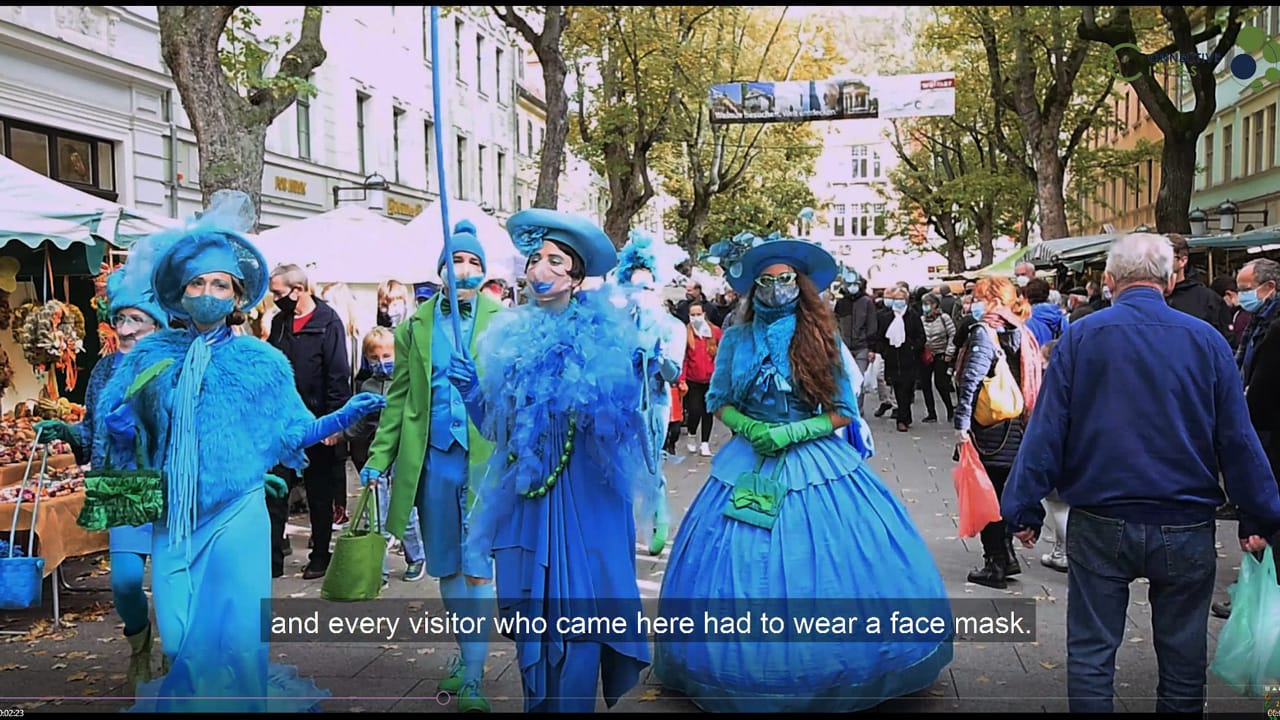
Weimar, a city that attracts thousands of tourists from all over the world every year. Watch how did the local city guides, hoteliers and small shop owners react to the lockdown? And what did the local authorities do?

Mehr: https://youtu.be/SxLgSY2aW6g

Join us and watch a special series of videos and podcasts that will show how to overcome a crisis from many different points of view. More videos, podcasts and interviews coming soon on our COVID-19 page.

Local Economic Development and Job Creation in MENA

Local Economic Development (LED) remains a top priority for the MENA countries as a driver for economic stability and job creation for a region with one of the highest unemployment rates in the world. While many resources are invested in fostering local economic development in the MENA countries led by governments, however, there is often a lack of systematic access to practice-oriented solutions.

More than 40 local urban practitioners from 22 municipalities and 10 countries from the MENA region and Germany took part of the virtual dialogue event organized by the Connective Cities project. The dialogue event consisted of five virtual sessions held between the Sep 29th – Oct 7th 2019, focusing on facilitating the exchange of know-how and experiences through peer-to-peer learning among municipal representatives and urban practitioners. Moreover, the dialogue event aimed at enriching the analysis and planning capacity of the participating municipal representatives to address existing challenges of implementing LED and job creation programs.

Throughout the Dialogue event, participants showed tremendous commitment to the program with a level of excitement that remained high till the last day of the dialogue where they learned how to present their LED project concepts in less than 3 minutes; an activity that reflected their understanding of project development process as well as the peer-to-peer exchange methodology.

This report reflects in detail the main results of the virtual dialogue event.

International exchange of experiences: lessons learned in the Covid-19 crisis

As soon as it was clear that the Covid-19 would pose serious challenges to municipalities around the world, the Federal Ministry for Economic Cooperation and Development (BMZ) addressed Connective Cities to adapt its methodology to provide municipal practitioners with an opportunity to share their experiences in an agile and flexible way.

In many ways, local authorities are constantly at the forefront of global challenges, as they are the first level of government to feel the impact of any crisis. Yet municipalities also have the potential to act as fruitful sources of innovative solutions in addressing these challenges, and those solutions would also require cooperation with different levels of government and the involvement of many different types of stakeholders: Academia, Civil Society, Private Sector, etc..

The series started in July/2020 and had the objective to help improving the responsiveness and resilience of urban actors through exchange and peer-to-peer learning by promoting the exchange of practical solutions between practitioners and to disseminate good practices. The explosive spread of the virus put existing municipal structures and capacities to the test. On the other hand, the interconnectivity and digitalisation opened up the possibility of offering a series of exchange events 100% virtually.

Hardly all the benefits of a well-organised personal exchange can be fully replaced by the current technologies. Nevertheless, in a crisis like the one caused by the Covid-19, technology made it possible to organise more than 35 response dialogue events with the participation of more than 800 specialists in such a short time.

Our main objective was to bring together experiences to be presented during and discuss how local authorities can cooperate, learn from each other and ultimately build their capacity to address global challenges. On the 9th of December, Connective Cities organised the official final event of the series “Municipal Response to COVID-19”.

Besides a keynote presentation from the Head of the Urban Policies and Reviews Unit the OECD, the event on the 9th of December included a showcase of examples from Stuttgart-Germany, Belo Horizonte-Brazil, Aman-Jordan, Tshwane-South Africa and Lviv-Ukraine. In closing an e-learning course on crisis management was presented by Dr. Peter Tinnemann, Head Global Health Science Unit, from the Charité – Universitätsmedizin Berlin.

During our additional session of 2020 on the 10th of December, tools and protocols that cities employ to monitor and control the infection chains during the COVID-19 pandemic were explored. While taking a closer look at the efficiency and effectivity of the tracking systems applied in the South Eastern Europe and the Caucasus, discuss existing challenges, and explore how can we enhance or scale-up tracing strategies. Speakers shared their experiences from different levels of local governance and research from Georgia, Serbia and Germany.

The Connective Cities team would like to thank all the inspiring and impressive urban practitioners who invested their time in sharing and discussing their good practices in response to the pandemic. In 2021 Connective Cities will continue to offer events and exchanges focused on the municipal needs connected to the Covid-19 pandemic. We warmly invite you to stay connected through our website and all our social media channels and stay tuned for updates and future events.

Virtual Global Exchange

The exchange was designed to bring together urban practitioners from all over the globe. The goal was to ignite creativity, innovation, solidarity and motivation, while creating and enhancing this global community of practice around the common purpose of combating the global COVID-19 pandemic and its consequences with smart local solutions and strategies.

During the first week, urban practitioners and experts from different municipalities, the civil society, business and academia, presented a total of 56 Good Practices in 18 sessions and gave insights into their experienced challenges and local solutions to deal with the pandemic. The exchange were centered around the nine topics were Public Health, Crisis Management, Economic Response, Housing, Education, Digitalisation, Crisis Communication, Innovation, and Green Urban Recovery.

The second week was about receiving practical “How To” workshops with practical exercises on topics that came up repeatedly during the exchange events such as: social media usage, digital tools, and how to plan for virtual meetings. Finally, the newly learned mindsets and tools could be applied in a 4-hour solution design workshop.

Download documentation

115 good practice examples for municipal responses to COVID-19

Some of the good practice examples were presented at the Connective Cities international dialogue event on lessons learned during the coronavirus crisis. These inspired the roughly 800 participants from 250 municipalities worldwide to see how they could improve their responses to COVID-19.

Municipalities the world over are on the front line of the battle against the COVID-19 pandemic. Above all, they have to maintain basic public services. Public health officers must organise tests and vaccinations, and public order offices need to monitor contact restrictions. Child day-care centres and schools must be largely kept running; public transport companies have to adapt to changed user behaviour, waste management utilities to different quantities of waste, and so on and so forth.

As a result, municipalities have been facing huge challenges for months. Many are overstretched, and often lack not just human resources and modern digital equipment, but also points of reference for how they might tackle the problems. On the other hand, since March municipalities have been generating countless ideas on how to cope with the pandemic as best they can. Some are falling back on crisis plans which they drew up years ago for disaster preparedness. Others are pursuing innovative paths, such as the Municipality of Hazmieh in Lebanon, which is relying amongst other things on geographic information systems to contain the pandemic, or Batnah in Algeria, where coronavirus-related medical products are being manufactured using 3D printers.

Sharing lessons learned internationally

To enable these examples to be replicated rather than remaining one-off solutions, from June 2020 onwards, and on behalf of Germany’s Federal Ministry for Economic Cooperation and Development (BMZ), Connective Cities gave local actors an opportunity to share their experiences with the pandemic in a simple and flexible way. This led to the ‘Municipal Responses to COVID-19’ series of events.

Just as the pandemic does not stop at borders, the expert dialogue on COVID-19 was designed to be international too. 256 municipalities from eleven countries in Africa, Asia, Europe and Latin America took part in 51 online events. All participants wanted to learn from and with each other, and improve their responses to the pandemic and their resilience – entirely in line with the ‘build back better’ principle

The Value of Sustainable Urbanization

“The world we live in has been transformed in a manner not witnessed in recent times. In a rapidly urbanizing and globalized world, cities have been the epicentres of COVID-19. The virus has spread to virtually all parts of the world; first, among globally connected cities, and now, through community transmission and from the city to the countryside.
The World Cities Report 2020 shows that the intrinsic value of sustainable urbanization can and should be harnessed for the wellbeing of all. The report provides evidence and policy analysis of the value of urbanization from an economic, social and environmental perspective, including the unquantifiable value that gives cities their unique character; and also explores the role of innovation and technology, local governments, targeted investments and the effective implementation of the New Urban Agenda in fostering the value of sustainable urbanization.”