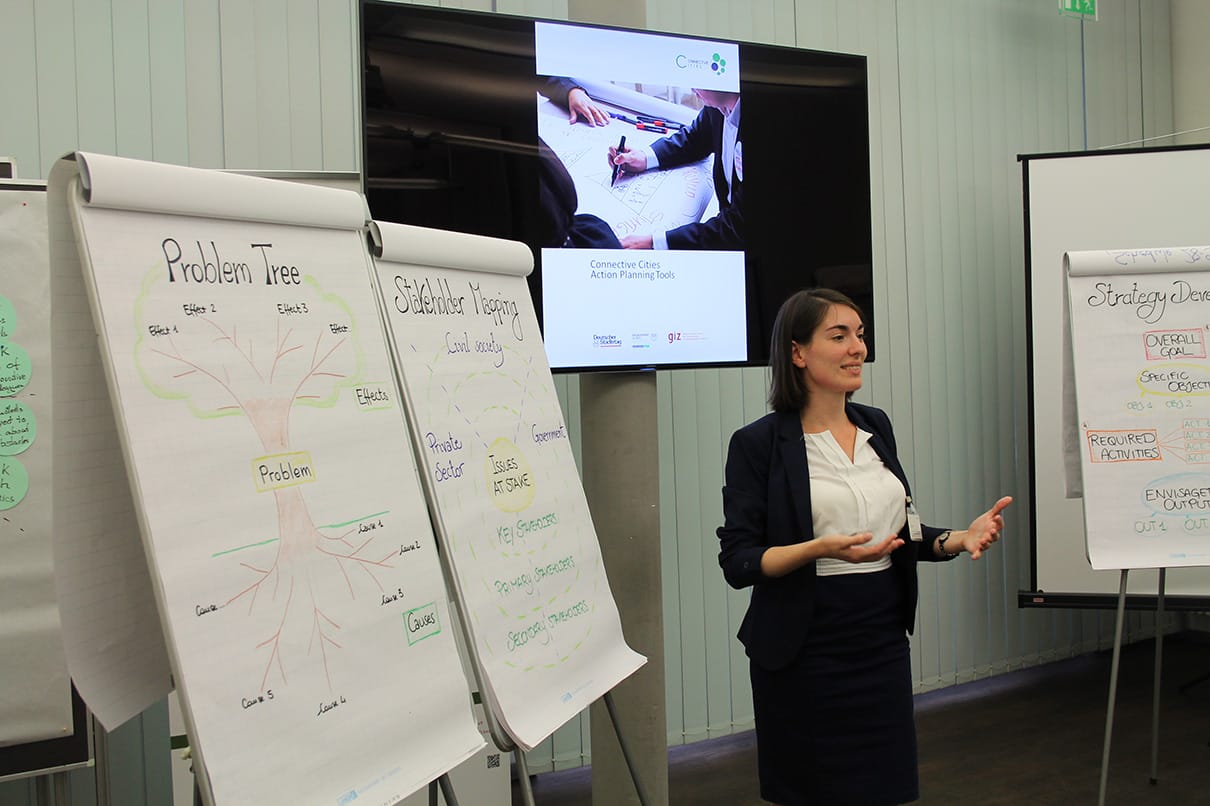
Planning integrated solid waste management at the municipal level

In cooperation with the Hanseatic City of Rostock, the international urban networking platform Connective Cities and its initiators, the Deutsche Gesellschaft für Internationale Zusammenarbeit (GIZ) GmbH, the German Association of Cities and Engagement Global / Service Agency Communities in One World, invited German and international stakeholders from Tunisia, Morocco, France, Italy, Zimbabwe, Austria, Albania and Egypt to exchange their experience and showcase their good practices in Rostock from 26 to 28 September. The dialogue event on ‚Planning integrated solid waste management at the municipal level‘ was hosted by the Hanseatic City of Rostock.

The dialogue event attracted German and international municipal actors with first-hand experience in solid waste management including representatives of municipalities, municipal companies as well as representatives from civil society, academia and business, active in municipal projects in this thematic area.

The main objective of the exchange was to showcase examples of good practices on implementing integrated solid waste management in each municipality and to check the regional applicability of the presented solutions. The event in Rostock could furthermore foster learning among participants through discussions of current challenges, such as the involvement of the informal sector and approaches to waste separation and recycling. In smaller working groups, experts and practitioners exchanged views on obstacles that municipalities face in practice and discuss possible solutions.
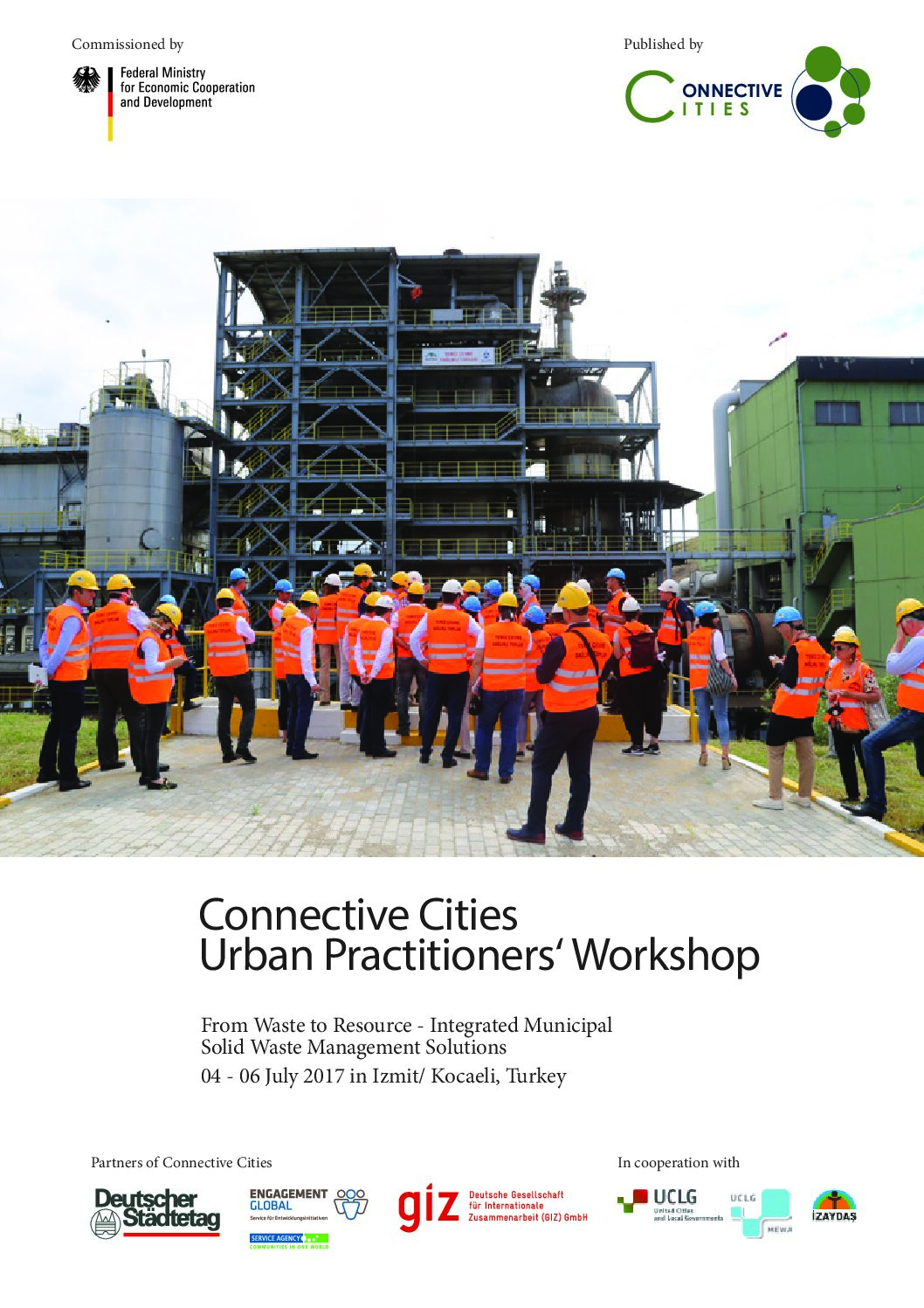
From Waste to Resource – Integrated Municipal Solid Waste Management Solutions

In collaboration with UCLG-MEWA and in the framework of the “Municipal know-how for host communities in the Middle-East” programme, Connective Cities organised a practitioners’ workshop on integrated solid waste management in İzmit/ Kocaeli, Turkey from July 4-6th, 2017.

The workshop aimed at fostering exchange between urban waste management practitioners from Turkey and Germany through good practice presentations and peer-to-peer advisory in order to create local action plans that improve solid waste management in an integrative manner.

The report provides a brief summary of the workshop, describing the starting situation in Turkey and featuring key discussion points, presented good practices and the project ideas developed in the workshop.

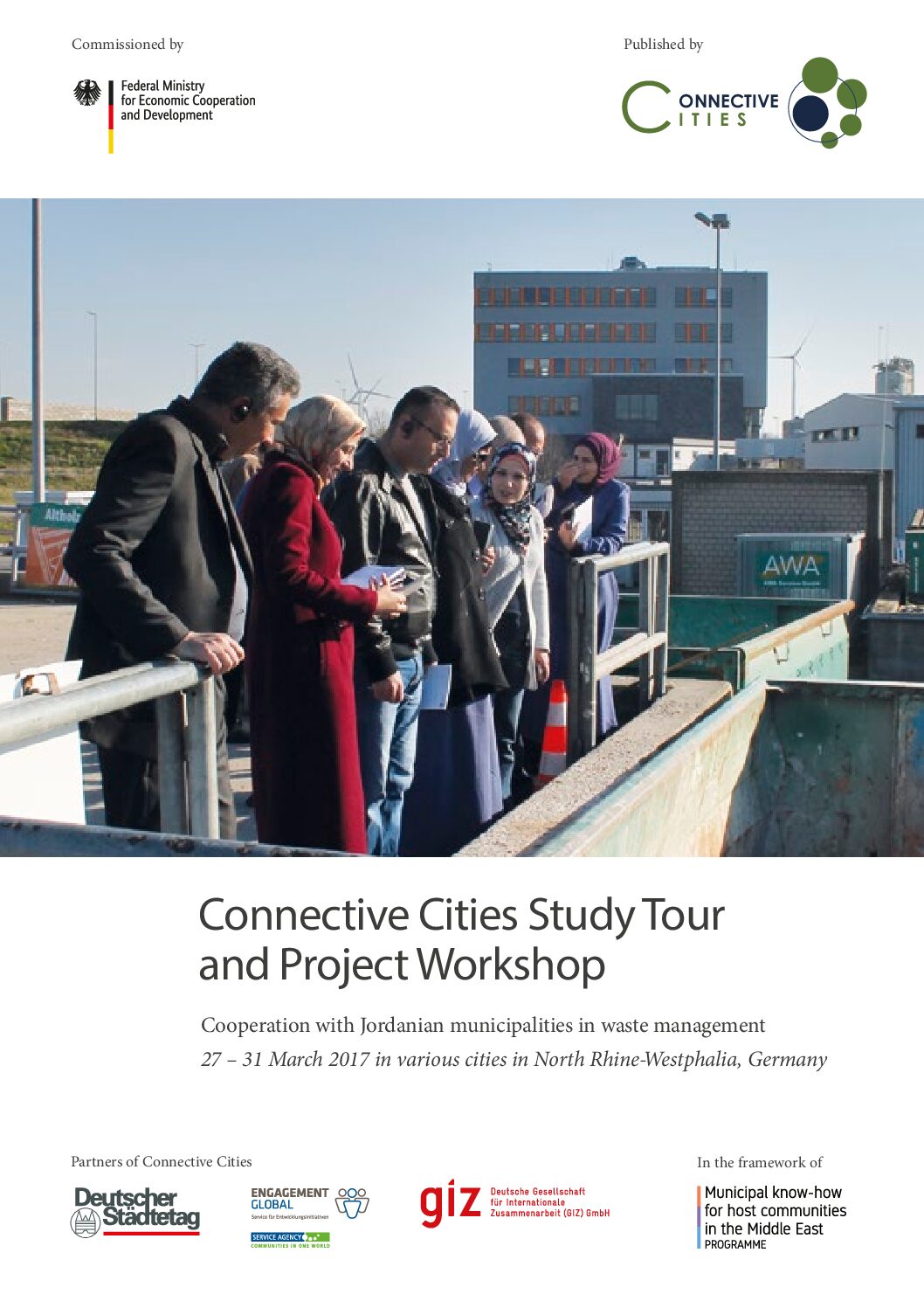
Connective Cities Study Tour and Project Workshop

With the continued growth of Jordan’s urban population as a consequence of the Syrian civil war, municipalities are struggling to cope with the increasing amounts of solid waste. Against this background, Connective Cities – in the framework of the “Municipal know-how for host communities in the Middle East” programme – brought together municipal actors from both Jordan and Germany for a Study Tour and Project Workshop in North Rine-Westphalia to enhance joint learning, develop concrete project ideas and strengthen bilateral cooperation between participating cities. This documentation contains a brief introduction to major aspects of integrated solid waste management, summarises insights presented and highlights the key outcomes of the joint workshop.

Taller de Proyecto de Connective Cities en América Latina

Ante la creciente urbanización en América Latina, las ciudades se ven enfrentadas a grandes desafíos de la movilidad urbana. También las ciudades de municipios alemanes, en muchos casos se ven frente a desafíos similares. Estos desafíos se refieren a temas como la integración de barrios menos privilegiados, al transporte eficiente entre vivienda y trabajo para los ciudadanos o al aseguramiento de un sistema de transporte en favor de un desarrollo económico local. Al mismo tiempo se busca garantizar una buena calidad del aire, mejorando así la salud de los ciudadanos y el clima urbano.

En respuesta a la demanda por parte de expertos de la práctica municipal latinoamericana y alemana, Connective Cities organizó en 2015 un evento en Bogotá Colombia acerca del tema Movilidad Urbana. Durante ese evento, se expresó la necesidad para la realización de otro taller con el enfoque en los sistemas integrados de movilidad y sus relaciones con inclusión social y mitigación del cambio climático. Ante esto, Connective Cities ofrece en mayo de 2016 un taller referente a Sistemas Integrados de Movilidad para Ciudades Inclusivas y Amables con el Clima. El presente documento resume los resultados de dicho taller.

4th Connective Cities Asian Dialogue Event

Road transport accounts for over 80% of the total transport emissions in Asia. If no countermeasures are taken, CO2 emissions resulting from the transport sector are projected to rise by 70% by 2050. At the same time, 64.5% of Asia’s population will be urban by 2050. Therefore, the extremely rapid increase of urban population in Asia and the rising CO2 emissions resulting from the transport sector lead to a high demand for climate-friendly means of urban transport.

The 4th Connective Cities Practitioners’ Workshop, which took place from 27 to 29 September 2016 in Bangkok, Thailand, brought together representatives from China, Georgia, Indonesia, the Philippines, Thailand and Germany to exchange on the varied and complex tasks of sustainable urban mobility and climate change focusing on climate-friendly means of urban transport to reduce air pollution.

Operationalizing the Urban NEXUS

This study “features an essential step ahead in putting the NEXUS intopractice for a sustainable urban future by delivering an approach, which encourages new ways of thinking and action in institutions, policy making and society at large.”

“The aim of this publication is to provide a conceptual foundation and hans-on approach that serves to inspire, identify and implement NEXUS solutions for integrated, resource-efficient development in metropolitan regions. It shall thereby spark exchange, debate, and learning across sectors and scales.”

Innovative measures of community-based monitoring as an instrument for inclusive urban development

The GIZ sector projects ‘Program Millennium Goals and Poverty Reduction’ and ‘Policy Advice for Urban Development’ jointly support – on behalf of the German Federal Ministry for Economic Cooperation and Development (BMZ) – CBM as an instrument for inclusive urban development. The objective is to improve monitoring and impact evaluation of inclusive urban development programs, to enhance decision-making and management processes of municipalities and strengthen the dialogue between them and urban poor groups. The joint measure includes a pilot project in Ethiopia and a survey in Bolivia as well as two studies by the United Cities and Local Governments (UCLG) and Slum/Shack Dwellers International (SDI). The report at hand summarizes and reviews the findings from the three studies and a review of the CBM pilot project in Ethiopia. It gives tentative recommendations to development cooperation and urban development experts for future application of CBM as an instrument for inclusive urban development, and assesses the potential of CBM as a contribution to urban indicators with regards to the post- 2015 debate and MDG/SDG monitoring.