


Amidst the energy crisis that Lebanon is facing, the municipality of Qaraoun has succeeded in overcoming major impediments to the provision of renewable energy to its residents. The renewable energy project ‘PV SOLAR SYSTEM- OUR FUTURE HOPE’ has addressed local needs for renewable energy, technical and vocational education and training, as well as community awarness raising. The project has adopted an inclusive approach that ensured gender-sensitivity throughout its components.
Category: Water supply / sewage
Greater Accra Metropolitan Area (GAMA) Sanitation and Water Project for Ghana

The Greater Accra Metropolitan Area (GAMA) Sanitation and Water Project was launched to increase access to improved and affordable sanitation and water services in the GAMA, including reducing the cost of a toilet from US$600 to about US$50. The GAMA project benefited more than 230,000 people in low-income communities, increasing household toilet coverage by 12%. Cholera and waterborne disease outbreaks have decreased thanks to improved environmental sanitation conditions, household sanitation facilities and 282 km of water pipelines.
Charlotte Akwaah Adjei, project manager of the project, describes (in English) the project’s approach and achievements in the podcast.
Listen to the podcast at YouTube: https://youtu.be/MRNfkALjmIw
More information: Greater Accra Metropolitan Area (GAMA) Sanitation and Water Project for Ghana
Greater Accra Metropolitan Area (GAMA) Sanitation and Water Project for Ghana

Ghana’s Ministry of Sanitation and Water Resources came up with a Rural Sanitation Model and Strategies (RSMS) to support rural communities with basic sanitation using the Community-Led Total Sanitation (CLTS) concept in efforts to eliminate open defecation. This approach has also been applied in the cities also with an emphasis on the low income urban communities. The project, Greater Accra Metropolitan Area (GAMA) Sanitation and Water Project was launched to increase access to improved and affordable (from an average bill of $600 to about $50) sanitation and water supply facilities in the GAMA.
Connective Cities’ network in Sub-Saharan Africa – our achievements in the 3rd phase

Review of the dialogue events, issues addressed during the learning processes, project ideas supported and good practices shared, as well as insights in the current activities of the established working groups of Connective Cities’ network in Sub-Saharan Africa.
More: https://youtu.be/Js4YZ5vxUMI
More videos on our YouTube channel
Bremen: Good crisis management pays off in times of COVID-19
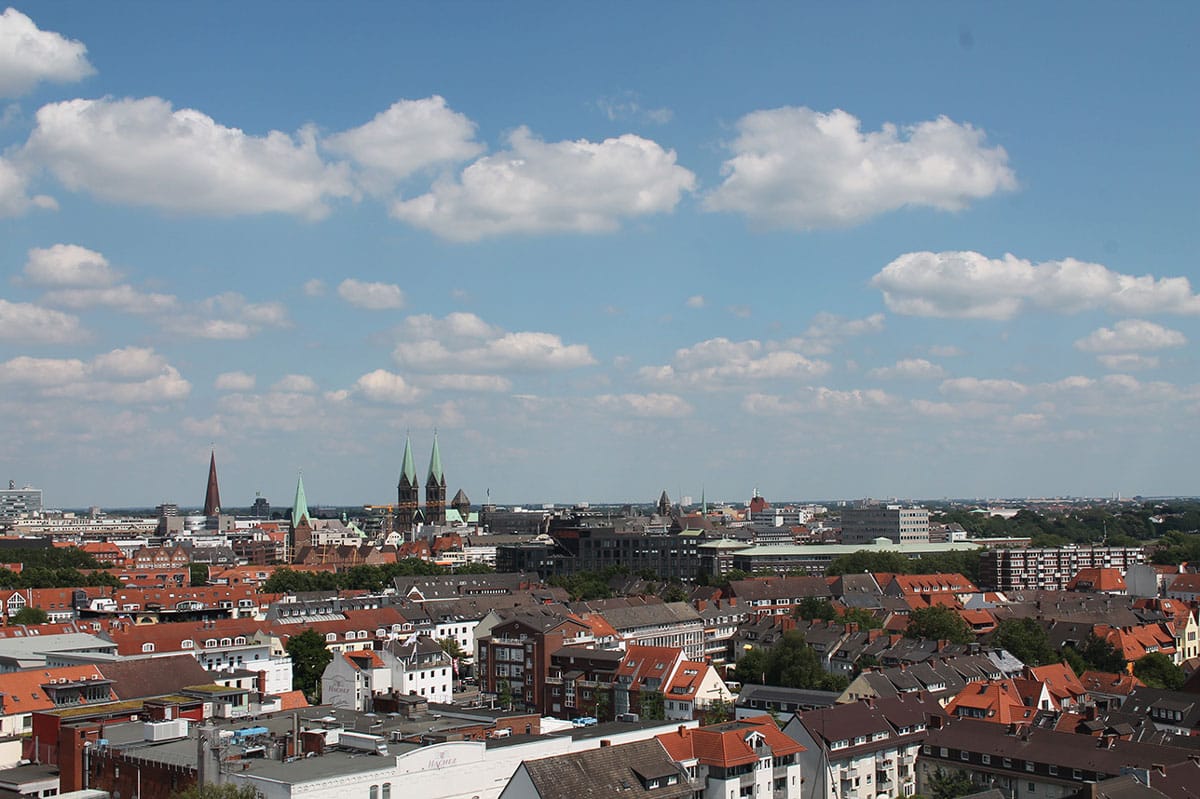
For years now, the Bremen-based wastewater utility company hanseWasser has been investing in efficient crisis and emergency management. Now, during the COVID-19 pandemic, its preparedness is paying off. The company is able to adapt its operations quickly and efficiently in line with new demands.
Municipal Response to COVID-19 for Sustainable Urban Development in Southeast Europe and Caucasus
The COVID-19 pandemic tested the robustness and resourcefulness of mostly all municipal services, from transportation and waste management to recreation and communication, pushing cities to reinvent new ways to serve their citizens. Besides, pandemic-centered protocols set new behavioral patterns – many of which were quite stressful for urban economies. Others, on the contrary, made both city leaders and citizens rethink the status-quo regarding sustainability and resilience. They created the opportunity for a green and circular economy to determine the mood of the recovery. Thus, a deep and better understanding of a city’s systems and operation is required in order to move towards sustainable development and greater resilience. If cities manage to learn from the COVID-19 crisis and proactively apply long-term prevention and risk reduction approaches, they will meet future emergencies better prepared or avoid some of them.
The following report summarizes the study on municipal response to COVID-19 pandemic. The study was conducted in September 2020, more than half a year after the global emergency was announced. It covers cities of Albania, Armenia, Azerbaijan, Belarus, Bosnia and Herzegovina, Georgia, Kosovo, North Macedonia, Moldova, Montenegro, Serbia and Ukraine.
Interview with Awande Buthelezi: Crisis Management and Digitalisation

Awande Buthelezi from Johannesburg, South Africa, shows how did he and his NGO handled to know who was in need of essential supplies such as water when there was no existing data about the precise locations.
More: https://youtu.be/r4WG9clnn40
Join us and watch a special series of videos and podcasts that will show how to overcome a crisis from many different points of view. More videos, podcasts and interviews on our COVID-19 page.
Provision of basic services: water supply

Water has been a critical commodity in the fight against the Corona. It has been used in regularly washing hands and maintaining hygiene. Cities/ municipalities therefore, have been in the forefront in ensuring that there is enough supply of water.
On the 27th of October, 2020, 13 participants from various cities/ municipalities in Kenya, South Africa, Tanzania, Zambia and Zimbabwe came together to engage on the subject of water supply. The composition of the participants varied from cities/municipalities to local government associations including Kiambu, Lusaka, Mbeya, Nairobi and Pretoria. The aim was to engage each other on the challenges being faced and the changes that need to be adopted going forward in the Water, Sanitation and Hygiene (WASH) sector.
Program
Four presentations were made in this session and the scope covered views and experiences from the cities (Nairobi City County), research work and civil society organizations (Ferrial Adam – researcher & Water and Sanitation for the Urban Poor- WSUP). The session was moderated and gave room for response to the presentations and sharing of experiences from other cities. The session sought to respond to the following questions:
- What have been the core challenges for the municipalities?
- What measures have municipalities put in place?
- How do the municipalities deal with vulnerable groups which were most affected by the pandemic?
- Have there been any lessons learned already for long term strategies to improve cities’ resilience (i.e. preparedness for pandemics or similar events in the future)?
Presentations
A Civil Society Response to the Water Crisis During Covid-19 – a Place for Activist Citizen Science
Ms. Ferrial Adam
Nairobi City County Response to Covid-19
Mr. Mario Kainga
How can the Global WASH Sector Respond Better in Future Crises?
(Blog: https://www.wsup.com/blog/how-can-the-global-wash-sector-respond-better-in-future-crises/)
Mr. Kariuki Mugo & Ms. Eden Mati
Results
The presentations and discussions confirmed that most cities in SSA have inadequate coverage of the basic service; water. The sector players need to look into more sustainable solutions to the gap in provision of the service as opposed to short term measures in response to emergencies that are not long lasting. The highlights of the session were:
- most of the countries in Africa are still water scarce.
- there had to be sporadic interventions to reach the vulnerable in society who had no water & that the actors should not ignore the poor at their peril.
- water has value hence encouraging the consumers not to pay has a negative impact on the service providers.
- water utilities need operational sustainability plans that will stand in emergencies.
- need for structured mandates & coordination mechanisms for institutions.
- ensure equity in access to basic urban services.
- the mapping of the water stressed communities using online tool by the activists is commendable and worth upscaling and replicating.
Asset Management to Optimize Water and Wastewater Infrastructure

Cost-intensive infrastructures such as drinking water and wastewater systems require carefully considered and target-oriented investment decisions from the management. The basis for this is Asset Management: the systematic inventory and documentation of all components, including a condition assessment and an evaluation of a possible extent of damage. The sustainable management of the water and wastewater infrastructure is thus based on a risk-based maintenance strategy. On the one hand, this is to maintain the most undisturbed operation of the facilities possible, and on the other hand, the limited resources are to used as efficiently as possible.
That is the theory! However, what does this mean in practice? About 25 municipal practitioners from 10 cities in Germany, the Palestinian Territories, Tanzania and Uganda exchanged ideas, developed solutions and project ideas together. They had accepted the invitation of Connective Cities and Hamburg Wasser to the virtual dialogue event, which took place from 30.11. – 02.12.2020.
Starting with an exchange of experiences on good practices and projects in the cities, challenges in implementation were identified and ultimately three project ideas were developed for Songea (Tanzania), Bethlehem (Palestinian Territories) and small and medium utilities in Uganda, which can lead to an improvement in efficiency and organisational framework for asset management.
Local Development Program for the City of Agadir in Morocco

Agadir municipality has pursued ambitious policies aimed at enhancing the quality of life of the city’s inhabitants, while protecting the environment and fostering sustainable development. The undertaken efforts targeted various key areas, in which the requirements and responsibilities for achieving environmental, social and economic sustainability were met.