Call for participants: Local Economic Development and Job Creation in MENA

Beyond the Immediate Response to the Economic Impacts of the Pandemic

The international cities platform, Connective Cities and its initiators, the Deutsche Gesellschaft fuer Internationale Zusammenarbeit (GIZ) GmbH, the German Association of Cities (Deutscher Städtetag) and Engagement Global GmbH with its Service Agency Communities in One World (SKEW), invite urban practitioners from the Middle East and North Africa region (MENA) and Germany to take part in the virtual dialogue event “Local Economic Development and Job Creation” from 29th September to 07th October 2020.

Thematic focus of the virtual dialogue event:

The Connective Cities virtual dialogue event on will focus on the following subtopics:

  1. Strategic planning for LED: guiding a participatory LED process that encourages partnership arrangements and inclusive representation; mobilizing strategic partnerships with the private sector and investors to access alternative financing mechanisms; enabling the joint design and implementation of a common development strategy; using local resources and competitive advantages to create a resilient locality.
  2. Promoting sustainable livelihood opportunities and social enterprise: implementing livelihood programs to enhance entrepreneurship skills and support the establishment of microbusinesses; contributing to social cohesiveness and conflict prevention through decent job creation for local communities.
  3. Public investments in green infrastructure and circular economies: creating decent jobs and revenues for localities through the investment in green infrastructure and circular economy; transformation towards green economy.

Objectives and Methodology

This virtual dialogue event is the first component of the Connective Cities learning process on LED and job creation and it aims at promoting the exchange of expertise on good practices for planning and implementing LED and job creation programs in cities in MENA. It thus facilitates practice-oriented exchange and peer-to-peer consultations among municipal actors on effective solutions to address challenges related to LED and job creation in their local realities. Through its virtual format, the dialogue event enables sharing of a broad variety of information synchronously as well as asynchronously, while ensuring the ease of communication between the participants. Interaction will take place using a variety of tools and the discussions will be recorded for future reference.
The objectives of the dialogue event include:

  • Facilitating exchange of know-how and experience on good practices through peer-to-peer consultation among urban practitioners from MENA and Germany;
  • Developing the capacity of participants to analyse and overcome challenges of implementing LED and job creation programs;
  • Determining future support needed for projects, which includes support from the Connective Cities International Community of Practice for Sustainable Urban Development.

Participation and Contact

Prospective participants are expected to provide a good practice example from a project they implemented or are currently implementing fitting the thematic focus of the event. We particularly encourage showcasing of good practices that incorporate gender- and/or climate-sensitive solutions.
The deadline for application is 11st September 2020.

For further details see: Call for participants [pdf 4 pages]

For applications and queries from interested experts from the MENA region, please contact: Dr. Muna Shalan, GIZ Regional Network Coordinator Connective Cities – MENA region (muna.shalan@giz.de).
Interested German experts should contact Ms. Alice Balbo, Connective Cities Project Manager at the German Association of Cities (alice.balbo@staedtetag.de).

Call for participants: International exchange of experiences: lessons learned in the Covid-19 crisis

August – December 2020

Cities worldwide are still experiencing the impacts of the Covid-19 pandemic throughout all their municipal departments. In addition to public health care, municipal services must be maintained during the crisis. Local governments must also ensure their own ability to function properly. Some consequences of the pandemic, such as halting economic development, hit local authorities first. Municipalities are currently having to learn to cope with new situations very fast. But the crisis has also shown how important the resilience of municipalities is: this directly applies to local crisis management and disaster preparedness as well as the need for continually adaptive urban planning and development towards increasing the resilience of cities. The current crisis has shown and proven once again that resilience is an essential capacity of municipalities.

Many cities and municipalities have found solutions to the new challenges and developed new strategies. In order to better address the issues related to the pandemic, it is now necessary to share and possibly develop these solutions and strategies together.  
From August to December 2020, the international community of practice for sustainable urban development Connective Cities is organising a series of virtual exchange formats on measures, challenges, and solutions to overcome the corona crisis in cooperation with engaged urban practitioners (municipal experts as well as local experts from academia, civil society and business).

The series of virtual exchange events targets German and international urban practitioners working on various aspects of municipal strategies to cope with the COVID-19 crisis. Presentations of good practice examples will encourage the participating stakeholders to exchange ideas. Developing customized and practical solutions for relevant affected cities can also be an additional and beneficial outcome of the series in the context of a follow-up cooperation.

More information: Detailed and regular updated schedule of events

Towards the Localization of the SDGs – 4th Report

LOCAL AND REGIONAL GOVERNMENTS’ REPORT TO THE 2020 HLPF 4th REPORT

The fourth report of the local and regional governments (LRGs) to the HLPF: Towards the Localization of the SDGs (2020) has been produced at a difficult time, when the world is suffering the effects of a global pandemic. The impact of this crisis on the social and economic fabric of our communities is, however, still difficult to measure. Within this context, the words “solidarity” and “cooperation” take on an even more relevant meaning. This was the message of the UN Secretary-General in his report to the HLPF and it reflects the feelings of our constituency, based on the experiences of numerous cities and territories.

The transformative framework of the universal development agendas remains essential for a more sustainable future. Local and regional governments from all over the world are reinstating their strong commitment to achieve the transformation that their societies call for after the pandemic through the potential of the SDGs and the universal development agendas.

In this context, the report analyses the evolution of the process of SDG localization in cities and territories throughout the world, particularly focusing on the 47 countries reporting this year. In doing this, it builds upon the information presented in the Voluntary National Reviews (VNRs) and on the views expressed by LRGs through their own reports (more than 40 Voluntary Local Reviews from cities and regions and six reports from LGAs which provide a wider, subnational view of the localization process in the countries reporting this year). It also collects together the answers to the GTF survey, with the visions of LRGs from 75 countries. This report will be presented during the Local and Regional Governments’ Day at the 2020 High-Level Political Forum.
Political Forum.

Niteroi Resilience Plan

Niteroi is a Brazilian coastal city surrounded by hills just outside Rio de Janeiro. With its approximately 500,000 inhabitants, Niteroi’s economy focuses mainly on commerce and services. In 2010, the city had the highest Human Development Index in the state of Rio de Janeiro and the seventh largest among Brazilian municipalities. Also, it is the first of the state concerning sanitation performance.

As a coastal city, Niteroi has at the same time, many tourism possibilities with extraordinary beaches, but also, problems related to sea level rising and eventual rough seas. Climate change has also contributed to an increase in droughts and wildfires.

The city is located between the sea and the hills and in the past decades, with the increasing of the city combined with a non-structured urbanistic plan, most of the hillsides were irregularly occupied by low-income families in a massive way. As the result of this situation, Niteroi has areas occupied by vulnerable people where there are significant risks of land sliding.

In April 2010, more than 240 people died in landslides, most of which occurred on the hills surrounding the city. After that, many preventive actions were made, aiming to reduce the number of accidents and deaths, what generated excellent results.

Finally, the municipal government has developed a Resilience Plan aiming to strengthen the direct and indirect actions of the Niteroi Civil Defense. It has had a great importance and a strong impact in the city. The plan was finalized and launched in December 2019 and its implementation has already started.

Cities Policy Responses

This note was developed by the OECD Centre for Entrepreneurship, SMEs, Regions and Cities (CFE) in collaboration with the OECD Working Party for Urban Policy and the OECD Champion Mayors Initiative for Inclusive Growth. It is an update of the earlier versions released on 27 March and 13 May, which expands the examples of measures taken by cities to respond to COVID-19 and recover from the economic and social crisis. The note provides analysis on issues related to the economic, social and environmental impacts, lessons learned in terms of digitalisation, mobility, density, urban design and collaborative governance, and action-oriented guidance to build back better cities, building on previous work on urban resilience. Short and medium term responses provided by cities are clustered around six categories: i) social distancing; ii) workplace and commuting; iii) vulnerable groups; iv) local service delivery; v) support to business; and vi) communication, awareness raising and digital tools. The note also includes updated information on how cities are progressively exiting the lockdown.

Call for participants: Improvement of urban water supply, sanitation and urban mobility in Sub-Saharan Africa

“Redefining service provision in unprecedented times” – Intermittent sessions between the 7th and 18th September, 2020

The challenge of providing adequate basic services and infrastructure in African cities is central to the economic performance of cities, and their ability to provide a minimum quality of life to their citizens. The major services which cities provide include transport networks, water and sanitation connections, electricity, health, education, and a whole host of other ancillary services such as street cleaning,and the maintenance of public spaces among others.

Connective Cities invites municipal experts from sub-Saharan Africa and Germany to participate in the virtual dialogue series on “Improving efficiency and effectiveness in water supply, sanitation and urban mobility”. The aim is to strengthen the capacity of municipalities to provide sustainable public services through intermunicipal knowledge exchange and mutual learning.

The topic will be addressed by focusing on three specific questions:

  1. Water supply: Approaches and technologies to improve access to clean drinking water
  2. Wastewater management: challenges and technologies for an effective municipal wastewater management
  3. Urban mobility: effective and environmentally friendly transport management

The Covid-19 pandemic also calls for redefining how cities design their projects to safeguard against the negative impacts and also to remain resilient in the face of a pandemic in future.

Please contact us if you have any questions:
Sophia Kamau, Coordinator of the Regional Network Sub-Saharan Africa: sophia.kamau@giz.de
Alice Balbo, Connective Cities Project Manager for the German Association of Cities: Alice.Balbo@staedtetag.de

Connective Cities and the COVID-19 pandemic

Dear experts and colleagues,

many municipalities around the world are currently facing many challenges, some of which were identified as a direct result of the Covid-19 pandemic, some other existing challenges were also negatively affected and increased their complexity and urgency. In view of the prolonged necessity of social distancing and several travel restrictions that persist in many places, our upcoming events will be offered in various virtual formats until further notice. Face-to-face events and activities will be considered for a later stage, until such options are possible.

The knowledge and experience exchange amongst peers shall continue with regional and thematic focus in accordance with current situation and needs. In addition to the established Connective Cities methodology the new formats offer several new virtual tools, that can strengthen the joint development of new ideas and practical solutions for current challenges. More information about upcoming events will be announced through our usual communication channels.

The Connective Cities Team

Series of virtual events on local climate leadership in times of COVID-19

The GIZ project “Climate Policy Meets Urban Development” is organizing a series of three online-seminars on local climate action in times of #COVID19. The series will kick off with its first online-seminar on 7 July 2020, 3-4 pm (CEST/UTC+2). The session will introduce Germany’s multi-level governance framework with a focus on the German National Climate Initiative (NCI) and its mechanisms to foster local climate projects.

Session 2 on maintstreaming climate projects into city governance frameworks and session 3 on steering local climate leadership trough collaborative action will take place on 1 September and 5 October. 

More Info

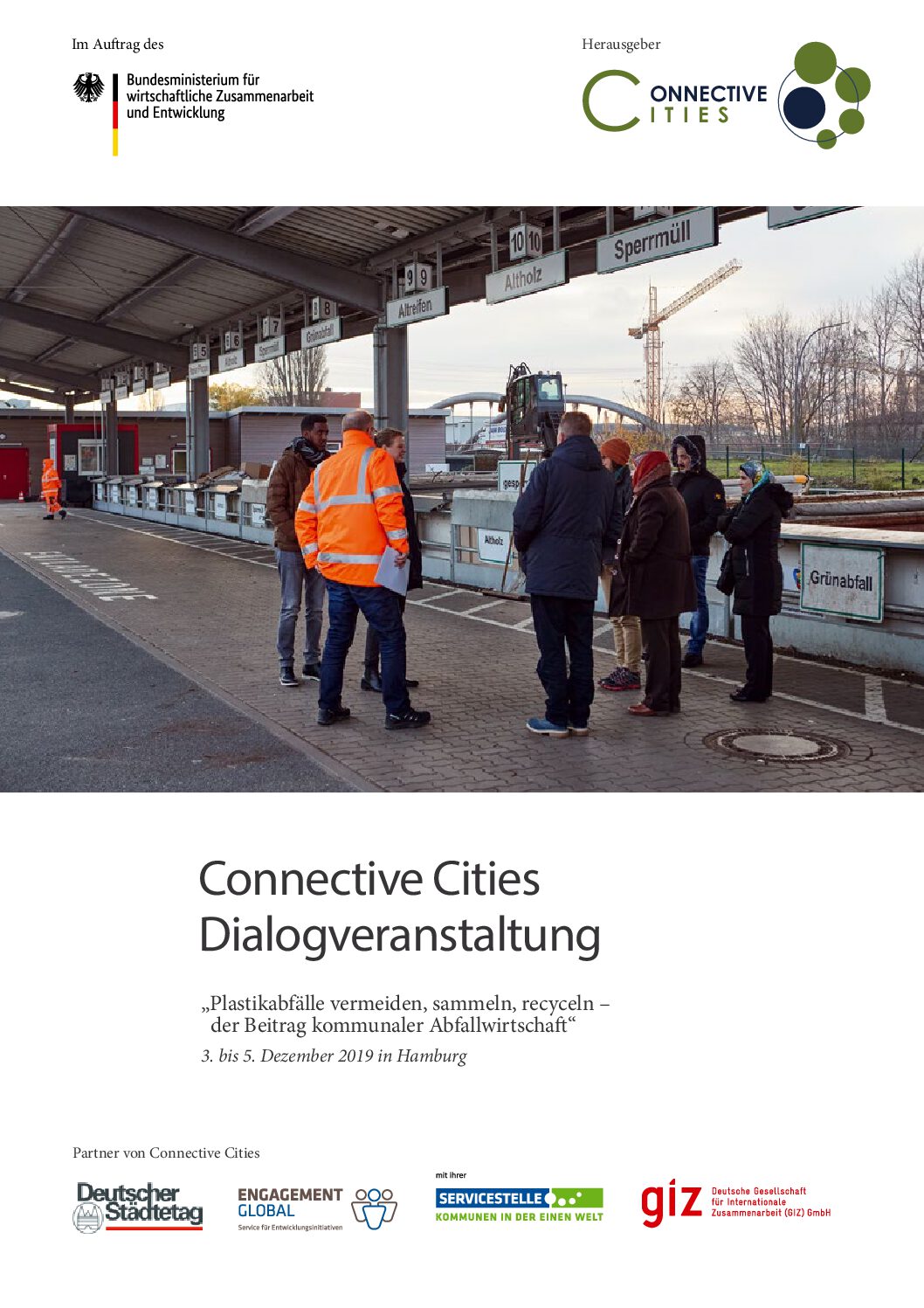
Avoiding, Collecting and Recycling Plastic Waste – The Contribution of Municipal Waste Management Systems

Almost 40 local practitioners from 13 cities, 9 countries and 4 continents intensively exchanged their experiences on the topic of ‘plastic waste’ and jointly developed solutions and project ideas. They followed the invitation of Connective Cities and the City of Hamburg to a dialogue event on ‘Avoiding, Collecting and Recycling Plastic Waste – The Contribution of Municipal Waste Management Systems’, which took place from 3 to 5 December 2019 in Hamburg.

At the end of the conference, eight concrete project ideas were developed which have great potential for implementation. The spectrum ranged from the establishment of an umbrella organisation for waste collectors in Mitrovica, the establishment of a recycling centre in Himara, the economically sustainable organisation of the collection of recyclable waste in Vushtrri, the automation of the recycling plant in Kandy, the development of a communication strategy for the recycling project in Quito, the establishment of waste separation at household level in Hawassa, the certification of sustainable shops in La Unión, to action planning for greater quality and competition in waste collection in Mogadishu.

The documentation describes in detail the format of the dialogue event, the good practices and results of the working groups as well as the planned further steps to implement the developed project ideas.

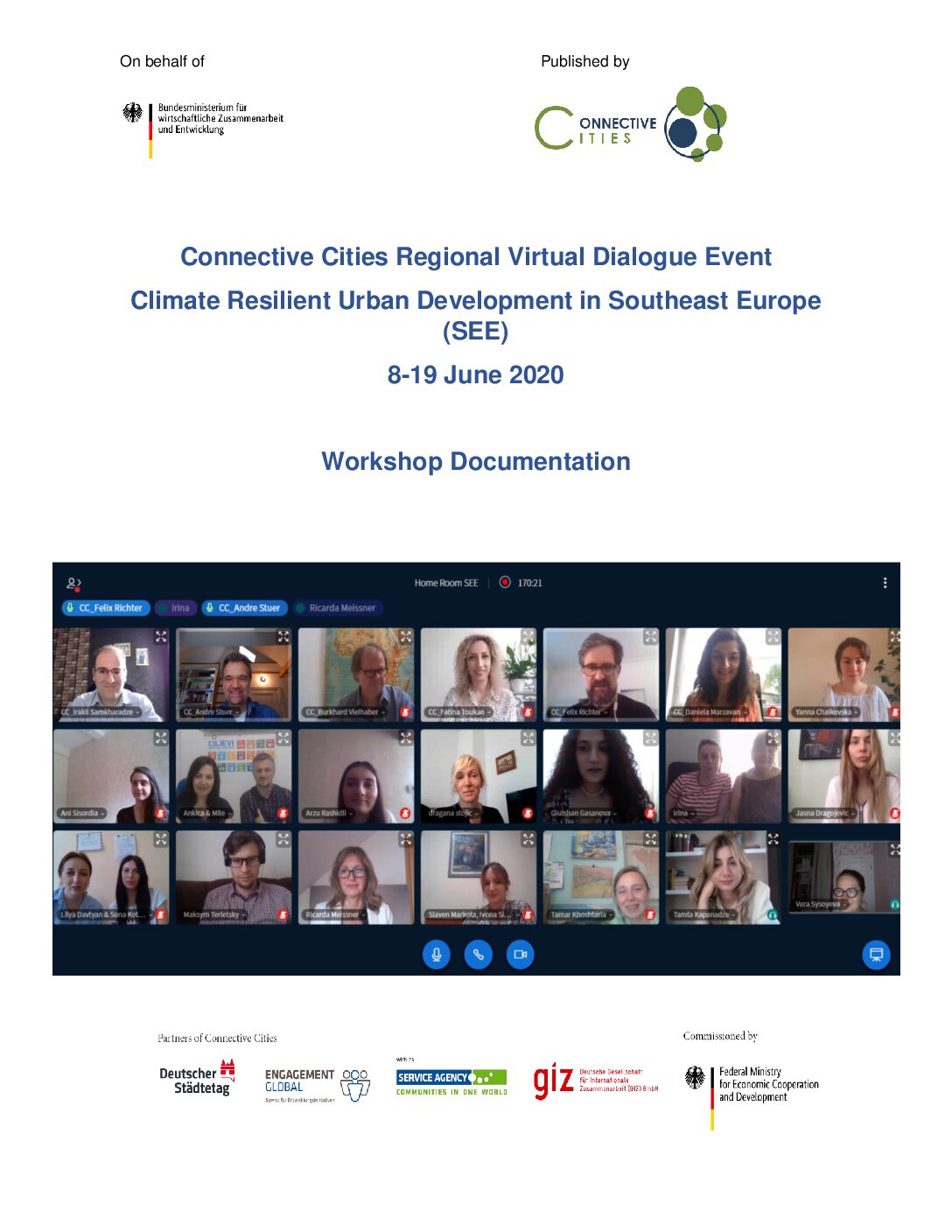
Climate Resilient Urban Development in Southeast Europe

The virtual event was the first component of the learning process conducted by Connective Cities in Southeast Europe. The aim of the virtual event was to support knowledge exchange and networking by increasing the visibility of good practices from municipalities in SEE region on one hand, and on the other hand by facilitating the needed virtual space and tools to create innovative solutions for local challenges through knowledge exchange and peer-to-peer consultations.

The virtual event, thus, supported transforming dialogue and exchange possibilities into a digital and remote format especially during and in the aftermath of the COVID-19 outbreak affecting heavily the lifestyle of urban dwellers and planers. As this will include effects on sustainable urban development, municipal urban practitioners need to develop more innovative and agile processes to improve future crises responses. Here, the interest was mainly in pragmatic solutions and approaches that can be applied or adapted to the different regional/local contexts. Furthermore, the event offered a virtual platform to discuss the challenges around the theme of climate resilient urban development and supported municipalities in developing new project ideas among peers that can be further implemented in the respective home communities or in the framework of existing or new thematic municipal partnerships.