

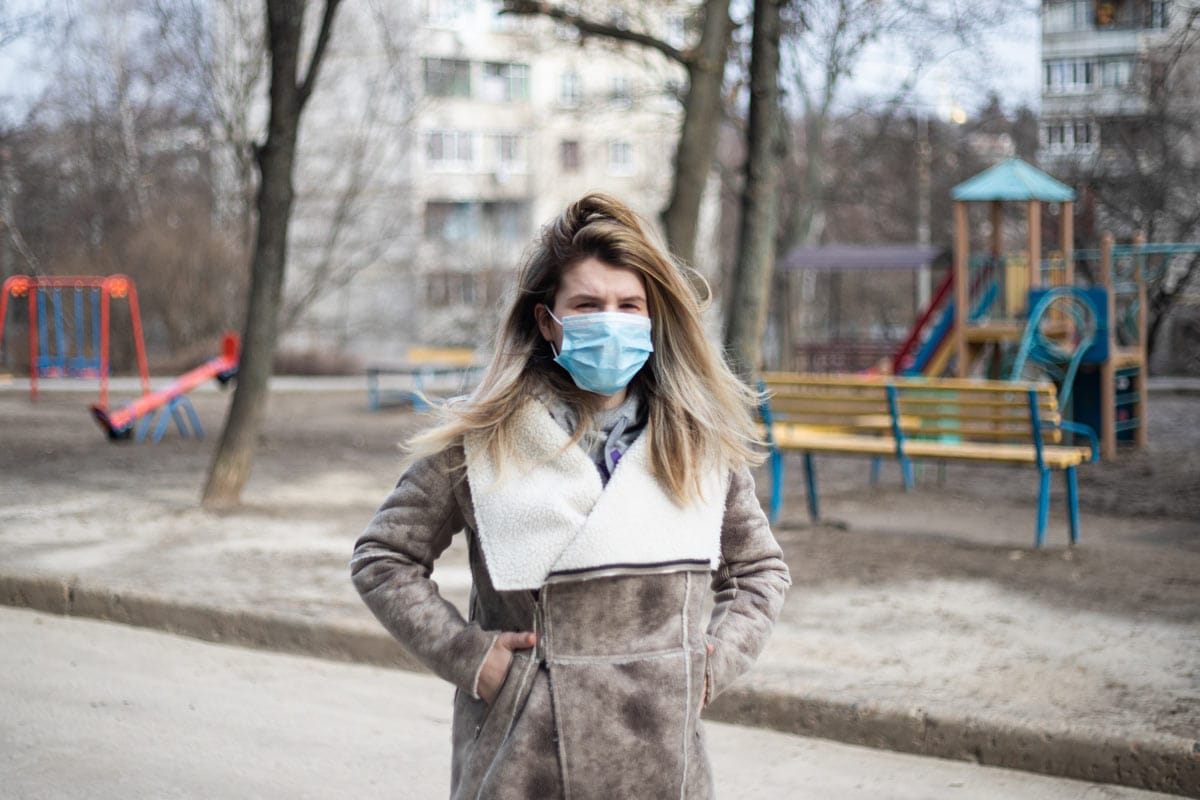
Corona lockdown can heighten the psychosocial problems many people are facing, for example in their family or partnership. Where this is the case, municipal psychosocial services need to respond flexibly. In Munich, for example, counselling for clients with smaller children was spontaneously relocated to playgrounds.
Category: Gender-sensitivity in the pandemic
Amman – strengthening social responsibility

With a prudent vision, the Greater Amman Municipality implemented several hard and soft measures to curb the impact of the pandemic on the local community using a three-pillars response approach: health, community, and environment. With the special focus on ‘community health and wellbeing’, the social development division fulfilled its role during the pandemic by implementing a myriad of measures under the umbrella of social services to the local community.
Final Report: Virtual Global Exchange

The exchange was designed to bring together urban practitioners from all over the globe. The goal was to ignite creativity, innovation, solidarity and motivation, while creating and enhancing this global community of practice around the common purpose of combating the global COVID-19 pandemic and its consequences with smart local solutions and strategies.
During the first week, urban practitioners and experts from different municipalities, the civil society, business and academia, presented a total of 56 Good Practices in 18 sessions and gave insights into their experienced challenges and local solutions to deal with the pandemic. The exchange were centered around the nine topics were Public Health, Crisis Management, Economic Response, Housing, Education, Digitalisation, Crisis Communication, Innovation, and Green Urban Recovery.
The second week was about receiving practical “How To” capsules with practical exercises on topics that came up repeatedly during the exchange events such as: social media usage, digital tools, and how to plan for virtual meetings. Finally, the newly learned mindsets and tools could be applied in a 4-hour solution design workshop.
International exchange of experiences: lessons learned in the Covid-19 crisis

As soon as it was clear that the Covid-19 would pose serious challenges to municipalities around the world, the Federal Ministry for Economic Cooperation and Development (BMZ) addressed Connective Cities to adapt its methodology to provide municipal practitioners with an opportunity to share their experiences in an agile and flexible way.
In many ways, local authorities are constantly at the forefront of global challenges, as they are the first level of government to feel the impact of any crisis. Yet municipalities also have the potential to act as fruitful sources of innovative solutions in addressing these challenges, and those solutions would also require cooperation with different levels of government and the involvement of many different types of stakeholders: Academia, Civil Society, Private Sector, etc..
The series started in July/2020 and had the objective to help improving the responsiveness and resilience of urban actors through exchange and peer-to-peer learning by promoting the exchange of practical solutions between practitioners and to disseminate good practices. The explosive spread of the virus put existing municipal structures and capacities to the test. On the other hand, the interconnectivity and digitalisation opened up the possibility of offering a series of exchange events 100% virtually.
Hardly all the benefits of a well-organised personal exchange can be fully replaced by the current technologies. Nevertheless, in a crisis like the one caused by the Covid-19, technology made it possible to organise more than 35 response dialogue events with the participation of more than 800 specialists in such a short time.
Our main objective was to bring together experiences to be presented during and discuss how local authorities can cooperate, learn from each other and ultimately build their capacity to address global challenges. On the 9th of December, Connective Cities organised the official final event of the series “Municipal Response to COVID-19”.
Besides a keynote presentation from the Head of the Urban Policies and Reviews Unit the OECD, the event on the 9th of December included a showcase of examples from Stuttgart-Germany, Belo Horizonte-Brazil, Aman-Jordan, Tshwane-South Africa and Lviv-Ukraine. In closing an e-learning course on crisis management was presented by Dr. Peter Tinnemann, Head Global Health Science Unit, from the Charité – Universitätsmedizin Berlin.
During our additional session of 2020 on the 10th of December, tools and protocols that cities employ to monitor and control the infection chains during the COVID-19 pandemic were explored. While taking a closer look at the efficiency and effectivity of the tracking systems applied in the South Eastern Europe and the Caucasus, discuss existing challenges, and explore how can we enhance or scale-up tracing strategies. Speakers shared their experiences from different levels of local governance and research from Georgia, Serbia and Germany.
The Connective Cities team would like to thank all the inspiring and impressive urban practitioners who invested their time in sharing and discussing their good practices in response to the pandemic. In 2021 Connective Cities will continue to offer events and exchanges focused on the municipal needs connected to the Covid-19 pandemic. We warmly invite you to stay connected through our website and all our social media channels and stay tuned for updates and future events.
Call for solutions until 9 November: #SolutionsForCities

Worldwide cities face similar challenges. This has become even more visible through the outbreak of the Covid-19 pandemic. The pandemic situation has generated inspiring creativity and solidarity. How can we transfer innovative solutions from the pandemic to the future? How can we promote sustainable urban development for the common good? To tackle these questions, the German Federal Ministry of the Interior, Building and Community initiated the international, digital ideas competition #SolutionsForCities.
In a two-day virtual Challenge Lab, current challenges of cities were identified together with German Smart City model projects and with partner cities of the International Smart Cities Network (ISCN). These challenges will be published on the platform www.solutionsforcities.de with the Call for Solutions from October 28th.
Call for Solutions from October 28th to November 9th 2020
The Call for Solutions is a global call for the submission of digital solutions for the common good. It is aimed at international companies and start-ups, as well as local authorities, research institutions and projects, and civil society. The Call for Solutions opens on October 28th 2020 during the Smart City Day at the Smart Country Convention 2020! Until November 9th 2020, digital solutions can be submitted on the platform www.solutionsforcities.de as response to the published urban challenges.
Scalathon from November 23rd – 25th 2020
After the Call for Solutions, the participating cities or municipalities select the most suitable solutions for their challenges and compete in the Scalathon as a team with the respective solution providers.
The Scalathon is the core of the ideas competition and will take place from November 23rd – 25th 2020. During the three-day virtual workshop, selected solution providers will work closely together with the respective city or municipality, further develop the digital solutions and adapt them to the concrete local challenges.
Call for participants: International exchange of experiences: lessons learned in the Covid-19 crisis

August – December 2020
Cities worldwide are still experiencing the impacts of the Covid-19 pandemic throughout all their municipal departments. In addition to public health care, municipal services must be maintained during the crisis. Local governments must also ensure their own ability to function properly. Some consequences of the pandemic, such as halting economic development, hit local authorities first. Municipalities are currently having to learn to cope with new situations very fast. But the crisis has also shown how important the resilience of municipalities is: this directly applies to local crisis management and disaster preparedness as well as the need for continually adaptive urban planning and development towards increasing the resilience of cities. The current crisis has shown and proven once again that resilience is an essential capacity of municipalities.
Many cities and municipalities have found solutions to the new challenges and developed new strategies. In order to better address the issues related to the pandemic, it is now necessary to share and possibly develop these solutions and strategies together.
From August to December 2020, the international community of practice for sustainable urban development Connective Cities is organising a series of virtual exchange formats on measures, challenges, and solutions to overcome the corona crisis in cooperation with engaged urban practitioners (municipal experts as well as local experts from academia, civil society and business).
The series of virtual exchange events targets German and international urban practitioners working on various aspects of municipal strategies to cope with the COVID-19 crisis. Presentations of good practice examples will encourage the participating stakeholders to exchange ideas. Developing customized and practical solutions for relevant affected cities can also be an additional and beneficial outcome of the series in the context of a follow-up cooperation.
More information: Detailed and regular updated schedule of events