

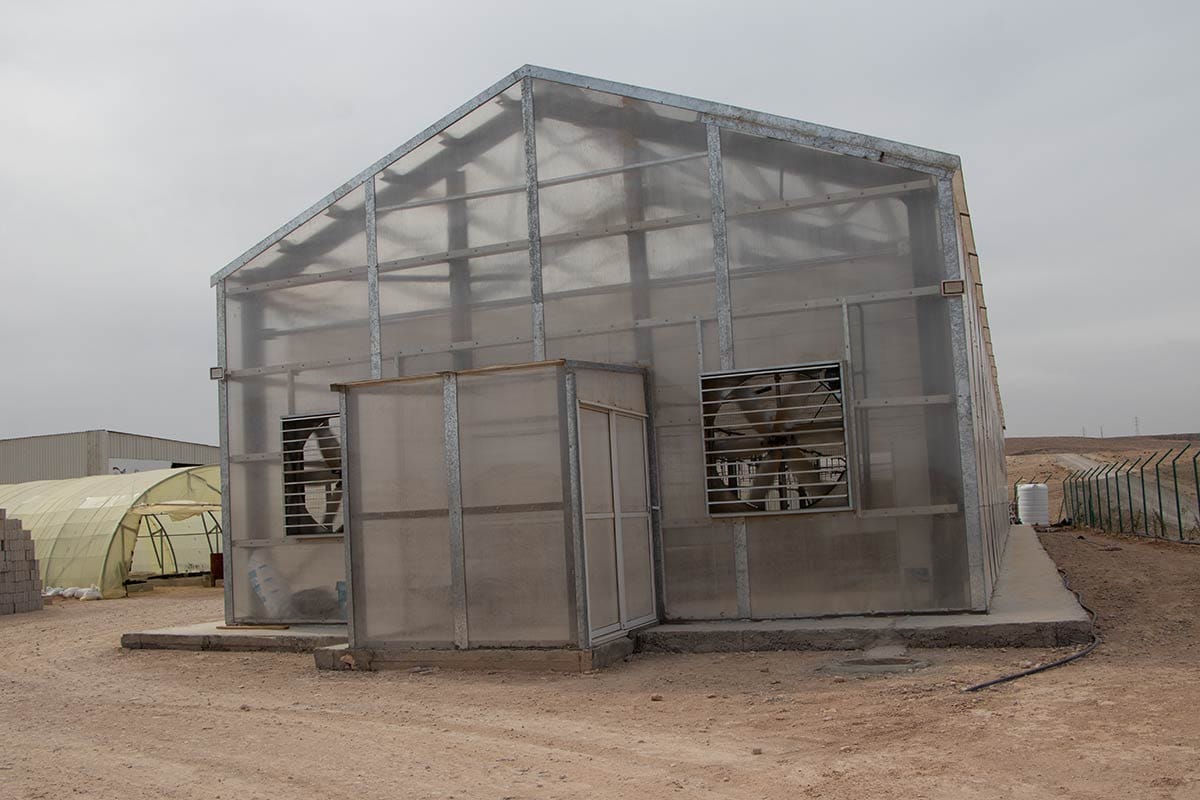
To address environmental challenges related to the loss of native species as well as the increasing CO2 emissions due to urbanisation, Karak municipality in Jordan constructed a nursery that aims at growing trees from native species. Besides demonstrating environmental protection and the transition into renewable energy sources, the project will have an economic impact resulting from the savings in the municipal budget as well as job creation for the local community.
Category: Energy efficiency and renewable energy
Digitalisation in Madaba Municipality, Jordan

In line with the efforts in Jordan to drive economic transformation and application of international quality standards, Madaba municipality developed a vision towards achieving equitable growth and sustainability. An integral part of this vision is the digital transformation of municipal services.
Southeast European (SEE) Regional Network continues exchange on recovery methods and practices

A total of up to 100 urban practitioners and experts participated in the Network Events held on behalf of Connective Cities international network initiative and Covid-19 Program. Two separate events held on 12th of November and 13th of December 2021, served as final big get-togethers of the year 2021 for the SEE Network members, leaving them with some food for thought and the floor for exchanges widely open for an upcoming year.
First Event on November 12, 2021 – “Connective Cities virtual exchange discussing the Southeast European Network’s development and presenting good municipal practices in the area of digitalization and crisis management” – was devoted to supporting peer-to-peer exchange and gathering municipal representatives, as well as field experts, to discuss crisis management and digitalization experiences, existing challenges, and to explore how scale-up strategies could be enhanced to meet crisis-induced demands. To cover these topics, the event was divided into three parts ensuring representation of all types of interaction as well as exchange. The web-seminar featured a Keynote speaker, who focused on COVID-19 and long-term challenges for territorial policies, followed by 3 case-study presentations on municipal responses to COVID-19 in terms of digitalization and crisis management from Melitopol (Ukraine), Tbilisi (Georgia) and Mostar (Bosnia and Herzegovina) – these examples demonstrated diverse practices taken up by each municipality during recent times. A panel discussion about the importance of digitalization for efficient crisis management at local governance level amid COVID-19 served as a closing ground of the event, ensuring an all-encompassing discussion on challenges, visions and possible peer-to-peer exchanges in the regards of topics discussed all throughout the day.
Recording and resources of the first session can be found on Connective Cities Platform here.
Sustainable urban energy planning in Southeast Europe
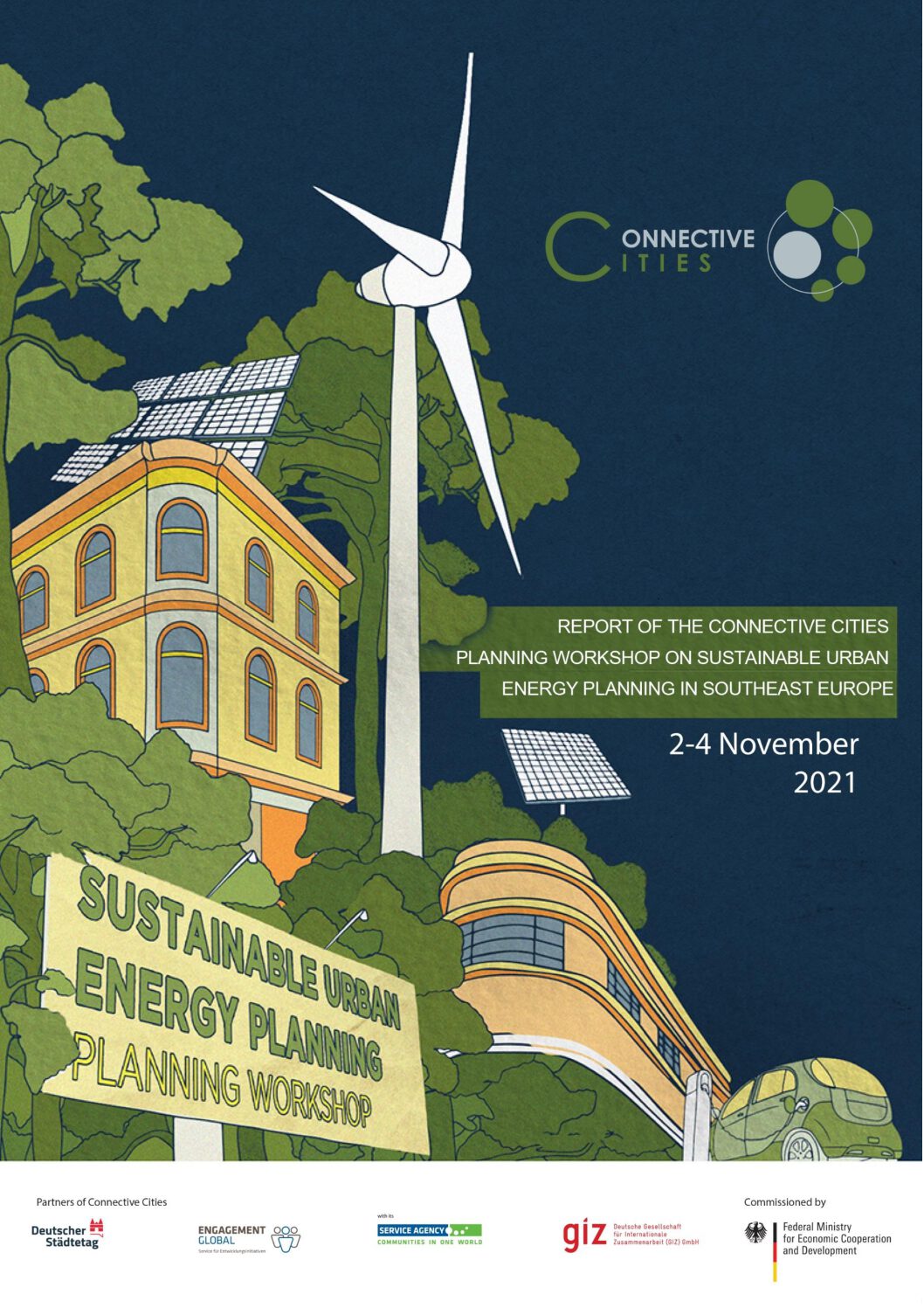
Sustainable Urban Energy Planning was a continuation theme for this year’s event gathering representatives of municipalities from Belarus, Ukraine, Kosovo and Georgia along with other interested practitioners in the field. These countries are the parties to international climate agreements and aim to harmonize their legislation with the energy acquis.
The Connective Cities Planning Workshop, held on 2-4 November 2021, represented a follow-up learning process for those 10 municipalities that were keen to engage after the Dialogue Event held in May 2021. The workshop aimed at supporting the municipalities in fine-tuning their project ideas and developing them further towards bankable project proposals. Due to COVID-19 pandemic it was decided to conduct the event virtually.
TUMI Transport Outlook 1.5˚C

The Paris Climate Agreement as adopted in December 2015 set out to reduce global greenhouse emissions at a rate that would limit global temperature increase this century to a level 2.0˚C above pre-industrial levels. It went even further, laying out steps that might be taken to pursue an increase limited to 1.5˚C.
for exactly how we can achieve the goal of limiting greenhouse emissions. The transport sector accounts for nearly one-quarter of global energy-related carbon emissions. Climate action in transport is urgently needed because energy-related carbon dioxide (CO2) emissions are the main driver of climate change (Teske et. al 2019). Yet a clear-cut path to transformation, one which is backed up with ‘hard’ numbers for policymakers around the world, remains missing. To close this gap, TUMI and the University of Technology Sydney developed a robust scenario study.
This study considers the conditions necessary to achieve these goals under three scenarios: A reference baseline study, in which no changes are implemented in terms of transport, along with a look at those changes that need to take place in order to limit warming to 1.5˚C or 2.0˚C.
For an executive summary and animated charts visit:
TUMI Transport Outlook 1.5˚C
The Paris Climate Agreement as adopted in December 2015 set out to reduce global greenhouse emissions at a rate that would limit global temperature increase this century to a level 2.0˚C above pre-industrial levels. It went even further, laying out steps that might be taken to pursue an increase limited to 1.5˚C.
for exactly how we can achieve the goal of limiting greenhouse emissions. The transport sector accounts for nearly one-quarter of global energy-related carbon emissions. Climate action in transport is urgently needed because energy-related carbon dioxide (CO2) emissions are the main driver of climate change (Teske et. al 2019). Yet a clear-cut path to transformation, one which is backed up with ‘hard’ numbers for policymakers around the world, remains missing. To close this gap, TUMI and the University of Technology Sydney developed a robust scenario study.
This study considers the conditions necessary to achieve these goals under three scenarios: A reference baseline study, in which no changes are implemented in terms of transport, along with a look at those changes that need to take place in order to limit warming to 1.5˚C or 2.0˚C.
For an executive summary and animated charts visit:
Building. Forward. Better

We look back on an eventful year. Hopes of getting the Corona pandemic under control quickly fizzled out. The World Climate Conference cast its shadow ahead, only to end with a mediocre result. Despite, or perhaps because of, these setbacks, experts at the municipal level intensified their cooperation to better meet the challenges of the pandemic and climate change. Our networks expanded, project proposals became more concrete, working groups more agile, and some “champion municipalities” are themselves doing much to move the networks forward. It is time to pause for a moment, look back and dare to look forward to the future. Our coordinators of the regional networks in South Eastern Europe, the MENA region and Sub-Saharan Africa describe this from their own personal perspective.
The Future of the Southeast Europe Region – by Irakli Samkharadze and Elene Samukashvili
As the year comes to a close Connective Cities Southeast European Region celebrates achievements of every concurrent Learning and Peer-exchange processes held with the support of urban practitioners, experts, consultancies and technical personnel from all over the world.
Activities under Learning Processes on Climate Resilient Urban Development and Sustainable Urban Energy Planning, underway in SEE region will continue into the upcoming year with an updated roadmap. We will proceed with expert missions, financial advisory and project proposals polishing support, in close synergy with financial institutions. This support will be provided for projects identified through Dialogue Events and Planning Workshops held in past two years.
In 2021 under Connective Cities COVID-19 Programme, Southeast European Region (SEE) gathered amazing and motivated professionals from all over the region who worked in two directions of Crisis Management and Digitalisation. As of new year, Programme Teams aims to maintain the close contact with the groups, through the Network, providing them with further news, updates and guidance.
As the network of the region is constantly expanding, planned activities are also amplifying and growing in their directions and frequency. 2022 promises to be a very active and highly engaging time for the network. Our topics include but are not limited to Sustainable Urban Development, Energy Efficiency & Renewable Energy, Urban Planning, Green Technologies, Infrastructure and recovery, Crisis management & Digitalisation, while also constantly looking into new directions according to preferences of Network Members and political Developments in the region.
Kontakt: Irakli Samkharadze (irakli.samkharadze@giz.de)
Sub-Saharan Africa – an outlook to 2022 – by Sophia Kamau
We have braved another year of virtual learning, networking and finding solutions to our urban challenges. Thank you for being part of this journey by sharing good practices, challenges, contacts and expertise.
We look over the skies into the endless opportunities that time gives and envision 2022. Based on the networks built, relationships established, and ideas exchanged, we would like to share our thoughts with you as we get into a reflective season.
In 2022 we will finalize the learning processes on urban basic services and sector governance and land management and land use planning. This will be through support to municipalities working on their proposals and those seeking expertise support. Through partnerships with like-minded institutions, we will have more opportunities to learn and exchange through the thematic working groups; solid waste management, urban green spaces, climate change and urban mobility.
We welcome you to join this community of transformers in the region.
From the Sub Saharan Africa desk, we appreciate your cooperation and wish you happy holidays!
Contacts: Sophia Kamau (sophia.kamau@giz.de)
Connective Cities in the MENA region: Champion Cities taking ownership of the network in 2022 – by Muna Shalan
Over the past year, the vibrant network of Connective Cities in the MENA region has grown and has intensified its activities: we are now at 235 registered members! To sustain the momentum and ensure the sustainability of the network, champion cities will take the lead in steering the activities of the different thematic working groups starting next year. This will include peer learning, good practice presentation and joint proposal development. Upon showcasing the outcomes of the activities in the planned regional event in January 2022, the network members will be able to nominate themselves or vote for the steering committee of the regional working groups that include local economic development and job creation, municipal energy efficiency projects, biodiversity and environmental protection, digitalisation of municipal services, social entrepreneurship and circular economy.
We are also looking forward for new partnerships with regional city associations in 2022. This includes our recently signed MoU with UCLG MEWA to strengthen decentralised regional cooperation.
Contact: Muna Shalan (muna.shalan@giz.de )
Unturning the Stones

The virtual dialogue event “Unturning the stones – Exploring Climate Finance for Asian Cities” was held on the Connective Cities platform from the 28th to the 30th of September 2021. It was jointly hosted by Connective Cities and TURBOCLIC (Transformation – Urban Opportunities – Climate Change), an initiative from GIZ’s sector networks TUEWAS (Transport Environment Energy and Water in Asia) and SNGA (Governance Asia).
The active participants consisted of 25 urban practitioners and experts from 6 countries (Nepal, Indonesia, India, Bangladesh, Philippines and Germany) working in the sectors financing, public works / infrastructure, greening and planning departments. They were united by the fact that all of them are working at the forefront of climate change mitigation and adaptation measures in their cities. In order to implement green and sustainable solutions that leapfrog current unsustainable patterns, it is essential to develop innovative and efficient financing approaches to build climate resilient and low-carbon cities.
Development of bankable project proposals for sustainable urban energy planning in Southeast Europe

Nearly 50 people from approximately 10 municipalities across 5 countries of Southeastern Europe (SEE) region as well as from EU and MENA gathered during the Planning Workshop to further the process of their project development.
The Planning Workshop held on 2-4 November 2021, represented a follow-up and a continuation on a learning process started through Dialogue Event in May 2021.
The ongoing COVID-19 situation ruled out meeting up in person. That’s why the workshop was planned as an online consultation event. Rather than travelling to a single location, the teams worked individually on pre-defined ‘homework’ which was later smoothed off during the workshop’s first and last days. Connective Cities team with the aid from mentors, who guided the process, oversaw the proceedings of project outline finalizations. The workshop aimed at supporting the municipalities in fine-tuning their project ideas and developing them further towards bankable project proposals.
The concept and content of the Planning Workshop was elaborated based on the Connective Cities’ methodology and the findings of the pre-workshop interviews that were conducted with the respective municipalities.
Invitation: Good municipal green recovery practices and the importance of renewable energy

The event aims to explore the crisis management mechanisms that cities employed and ways in which they envision green recovery especially on the bases of introducing the use of renewable energy.
The pandemic tested the robustness and remorsefulness of mostly all municipal services, from transportation and waste management to recreation and food supply. Pandemic-centered protocols set new behavioral patterns – many of which were quite stressful for urban economies. On the contrary, others – such as raised environmental awareness – made both city leaders and citizens rethink the status-quo regarding sustainability, resilience and in overall – stressed the importance of accelerating previous commitments and striving for even more.
Date and time: 13 December 2021, 12:00 – 14:30 CET
Please find more information in our Call of Participants or enroll in the event here.
If you have any further queries about the event encourage you to contact:
SEE Regional Network Coordinator: Irakli Samkharadze (irakli.samkharadze@giz.de)