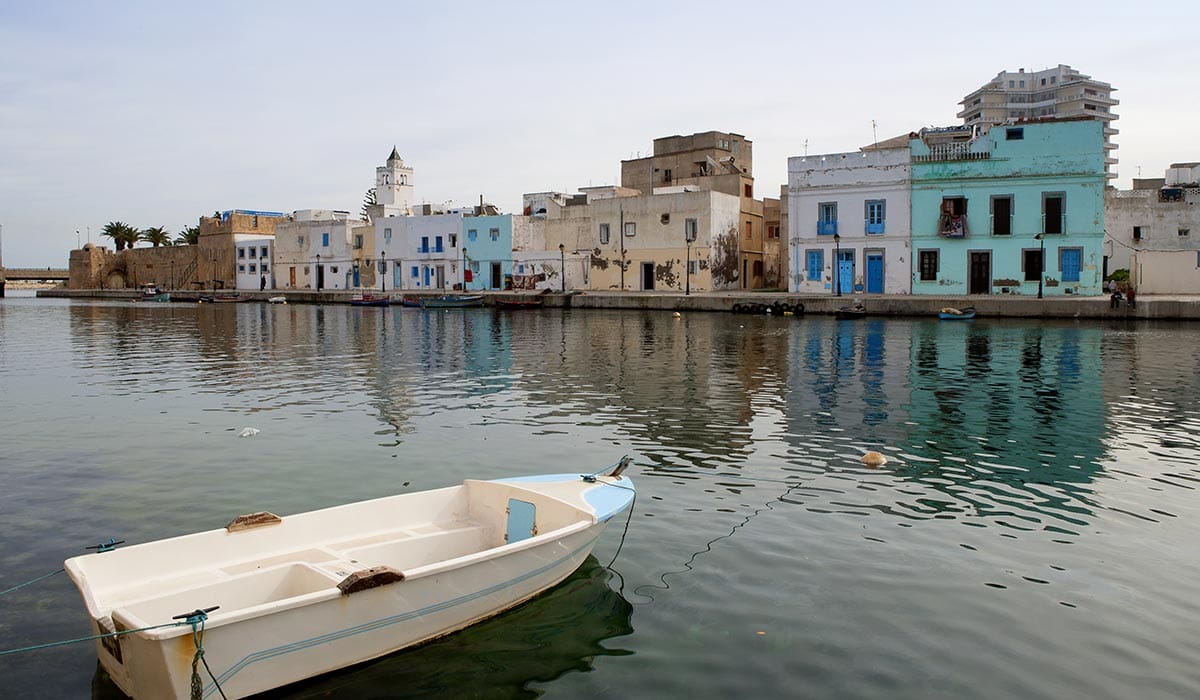
Bizerte municipality in Tunisia has set an ambitious vision to transition into a smart municipality by 2050. The municipal plan integrates smart components into the development of future projects, namely in the management of mobility, energy, building and housing, public services, and integrated management. In order to concretize this vision, the municipality has partnered with a wide spectrum of stakeholders including representatives of civil society (the Association Bizerte 2050, the association Hippo Dirutus), development agencies, research institutions as well as companies and regional representatives of the private sector. As part of the action plan towards this vision, the municipality has successfully piloted a number of projects including the energy retrofitting of municipal building and improving energy efficiency in municipal vehicular fleet.
Category: Integrated urban development
Towards Climate Neutrality in Lviv
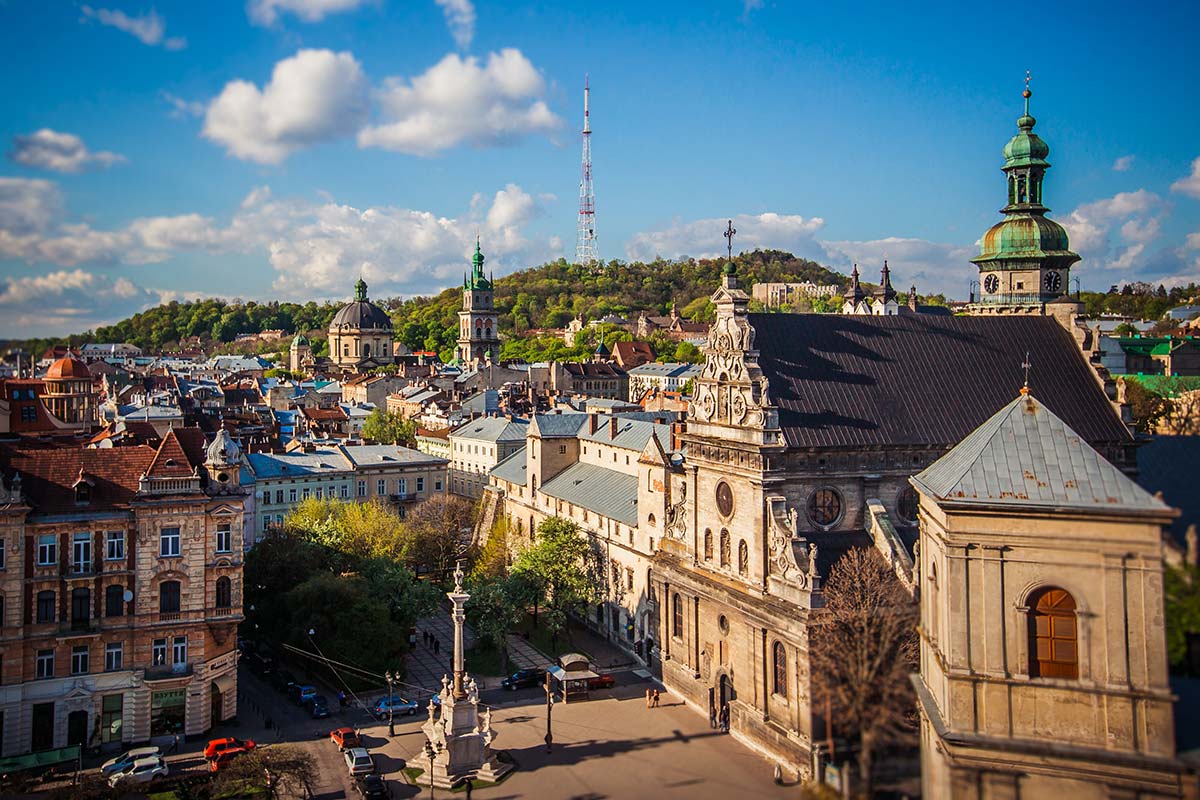
Lviv has the vision to become a climate neutral city. Starting off with the systemic implementation of energy solutions, Lviv has developed a concept of energy efficient districts Sykhiv and Ryasne. Now Lviv is moving towards climate neutrality with a Positive Energy District concept within a SPARCS project.
Karak in Jordan: local actions for climate protection
In line with the Nationally Determined Contribution (NDC) of Jordan for 2030, Karak municipality has committed to a 14% reduction of the municipality’s greenhouse gases (GHG) emissions with an aim to counteract climate change. Besides the capital city Amman, Karak municipality is the first municipality in Jordan to construct renewable energy projects and is committed to a sustainable future for the city. This objective is expressed through the actions agreed upon in the city’s Sustainable Energy & Climate Action Plan (SECAP), focusing not only on reducing the energy consumption through energy efficiency, or producing more clean energy, but also on improving the existing infrastructures in the city.
Capacity building for gender equality at the local level
Local governments and their local government associations play a large role in advancing gender equality at the local level through policy and programming. Local government associations also play a core role in awareness raising on and implementation of gender equality measures
The study aims to provide an overview and an inventory, highlighted by concrete cases, of what is happening in the field of promoting gender equality in the international work of the UCLG membership.
With this publication the CIB Working Group Secretariat explored how UCLG’s political gender strategy can be included in the many of projects and programmes. At the same time, it provides instruments and tools that will help UCLG members to implement gender strategies in their work. The brochure consist of guidelines, technical tools as well as twelve case studies, composed to demonstrate how local government development cooperation projects can concretely improve gender equality at both the local and regional level.
Space-blind strategies don’t work for COVID-19
The Organisation for Economic Cooperation and Development (OECD) recently analysed how cities have responded to the COVID-19 pandemic. Soo-Jin Kim, Head of the OECD’s Urban Policies and Reviews Unit, calls for locally-adapted solutions now and for the post-COVID era.
Since March 2020, local health authorities have often dominated the headlines. Citizens’ trust in local politicians has significantly increased. Which role have municipalities played so far in responding to the COVID 19 crisis?
Soo-Jin Kim: Since the very beginning of the pandemic, municipalities have not waited for national governments to tell them what to do – they started to act immediately. They have deployed a range of measures to inform the public about necessary measures, ensure that people comply with social distancing and lockdown rules, support the shift to tele-working and take care of the most vulnerable such as the elderly and the poor. They have also worked to keep basic public services running, including the health system, and help the local economy survive the crisis. So I would describe municipalities as ‘essential workers’.
In addition, regardless of the crisis, we should not forget that municipalities are always key public actors. Subnational governments are responsible for an average of 40 per cent of all public spending across OECD countries. In federal states such as Germany or Switzerland, it’s even 50 to 60 per cent!
Municipal energy efficiency projects in MENA
By 2030, the population in the MENA-region is expected to increase to 487 million people, 63 per cent of whom will live in cities and their surroundings. The expected population growth will increase the energy demand thus increasing the risk of future energy constraints.
Within the ambit of the learning process on municipal energy efficiency projects in MENA, the virtual dialogue event was held on the 18 – 20 May 2021. The dialogue event aimed at promoting the exchange of expertise on good practices for planning and implementing energy efficiency projects.
The virtual dialogue event was attended by 23 municipalities joining from Algeria, Germany, Jordan, Lebanon, Palestine, Tunisia and Turkey. Working in groups, participants exchanged ideas, worked in collaboration, and developed project concepts addressing local needs and opportunities for energy efficiency in their cities. Throughout the dialogue event, participants showed high commitment to the program with a level of excitement that was particularly evident on day 3 of the event dedicated for peer advisory on challenges and developing project ideas.
The virtual dialogue event had the following direct outcomes:
- Formation of a regional Community of Practice (CoP) that included 23 different municipalities from five countries in MENA in addition to Germany.
- Establishment of institutional relationships among municipalities with shared vision to achieve energy transformation and efficiency.
- Enrichment of the capacity of more than 23 municipal representatives in the field of energy efficiency project development and the showcasing of 21 different good practices from MENA, Germany, Southeast Europe, Southampton and South Africa.
- Successfully enabling the peer-to-peer advisory among different municipalities during group activities, in the main sessions, and during offline times.
- Development of 7 energy efficiency project ideas that are ready to be expanded into fullscale project proposal.
This report documents in detail the dialogue event.
Insight Sessions: Post-COVID Urban Futures
The new event series “Insight Sessions: Post-COVID Urban Futures” is part of this year’s Connective Cities Corona programme and facilitates a regular, open exchange on relevant topics of the post-COVID-19 era for municipal practitioners and relevant experts worldwide. Different topics of sustainable urban development during and after the COVID-19 pandemic will be discussed and innovative approaches in this regard will be shared in brief and concise virtual exchange formats. The aim of these events is to provide impulses that encourage participants to reflect on their progress so far and think about innovative solutions. The open discussion rounds will take place on Wednesdays once every three weeks.
We are pleased to invite you to the opening event and first discussion of the Insight Sessions series focusing on the topic “COVID-19 Recovery & SDG 11” on Wednesday, 28 July 2021, from 10:00 to 11:45 a.m. CEST.
The opening event will start with a brief introduction to this year’s Connective Cities Corona programme. Subsequently, a panel discussion will explore the challenges and opportunities of the COVID-19 crisis for achieving SDG 11 towards making cities more inclusive, safe, resilient and sustainable. During this panel discussion, municipal practitioners and experts from different urban sectors and world regions will share their diverse perspectives and insights on this topic. The panelists (tbc) are:
- Faola Hodaj, Director of Innovation, Municipality of Tirana, Albania
- Karim Elgendy, Sustainable City Strategist, London UK / MENA – Recipient of the 2013 Global Green Building Entrepreneurship Award by the World Green Building Council
- Aditya Kumar, Executive Director, NGO Development Action Group, Cape Town, South Africa
- Hilmar von Lojewski, Councillor for Urban Planning, Building, Housing and Traffic, Association of German Cities / Cologne, Germany
A detailed agenda of the opening event can be found here. The preliminary schedule of the series of Insight Sessions will be shared soon. The event will take place virtually in the Connective Cities Community:
Insight Session: COVID-19 Recovery and SDG 11 | Connective Cities Network (connective-cities.net)
Date: Wednesday, the 28th of July 2021
Time: 10:00 – 11:45 a.m. CEST
Event language: English. Translation available in: Russian, French, Arabic.
.
If you have any further questions, please do not hesitate to contact us:
Contact: paulina.koschmieder@giz.de
New working groups in the MENA network: Municipal recovery from the pandemic
Following the intensive knowledge-exchange program on municipal response to the pandemic that was conducted in 2020 to support the Connective Cities network in MENA, several working groups are being established to sustain the results of the peer learning activities. The working groups consist of municipal representatives and partners from the business sector, civil society, and academia. From a thematic standpoint, the topics under focus are:
- Waste management and circular economy
- Digitalisation for resilient cities
- Biodiversity and environmental protection (kick-off event: August 9, 2021)
- Crisis management in Palestinian municipalities
- Social entrepreneurship and local economic development (kick-off event: August 12,2021)
Several meetings and preparatory activities have been conducted to formulate the road map of each working group. The core working group on ‘biodiversity and environmental protection’ has developed and submitted a concept note to the EU Call for Proposals on Biodiversity and Ecosystems Protection in Lebanon. In order to be eligible for this call, an effective consortium was established under the umbrella of Connective Cities network. The consortium members included Saint Joseph University (represented by Dr. Jocelyne Gerard and Dr. Zaarour), Green Line environmental NGO (represented by Dr. Ali Darwish), and Menjez municipality (represented by its Mayor Dr. Georges Yousef). Other potential local authorities’ beneficiaries include Beit Meri, Jezzine, Al Buhayra Union of municipalities, which will join at a later stage of the project.
We are looking forward to include new members to these working groups. If you would like to be an active member of these working groups, please contact us at: muna.shalan@giz.de
Kruševac’s Vision – “A city accessible to all”
The Vision of Kruševac’s SUMP is that the urban environment and traffic should contribute to the city’s development. The aim is to make traffic accessible to all, regardless of age, gender, income, physical or mental ability. The target from the Agenda 2030 is „80:20“, namely that citizens will walk, cycle or use public transport to cover 80% of the trips they need to make.
Sustainable, Informed and Participatory Land Management and Land Use Planning in Rapidly Growing Cities
On the 11th, 12th & 14th of May 2021, Connective Cities held a dialogue event to address the topics of integrating nature-based solutions in land use planning, land information systems and participatory & inclusive land use planning. The event attracted the participation of 38 participants from municipalities, local government associations, national governments, research institutions and civil society organizations. The countries represented include Burkina Faso, Cameroon, Ethiopia, Germany, Ghana, Kenya, Netherlands, Rwanda, Senegal, South Africa, Uganda and Zambia.
The event comprised of input in form of thought-provoking key note speeches and good practices from the cities. It also provided an opportunity for the participants to consult with their peers through collegial learning methodology on challenges they experience in line with the topics of discussion. Out of these, the cities formulated project ideas they would like to pursue in order to solve some of the challenges.
- Integrating Nature-based Solutions (NbS) in land use planning; how have cities planned for, implemented and protected the green infrastructure amidst the ever-increasing development that is characterized by the grey infrastructure?
- Land information systems; sharing on tools and mechanisms applied by municipalities to ensure that a robust information system contributes to sustainable urban development
- Participatory and inclusive land use planning; participatory approaches and methodologies applied to ensure active participation of the different sectors in the city including gender aspects, people living with disabilities and other vulnerable groups. Cities should be designed with and for people.
This report documents in detail the dialogue event.