


A combined system of thermal panels (SWH) with heat pumps (HP) and photovoltaic panels (PV) was installed on the site of Navahrudak district hospital. It was the first time that such a combined project using SWH, HP and PV was implemented in Belarus. Now two buildings of the district hospital have independent heating, electricity system and hot water supply.
Category: Integrated urban development
Multidimensional: The COVID-19 urban restoration programme “Lviv tomorrow”

Ukraine, like most countries around the world, is strongly affected by Corona since March 2020. Individual cities experience little government support and are largely left to their own devices to combat and deal with COVID-19. Despite this challenge and only limited financial resources within the city budget, the city of Lviv managed to take quick and effective action.
The city, which is in northwestern Ukraine and has a population of about 750,000, established the “Lviv tomorrow” program to mitigate the negative consequences of COVID-19 and create the preconditions for improving the social, economic and cultural situation in the city. The program consists of 80 different projects, of which more than 50 already have been implemented.
An important pillar of the program is safety and health. The city of Lviv doubled the number of hospital beds available and set up its own COVID-19 testing laboratory. This allowed the number of COVID-19 tests to increase from 200-400 to over 3000 per day, speeding up the tracking of infected individuals and thus simplifying pandemic response.
The city also established new digital solutions that make it easier for the population to stay at and work from home. For example, a portal was created where the population can pay digitally for city services.
Especially the cultural sector was hit hard by the restrictions necessary to combat the pandemic. The city of Lviv is countering this by promoting open-air events and smaller cultural events, for example on balconies. This way, not only jobs in the cultural industry can be preserved, but also part of the life quality in the city can remain. In the uncertain times of the pandemic, cultural events are also a important psychological support for the population.
Another component of the “Lviv tomorrow” program is economic development. One project, for example, supports local food producers. In cooperation with supermarkets, food produced in Lviv is promoted and labeled with “made in Lviv” stickers.
With its extensive “Lviv tomorrow” program, the city of Lviv is taking action on many different levels to combat the pandemic and its effects. Not only the immediate aspects of the pandemic, such as the number of hospital beds, but also other areas of coexistence, such as cultural life, are included. Thus, not only acutely fighting the spread of Corona, but also creating a long-term perspective for the post COVID-19 city.
Contact:
Mr. Oleksandr Kobzarev
Director of the City Institute. Center of strategic planning in Lviv, Ukraine
o.kobzarev@city-institute.org
More Information:
LVIV TOMORROW. RESTORATION PROGRAM [pdf 11 pp.]
Interaktive Präsentation über Lviv (Only for those registered on the Connective Cities Platform)
Psychosocial support is more important than ever during the pandemic
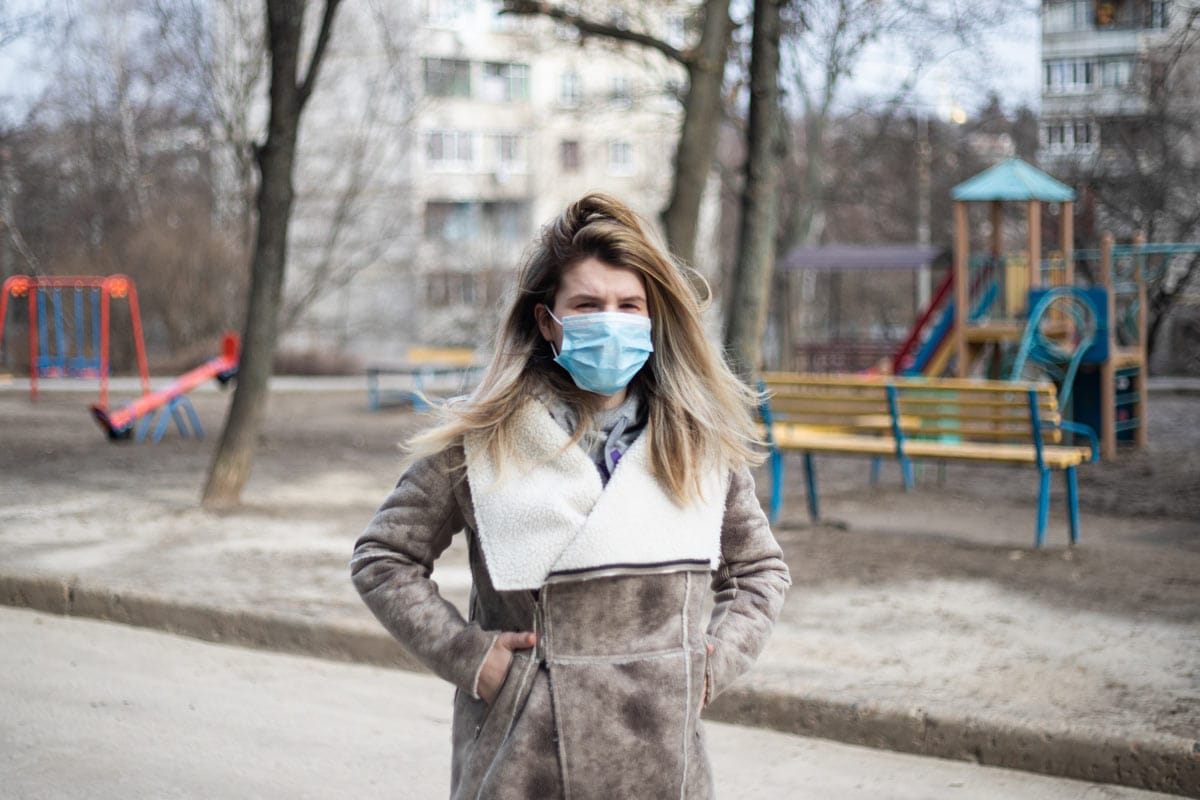
Corona lockdown can heighten the psychosocial problems many people are facing, for example in their family or partnership. Where this is the case, municipal psychosocial services need to respond flexibly. In Munich, for example, counselling for clients with smaller children was spontaneously relocated to playgrounds.
Amman – strengthening social responsibility

With a prudent vision, the Greater Amman Municipality implemented several hard and soft measures to curb the impact of the pandemic on the local community using a three-pillars response approach: health, community, and environment. With the special focus on ‘community health and wellbeing’, the social development division fulfilled its role during the pandemic by implementing a myriad of measures under the umbrella of social services to the local community.
Renewables in Cities

The report gives an overview of the status, trends and developments of renewable energy in cities, using the most up-todate information and data available. The REC’s neutral, fact-based approach documents in detail the annual developments in policies, markets, investments and citizen action, with a particular focus on renewables in public, residential and commercial buildings as well as public and private urban transport. The REC complements REN21’s Renewables Global Status Report, which covers renewable energy market, industry and policy trends. Jointly, these reports contribute to making renewable energy visible in the global debate, drawing decision makers’ attention to renewables and continuously providing better data and tracking to inform energy decisions worldwide.
REC 2021 is the result of a collaborative effort, building on REN21’s unique data and reporting culture (p see Data Collection and Validation section), with more than 330 data contributors and peer reviewers and over 30 individual interviews from around the world.
Being prepared in times of crisis

“We have distributed soap everywhere,” says Mishi Rama Mbete. The 48-year-old is sitting on a cardboard box in front of her mud hut, her hands folded in her lap. She wears the face mask correctly over her mouth and nose. “Corona is a terrible disease that has no cure yet. We are the medicine, our behaviour is, like when we wash our hands many times a day.” Mbete is one of 30 Community Health Volunteers from the informal settlements of Majengo and Mzambarauni who, on behalf of Participatory Slum Upgrading Project (PSUP) and its collaborative partner, the Community-based Organization Shining Hope for Communities (SHOFCO), tackled the initial stages of the COVID-19 outbreak, going door-to-door for weeks in awareness campaigns. She, among others, distributed hand sanitizers and soap, explaining the importance of washing hands properly, wearing a facemask, keeping social distance when possible, and recognising the symptoms of COVID-19 in time. Suspected cases of infections were referred to government facilities for further tests and follow-ups.
The awareness campaign is part of an emergency response package that PSUP and SHOFCO launched at the onset of the Corona outbreak in Kenya in March 2020. The aim, from the very beginning, was to prevent a looming disaster in the slums. No one was to be left behind during the pandemic. Together with the County Government of Kilifi and the communities in the PSUP project region, both partners set up 20 handwashing stations, maintained by men and women from the communities for a small additional income, to protect local people from the virus. The Community Health Volunteers were trained by the County Government’s Department of Health to use their expertise to conduct education and provide up-to-date emergency assistance.
City Practitioners Handbook: Circular Food Systems

This handbook provides local governments with concrete tools their peers are using to facilitate the transition to circular food systems, from stakeholder engagement to designing effective policies. It draws on experiences from the ICLEI network and its Circular Development pathway, learnings from the ICLEI-RUAF CITYFOOD Network and best practices from the Milan Pact Awards. This publication features experiences from 50 local governments and was designed by ICLEI experts in collaboration with champion cities for the benefit of city practitioners.
Are we on track for a green recovery? Not Yet

One year from the onset of the pandemic, recovery spending has fallen short of nations’ commitments to build back more sustainably. An analysis of spending by leading economies, led by Oxford’s Economic Recovery Project and the UN Environment Programme (UNEP), finds only 18.0% of announced recovery spending can be considered ‘green.’. The report “Are We Building Back Better? Evidence from 2020 and Pathways for Inclusive Green Recovery Spending” was supported by the International Monetary Fund and GIZ through the Green Fiscal Policy Network (GFPN).
It calls for governments to invest more sustainably and tackle inequalities as they stimulate growth in the wake of the devastation wrought by the pandemic.
The most comprehensive analysis of COVID-19-related fiscal rescue and recovery efforts by 50 leading economies so far, the report reveals that only $368bn of $14.6tn COVID-induced spending (rescue and recovery) in 2020 was green.
Creating sustainable cities through low-carbon freight

Freight transport demand is expected to triple and its associated emissions to more than double by 2050 compared to the 2015 levels, if left unchecked.To reverse this trend, cities and companies need to turn promises into actions.
The purpose of this report is to review existing urban freight movement characteristics across the nine project cities in Argentina, Colombia and India, provide an account of baseline GHG emissions (2019) from urban freight and identify possible interventions to minimize its negative impacts. The emissions have been established using the EcoLogistics Self-monitoring Tool.
Drawing on the analysis, policy recommendations and interventions are also presented in this report and will be used as part of the Low Carbon Action Plan for Urban Freight (LCAP-UF) in the cities.
Her City

There is a lack of knowledge in participatory urban planning and design, particularly in involving vulnerable groups in urban development processes. Research has shown that participatory urban development with girls and young women, local actors, as well as multi-level decision-makers, creates opportunities for more inclusive, equal and sustainable urban development.
Thus, Her City provides an opportunity to build capacity on a larger scale. Her City provides municipal professionals, urban actors and local decision-makers with a solid toolbox for mainstreaming youth, gender and socioeconomic perspectives by strategically involving girls and young women in urban planning and design.
Her City’s ambition is to contribute to a range of the 2030 Agenda Sustainable Development Goals (SDGs): SDG3 on health and well-being, SDG5 on gender equality, SDG10 on reducing inequality, SDG11 on sustainable cities and communities, SDG16 on peace, justice and strong institutions and SDG17 on partnerships. However, previous experiences have shown that this approach also contributes to implementing other SDGs on the local level.