


Public spaces can bring together communities and facilitate cultural expression and diversity, so it is important to look at how public spaces can promote women-city relationship building. Femmedina, a combination of the terms “femmes” (women) and “medina” (historical city), is the name of a project implemented in the historic center of Tunis. The project has the ambition to foster this relationship building.
Category: Security in cities
Urban Safety for Women and Girls

Celebrating International Women’s Day on March 8th 2022, Connective Cities was seeking the opportunity to address the issue of safer public spaces for women and girls in cities. The Insight Session “Urban Safety for Women and Girls – Strategies for safer public spaces in Cities” featured three speakers on the topic of participatory planning with women and girls as well as design and policy strategies.
During the COVID-19 pandemic, the importance of public spaces as places for recreation and community life has noticeably increased. Raising awareness for the voices of women and girls that were often unheard in urban planning in the past, is crucial to ensure public spaces are safe for them to play, meet, walk and work. Urban public spaces as well as public transport were mostly designed by and to accommodate the needs of men. A lot of them are not fit for women’s needs or pose a threat to women’s safety, their design complicates everyday lives and reduces possibilities to engage in community life. Therefore, if possible, a lot of times these urban areas are avoided by women. The COVID-19 pandemic has exposed and exacerbated these existing gender inequalities in various aspects. At the same time, this crisis can be an opportunity to make urban planning more equitable and sustainable. Participatory approaches provide great opportunities to include voices and their ideas in urban planning that might have been unheard in the past. A rich community life and democratic urban societies can only thrive if public spaces are safe and functional for all citizens to meet and engage.
The three speakers of the event introduced valuable insights on gender sensitive urban planning tools and shared practical experiences from Latin America, Europe and the MENA Region.
Sara Ortiz Escalante, Barcelona is a sociologist and urban planner. As part of the feminist planning collective Col·lectiu Punt 6 in Barcelona, Spain she has a wide range of experience in gender sensitive urban planning methodology and tools. In her Keynote, she introduced the audience to a feminist perspective on urban safety. She introduced the 6 principles of Women’s safety that were introduced by Anne Michaud in Montreal in the 1980s, yet are still of utmost importance today. In order to create safer public spaces, participatory planning is key. Ortiz Escalante introduced the tools of explanatory walks and safety audits. Her presentation features the examples of Cali, Colombia and Tétouan, Morocco.
The Her City Toolbox was presented by Tove Andréasson Derner, Stockholm. Her City is a joint initative of Global Utmaning, a Swedish Think Tank and UN Habitat that provides municipalities as well as civil activists with a toolbox for participatory planning with Women and Girls. The Toolbox follows a process of 9 blocks that guide the user from Stakeholder Engagement to Implementation of specific projects. The design phase of the toolbox uses the Minecraft Tool which is accessible and fun for both kids and adults. The platform Her Cities – #HerCity (unhabitat.org) is open to the public and free of charge. So far, 315 cities are undertaking the process.
The Minecraft Tool was also used for the design of Al-Gwheirieh Neighbourhood Park in Zarqa, Jordan. Like many other municipalities in Jordan, Zarqa is home to a lot of Syrian refugees. The city is one of the densest cities in the world. Therefore, the establishment of parks was an enormous challenge, yet became even more important regarding the COVID 19 pandemic. Mohammad Zawahreh, former head of the local development unit of the city of Zarqa, shared his experiences on establishing neighbourhood parks in inclusive planning processes in the city. Women and Men of different backgrounds were working together and established functional, safe, and green public spaces.
The presentations were followed by a Q&A Session that addressed common challenges and solutions in urban planning with women and girls worldwide. The speakers noted, that women and girls all over the world were putting an emphasis not only on safe but also green public spaces. Therefore, gender sensitive urban planning often leads to the establishment of sustainable green spaces. Another point of discussion was the inclusion of men in feminist urban planning. Depending on the cultural context, different approaches have proven to be most effective. While the set- up of female only exclusive groups proved to be an important factor in designing gender sensitive urban spaces, it is important to encourage the male population to support the inclusion of women and girls in urban design. Because, safer public spaces for women and girls are safer public spaces for everyone.
Videos
Her City Toolbox – From Botkyrka to Johannesburg – YouTube
Rehabilitation of Jana Park : Zarqa/Jordan with AVSI Jordan – YouTube
Presentations
Urban Safety from a feminist perspective, Sara Ortiz Escalante, Collectiu Punt 6, Barcelona
Her City Toolbox, Tove Andréasson Derner, Her City, Stockholm
The recording of the event can be found here: Insight Session: Urban Safety for Women and Girls – Strategies for safer public spaces in Cities | Connective Cities Network (connective-cities.net)
Call for participants: Insight Session – Urban Safety for Women and Girls
Safer public spaces for women and girls mean safer public spaces for everyone. On 8th March 2022 we celebrate International Women’s Day, and Connective Cities is seeking this opportunity to inspire urban practitioners worldwide to strengthen a gender sensitive approach in their city planning.
Urban public spaces as well as public transport were mostly designed by and to accommodate the needs of men. A lot of them are not fit for women’s needs or pose a threat to women’s safety, their design complicates everyday lives and reduces possibilities to engage in community life. Therefore, if possible, a lot of times these urban areas are avoided by women.
The COVID-19 pandemic has exposed and exacerbated these existing gender inequalities in various aspects. At the same time, this crisis can be an opportunity to make urban planning more equitable and sustainable. Participatory approaches provide great opportunities to include voices and their ideas in urban planning that might have been unheard in the past. A rich community life and democratic urban societies can only thrive if public spaces are safe and functional for all citizens to meet and engage.
Objectives
As part of our virtual global exchange series “Insight Sessions: (Post)-COVID Urban Futures”, the Insight Session on “Urban Safety for Women and Girls – Strategies for safer public spaces in Cities” aims to discuss the design and policy strategies for safer public spaces for women and girls. The objective is to inspire the participating urban practitioners to address women and girls in their urban planning.
Participation and contact
We herewith kindly invite you to participate in the upcoming Insight Session taking place on Wednesday, 9th March 2022, 15:00 – 16:30 CET. The event is addressed to urban practitioners from local governments as well as from academia, the private sector and civil society. The conference language is English.
Further information and enrolment here: https://community.connective-cities.net/de/node/1141
If you have any further questions about the programme or your participation, please do not hesitate to contact us:
lina.kratz@giz.de / paulina.koschmieder@giz.de
Date: Wednesday, 9th March 2022 | 15:00 – 16:30 (CET, Berlin time)
Location: Virtual Event on Connective Cities Community
https://community.connective-cities.net/de/node/1141
Conference Tool: Big Blue Button (best operated with Chrome or Firefox)
Conferrence language: English
Call for participants: Risk informed urban development
Are you an urban representative, employee of a municipality or an urban practitioner from a NGO, university, research unity, or other working directly with cities administrations in a low- or middle-income country? You want to work towards a flood risk informed urban development and would like to apply for the City Climate Finance Gap Fund?
Join our working group and:
- Get introduced to the City Climate Finance Gap Fund and what it offers
- Profit from peer-to-peer consultations and jointly work on challenges, project ideas and expressions of interest with your peers
- Learn from good practice examples of international cities working on risk management
- Receive individual expert’s advice on your ideas
- Benefit from a strong cooperation with UNFCCC, UNDRR and the WorldBank
- Profit from different capacity building measure to improve your skills and understanding of risk informed urban development
European cities have experienced flooding many times in history, however, the scale and numbers of losses of life from the flooding in July 2021 have been devastating. Hitting the long safely imagined temperate zone, the events reveal the importance and urgency of discussing measures to enhance disaster preparedness, strengthen resilience and enhancing preparedness in cities around the globe. The need of cities worldwide to adapt to a changing climate and an increasing number of extreme weather events is more prominent than ever to save lives, reduce economic losses and protect critical infrastructure. The competences and institutional capacities of policy- and decision-makers need to be strengthened to address risks.
Within the working group on risked informed urban development, which will be hosted jointly by the Global Initiative Disaster Risk Management (GIDRM) and Connective Cities, cities will work together towards handing in their expressions of interest for the City Climate Finance Gap Fund by peer-to-peer exchanges, learning from good practice examples and profiting from individual experts’ advice. Specific topics of the project ideas may include public sensitization for disaster management, risk assessment and communication, risk governance, as well as other scopes depending on the participating cities’ needs.
You are interested in becoming part of the joint GIDRM and Connective Cities working group on risk informed urban development? Please consider the following steps:
Join the working group online: Risk informed urban development | Connective Cities Network
Join the first meeting: 12 October 2021, 14:00-15:00 CET
For further requests, do not hesitate to contact Karl-Heinz Gaudry (karl-heinz.gaudrysada@giz.de) or Ricarda Meissner (ricarda.meissner@giz.de).
Tackling drug addiction and drug use through an innovative partnership
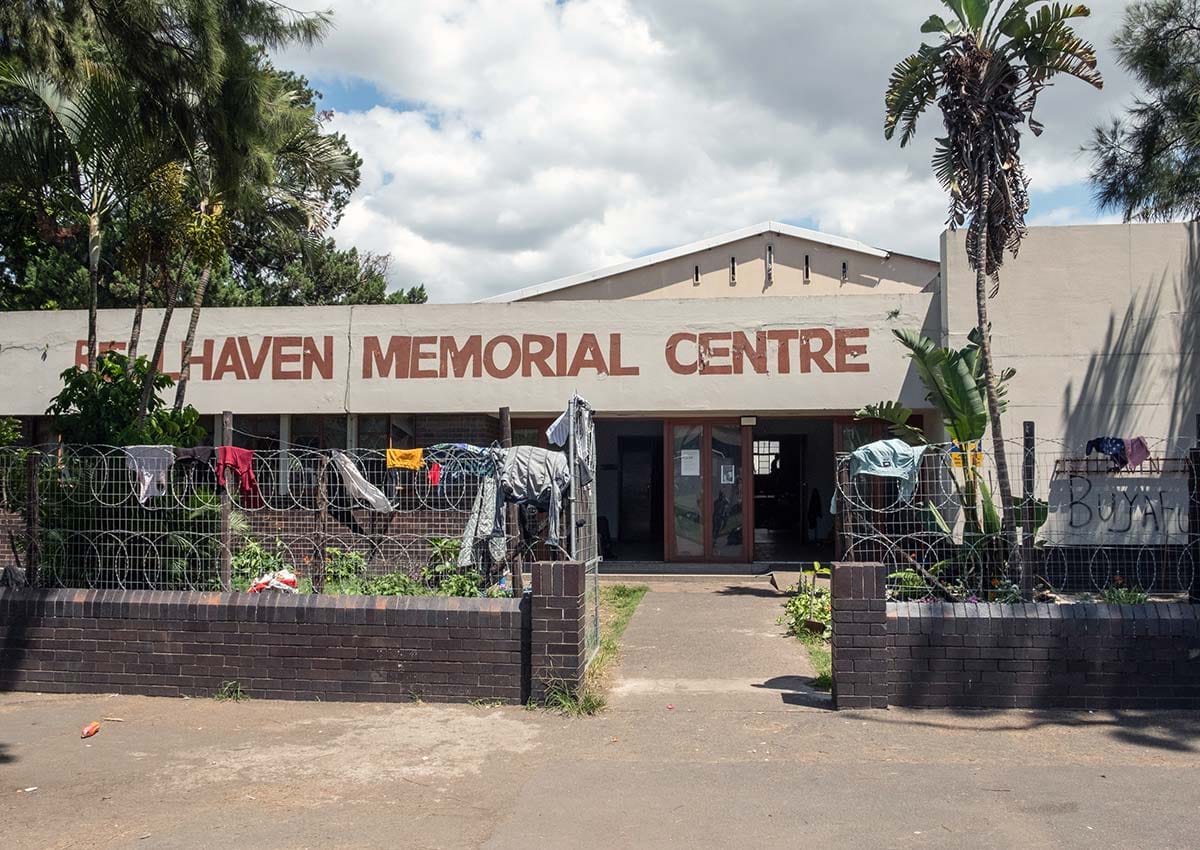
Drug addiction or drug use disorder is a major issue facing our cities and in fact, all parts of societies. During South Africa’s toughest lockdown, an innovative partnership with the city government, academics, NGOs, businesses, the police led to the setting up of a rehabilitation centre inside the iconic Moses Mabhida Stadium for homeless people with drug use disorder called Bellhaven Harm Reduction Centre.
Amman – strengthening social responsibility

With a prudent vision, the Greater Amman Municipality implemented several hard and soft measures to curb the impact of the pandemic on the local community using a three-pillars response approach: health, community, and environment. With the special focus on ‘community health and wellbeing’, the social development division fulfilled its role during the pandemic by implementing a myriad of measures under the umbrella of social services to the local community.
Her City

There is a lack of knowledge in participatory urban planning and design, particularly in involving vulnerable groups in urban development processes. Research has shown that participatory urban development with girls and young women, local actors, as well as multi-level decision-makers, creates opportunities for more inclusive, equal and sustainable urban development.
Thus, Her City provides an opportunity to build capacity on a larger scale. Her City provides municipal professionals, urban actors and local decision-makers with a solid toolbox for mainstreaming youth, gender and socioeconomic perspectives by strategically involving girls and young women in urban planning and design.
Her City’s ambition is to contribute to a range of the 2030 Agenda Sustainable Development Goals (SDGs): SDG3 on health and well-being, SDG5 on gender equality, SDG10 on reducing inequality, SDG11 on sustainable cities and communities, SDG16 on peace, justice and strong institutions and SDG17 on partnerships. However, previous experiences have shown that this approach also contributes to implementing other SDGs on the local level.
Implementing the Non-Motorised Transport Pilot corridor in Kampala City, Uganda
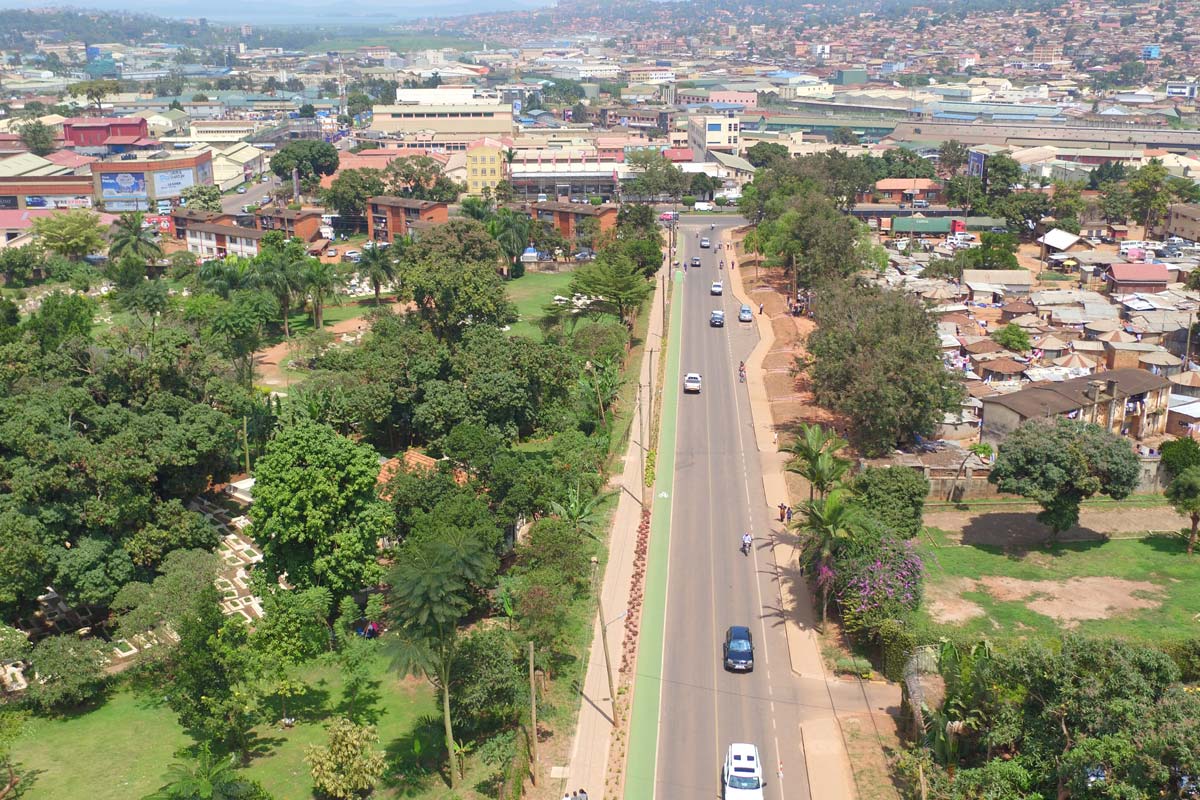
Integration of Non-Motorised Transport (NMT) infrastructure in most African cities has always been an afterthought. This has been witnessed by the uncoordinated mix of modes in the urban areas and the continuous effects it has had on the economy and the functioning of major towns and urban areas. The City of Kampala has decided to trailblaze in this area of transforming urban mobility in East Africa, a region renowned for traffic congestion and stressful commuting. This was necessitated by the ever-increasing urban population and the resultant increased demand on infrastructure. Namiremebe Road and Luwum street were chosen as the pilot areas for the program as they pass through the city center and are the major public transport hub for in the city. The aim of the program was to have an integrated network for all modes.
Final Report: Virtual Global Exchange

The exchange was designed to bring together urban practitioners from all over the globe. The goal was to ignite creativity, innovation, solidarity and motivation, while creating and enhancing this global community of practice around the common purpose of combating the global COVID-19 pandemic and its consequences with smart local solutions and strategies.
During the first week, urban practitioners and experts from different municipalities, the civil society, business and academia, presented a total of 56 Good Practices in 18 sessions and gave insights into their experienced challenges and local solutions to deal with the pandemic. The exchange were centered around the nine topics were Public Health, Crisis Management, Economic Response, Housing, Education, Digitalisation, Crisis Communication, Innovation, and Green Urban Recovery.
The second week was about receiving practical “How To” capsules with practical exercises on topics that came up repeatedly during the exchange events such as: social media usage, digital tools, and how to plan for virtual meetings. Finally, the newly learned mindsets and tools could be applied in a 4-hour solution design workshop.
Infection chains – preventing infections through distance, communication and support for the informal sector

Around 100 municipal practitioners from more than 20 Latin American and European cities, including Brazil, Peru, Mexico, Colombia, Costa Rica, Chile, Ecuador, El Salvador, Spain, the United Kingdom and Germany, participated in two virtual events on the topic of “Infection Chains – preventing infection through distance, communication and supporting the informal sector”.
During the virtual exchange of experiences, which was held as part of the series of events on “Municipal response to COVID-19”, the participants presented and discussed practical examples from their cities and exchanged experiences on the topics of infection chains and prevention measures, as well as on the topic of crisis communication.
In the first virtual event, the challenges in the areas of infection chain tracing and Covid-19 testing strategies were discussed intensively, because they represent urgent problems for many Latin American cities. The exchange of experiences revealed that crisis communication in particular is an important concern for municipalities – in European as well as Latin American cities alike.
Municipal practitioners face the challenge of raising public awareness of the need for the measures taken over a long period of time. Therefore, the focus of the second event was on the topic of communication. Among other things, strategies of cities were presented on how municipal crisis communication can be designed. It was discussed how cities can inform their residents about public restrictions and Covid-19 in a transparent, inclusive and understandable way.
The virtual events provided space for an interactive exchange of experiences, which was very positively received. All participants took part in a lively discussion and were in favour of continuing the offer.
The languages offered included Spanish, Portuguese, English and (partly) German.
Programme
During the two events, six good practices from Essen and Stuttgart (Germany), Aracaju, Niterói, Belo Horizonte (Brazil) and Naucalpan (Mexico) were presented.
Participants also gained a new perspective on the pandemic from the presentation of three studies on municipal management of Covid-19 by the Brazilian municipal associations “Asociación Brasileña de Municipios” and “Confederación Nacional de Municipios,” as well as “Design Thinkers Group Spain” and “Whiteboard Innovation Israel”.
The aim of the virtual event was also to actively involve the participants. The space for questions between the presentations and the subsequent discussion were used intensively for exchange.
The following questions were discussed during the two events:
- What measures can be taken to interrupt infection chains and what role can the municipality play in this?
- How can infections be traced and what are local challenges in doing so?
- What is the role of the informal sector in relation to infections?
- What strategies can be taken to make crisis communication inclusive, transparent and understandable?
- How can communities with limited access to digital communication tools be reached?
Good practice presentations
Presentations on 14.10-2020
Decentralised mobile sample collection strategy of the city of Essen.
Jörg Spors, Hygiene Officer of the Fire Department of the City of Essen, Germany
Measures taken by municipalities to combat the COVID-19 pandemic.
Eduardo Tadeu Pereira, Director “Asociación Brasileña de Municipios” (ABM), Brazil
Fighting the pandemic with strategic management and innovative measures, Aracaju, Brazil.
Waneska de Souza Barboza, Aracaju Health Department, Aracaju City Hall, representative of the National Front of Mayors (FNP), Brazil
Government action to combat Covid-19 in Naucalpan, Mexico.
Mauricio Eduardo Aguirre Lozano, Secretary of the Municipality of Naucalpan, Mexico
Survey on covid-19: focus on local government and support from federal agencies.
Carla Albert, Health Worker, Confederación Nacional de Municipios (CNM), Brazil
Presentations on 05.11.2020
Opening Speech “Global Human Research Project”. Jorge Roriguez Nieto,
Design Thinkers Group Spain and Amir Hoshia, Whiteboard Innovation Isreal.
Integrative Crisis Communication, Stuttgart, Germany.
Ayşe Özbabacan, Integrative Crisis Communication Officer, Stuttgart, Germany,
Simone Fischer, Integration Policy Officer, Stuttgart, Germany,
Reinhard Schröter, Operations Manager Bus and Tram, Stuttgarter Verkehrsbetriebe, Stuttgart, Germany.
Covid-19 and the implications on the sewage system, Niterói, Brazil.
Camilla Franco, Undersecretary of Health, Niterói Municipal Health Secretariat, Niterói, Brazil
Communication in Crisis: Citizens, Passers-by & Customers, Belo Horizonte, Brazil.
Hugo Salomão França, Director of International Relations, Belo Horizonte City Hall, Brazil.
Results
Through peer consultation, participants were able to share their knowledge and experiences around the topics of infection chains and crisis communication, as well as analyse common challenges. Furthermore, thanks to international expertise and the presentation of good practice examples, new approaches to solutions were disseminated.
After the virtual session, participants can continue their exchange on the Connective Cities virtual platform.