


In line with the Nationally Determined Contribution (NDC) of Jordan for 2030, Karak municipality has committed to a 14% reduction of the municipality’s greenhouse gases (GHG) emissions with an aim to counteract climate change. Besides the capital city Amman, Karak municipality is the first municipality in Jordan to construct renewable energy projects and is committed to a sustainable future for the city. This objective is expressed through the actions agreed upon in the city’s Sustainable Energy & Climate Action Plan (SECAP), focusing not only on reducing the energy consumption through energy efficiency, or producing more clean energy, but also on improving the existing infrastructures in the city.
Category: Sustainable mobility
Space-blind strategies don’t work for COVID-19

The Organisation for Economic Cooperation and Development (OECD) recently analysed how cities have responded to the COVID-19 pandemic. Soo-Jin Kim, Head of the OECD’s Urban Policies and Reviews Unit, calls for locally-adapted solutions now and for the post-COVID era.
Since March 2020, local health authorities have often dominated the headlines. Citizens’ trust in local politicians has significantly increased. Which role have municipalities played so far in responding to the COVID 19 crisis?
Soo-Jin Kim: Since the very beginning of the pandemic, municipalities have not waited for national governments to tell them what to do – they started to act immediately. They have deployed a range of measures to inform the public about necessary measures, ensure that people comply with social distancing and lockdown rules, support the shift to tele-working and take care of the most vulnerable such as the elderly and the poor. They have also worked to keep basic public services running, including the health system, and help the local economy survive the crisis. So I would describe municipalities as ‘essential workers’.
In addition, regardless of the crisis, we should not forget that municipalities are always key public actors. Subnational governments are responsible for an average of 40 per cent of all public spending across OECD countries. In federal states such as Germany or Switzerland, it’s even 50 to 60 per cent!
Kruševac’s Vision – “A city accessible to all”

The Vision of Kruševac’s SUMP is that the urban environment and traffic should contribute to the city’s development. The aim is to make traffic accessible to all, regardless of age, gender, income, physical or mental ability. The target from the Agenda 2030 is „80:20“, namely that citizens will walk, cycle or use public transport to cover 80% of the trips they need to make.
Municipal experts wanted: Dialogue event on Covid-19 and urban mobility

Connective Cities is organising a three-day dialogue event in collaboration with the City of Wiesbaden, Germany, and UN-Habitat on 19th, 20th and 22nd July 2021. The online sessions are scheduled for 3.5 hours (including breaks), from 13:00 to 16:30 CEST.
The event is aimed at municipal actors from Germany and other countries (municipal administrations, municipal enterprises, civil society, business and academia) who are working on the impacts of Covid-19 on urban mobility and looking for innovative solutions for a post-pandemic future. The highly interactive event gives municipal practitioners involved in urban planning or municipal transport the opportunity to discuss projects and ideas, which are currently being implemented or planned in their municipality.
Thematic focus:
- Sustainable urban logistics: Impulses for green logistics solutions during and after the pandemic;
- Cycling/bicycle traffic: Reassessing urban space and the role of cycling for urban mobility;
- Local public transport: Rethinking financing models and regaining passengers’ trust.
If your city is currently working on or wishes to work on different aspects of urban mobility and Covid-19 and you would like to actively participate in the event, please do not hesitate to contact us!
Objectives of the three-day event:
- Day 1: To share and discuss examples and good practices from German and international municipalities;
- Day 2: To exchange ideas for solutions through peer-to-peer consultation on identified challenges;
- Day 3: To jointly develop project ideas for further cooperation in response to these challenges.
The working language of the event is English. Translation into other languages may be provided on demand. Participation is free of charge and the deadline for application is 9th June, 2021. For more information on the event please read the full “Call for Participants” [pdf, 440 kb, 4 pp.].
If you are interested in actively participating and contributing to the event or have any questions, please contact us:
Alice Balbo, Alice.balbo@staedtetag.de, +49 (0)221-3771-573
Nikola Krause, Nikola.krause@engagement-global.de, +49 (0)228-20717-2672
Thiago Garcia, Thiago.garcia@engagement-global.de, +49 (0)228-20717-2633
Streets for all – Glasgow’s new avenues

The pandemic has fundamentally changed all our daily lives. Instead of meeting indoors, we meet outside and instead of taking the bus or train, we use the bicycle or sometimes the car. Cities need to respond to this change in population behavior. Glasgow, Scotland’s largest city, whose central streets have long been reserved for car traffic, has met this challenge by taking extensive measures to create more space for cyclists and pedestrians and new central green spaces.
During the pandemic, space for cyclists and pedestrians in Glasgow was provisionally separated from the streets with plastic elements, giving them more space. By doing so, the city successfully responded to the new needs of its residents.
But in the long term the streetscapes suffer from the unsightly plastic elements. However, for the quality of life in a city and the well-being of its residents not only the functionality but also the beauty of the city is important. That’s why the long-term avenue strategy in Glasgow’s city center calls for the creation of 21 streets with continuous bicycle and pedestrian paths in combination with extensive greening by 2027. The new avenues will link central locations and better connect adjacent neighborhoods. The greening will beautify the streets, which were often completely concreted before, and more space for pedestrians and cyclists will significantly reduce motorized traffic.
Thus, not only does the functionality of the street adapt to the new needs of the population, but the new avenues are also visually much more attractive. This increases the attractiveness of the location for retailers and the quality of stay in the public space. Combined with new technologies, such as individually controllable LED lighting, the center of Glasgow is thus made fit for the future.
More Information
Glasgows Avenue Strategy & the Role of Beauty in Public Spaces (PDF)
Event Recording (Presentation on Glasgow starts min. 78): COVID-19 – A chance for urban green recovery? (Only for those registered on the Connective Cities Platform)
Contact:
Jamie Shields, Development and Regeneration Services, Glasgow City Council, UK jamie.shields@glasgow.gov.uk
Paola Pasino, Development and Regeneration Services, Glasgow City Council, UK paola.pasino@glasgow.gov.uk
Renewables in Cities

The report gives an overview of the status, trends and developments of renewable energy in cities, using the most up-todate information and data available. The REC’s neutral, fact-based approach documents in detail the annual developments in policies, markets, investments and citizen action, with a particular focus on renewables in public, residential and commercial buildings as well as public and private urban transport. The REC complements REN21’s Renewables Global Status Report, which covers renewable energy market, industry and policy trends. Jointly, these reports contribute to making renewable energy visible in the global debate, drawing decision makers’ attention to renewables and continuously providing better data and tracking to inform energy decisions worldwide.
REC 2021 is the result of a collaborative effort, building on REN21’s unique data and reporting culture (p see Data Collection and Validation section), with more than 330 data contributors and peer reviewers and over 30 individual interviews from around the world.
Creating sustainable cities through low-carbon freight

Freight transport demand is expected to triple and its associated emissions to more than double by 2050 compared to the 2015 levels, if left unchecked.To reverse this trend, cities and companies need to turn promises into actions.
The purpose of this report is to review existing urban freight movement characteristics across the nine project cities in Argentina, Colombia and India, provide an account of baseline GHG emissions (2019) from urban freight and identify possible interventions to minimize its negative impacts. The emissions have been established using the EcoLogistics Self-monitoring Tool.
Drawing on the analysis, policy recommendations and interventions are also presented in this report and will be used as part of the Low Carbon Action Plan for Urban Freight (LCAP-UF) in the cities.
Implementing the Non-Motorised Transport Pilot corridor in Kampala City, Uganda
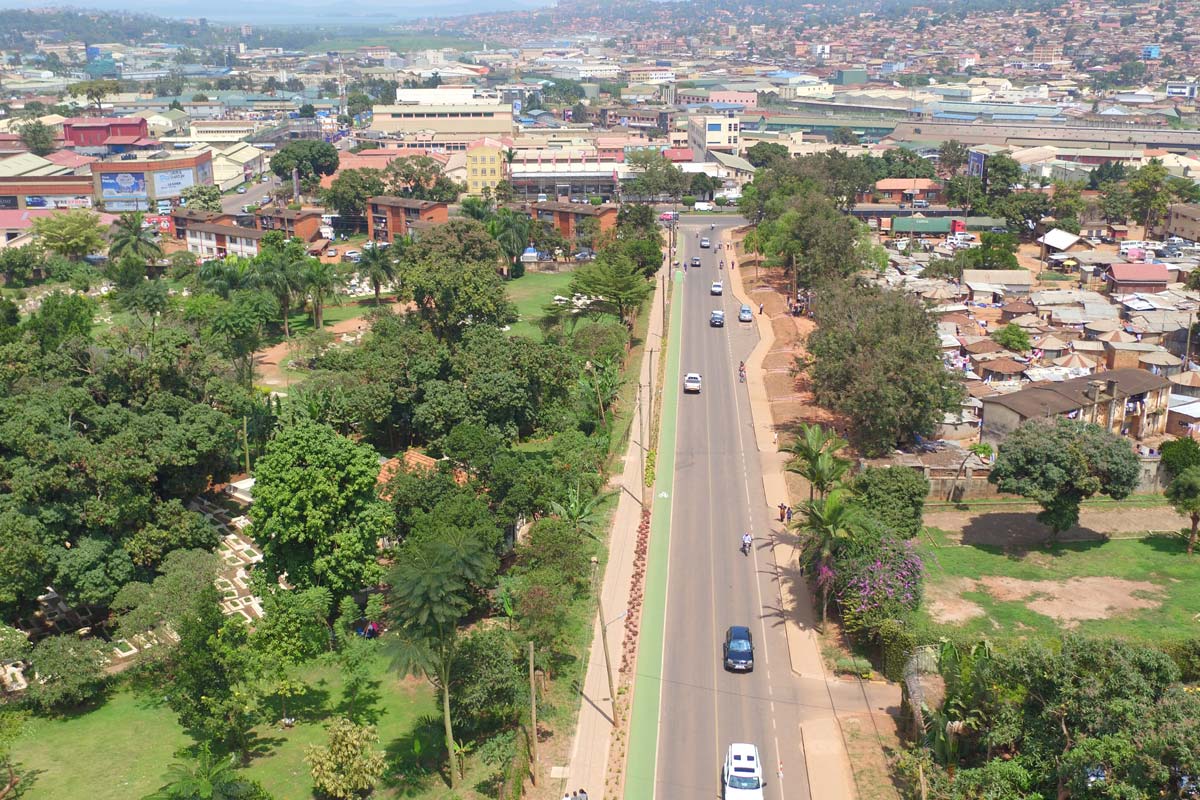
Integration of Non-Motorised Transport (NMT) infrastructure in most African cities has always been an afterthought. This has been witnessed by the uncoordinated mix of modes in the urban areas and the continuous effects it has had on the economy and the functioning of major towns and urban areas. The City of Kampala has decided to trailblaze in this area of transforming urban mobility in East Africa, a region renowned for traffic congestion and stressful commuting. This was necessitated by the ever-increasing urban population and the resultant increased demand on infrastructure. Namiremebe Road and Luwum street were chosen as the pilot areas for the program as they pass through the city center and are the major public transport hub for in the city. The aim of the program was to have an integrated network for all modes.
Climate Resilient Urban Development in Southeast Europe

From October 26th until November 6th 2020 around 30 urban practitioners from 11 Southeast European cities (from 8 different countries Georgia, Bosnia and Herzegovina, Montenegro, Belarus, Serbia, Slovenia, Ukraine, Germany) came together virtually to exchange their experiences and expertise in the field of Urban Mobility and Green Urban Infrastructure. Especially challenges in waste management, transportation and public lighting system and water revitalization were discussed intensively, as they represent pressing issues for many Southeast European cities.
The aim of the workshop was to jointly work out comprehensive project plans which can be the basis for technical and financial proposals for funding. The workshop focused on the following topics:
- Green Infrastructure – based on the notion that protecting and enhancing nature and natural processes are consciously taken into consideration in the context of spatial planning and territorial development.
- Urban Mobility – developing and implementing sustainable urban mobility plans (SUMP) including private as well as public transportation.
The event was a follow-up to the virtual dialogue event conducted in June 2020 with representatives of 24 municipalities as well as international experts. Where, based on innovative methodologies such as Design Thinking, participants from 9 countries worked on their first project ideas.
These two weeks of synchronous and asynchronous workshops were participated by the officials from institutions, representatives from urban networks that share the project’s objectives, and experienced professional from the civil society and the private sector, who work in the thematic areas as well as academia in the field of urbanism, spatial planning, geography, climate change and other disciplines. During the workshop, also donor organizations were invited to get to know the projects, to answer questions of the municipalities and to support financial proposals and grant applications written in a professional way.
Local Development Program for the City of Agadir in Morocco

Agadir municipality has pursued ambitious policies aimed at enhancing the quality of life of the city’s inhabitants, while protecting the environment and fostering sustainable development. The undertaken efforts targeted various key areas, in which the requirements and responsibilities for achieving environmental, social and economic sustainability were met.