Invitation: “Citizen engagement in planning and implementation of sustainable mobility after Covid-19”

Connective Cities Southeast European Region is pleased to invite you to a Workshop on “Citizen engagement in planning and implementation of sustainable mobility after Covid 19”, discussing a collection of successful tools and roadmaps that can be used in different phases of sustainable mobility planning and implementation in and after the pandemic. The tools will cover different levels and degrees of participation.

This Planning Workshop is dedicated to

  • Presenting and discussing the prototype of the toolbox, selected roadmaps and tools for citizen engagement in the pandemic;

  • Sharing additional experiences and good practices;

  • Collecting ideas for publishing the toolbox (CC platform, municipality websites, research institute websites …); and

  • Identifying potential next steps for extending the toolbox.

The workshop will take place on

December 3, 2021 14.00-16.30 CET on the following link Sustainable Mobility Core Group | Connective Cities Network.

Please log in or sing up on Connective Cities platform to access Event and resources. Do not hesitate to get in touch with us if you have any questions.

Contact:

Dr. Irakli Samkharadze
GIZ Regional Network Coordinator Connective Cities – Southeast Europe 
irakli.samkharadze@giz.de

For German experts:

Alice Balbo
Connective Cities Project Manager at the German Association of Cities
alice.balbo@staedtetag.de

Providing access to cycling as a sustainable and affordable form of transport

Mzikhona Mgedle, a local resident in Langa township (Cape Town, South Africa), founded Langa Bicycle Hub in 2020 with a vision of positively influencing the community of Langa while providing access to a sustainable and affordable form of transport by using bicycles to move people and basic goods and facilitate community building. This project is in partnership with Open Streets Cape Town, Darrvin Ebikes Africa, Langa Safety Patrol and Langa Community individuals.

Tianjin Daqiuzhuang Eco-City: green, ecological and low carbon

Daqiuzhuang has traditionally been an important industrial site, especially for the steel industry.

The Sino-German Tianjin Daqiuzhuang Eco-City has developed an overarching indicator system with 20 ecological indicators, 50 percent of which are from the areas of energy saving and emission reduction. Modern concepts and technologies from Germany serve as a reference and the Energy and Climate Protection Management System (EKM) of the German Energy Agency (DENA) as a basis. The modern indicator systems for regional development of the China-Singapore Tianjin Eco-City, the Xiong’an New District and the Beijing Municipal Administrative Centre are also used as a basis. The Eco-City indicator system is divided into three areas: green ecology, liveable life and innovative production; of which 11 are control indicators and 9 are leading indicators. The indicator system thus guides the construction and development of the Eco-City throughout its life cycle.

Pop-up bike lanes: long-term opportunities for green urban development after the Covid-19 pandemic?

The event series “Insight Sessions: Post-COVID Urban Futures” is part of this year’s Connective Cities COVID programme and facilitates a regular, open exchange on relevant topics of the post-COVID-19 era for municipal practitioners and relevant experts worldwide. Different topics of sustainable urban development during and after the COVID-19 pandemic will be discussed and innovative approaches in this regard will be shared in brief and concise virtual exchange formats. The aim of these events is to provide impulses that encourage participants to reflect on their progress so far and think about innovative solutions. The open discussion rounds will take place on Wednesdays once every three weeks. 

We are pleased to invite you to the fourth event in the series on “Pop-up bike lanes: long-term opportunities for green urban development after the Covid-19 pandemic?” on Wednesday, September 8th, 2021, from 15:30 to 17:00 CEST.

They appeared suddenly: bike lanes separated by yellow markings and conspicuous warning bars, replacing parking lanes, parts of the roadways or even the entire right lanes on busy roads. Following the example of the Colombian capital Bogotá, dozens of kilometers of new bike lanes have been built in cities around the world after the outbreak of the COVID-19 pandemic. The bike lanes allow urban residents to get more physical activity and offer hope for a shift towards a more sustainable urban mobility and transportation and a reduction of CO2 emissions in cities. As a result, many users want the pop-up bike lanes to remain in place after the pandemic and urban researchers and practitioners value them as a great opportunity for a more climate friendly and healthy urban development and a paradigm shift in urban mobility in the post-COVID era.

However, there is also criticism on the new bike lanes. Motorists fear more congestion and longer travel times with increased traffic after the COVID-19 pandemic, as the pop-up bike lanes lead to fewer lanes are available for cars. This would also contradict the plan to improve air quality. This would also contradict the plan to improve air quality. There are also fears of more accidents when cars and bicyclists meet in close quarters. As a result, the cities of Berlin and Munich, for example, have had to contend with lawsuits against the preservation of pop-up bike lanes.

In this session insights into good practices of cities and the challenges they are facing will be presented. Discussions on the pop-up bike lanes and their long-term preservation will be stimulated and urban practitioners worldwide will exchange and be made aware of the opportunities of more bike lanes for green urban development in the post-COVID era.

To register for the event and stay updated on the agenda, the announcement of speakers and further details of the session please follow:  

Insight Session: Pop-up bike lanes - Long-term opportunities for green urban development? | Connective Cities Network (connective-cities.net)  

Date: Wednesday, September 8th

Time: 15:30-17:00 CEST

Event language: English (translation tba)

If you have any further questions, please do not hesitate to contact us.

Contact: angela.beckmann-wuebbelt@giz.de

Beyond Climate

When planning and investing in infrastructure projects, innovative cities bundle together a larger set of overarching objectives in the social, economic, environmental, health and governance realms. Integrating multiple benefits in climate infrastructure projects tends to enhance their political and financial/ fiscal viability, scalability, and replicability. Identifying and planning for benefits during early project development stages increase the project’s success, both in delivering positive environment and human-centred impacts, as well as in mobilising political buy-in and connecting with finance.

This report aims to show that project preparation facilities (PPFs) can and should aid in integrating climate action with other, highly synergetic development and cooperation objectives.

Covid-19 and Urban Mobility

Summary of the Connective Cities Virtual Dialogue Event in partnership with United Cities and Local Governments (UCLG) and UN-Habitat and hosted by the City of Wiesbaden – Germany , 19, 20 and 22 July 2021
 

1. Covid-19: A major turning point for urban mobility

The Covid-19 pandemic has led to fundamental changes in urban mobility worldwide. Some impacts are short-term, especially during lockdowns. Others are long-term changes in the way urban mobility and traffic will operate in the future.

One of the main responses of governments worldwide to the pandemic was to restrict circulation of people. However, municipalities still had to guarantee the mobility of essential workers and goods. There was also a shift in behaviour, with citizens changing their regular modes of transport for reasons of safety and hygiene. Modes of transport which allow for physical distancing, such as walking, cycling and private cars are now favoured, whereas there is a decline in the use of public and shared transport. Lockdown restrictions further contribute to the rise in e-commerce and delivery services, posing particular challenges for last mile freight distribution.

Having experienced reduced traffic and less pollution during lockdowns, the motivation to promote more sustainable urban mobility has grown for many local governments. Investing in measures such as active mobility infrastructure, safer and more accessible public transport and low-emission transport options are in accordance with the imperative aim of economic recovery, as infrastructure investments may lead to job creation and private investment in diverse economic sectors.
 

2. Focus on local public transport, bicycle traffic and urban logistics

During the three-day event, 55 participants, including representatives of municipal administrations and enterprises, civil society, business and academia from over 15 countries, discussed how they could shape the future urban mobility in terms of

  1. Local public transport: Local public transport operators around the world face an unprecedented decline in passenger numbers and, consequently, severe revenue losses due to the restrictions imposed to control the pandemic. In many cities, financing models had to be reconsidered and it is necessary to regain passengers’ trust and maintain the attractiveness of services.
  2. Bicycle traffic: The pandemic has underlined the need for more bike-friendly cities and can be an opportunity to rethink urban space and the role of cycling in urban mobility. Many municipalities promote active travel.
  3. Sustainable urban logistics: With growing e-commerce and an increasing number of goods deliveries in cities, freight movement within cities has to be adapted.

In her opening speech, Stefanie Holzwarth from UN-Habitat emphasised that “we have a window of opportunity to learn from this pandemic and to build back better by making our mobility systems more resilient and responsive to crises. We should aim to get out of this stronger and ready to address climate change, air pollution and road fatalities, because the world cannot accept any further delays!” Sergio Arredondo from the Latin American Federation of Cities, Municipalities and Municipal Associations (FLACMA), speaking on behalf of UCLG, reminded participants that it was not enough to continue to provide local transport services; they have to be provided in a healthy and safe manner. Around the world, municipalities were witnessing a bicycle revolution – which has to be reflected in future urban development and design. In a welcome speech, Bettina Gies from the event’s host city of Wiesbaden said that international exchange on urban mobility was crucial, because agile and active solutions were needed to tackle current and future urban mobility challenges.

After presenting thirteen examples of good practice in the areas of public transport, bicycle traffic and urban logistics, municipalities, civil society and private sector participants shared their related challenges, discussed them in peer-to-peer learning processes and jointly developed potential solutions. The challenges presented ranged from reducing e-commerce-related waste in the city of Taoyuan (Taiwan) and increasing citizens’ acceptance of bike lanes in Cuenca (Ecuador) to making public transport more attractive in terms of speed in Yerevan (Armenia) and increasing mutual appreciation and respect between different road users in Wiesbaden (Germany).

2021 State of Cities Climate Finance

The 2021 State of Cities Climate Finance Report examines the current state of urban climate investment, the barriers to reaching the needed investment levels, and the steps to overcoming these challenges. Produced by the Cities Climate Finance Leadership Alliance (the Alliance), the report contributes to the Alliance’s mission to mobilize city level climate finance at scale by 2030. The report also contributes to the Leadership for Urban Climate Investment framework initiative hosted by the Alliance, which aims to create a strong global architecture for subnational climate finance and tracking.

The COVID-19 pandemic brought unprecedented challenges for cities globally. Cities have borne the brunt of the COVID-19 pandemic, with high mortality and infection rates and staggering economic losses. Many residents have and continue to endure months of pain. Job losses, most especially among women and young people, have led to stunning increases in poverty and hunger, threatening decades of development gains.

The pandemic recovery, however, opens a once in a generation opportunity to build sustainable, clean, inclusive, green cities that are fit for an imminent, unprecedented wave of urban growth. How we design power generation, transport and buildings in cities will be decisive in getting on track to achieve the Paris Agreement and the Sustainable Development Goals.

The report delivers its findings in two parts:

  • The Landscape of Urban Climate Finance (Part 1). Authored by the Cities Climate Finance Leadership Alliance Secretariat (Climate Policy Initiative) in partnership with the Atlantic Council’s Adrienne Arsht-Rockefeller Foundation Resilience Center, Part 1 presents for the first time a comprehensive estimate of global urban climate finance. The Landscape was developed by tracking all sources of climate finance flows to urban areas and estimating urban climate investments in the buildings and transport sectors. Part 1 also presents some of the Alliance’s activities to address barriers to investment.
  • The Enabling Conditions for Urban Climate Finance (Part 2). Authored by the World Bank, Part 2 analyzes enabling frameworks and presents solutions for mobilizing climate finance for low-carbon, climate-resilient urban development pathways. It seeks to provide a common level of understanding of the terminologies, knowledge, and themes used by climate policy and climate finance practitioners, city-level urban planners, and municipal finance officials.

The Executive Summary summarizes the key findings from both Parts, including the current context for city-level climate action, estimated urban climate finance flows, the enabling conditions needed to mobilize more finance, and steps to address the urban climate investment gap.

Bizerte – pioneering municipal energy efficiency in Tunisia

Bizerte municipality in Tunisia has set an ambitious vision to transition into a smart municipality by 2050.  The municipal plan integrates smart components into the development of future projects, namely in the management of mobility, energy, building and housing, public services, and integrated management. In order to concretize this vision, the municipality has partnered with a wide spectrum of stakeholders including representatives of civil society (the Association Bizerte 2050, the association Hippo Dirutus), development agencies, research institutions as well as companies and regional representatives of the private sector. As part of the action plan towards this vision, the municipality has successfully piloted a number of projects including the energy retrofitting of municipal building and improving energy efficiency in municipal vehicular fleet.

Towards Climate Neutrality in Lviv

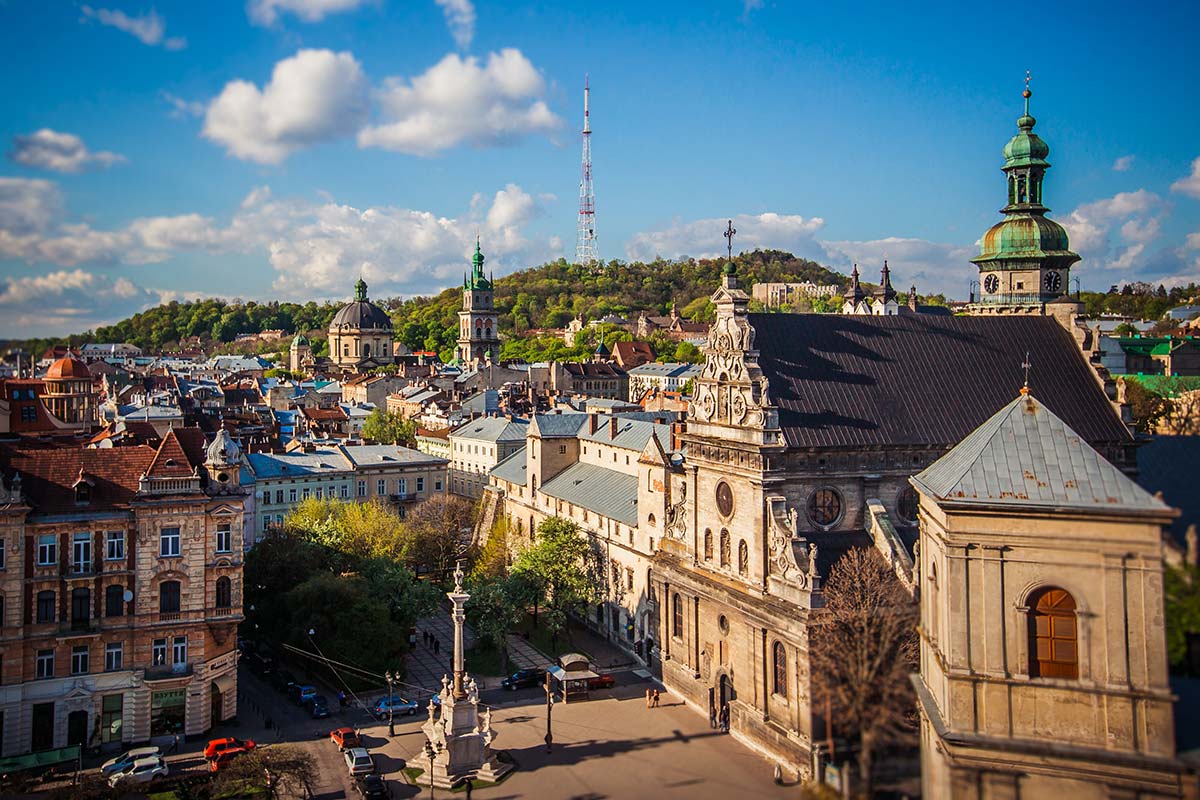
Lviv has the vision to become a climate neutral city. Starting off with the systemic implementation of energy solutions, Lviv has developed a concept of energy efficient districts Sykhiv and Ryasne. Now Lviv is moving towards climate neutrality with a Positive Energy District concept within a SPARCS project. 

Karak in Jordan: local actions for climate protection

In line with the Nationally Determined Contribution (NDC) of Jordan for 2030, Karak municipality has committed to a 14% reduction of the municipality’s greenhouse gases (GHG) emissions with an aim to counteract climate change. Besides the capital city Amman, Karak municipality is the first municipality in Jordan to construct renewable energy projects and is committed to a sustainable future for the city. This objective is expressed through the actions agreed upon in the city’s Sustainable Energy & Climate Action Plan (SECAP), focusing not only on reducing the energy consumption through energy efficiency, or producing more clean energy, but also on improving the existing infrastructures in the city.