


As part of its support during the COVID 19 pandemic, Tbilisi has adopted a number of measures and social projects to support vulnerable groups during the pandemic and has involved businesses, the Red Cross and many volunteers in its implementation.
Category: Public Health & Public Services
Safety First in Belo Horizonte

The municipality of Belo Horizonte in the south-east of Brazil introduced a Covid-19 safety protocol for the selective collection and screening of recyclable materials. The protocol ensured that waste management services could continue during the pandemic and that waster pickers and sorters were protected as effectively as possible.
Sustainable Urban Mobility and COVID-19

The Covid-19 pandemic has led to fundamental changes in urban mobility worldwide. Some impacts are short-term, especially during lockdowns. Others are long-term changes in the way urban mobility and traffic will operate in the future. Sustainable urban mobility and Covid-19 was the focus of the Connective Cities Virtual Dialogue Event in partnership with United Cities and Local Governments (UCLG) and UN-Habitat and hosted by the City of Wiesbaden – Germany that took place on 19, 20 and 22 July 2021. This peer-learning note summarizes good practices of participating cities with a focus on local public transport, bicycle traffic and sustainable urban logistics.
In addition to the English version, there is also a German and Spanish version.
Additional information: a summary of the event including all presentations is available here.
Building. Forward. Better

We look back on an eventful year. Hopes of getting the Corona pandemic under control quickly fizzled out. The World Climate Conference cast its shadow ahead, only to end with a mediocre result. Despite, or perhaps because of, these setbacks, experts at the municipal level intensified their cooperation to better meet the challenges of the pandemic and climate change. Our networks expanded, project proposals became more concrete, working groups more agile, and some “champion municipalities” are themselves doing much to move the networks forward. It is time to pause for a moment, look back and dare to look forward to the future. Our coordinators of the regional networks in South Eastern Europe, the MENA region and Sub-Saharan Africa describe this from their own personal perspective.
The Future of the Southeast Europe Region – by Irakli Samkharadze and Elene Samukashvili
As the year comes to a close Connective Cities Southeast European Region celebrates achievements of every concurrent Learning and Peer-exchange processes held with the support of urban practitioners, experts, consultancies and technical personnel from all over the world.
Activities under Learning Processes on Climate Resilient Urban Development and Sustainable Urban Energy Planning, underway in SEE region will continue into the upcoming year with an updated roadmap. We will proceed with expert missions, financial advisory and project proposals polishing support, in close synergy with financial institutions. This support will be provided for projects identified through Dialogue Events and Planning Workshops held in past two years.
In 2021 under Connective Cities COVID-19 Programme, Southeast European Region (SEE) gathered amazing and motivated professionals from all over the region who worked in two directions of Crisis Management and Digitalisation. As of new year, Programme Teams aims to maintain the close contact with the groups, through the Network, providing them with further news, updates and guidance.
As the network of the region is constantly expanding, planned activities are also amplifying and growing in their directions and frequency. 2022 promises to be a very active and highly engaging time for the network. Our topics include but are not limited to Sustainable Urban Development, Energy Efficiency & Renewable Energy, Urban Planning, Green Technologies, Infrastructure and recovery, Crisis management & Digitalisation, while also constantly looking into new directions according to preferences of Network Members and political Developments in the region.
Kontakt: Irakli Samkharadze (irakli.samkharadze@giz.de)
Sub-Saharan Africa – an outlook to 2022 – by Sophia Kamau
We have braved another year of virtual learning, networking and finding solutions to our urban challenges. Thank you for being part of this journey by sharing good practices, challenges, contacts and expertise.
We look over the skies into the endless opportunities that time gives and envision 2022. Based on the networks built, relationships established, and ideas exchanged, we would like to share our thoughts with you as we get into a reflective season.
In 2022 we will finalize the learning processes on urban basic services and sector governance and land management and land use planning. This will be through support to municipalities working on their proposals and those seeking expertise support. Through partnerships with like-minded institutions, we will have more opportunities to learn and exchange through the thematic working groups; solid waste management, urban green spaces, climate change and urban mobility.
We welcome you to join this community of transformers in the region.
From the Sub Saharan Africa desk, we appreciate your cooperation and wish you happy holidays!
Contacts: Sophia Kamau (sophia.kamau@giz.de)
Connective Cities in the MENA region: Champion Cities taking ownership of the network in 2022 – by Muna Shalan
Over the past year, the vibrant network of Connective Cities in the MENA region has grown and has intensified its activities: we are now at 235 registered members! To sustain the momentum and ensure the sustainability of the network, champion cities will take the lead in steering the activities of the different thematic working groups starting next year. This will include peer learning, good practice presentation and joint proposal development. Upon showcasing the outcomes of the activities in the planned regional event in January 2022, the network members will be able to nominate themselves or vote for the steering committee of the regional working groups that include local economic development and job creation, municipal energy efficiency projects, biodiversity and environmental protection, digitalisation of municipal services, social entrepreneurship and circular economy.
We are also looking forward for new partnerships with regional city associations in 2022. This includes our recently signed MoU with UCLG MEWA to strengthen decentralised regional cooperation.
Contact: Muna Shalan (muna.shalan@giz.de )
Crisis Management in Palestinian municipalities: in the sectors economy, health and education

The COVID-19 pandemic has presented unique challenges to the public sector worldwide. Especially municipalities play a central role in fighting the pandemic. Increasingly, municipalities are also developing local strategies for the recovery and conceptualising post-pandemic measures.
Due to the constant emergency situation in the Palestinian Territories, coupled with the negative impact of the Corona pandemic, crisis management planning especially at the municipal level is perceived as a high priority. Therefore, and as part of the Connective Cities programme, 10 Palestinian municipalities:
- Tullkaram,
- Salfit,
- Toubas,
- Al Beera,
- Beitunia,
- Jericho
- Halhoul,
- Beit Jala,
- Bani Naim,
- and Dura
have come together in 3 working groups to work out solutions for their common crisis management challenges as follows:
Working Group 1: Crisis Management in the Education Sector
Municipalities: Tullkaram, Salfit, Toubas, Beit Jala
Working Group 2: Crisis Management in the Health Sector
Municipalities: Bani Naim, Halhul, AlDura
Working Group 3: Crisis Management in the Local Economy Sector
Municipalities: ElBeera, Bitunia, Jericho
The working groups have worked throughout the past 3 months with the support of national experts on developing various prototypes, projects ideas as well as sharing their good practices in crisis management in the different sectors. The efforts of the working groups resulted in the following products:
The Working Group focussing on the education sector developed a prototype which provides a model for organizational structure for an emergency management cell at the municipal level with clear mandates and roles for different involved units at the municipalities. The prototype proposes practical guidelines on how to structure an emergency management cell at times of crises with the existing units of the municipalities and how to involve various actors in the cell. Further, the working group drafted a project idea which is aimed at the development of an Emergency fund. The fund is to be institutionalized as part of the educational tax collected by the municipality and shall cover educational interventions and support for schools. Membership of the fund shall come from various community representatives. The municipalities of the working group developed and drafted this idea jointly.
The second working group, concentrating on the health sector, created an outline for how to include crisis management as part of strategic planning of municipalities. The task force is developing an additional chapter for a manual for municipal strategic planning, focusing on practical guidelines of crisis management. In addition, the municipalities drafted jointly a project idea, which targets the establishment of a Crisis Management Fund – allocated for municipalities to support the system during crisis situations.
Crisis management in the local economy sector was covered by the third working group. This group has also worked on a prototype, concluding in an organizational matrix for Crisis Management planning in the various units of local governments. The matrix proposes specific actions to be taken by each unit in the municipality during the 3 phases of crises management – pre, during and post crisis. As project idea the group focused on strengthening the role and capabilities of the local economic development unit (LED) in municipal crisis management to assist in crisis. The process includes carrying out an inventory of economic damage and collecting and analyzing key economic data during crises in cooperation with the relevant parties.
The undertakings of Connective Cities and its working groups were a cooperation with and endorsement of activities by the Government of Palestinian Territories and Association of Palestinian Local Authorities APLA. The municipalities and APLA are interested to further build on innovative approaches in cooperation with Connective Cities.
All data (recordings of workshops) of the different working groups has been shared on our Connective Cities Community and can be accessed as registered member. For more insights into the developments of the working groups, watch our YouTube movie and please visit our YouTube Kanal.
Municipal Waste Management in Times of COVID-19

The COVID-19 pandemic has left a significant mark on municipal waste management worldwide. During the lockdowns, quantities of private household waste have increased, while commercial waste has decreased. Strict hygiene measures are required when collecting and sorting waste – a service that must continue to function everywhere despite the more difficult conditions created by the pandemic. Many municipal waste companies were unprepared for a digital way of working and, in some cases, have come under financial pressure. In the long term, the pandemic demonstrates that a shift towards a circular economy is an essential strategy for sustainability.
These and other topics were on the agenda at the Connective Cities Response Dialogue “COVID-19 and municipal waste management: Response to the pandemic and post-pandemic outlook”. On November 9 and 11, more than 20 participants from seven countries shared their experiences online. They also advised each other on how best to address current challenges in municipal waste management, and how to incorporate lessons learned from the crisis into long-term operations.
Workshop invitation: regaining trust in public transport after Covid 19

After two years of a global pandemic, some of the preconditions of sustainable mobility plans of municipalities are questioned.
- Increased use of home-office leads to changed or even reduced mobility flows and needs
- Lack of information and fear to get infected due to unclear hygienic conditions and compliance with hygienic rules lead to loss of trust in public transport
Therefore, instead of increased public transport, people are increasingly using individual transport,
- counteracting efforts to improve sustainable mobility
- putting financial pressure on public transport
- sometimes even increasing infection risks by travelling in smaller vehicles
In this workshop we will focus on the following questions:
- Scientific findings on hygienic guidelines for public transport
- Good practices on
- defining hygienic rules for public transport
- ensuring compliance with hygienic rules in public transport
- regaining trust in public transport from political stakeholders and potential passengers
In exploration of abovementioned topics Connective Cities team would like to invite you to a workshop on December 9, 2021 at 13.00-15.00 CET on the following link
Regaining trust in public transport after Covid-19 | Connective Cities Network
Please log in or sing up on Connective Cities platform to access Event and resources. Do not hesitate to get in touch with us if you have any questions.
Contact:
Dr. Irakli Samkharadze
GIZ Regional Network Coordinator Connective Cities – Southeast Europe
irakli.samkharadze@giz.de
For German experts:
Alice Balbo
Connective Cities Project Manager at the German Association of Cities
alice.balbo@staedtetag.de
Call for Participation: Join the Connective CitiesCity Lab

A open and flexible online program for local municipal employees and urban practitioners around the world.
Municipalities around the world are affected by the impact of the COVID-19 pandemic. Therefore, Connective Cities is organising a series of virtual formats to discuss and develop measures, challenges, and solutions to overcome the pandemic and support the municipal recovery.
By joining the Connective Cities Lab, you get full access to international experts and urban practitioners from other cities, who will support you to develop solutions and prototypes to the challenges you are working on in your local community.
Adopt a grandparent, the theme of solidarity in Tirana, Albania
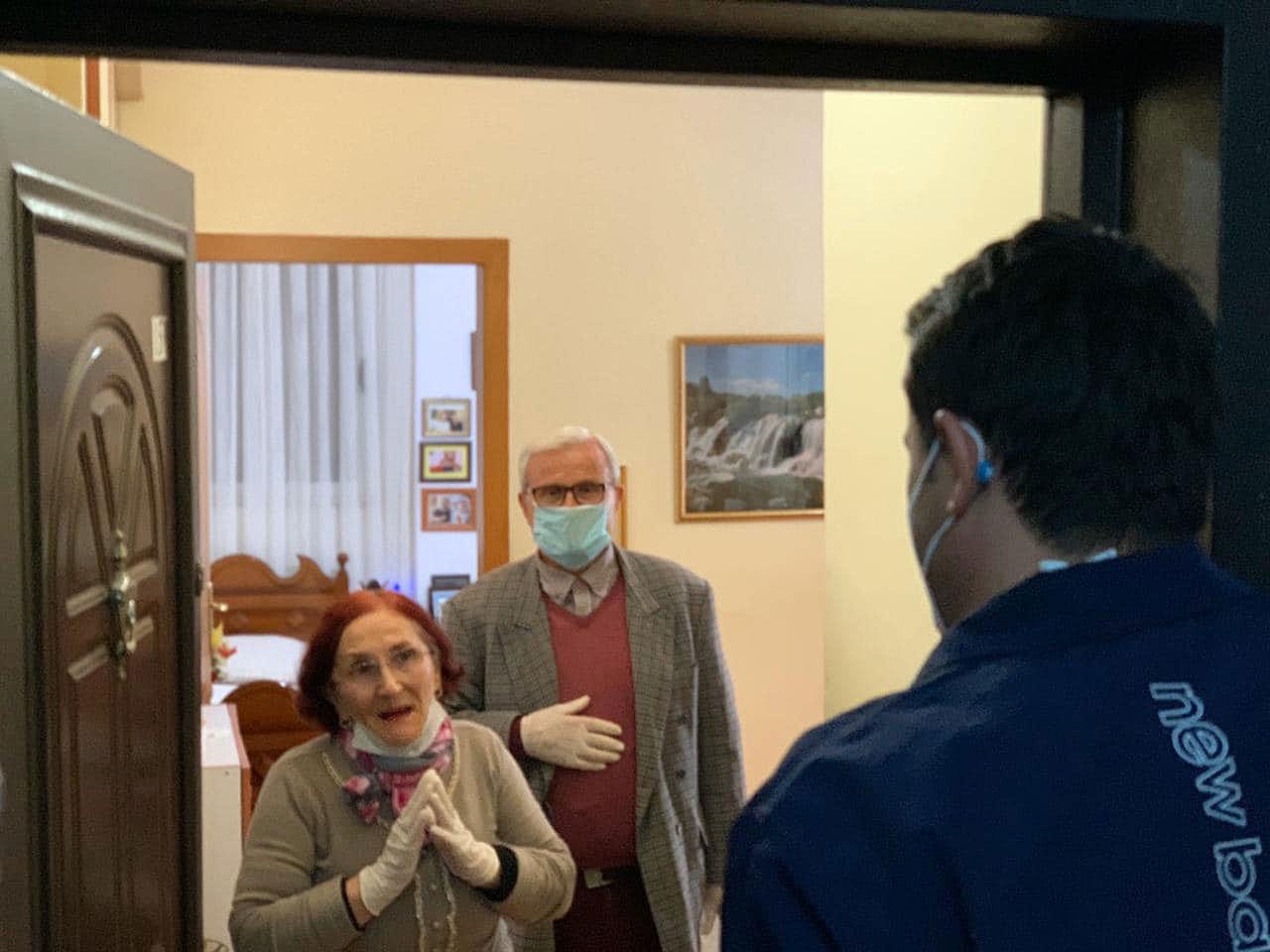
The project ‘Adopt a grandparent’ is an initiative to help the lonely older people by providing groceries and medical care to their homes, helping those who live alone around their house, or merely accompanying them during difficult times.
Call for Participants – Covid-19 and municipal waste management

Connective Cities and its partners invite municipal practitioners to a two-day Covid-19 Response Dialogue on Covid-19 and municipal waste management to be held virtually on 9 and 11 November 2021.
The event brings together municipal experts from Germany with international urban practitioners to discuss municipal waste management during and after the pandemic.
Two main aspects of waste management and Covid-19 will be covered during the event:
- The importance of a more circular economy, including a more sustainable approach to (re-)use of resources, recycling and the creation of jobs and
- the adaptation of operation practices due to the pandemic and its experiences.
Both aspects can be better dealt with if gender-sensitive strategies are considered. Therefore, the exchange will give special attention to the gender perspective.
More information: Call for participants [pdf, 3 Seiten, 339 kb]
If you have any further questions, please do not hesitate to contact us:
Thiago Garcia
thiago.garcia@engagement-global.de
Phone +49 (0)228-20717-2633
Alice Balbo
Alice.Balbo@staedtetag.de
Phone: 49 (0)221-3771-573