Support for more bike lanes in cities

On 8 September 2021 the event “Pop-up bike lanes: long-term opportunities for green urban development after the COVID-19 pandemic?” took place as part of the virtual event series Insight Sessions: (Post) COVID Urban Futures. The series facilitates a recurring exchange on various topics of sustainable urban development in the (post) COVID-19 era between urban practitioners and interested participants worldwide. In entertaining exchange formats, space is created for impulses and reflection, and innovative solutions are presented.

The current event focused on pop-up bike lanes and changes in urban mobility during the pandemic. Over 30 participants from Bangladesh, Georgia, Tunisia, Egypt, Japan and Germany, among others, took part in the event. Representatives of cities worldwide discussed the possibilities and opportunities that arise from the long-term maintenance of the newly created cycle paths.

Programme

After a brief insight into this year’s Connective Cities COVID-19 programme, Sebastián Posada Garcia of the Bicycle and Pedestrian Department at the Secretariat of Mobility of the City of Bogotá, Colombia, presented the concept of pop-up bike lanes and good practice in Bogotá. At peak times in April and May 2020, the city installed more than 80km of additional temporary bike lanes, some of which have already been converted into permanent new bike lanes. In his presentation, Mr. Posada Garcia also addressed some frequently mentioned criticisms against pop-up bike lanes, such as increased numbers of accidents or increased congestion for motorists. He emphasised, based on statistical analyses, that the speed of car traffic did not decrease during the pandemic. However, many more citizens used bicycles to get around the city of Bogotá during COVID-19.

Afterwards, Thomas Kiel d’Aragon, Head of the Transport and Civil Engineering Department at the German Association of Cities in Berlin, presented examples of pop-up cycle paths in German cities. He also discussed the legal basis for the construction of additional cycle paths, as well as the financing of sustainable urban projects. Mr. Kiel d’Aragon also highlighted the enormous knowledge in the private sector compared to cities and pleaded for a close cooperation between the municipal administration with cycling initiatives or sustainability movements and private institutions.

Finally, Seçil Öznur Yakan, co-founder of the Women on Bicycle Initiative in Istanbul, Turkey, gave insights into the work of her initiative. In an impressive way, she showed how women around the world are working for more equity in bicycle mobility and networking with each other as well as with urban actors. Ms Öznur Yakan also presented the film My Bicycle My City, which was released in 2019 as part of World Bicycle Day. The film is available on YouTube: Benim Bisikletim Benim Şehrim Film – 2019 – YouTube

The presentations were followed by a lively discussion in which further questions could be answered, for example on the political promotion of increasing bicycle mobility in the different cities and countries. Finally, the Connective Cities working groups “Gender responsive urban mobility” and “Smart Mobility” were presented in the context of the COVID-19 pandemic. You want to be part of the working groups? You can find more information and register here: Platform COVID-19 | Connective Cities Network

Recording

You can find the recording of the event here: Insight Session: Pop-up bike lanes - Long-term opportunities for green urban development?

Presentation

Good Practice Bogotá, Colombia

Pop-Up Bikelanes in German Cities

Insights Women on Bicycles

Building mental health resilience during times of COVID-19

Since the outbreak of the global pandemic, municipalities have faced a multitude of challenges. Following prolonged lockdowns, travel restrictions, financial losses and job cuts, mental health problems have been on the rise.

Municipalities have been key players in fighting the spread of the virus and in managing the overall situation. As a result of these complex responsibilities, mental health issues, including burn out, have been observed among municipal employees, social workers, teachers, and civil society activists. Citizens have also been psychologically affected by the pandemic and are in need of support.

Connective Cities cordially invites you to participate in the virtual Public Health Cluster kick-off on “Building Mental Health Resilience during times of COVID-19” on  29 September 2021, from 15:30 to 17:30 CEST (Berlin Time).

The event will cover the following issues:

  • What are municipal challenges in the field of mental health, and why is the topic relevant?
  • What are the recommended actions to promote mental health in municipalities, also considering limited financial resources?
  • What can municipalities do to mitigate the mental health impacts of the pandemic?
  • How can different target groups be reached, including those for whom mental health is considered taboo?

The event is aimed at international municipal actors from local governments, civil society, business and academia who wish to share their challenges and good practices in the field of public health.

The aim is to present municipal challenges and practical examples and to develop new solution approaches through a joint exchange. The kick-off event lays the foundation for the formation of working groups that will further develop these solutions through collective consultation and with the support of regional and international experts.

In order to learn more about your experiences and wishes for the workshop, we kindly ask you to fill out this short questionnaire (5-7 min): Survey Mental Health | Connective Cities Network (also available in ArabicGerman & Spanish). The results will be presented anonymously during the event.

To register for the workshop and stay updated on the agenda, the announcement of speakers and further details of the session, please visit our Connective Cities Community.

Please also visit our COVID 19 topic pages. Here you will find more event information, videos, good practices and publications, including on public health.

We are looking forward to your participation!

Public Health Cluster kick-off “Building mental health resilient during times of COVID-19”

Date: 29 September 2021

Time: 15:30 – 17:30 CEST (Berlin time)

Event Language: English. Translation into German, Arabic and Spanish (tbc)

If you have any further questions, please do not hesitate to contact us.

Contact: Paulina.koschmieder@giz.de

Tackling drug addiction and drug use through an innovative partnership

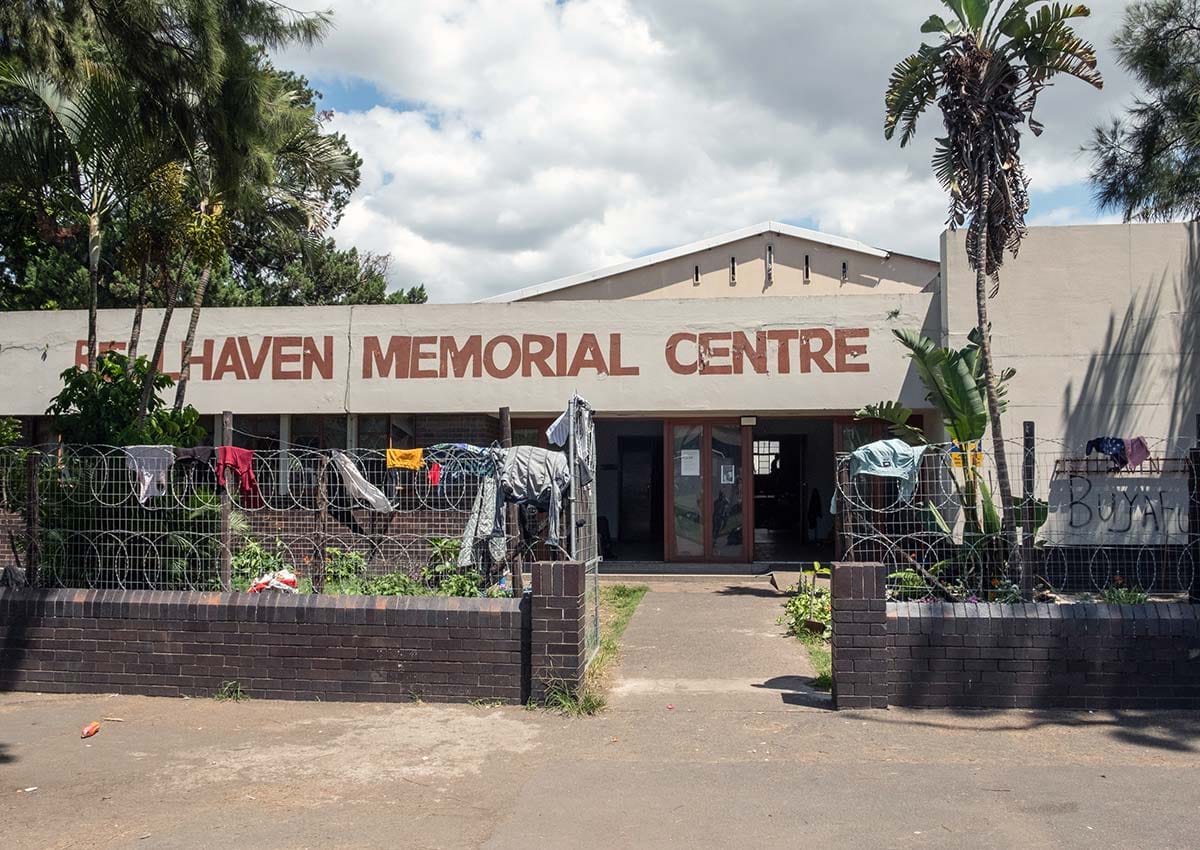
Drug addiction or drug use disorder is a major issue facing our cities and in fact, all parts of societies. During South Africa’s toughest lockdown, an innovative partnership with the city government, academics, NGOs, businesses, the police led to the setting up of a rehabilitation centre inside the iconic Moses Mabhida  Stadium for homeless people with drug use disorder called Bellhaven Harm Reduction Centre.

Beyond Climate

When planning and investing in infrastructure projects, innovative cities bundle together a larger set of overarching objectives in the social, economic, environmental, health and governance realms. Integrating multiple benefits in climate infrastructure projects tends to enhance their political and financial/ fiscal viability, scalability, and replicability. Identifying and planning for benefits during early project development stages increase the project’s success, both in delivering positive environment and human-centred impacts, as well as in mobilising political buy-in and connecting with finance.

This report aims to show that project preparation facilities (PPFs) can and should aid in integrating climate action with other, highly synergetic development and cooperation objectives.

The city of Krusevac during the pandemic

Krusevac, a city in the heart of Serbia, took multiple actions during the pandemic to protect its approximately 58,000 inhabitants. The city’s crisis management included preventive measures. For instance, disinfectants in 200 large canisters were placed throughout the city and made available to the population free of charge, and the public enterprise “Veterinary Station Krusevac” disinfected public facilities. Furthermore, public health was an integral part of crisis management. Namely, the municipality of Krusevac built a temporary hospital with 150 beds in a sports hall to treat people with mild disease progression. In addition, a larger hospital with 500 beds was built after the first wave to be prepared for the second wave of the pandemic. 

For an effective and fast implementation of the COVID measures, not only the involvement of different stakeholders, such as the Serbian military, public enterprises, and the political administration of the city, but also the protection of vulnerable and at-risk groups was vital. Therefore, Krusevac organised and coordinated a volunteer service. Volunteers packed and distributed 62,175 food rations to pensioners, single parents during the first three months of the pandemic. Moreover, the city provided taxis to deliver food and medicine to people in need.

By now (as of July 2021), about 45 percent of Krusevac residents are fully vaccinated. In the coming months, the municipality will mainly focus on keeping interest in vaccination high in order to achieve herd immunity. 

The city of Krusevac is also working on sustainable and inclusive mobility concepts, for example by building new bicycle paths.

Further Information: 

Presentation: CITY OF KRUSEVAC  [PDF, 5mb]
THE DEPARTMENT OF DEFENSE AND EMERGENCY SITUATIONS

Veranstaltungsaufzeichnung in Englisch (Präsentation Krusevac beginnt bei der Minute 92:00): „Infection Chain Tracing in Southeast Europe (SEE) and Caucasus“ (Nur für Registrierte auf der Connective Cities Plattform) 

Contact

Dusan Todorovic,
Head of the Department of Defense and Emergency situations
dusan.todorovic@krusevac.rs

COVID-19 epidemic prevention and control in the cardiovascular hospital in Shanxi, China

The Shanxi Cardiovascular Hospital was founded in 1980 and is affiliated with the Shanxi Medical University. In addition to medical treatment, the hospital focuses on research, education and pre- and postoperative care.  

The hospital has about 1,300 inpatient beds, over 1500 employees and normally treats over 250,000 outpatients and 35,000 inpatients a year. The Department of Cardiology has been authorized as the National Key Clinical Specialty, Key Medical Discipline of Shanxi Province, Shanxi Provincial Quality Control Centre for Cardiovascular Interventional Diagnosis and Treatment, amongst others.

Over 6000 percutaneous coronary intervention – PCI – cases including over 1000 Primary PCIs are performed in this centre each year. Radiofrequency – RF – ablation and pacemaker implantation are accomplished in around 1,500 and 1,000 patients every year. Over 1500 cases of various cardiovascular surgeries are performed each year in the hospital.

Upon the outbreak of the Corona pandemic, the hospital established an effective pandemic preparedness and control strategy, including the following:   

  • Routine meetings on analysis of fever patients in hospital 
  • Various forms of COVID-19 prevention and control training in the hospital 
  • Standardised reporting of fever patients and suspicious cases 
  • Strengthened surveillance and inspection of prevention and control work 
  • Strengthened hospital-acquired infection control 

The existing pandemic response plan is continuously improved and adapted to the current situation. This enables the hospital to react quickly to changes in the incidence and to integrate new scientific findings into the measures. The holistic approach of the measures, the use of digital management systems and an effective hygiene concept have reduced the number of patients infected with COVID-19 drastically. 

The experience of the Shanxi Cardiovascular Hospital shows that comprehensive planning, scientific prevention and control, as well as adherence to the “four early” principles (early detection, early diagnosis, early isolation and early treatment) are effective methods to contain the spread of the virus. International exchange and learning from each other’s experiences is important to further combat the virus effectively in the future.

Contact 

Wang Fei MD, PhD

Cardiovascular Department

Shanxi Cardiovascular Hospital

No.18, Yifen Street, Taiyuan, Shanxi Province, P.R. of China

Zipcode: 030024

Phone: +86-13453189752   

Further Information 

COVID-19 epidemic prevention and control in a cardiovascular hospital in Shanxi, China (PDF)   

Event Recording (Presentation on Shanxi starts min. 37:00): „Infection Chains & Mobile Testing | Connective Cities Network (connective-cities.net)“ (only for those registered on the Connective Cities Platform)

Research of good practices on the subject of health, business, and governance at municipal level during the COVID-19 pandemic

The report aims to explore municipal initiatives and measures taken to address health, governance, and business sector challenges caused by the COVID-19 pandemic.
The report is structured as follows:
The first part reviews the methodology of country identification for further investigation of good practices at national and city level.
The second, third, and fourth parts consist of good practices in the areas of health, governance, and business during the COVID-19 pandemic, including data analysis in selected countries and a brief overview of municipal practices in response to COVID-19. Good practices were selected from low and medium income countries from Africa, Asia and Southeast Europe.
In the final section, the cities’ challenges and recommendations for Connective Cities are reviewed and conclusions regarding the research findings are also presented.

Connective Cities’ COVID-19 programme 2021

After last year’s Connective Cities event series “Municipal Response to COVID-19”, which was well received by over 750 participants from different cities and municipalities around the world, Connective Cities is again offering a comprehensive programme on COVID-19 this year. Last year, the programme focused on sharing experiences of immediate municipal measures during the pandemic – this year, the perspective will be broadened to include municipal recovery from the pandemic, also in the context of the 2030 Agenda. Instead of pure exchange formats, the second part of the Corona programme will derive proven methods from Connective Cities as well as use new approaches to promote a deeper municipal exchange of experiences. In this sense, it is planned that municipal practitioners jointly address current COVID-19-related topics in compact learning processes. The aim here is the (further) development of (project) initiatives and guidelines for municipal challenges as well as the elaboration and dissemination of existing approaches to solutions. Building on the previous momentum, challenges related to COVID-19 can thus be dealt with in greater depth and in a practical manner.

Aspects already addressed in the previous year will thus be further developed. Connective Cities will focus on the following topics in this year’s COVID-19 programme:  

  • Local economy & industry   
  • Digitalisation & communication  
  • Public health & public services
  • Crisis management 
  • Climate neutral urban development
  • Gender sensitivity in the pandemic
  • Innovation

For more information on our COVID-19 activities this year, watch our information video and visit our
COVID-19 webpage.

Municipal response to COVID-19 in the health sector

Focusing on exploring tools and protocols that cities have been employing to control and monitor the spread of infection and reviewing the efficiency and effectiveness of such tools and protocols.

More: https://youtu.be/iy9Zb3HL2GQ

More good practices, articles, videos, podcasts and interviews on our COVID-19 page.

Germany’s health offices and their fast-track response to the COVID-19 crisis

The COVID-19 pandemic is a major challenge for Germany’s health offices. Many responded quickly at the start of the pandemic by reorganising their work procedures, but staff shortages and poor digital infrastructure has made their work harder.