


Two 30 km/h zones were planned in Belo Horizonte as traffic calming measures and successfully implemented in 2019 to reduce car traffic and make neighbourhoods safer and more liveable. This change process took place with the broad participation of the local retail community, the residents and, in particular, the local schools. The public acceptance was very high. The project was inspired by peer-to-peer consultations during a dialogue event in Bremen and a subsequent expert mission of German experts to Belo Horizonte. The project now serves as a model for further similar action in other districts.
Author: erik
Educational projects on the production of compost, the expansion of greenhouses and the creation of green spaces

As part of the Connective Cities learning process on Urban Gardening, a virtual dialogue event was organised and hosted together with the city of Berlin in April 2021. The cities of Maputo and Berlin actively participated in the dialogue event and their experts had the opportunity to present their districts experiences on urban gardening and environmental protection projects.
One of the outcomes of the event was the interest in further exchange on the thematic. Therefore, Connective Cities supported the cities of Maputo and Berlin by organising a virtual project workshop on 15 December 2021. This virtual exchange strengthened the municipal partnership and its cooperation, which has been in place since 1995. Experts from both cities shared ideas and experiences on how to improve the economic situation in the cities while working towards environmental and climate protection. Topics that have been the focus of the partnership since 2015.
During the session, it became clear that the involvement of the population and the younger generations plays a major role. In both cities, there is a variety of good practice projects in the field of environmental education to create an awareness among the younger generations. In such projects, pupils learn about the importance of protecting the environment and the impact of their actions. In so-called green classrooms or environmental clubs, students from Maputo, for example, get to know more about recycling systems or waste separation. At the same time, the school organises events to reach and involve other people outside of school.
An important achievement for KaMubukwana is winning award as the cleanest neighbourhood in Maputo, Mozambique. This mention and all the ideas during the virtual exchange motivated Maputo and Berlin to continue collaboration and sharing expertise beyond the virtual session supported by Connective Cities.
There are many different ideas that arise during the exchange to continue educational projects, such as the production of green compost, the expansion of greenhouses and green landscapes or functional irrigation systems. All these projects would benefit and support the efficient cultivation throughout the community.
As a next step, both cities want to develop a structural project plan to identify and prioritise project ideas according to their needs. This project plan will set the first steps for mutual implementation.
Another topic mentioned during the session, which called attention for future cooperation, is the strengthening of the health care system to achieve the implementation of solidarity and preventive actions. This topic will be further discussed and should achieved through intense cooperation between the cities.
Municipal Business Incubators in Madaba

In an effort to drive sustainable recovery from the impacts of the pandemic, Madaba municipality in Jordan has succeeded in attracting technical and financial support to establish business incubators that will accelerate the growth of entrepreneurial activities in sustainable agriculture.
The establishment of the business incubators serve as a pioneer experiment for a new model of productive eco-business park that will drive economic recovery while contributing to the local sustainable development goals of Madaba in the fields of agriculture, environment, and clean energy.
Video: Pop-up bike lanes during the Pandemic

Reducing the number of accidents, while at the same time increasing safety for everyone? Bogotá showed us, that this is possible and that the key to promote sustainable urban planning and environmentally friendly mobility are pop-up bike lanes. The concept of pop-up bike lanes, which emerged especially due to the COVID pandemic, is spreading not only in Bogotá, but also worldwide, for example in Berlin.
Both cities face the challenge that for a long time the principle of the car-friendly city was pursued in urban and transport planning. With an increase in cyclists during the pandemic and the limitation of public space, it was necessary to rethink and meet the needs of residents, for example to increase road safety for cyclists. This Good Practice outlines the undertaken measures in transport planning, the opinions of residents to the new concept and how in the end all road users can benefit from pop-up bike lanes in the long term, whether in Bogotá or Berlin.
The Protagonists are:
- Sebastián Posada García (Bicycle and Pedestrian Sub-Dictorate, Bogotá)
- Dr. Lea Wisken (Head of Cycling and Pedestrian Coordination Office, Berlin)
Watch video at YouTube (with mit English or Spanish sub-title):
A sustainable land use plan for undeveloped land

At a dialogue event on intermunicipal land management at the end of 2020, the idea had arisen to support Greater Amman Municipality in drawing up a community plan for a largely undeveloped area. To this end, Jordanian and German experts began an intensive exchange at the end of 2021.
Voices from Connective Cities – Jerash municipality

Representatives from the Jordan municipality of Jerash tell how they have benefited from the exchange with other experts at the events and workshops organised by Connective Cities. They were able to take away many ideas for their own projects in the areas of gender-sensitive local economic development, waste management and plastic recycling, which aim at a zero-waste municipality.
Watch video at YouTube:
Creating inclusive public spaces for women

Public spaces can bring together communities and facilitate cultural expression and diversity, so it is important to look at how public spaces can promote women-city relationship building. Femmedina, a combination of the terms “femmes” (women) and “medina” (historical city), is the name of a project implemented in the historic center of Tunis. The project has the ambition to foster this relationship building.
Frankfurt (Oder) – Slubice: Together against the pandemic
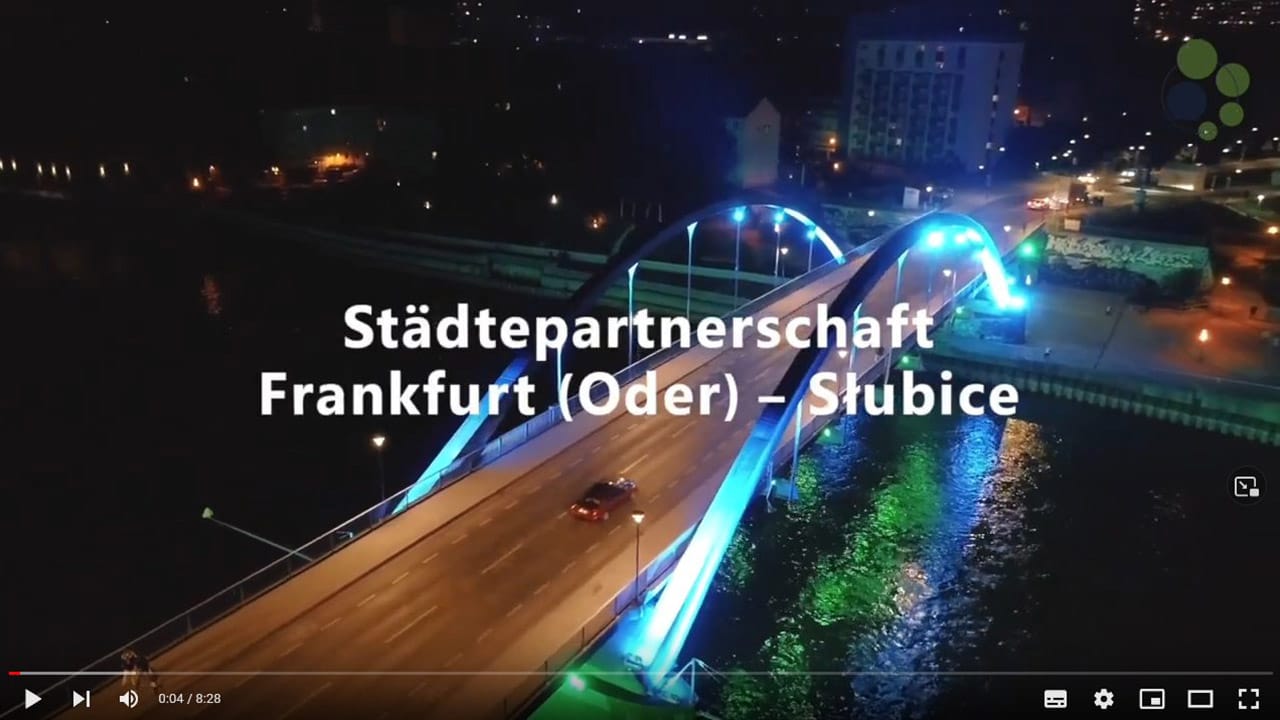
The Corona pandemic had a great impact on the lives of people in the partner city of Słubice and Frankfurt (Oder). Especially citizens living at the border area were impacted by the restrictions – commuters could no longer pass to the other side of the river for work, families could no longer see each other. Despite all this, it was possible to organise support with great civil society commitment through direct and rapid communication, which underlined the importance of cohesion at the boarders.
Learn how the two cities have worked together to tackle the challenges of the pandemic and successfully strengthened their partnership!”
Watch Video at YouTube: https://youtu.be/k0uCJE_yCac
With pony and corgis humorously through the crisis

With Corona, there was also a crisis in public transport in the German capital Berlin: passenger numbers fell by 70% – the BVG met the communication challenge with humour. Passengers and employees were to be convinced that safe bus and train travel was possible under consideration of the Corona rules.
Urban gardens of Amman

The pandemic and its associated lockdowns have uncovered an acute need for food security in urban areas. To address this need, Greater Amman Municipality (GAM) in Jordan has embarked on several projects to foster urban gardening in the capital Amman, in coordination with various associations, funding agencies, and the local community.