The Connective Cities Lab 2021 – Facts & Findings

Municipalities around the world are affected by the impact of the COVID-19 pandemic. Therefore, Connective Cities organised a series of virtual formats to discuss and develop measures, challenges, and solutions to overcome the pandemic and support the municipal recovery.

The Connective Cities Lab – an online programme for urban practitioners and municipal experts – created an international exchange between 85 municipalities from 57 different countries worldwide to support the development of solutions and prototypes for local challenges.

With a total of 72 hours of programme, the following components were implemented and results achieved within the Connective Cities Lab.

Connective Cities Lab Nov 10th – 30th 2021

The Connective Cities Lab – an online programme for urban practitioners and municipal experts – created an international exchange between 85 municipalities from 57 different countries worldwide.

The “Connective Cities Lab” was designed as a complementary digital format to promote the international exchange between urban practitioners, tech enthusiasts and municipal stakeholders, that aimed to inspire the development of solutions for municipal recovery from the pandemic and to prepare participants to transfer their ideas into fundable projects.

Instead of exchange formats for sharing expertise and Good Practices, the CCLab 2021 focussed on in-depth formats – including the strengthening of existing capacities and facilitating a creative collaboration between Connective Cities Community members and global networks of innovators and data scientists.

The Capacity Strengthening Capsules were organized as preparation and knowledge base for further discussions. A total of nine challenges were initially formulated, further elaborated in a 3-day Design Thinking process and summarised in project outlines. An additional workshop provided insights on requirements in municipal funding proposals. Six of the nine digital challenges were tackled by interdisciplinary teams in a global virtual 48-hour hackathon and evaluated by a jury of experts.

The concept and results are documented in this report.

Crisis Management in Palestinian municipalities: in the sectors economy, health and education

The COVID-19 pandemic has presented unique challenges to the public sector worldwide. Especially municipalities play a central role in fighting the pandemic. Increasingly, municipalities are also developing local strategies for the recovery and conceptualising post-pandemic measures.

Due to the constant emergency situation in the Palestinian Territories, coupled with the negative impact of the Corona pandemic, crisis management planning especially at the municipal level is perceived as a high priority. Therefore, and as part of the Connective Cities programme, 10 Palestinian municipalities:

  • Tullkaram,
  • Salfit,
  • Toubas,
  • Al Beera,
  • Beitunia,
  • Jericho  
  • Halhoul,
  • Beit Jala,
  • Bani Naim,
  • and Dura

have come together in 3 working groups to work out solutions for their common crisis management challenges as follows:

Working Group 1: Crisis Management in the Education Sector

Municipalities: Tullkaram, Salfit, Toubas, Beit Jala

Working Group 2: Crisis Management in the Health Sector

Municipalities: Bani Naim, Halhul, AlDura

Working Group 3: Crisis Management in the Local Economy Sector

Municipalities: ElBeera, Bitunia, Jericho

The working groups have worked throughout the past 3 months with the support of national experts on developing various prototypes, projects ideas as well as sharing their good practices in crisis management in the different sectors. The efforts of the working groups resulted in the following products:

The Working Group focussing on the education sector developed a prototype which provides a model for organizational structure for an emergency management cell at the municipal level with clear mandates and roles for different involved units at the municipalities. The prototype proposes practical guidelines on how to structure an emergency management cell at times of crises with the existing units of the municipalities and how to involve various actors in the cell. Further, the working group drafted a project idea which is aimed at the development of an Emergency fund. The fund is to be institutionalized as part of the educational tax collected by the municipality and shall cover educational interventions and support for schools. Membership of the fund shall come from various community representatives. The municipalities of the working group developed and drafted this idea jointly.

The second working group, concentrating on the health sector, created an outline for how to include crisis management as part of strategic planning of municipalities. The task force is developing an additional chapter for a manual for municipal strategic planning, focusing on practical guidelines of crisis management. In addition, the municipalities drafted jointly a project idea, which targets the establishment of a Crisis Management Fund – allocated for municipalities to support the system during crisis situations.

Crisis management in the local economy sector was covered by the third working group. This group has also worked on a prototype, concluding in an organizational matrix for Crisis Management planning in the various units of local governments. The matrix proposes specific actions to be taken by each unit in the municipality during the 3 phases of crises management – pre, during and post crisis. As project idea the group focused on strengthening the role and capabilities of the local economic development unit (LED) in municipal crisis management to assist in crisis. The process includes carrying out an inventory of economic damage and collecting and analyzing key economic data during crises in cooperation with the relevant parties.

The undertakings of Connective Cities and its working groups were a cooperation with and endorsement of activities by the Government of Palestinian Territories and Association of Palestinian Local Authorities APLA. The municipalities and APLA are interested to further build on innovative approaches in cooperation with Connective Cities.

All data (recordings of workshops) of the different working groups has been shared on our Connective Cities Community and can be accessed as registered member. For more insights into the developments of the working groups, watch our YouTube movie and please visit our YouTube Kanal.

A green infrastructure plan for Mexico City

In collaboration with public administration, academia and urban society, the Secretariat of Environment and Natural Resources of the City of Mexico has developed a comprehensive master plan for the development of green infrastructure in Mexico City. The master plan aims to preserve and create green urban spaces ranging from parks and gardens to larger nature reserves. Another focus is the renaturation of urban rivers. Especially in one of the world’s largest cities, the pandemic highlights the importance of access to public green spaces for residents. This good practice from Mexico shows how the design process of a master plan can succeed in an inclusive and dynamic way with the involvement of diverse population groups.

Watch video at YouTube:

https://youtu.be/5mstcHadvho

Unturning the Stones

The virtual dialogue event “Unturning the stones – Exploring Climate Finance for Asian Cities” was held on the Connective Cities platform from the 28th to the 30th of September 2021. It was jointly hosted by Connective Cities and TURBOCLIC (Transformation – Urban Opportunities – Climate Change), an initiative from GIZ’s sector networks TUEWAS (Transport Environment Energy and Water in Asia) and SNGA (Governance Asia).

The active participants consisted of 25 urban practitioners and experts from 6 countries (Nepal, Indonesia, India, Bangladesh, Philippines and Germany) working in the sectors financing, public works / infrastructure, greening and planning departments. They were united by the fact that all of them are working at the forefront of climate change mitigation and adaptation measures in their cities. In order to implement green and sustainable solutions that leapfrog current unsustainable patterns, it is essential to develop innovative and efficient financing approaches to build climate resilient and low-carbon cities.

Community development plan for the Tareq B area in Greater Amman Municipality, Jordan

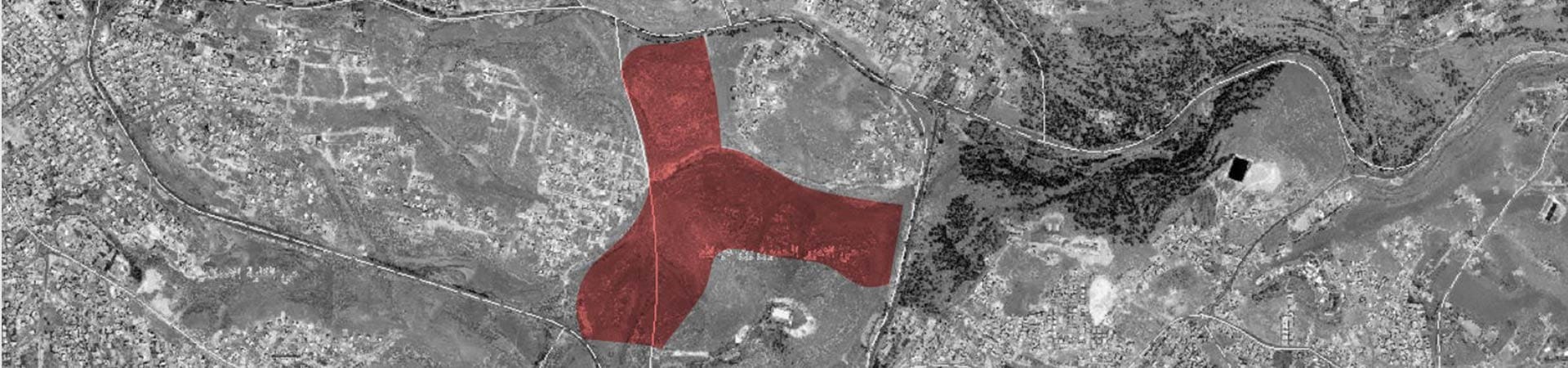
During the three-day dialogue event ‘Sustainable and resilient, regional and intermunicipal land management‘ from 18 to 20 November 2020, one of the project ideas that arose was to support the Municipality of Greater Amman, Jordan, in preparing a land use plan for a still largely undeveloped area in the north-east of Amman. Since the area has now been analysed in more detail, a virtual dialogue between Jordanian and German experts was initiated on 10 November 2021.

On the Jordanian side, 17 experts – architects, urban planners and GIS experts – took part in the virtual consultations. These included the heads of the local planning department and the Planning Department of Greater Amman Administration, the Department of Spatial Planning and the Department of Urban Studies. On the German side, Gerhard Gross, former project manager in the Urban Development Planning Section of the Department of Urban Planning and Building Regulations of the City of Munich, and Rainer Müller-Jökel, Head of the City Surveyor’s Office of the City of Frankfurt am Main, joined the meeting.

Development of bankable project proposals for sustainable urban energy planning in Southeast Europe

Nearly 50 people from approximately 10 municipalities across 5 countries of Southeastern Europe (SEE) region as well as from EU and MENA gathered during the Planning Workshop to further the process of their project development.

The Planning Workshop held on 2-4 November 2021, represented a follow-up and a continuation on a learning process started through Dialogue Event in May 2021.

The ongoing COVID-19 situation ruled out meeting up in person. That’s why the workshop was planned as an online consultation event. Rather than travelling to a single location, the teams worked individually on pre-defined ‘homework’ which was later smoothed off during the workshop’s first and last days. Connective Cities team with the aid from mentors, who guided the process, oversaw the proceedings of project outline finalizations. The workshop aimed at supporting the municipalities in fine-tuning their project ideas and developing them further towards bankable project proposals.

The concept and content of the Planning Workshop was elaborated based on the Connective Cities’ methodology and the findings of the pre-workshop interviews that were conducted with the respective municipalities.

Invitation: Good municipal green recovery practices and the importance of renewable energy

The event aims to explore the crisis management mechanisms that cities employed and ways in which they envision green recovery especially on the bases of introducing the use of renewable energy.

The pandemic tested the robustness and remorsefulness of mostly all municipal services, from transportation and waste management to recreation and food supply. Pandemic-centered protocols set new behavioral patterns – many of which were quite stressful for urban economies. On the contrary, others – such as raised environmental awareness – made both city leaders and citizens rethink the status-quo regarding sustainability, resilience and in overall – stressed the importance of accelerating previous commitments and striving for even more.

Date and time: 13 December 2021, 12:00 – 14:30 CET

Please find more information in our Call of Participants or enroll in the event here.

If you have any further queries about the event encourage you to contact:

SEE Regional Network Coordinator: Irakli Samkharadze (irakli.samkharadze@giz.de)

Sustainable, informed and participatory land management and land use planning in rapidly growing cities in Sub Saharan Africa

Connective Cities Sub Saharan Africa organized a three part series of workshops on the topic of ‘Sustainable, informed and participatory land management and land use planning in rapidly growing cities’ as subsequent steps to the dialogue event held in May. The objectives of the series were to support the cities better understand their projects, provide an opportunity for review by German experts, train on proposal writing and offer financial advisory.

 The conceptual approach was based on:

  • analyzing the status quo of the process and the individual projects
  • integrating all stakeholders of the relevant projects
  • co-designing solutions through interactive learning
  • harnessing the skills within the group of the project owners supported with expert advice
  • outcome driven to achieve the main goal to enable the participants finalize their relevant proposals

Four municipalities from Cameroon, South Africa and Zambia presented their project ideas and the gaps therein. These project ideas are:

  1. Development of socio-economic initiatives that will complement biodiversity protection and management and enhance cultural and heritage resources in eThekwini Municipality, South Africa
  2. Adams-R603 Settlement Plan- eThekwini, South Africa
  3. Integrated Land Management System for Livingstone City Council, Zambia
  4. Development of the banks of Lake Baleng with rest & recreational areas in the Commune of Bafoussam II, Cameroon

Municipal Waste Management in Times of COVID-19

The COVID-19 pandemic has left a significant mark on municipal waste management worldwide. During the lockdowns, quantities of private household waste have increased, while commercial waste has decreased. Strict hygiene measures are required when collecting and sorting waste – a service that must continue to function everywhere despite the more difficult conditions created by the pandemic. Many municipal waste companies were unprepared for a digital way of working and, in some cases, have come under financial pressure. In the long term, the pandemic demonstrates that a shift towards a circular economy is an essential strategy for sustainability.

These and other topics were on the agenda at the Connective Cities Response Dialogue “COVID-19 and municipal waste management: Response to the pandemic and post-pandemic outlook”. On November 9 and 11, more than 20 participants from seven countries shared their experiences online. They also advised each other on how best to address current challenges in municipal waste management, and how to incorporate lessons learned from the crisis into long-term operations.